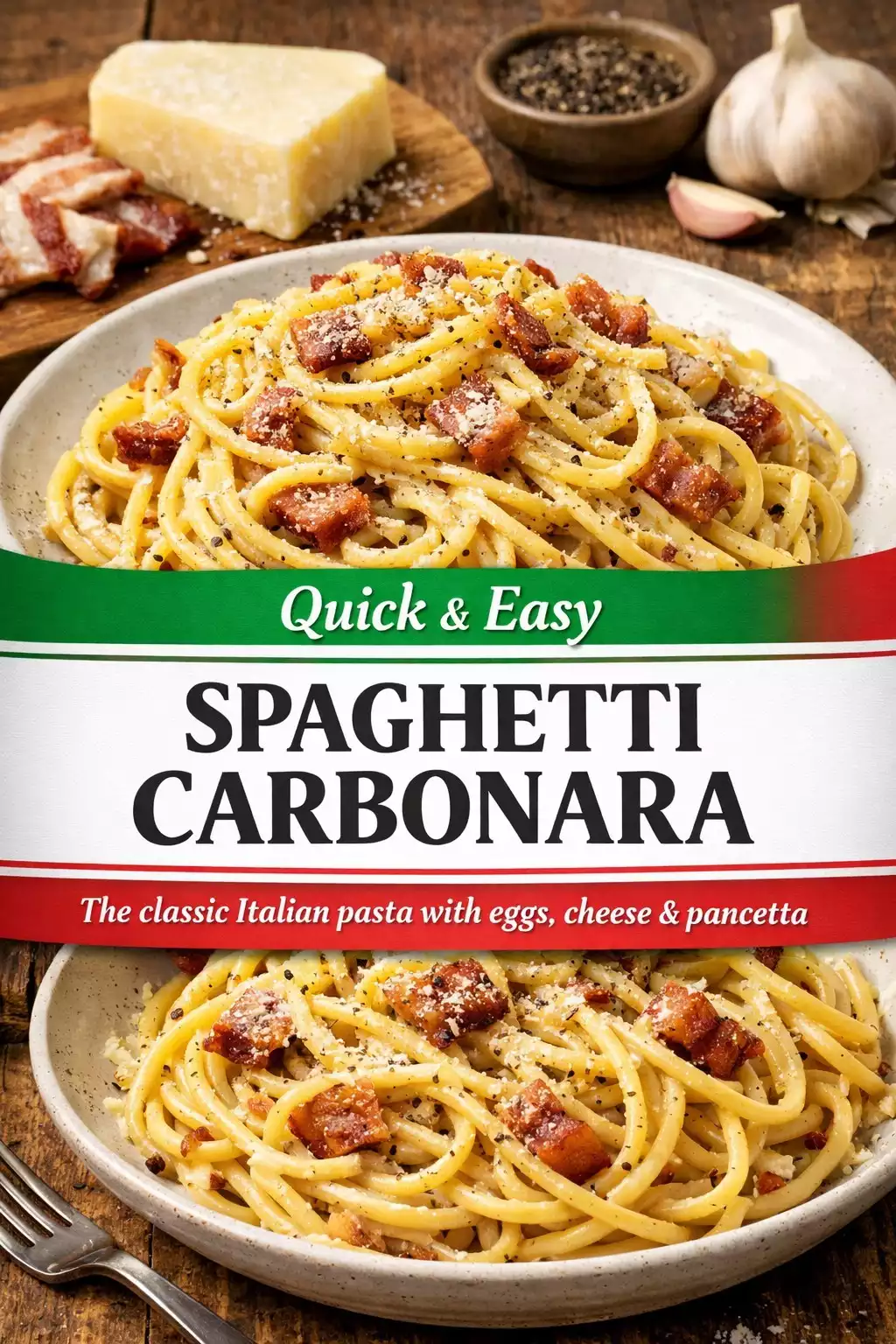
I‘m only gonna say this once. There is no pasta dish on earth that gets mangled more consistently by home cooks than carbonara — and it’s not because it’s complicated. It’s because people don’t understand what they’re actually making. Easy spaghetti carbonara is not pasta with cream sauce. It is not pasta with scrambled eggs. It is an emulsified sauce made from eggs, aged cheese, rendered pork fat, and pasta water — and when it’s done right, it’s one of the most profound things you can put on a plate.
I’ll fight anyone who says this needs to be complicated. Four ingredients — five if you count black pepper as a thing you measure, which you should. The technique is specific. The execution takes maybe twenty minutes once you’ve done it twice. But you have to know what you’re doing and why, or you’ll scramble the eggs and blame the recipe. Follow this and you won’t.
My family came up eating carbonara the right way — guanciale, not bacon; Pecorino Romano, not Parmigiano alone; no cream ever, not once, not ever. That’s the recipe of pasta that earns respect at the table. That’s what I’m giving you here.
Why This Recipe Works
The sauce in the best spaghetti carbonara is an emulsion — eggs and fat suspended together into something creamy without actually containing any dairy. The pasta water is the key ingredient most people don’t count: its starch and heat allow the egg mixture to thicken without curdling. Pull it off the heat at the right moment, add the eggs while the pasta is hot but not boiling, work fast, and the result is silky and rich. Mess up the timing and you get scrambled eggs with pasta.
Guanciale — cured pork cheek — has more fat than pancetta and a sweeter, more complex flavor. If you can’t find it, pancetta is an acceptable substitute. American bacon is a last resort — the smoke is too aggressive and overwhelms everything. The rendered fat from the guanciale goes directly into the sauce, carrying that flavor through every bite.
Ingredients
The Pasta and Pork
- 1 lb spaghetti (or rigatoni, tonnarelli)
- 7 oz guanciale, cut into small lardons (pancetta if needed)
- Kosher salt for pasta water
The Sauce
- 4 large egg yolks
- 2 whole eggs
- 1 cup Pecorino Romano, finely grated (plus more for serving)
- ½ cup Parmigiano-Reggiano, finely grated
- 2 tsp coarsely cracked black pepper (freshly cracked — not pre-ground)
- Reserved pasta water — about 1 cup
How to Make It
1 Render the Guanciale Low and Slow
Add the guanciale lardons to a cold pan — no oil needed. Turn the heat to medium-low and let the fat render slowly over 8 to 10 minutes, stirring occasionally. You want the fat melted out and the meat lightly golden — not crispy, not chewy. Remove the pan from the heat and let it cool slightly. Do not discard the fat in the pan. That fat is the sauce.
2 Build the Egg and Cheese Mixture
In a bowl, whisk together the egg yolks and whole eggs until smooth. Add the grated Pecorino Romano and Parmigiano-Reggiano and whisk until you have a thick, paste-like mixture. Add the cracked black pepper and stir. Set aside near the stove — it should be at room temperature, not cold, when it hits the pasta.
3 Cook the Spaghetti, Save the Water
Bring a large pot of salted water to a rolling boil. Cook the spaghetti until 1 minute short of al dente — firm in the center, not crunchy. Before draining, scoop out at least 1 full cup of pasta water and set it aside. This water is starchy, salty, and warm — it’s what makes the sauce work. Drain the pasta but do not rinse.
4 Toss the Pasta With the Guanciale Off the Heat
Return the guanciale pan to medium heat for 30 seconds to warm the fat. Add the drained pasta to the pan and toss to coat in the fat — about 1 minute. Pull the pan completely off the heat. This is critical: the pan must not be on a live flame when the eggs go in.
5 Add the Egg Mixture and Work the Sauce
Pour the egg and cheese mixture over the pasta. Immediately add 3 to 4 tablespoons of the reserved pasta water. Toss constantly and aggressively, working the pasta like you mean it — the movement and the steam from the pasta water cook the eggs gently without scrambling them. Add more pasta water a splash at a time until the sauce is creamy, glossy, and clings to every strand without pooling at the bottom of the pan. Season with salt to taste. Serve immediately with extra grated Pecorino and more cracked black pepper.
Where Most People Blow It
The pan is still on the heat when the eggs go in. That’s scrambled eggs. Full stop. Pull the pan off the burner before the egg mixture touches the pasta. The residual heat of the pasta does the work.
Not enough pasta water. The starchy water is the emulsifier. Add it incrementally until the sauce is silky and mobile — not dry and clumping. Most people add too little. You can always add more; you can’t take it out.
Pre-ground pepper is not the same. Freshly cracked black pepper, coarse, is a flavor component — not just a seasoning. The pre-ground stuff in a jar tastes like dust and contributes nothing to the dish.
Adding cream. This is not carbonara. This is pasta with cream and eggs. Not the same dish, not even close. If the sauce feels thin, add more pasta water and work the toss. That’s the fix.
Cold eggs from the fridge. Cold eggs cool the pasta too fast and don’t emulsify properly. Pull them at least 20 minutes before cooking. Room temperature eggs, every time.
Using the wrong pasta water. Take the water before you drain the pasta — not after. Post-drain water from the colander has lost its starch and is useless. Scoop it out before you dump the pot.
What Goes on the Table With Easy Spaghetti Carbonara
This is a rich, fatty dish — it wants contrast. A bitter green salad with lemon vinaigrette cuts right through it. Good crusty bread for the plate. A glass of dry white wine — Frascati if you want to be traditional about it, anything crisp and unoaked if you don’t.
If you’re building a full Italian-American spread, the homemade lasagna recipe is the centerpiece and the baked ziti recipe is the crowd-feeder. For something in the same quick-pasta lane, the fettuccine alfredo recipe and cacio e pepe are both worth having in rotation.
Variations Worth Trying
Rigatoni Carbonara. The Romans argue about which pasta is correct. Rigatoni holds more sauce inside the tube, which gives you a different — heavier — eating experience. Worth trying once you’ve mastered the technique on spaghetti.
Carbonara with Pancetta. If guanciale isn’t available, pancetta is the approved substitute. Cut it thicker than you think necessary — the fat content is lower and you want real pieces, not wisps.
Spring Carbonara. Add blanched English peas and a little lemon zest to the finished dish. Not traditional — but bright, seasonal, and genuinely good. A departure worth making in May.
Carbonara-style Tortellini. Use cheese tortellini instead of long pasta. The cheese inside the pasta plays off the Pecorino in the sauce in an interesting way. Not a weeknight version — a dinner party version.
Storage and Reheating
Carbonara does not store well — that’s the honest answer. The egg sauce congeals and the pasta absorbs it overnight, producing a stiff, dry result that reheating can only partially fix. If you have leftovers, reheat them gently in a pan over low heat with a splash of water, tossing constantly. It won’t be what it was last night, but it’ll be edible.
The real answer is to make only what you’ll eat. The portions are generous — this recipe serves four. Scale down if your table is smaller. Carbonara is best made fresh, served immediately, and finished completely.
FAQ
Is carbonara safe to eat? The eggs aren’t fully cooked.
The eggs are tempered by the heat of the pasta and pasta water to a temperature that pasteurizes them. If you’re concerned, use pasteurized eggs — available in most grocery stores. The technique in this recipe is the same one used in professional kitchens daily. The risk is extremely low with fresh eggs and proper technique.
Can I use bacon instead of guanciale?
You can. Purists will note that you’re no longer making carbonara — you’re making a carbonara-style dish. The smoke from bacon is assertive and changes the flavor profile significantly. If that’s what you have, use it. Just know it’s a different dish. Pancetta is the preferred substitute if guanciale isn’t available.
Why did my sauce turn into scrambled eggs?
The pan was too hot when the eggs went in, or you added the eggs too slowly while the pasta was still on the heat. Pull the pan off the burner completely before adding the egg mixture, add pasta water immediately to drop the temperature, and toss constantly. Speed and constant motion are your protections against scrambling.
What does al dente mean exactly?
Al dente means al dente. Not soft. Not crunchy. Al dente. Bite into a strand and look at the cross-section — there should be a tiny white dot of uncooked starch in the very center. That’s the target. When cooking carbonara, pull it 1 minute before that point because it finishes in the sauce.