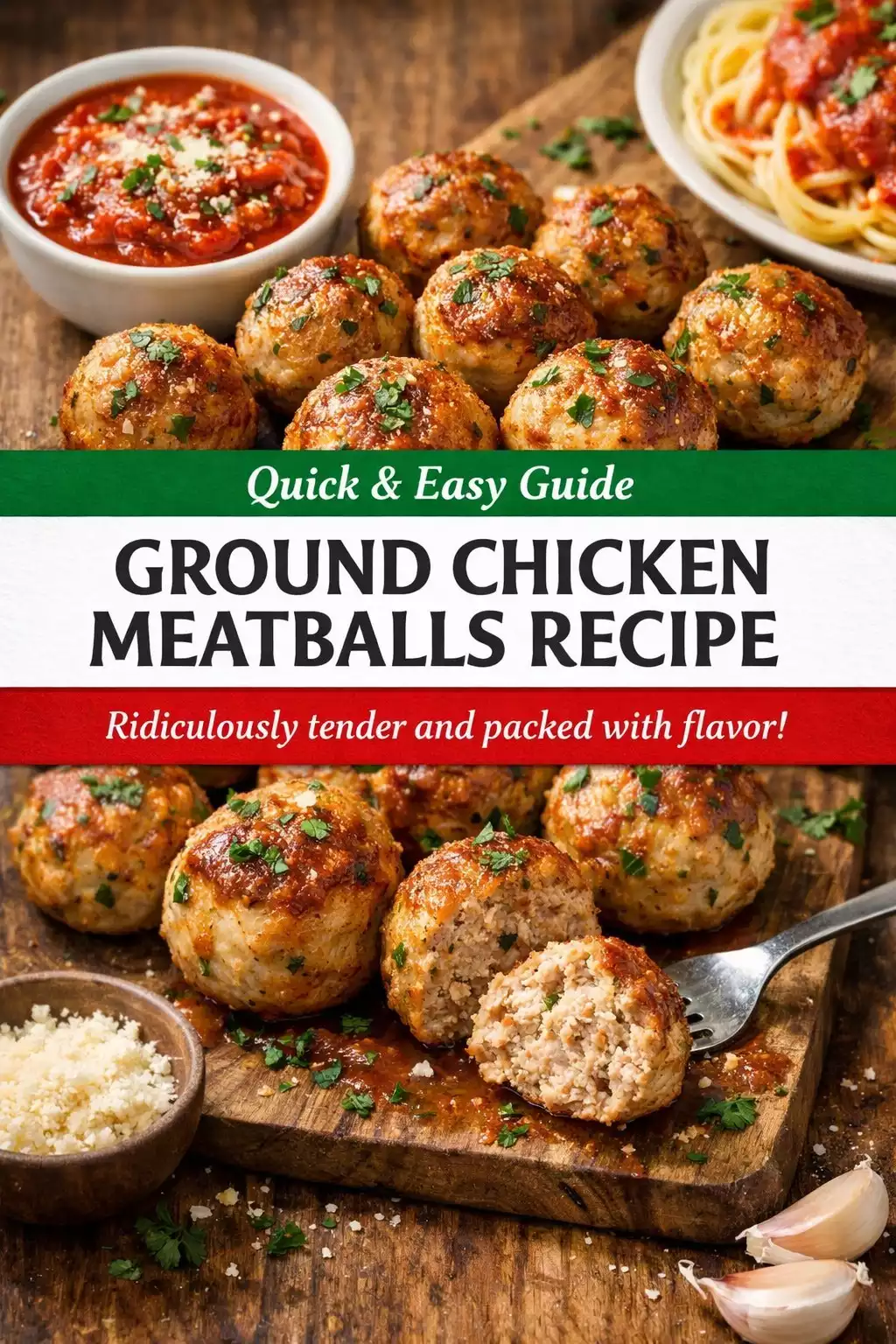
If you can boil water and follow directions, you can make this. Ground chicken meatballs are the kind of dish that looks like a production and is actually straightforward if you understand two things: what holds a meatball together and what makes it taste like something. Get those right and you’re done. Get them wrong and you have hockey pucks in sauce.
Ground chicken has less fat than beef or pork, which is the main challenge. Less fat means less moisture, which means a meatball that dries out faster and binds less naturally. The fix is adding moisture back in strategically — ricotta, egg, a soaked bread binder — and handling the mixture gently so the proteins don’t seize and tighten before cooking even starts.
These go well in marinara, in soup, in a sub, on their own with dipping sauce. Once you have the basic technique, the applications are endless. And they’re genuinely better the next day when the sauce has had time to work into the meat.
Why This Recipe Works
The ricotta is the key ingredient that most people leave out of ground chicken meatballs. It adds moisture and fat to compensate for what’s missing from the leaner protein, and it creates a lighter, more tender texture than egg alone can achieve. The ricotta also acts as a binder that doesn’t tighten when heated the way egg does — the result is a meatball that stays tender even when fully cooked.
The bread panade — bread soaked in milk, then squeezed — is the other non-negotiable. The starches in the bread physically interrupt the protein structure as the meatball cooks, preventing the tight, bouncy texture of an over-bound meatball. Italian grandmothers have been doing this for centuries. There’s a reason it survived.
Ingredients
The Meatballs
- 1.5 lbs ground chicken (not extra-lean — needs some fat)
- ¼ cup whole-milk ricotta
- 2 slices white bread, crusts removed, soaked in ¼ cup whole milk and squeezed dry
- 1 large egg
- ½ cup Parmigiano-Reggiano, freshly grated
- 3 garlic cloves, minced
- 2 tbsp fresh parsley, chopped
- 1 tsp kosher salt
- ½ tsp black pepper
- ½ tsp dried oregano
- ½ tsp red pepper flakes (optional)
For Baking
- Olive oil or cooking spray for the baking sheet
How to Make It
1 Mix the Meat Gently
In a large bowl, combine the ground chicken, ricotta, squeezed bread panade, egg, Parmigiano-Reggiano, garlic, parsley, salt, pepper, oregano, and red pepper flakes. Mix with your hands until just combined — the goal is an evenly distributed mixture, not a compacted one. Overworking develops the proteins and produces tough, dense meatballs. Mix until there are no dry pockets of cheese or parsley, then stop.
2 Chill the Mixture
Cover the bowl and refrigerate for at least 30 minutes. Cold mixture is firmer and easier to roll into uniform balls without sticking to your hands. This step also lets the flavors begin to meld and the bread panade absorb fully into the meat mixture. Don’t skip it if you want clean, round meatballs.
3 Roll and Arrange
Preheat the oven to 400°F. Line a rimmed baking sheet with foil and coat generously with olive oil or cooking spray. With lightly oiled hands, portion the mixture into 1.5-inch balls — about the size of a golf ball. Roll each between your palms to form a smooth sphere. Arrange on the baking sheet with at least ½ inch between each one. Drizzle or spray lightly with oil.
4 Bake Until Cooked Through and Golden
Bake at 400°F for 18 to 22 minutes until the meatballs are cooked through and golden on top. An internal temperature of 165°F confirms doneness. The tops will be lightly browned; the bottoms will have a deeper caramelization from the oiled pan. If you want more color on the sides, finish under the broiler for 2 to 3 minutes, watching carefully.
5 Finish in Sauce or Serve Directly
If serving in marinara: add the baked meatballs to warm sauce and let them simmer for 10 to 15 minutes. The sauce penetrates the exterior and the flavors integrate. If serving on their own: serve immediately with marinara for dipping or over pasta. The meatballs hold their shape best when cooked fully before sauce contact.
Where Most People Blow It
Overworking the mixture. Ground chicken proteins seize when overworked just like beef. Mix until combined, not until smooth and paste-like. Stop when you can’t see dry pockets of cheese or herbs.
Skipping the chill. Warm, soft mixture sticks to your hands, produces uneven balls, and falls apart before it sets in the oven. 30 minutes minimum in the refrigerator before rolling.
Using extra-lean ground chicken. Extra-lean ground chicken has almost no fat. Without fat, the ricotta and panade can’t compensate enough and you end up with dry, chalky meatballs. Look for ground chicken that isn’t labeled extra-lean.
Not oiling the baking sheet generously. Ground chicken meatballs stick aggressively. Use plenty of oil and a foil liner. A stuck meatball that tears when you try to remove it is a problem with no graceful fix.
Skipping the panade. The bread-and-milk binder is not optional for a tender result with lean ground chicken. If you want dense, bouncy meatballs, skip it. If you want something that actually resembles a real Italian-American meatball, use it.
Not finishing in sauce. Baked meatballs straight from the pan are good. Baked meatballs simmered in marinara for 15 minutes are exceptional. The sauce works into the exterior and ties everything together. Give them the time.
What Goes on the Table With Ground Chicken Meatballs
Over spaghetti with marinara is the classic move. In a hoagie roll with provolone and sauce under the broiler. On a platter as an appetizer with marinara for dipping. The meatball is flexible — it works in all three applications without any adjustment.
For other chicken dishes in the rotation, the crispy baked chicken thighs are the weeknight backbone. The chicken pot pie recipe is the production-level move for a crowd. The lemon herb baked chicken breast and creamy chicken casserole fill out the rotation with different techniques and flavors.
Variations Worth Trying
Spicy Arrabbiata Meatballs. Double the red pepper flakes in the mixture and serve in arrabbiata sauce instead of plain marinara. The heat in the meatball and the heat in the sauce build together into something genuinely spicy.
Greek-Inspired Meatballs. Swap the Parmigiano-Reggiano for crumbled feta, replace the parsley with fresh mint and dill, and add a pinch of cinnamon. Serve with tzatziki and warm pita instead of marinara and pasta. Same technique, completely different direction.
Asian-Style Chicken Meatballs. Replace the Italian seasonings with ginger, scallion, soy sauce, sesame oil, and a teaspoon of fish sauce. Shape, bake, and serve with sweet chili dipping sauce. The ricotta and panade technique works across flavor profiles.
Soup Meatballs. Make the meatballs half the standard size (about ¾ inch) and drop them directly into simmering chicken broth with diced vegetables and small pasta. They cook in the broth in 10 to 12 minutes and produce a deeply satisfying Italian-American wedding soup.
Storage and Reheating
Cooked meatballs keep refrigerated for up to 4 days or frozen for up to 3 months. In sauce: store in the sauce and reheat together in a saucepan over medium-low heat until warmed through. Without sauce: microwave on medium power with a damp paper towel cover, 60 to 90 seconds. The microwave works well here — the ricotta in the meatball keeps them moist through reheating.
Raw shaped meatballs also freeze well. Freeze them on a baking sheet until solid, then transfer to a zip-lock bag. Bake from frozen at 400°F for 25 to 28 minutes. A useful prep-ahead move for a batch that can be cooked off any night of the week.
FAQ
Can I pan-fry these instead of baking?
Yes. Heat 2 tablespoons of olive oil in a skillet over medium heat. Add the meatballs in batches and cook, turning every 2 minutes, until browned on all sides and cooked through — about 10 to 12 minutes total. Pan-frying produces more color and a slightly crisper exterior than baking. Baking produces more uniform results and handles larger batches more efficiently. Both are good.
Why do my meatballs fall apart?
Either the mixture was too wet (too much ricotta, not enough squeeze on the panade), too dry (not enough binder), overworked (proteins broken down), or the meatballs didn’t chill before rolling. Chill the mixture thoroughly, handle gently, and use generously oiled hands. If the mixture still seems too loose to hold a shape, add a tablespoon of breadcrumbs to tighten it.
Can I use ground turkey instead of ground chicken?
Yes — same fat considerations apply. Ground turkey breast is very lean and produces dry meatballs without the ricotta and panade. Ground turkey thigh meat (darker meat) has more fat and works better. The technique is identical; the flavor is slightly different — turkey has a more neutral, slightly denser character than chicken.
How do I keep the meatballs round when baking?
The bottom will flatten slightly from contact with the pan — that’s normal and fine. To minimize it: use a very generously oiled pan, don’t press them down, and handle gently when transferring. An oven-safe wire rack set over the baking sheet produces the most even, round result because air circulates underneath and the meatball doesn’t sit in rendered fat.