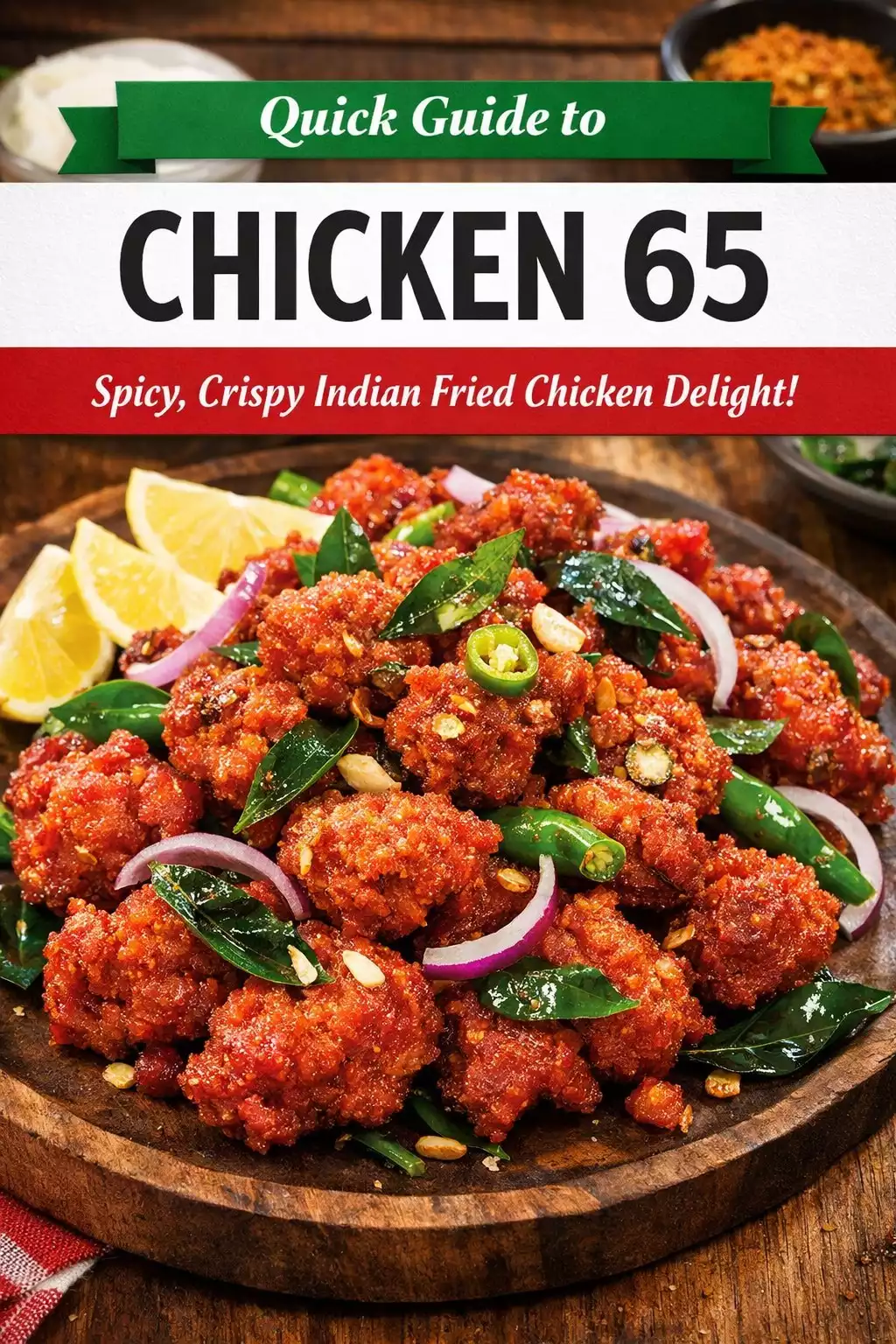
This is the recipe that ends arguments at Sunday dinner. Chicken 65 — crispy, deeply spiced Indian fried chicken — is one of the most addictive things you’ll ever make at home, and it doesn’t take specialized equipment or obscure technique. What it takes is the right marinade, the right frying temperature, and the discipline not to crowd the pan.
The dish comes from the Tamil Nadu region of India, though the exact origin story involves some entertaining debate. What’s not debated is the result: small pieces of chicken marinated in a vivid red spice paste, fried until shatteringly crispy, then tossed in a quick tempering of curry leaves, green chiles, and yogurt that clings to the hot, crispy exterior in the most satisfying way.
I’ve made this a thousand times. It gets better every time. Once you nail the marinade and frying temperature, this goes into your permanent rotation. It’s that kind of dish.
Why This Recipe Works
The marinade for the best chicken 65 uses yogurt as a tenderizer, red chili paste and spices for flavor, and cornstarch for the crispy exterior. The cornstarch is the technical key: it creates a coating that fries up lighter and crispier than flour alone, with a more delicate crunch that shatters instead of chews. The double-marinade approach — a first marinade that penetrates, a second coating of cornstarch right before frying — is how the street carts do it.
The tempering at the end — hot oil flashed with curry leaves, green chiles, and garlic, then hit with yogurt — is what distinguishes chicken 65 from plain fried chicken. The yogurt tempering clings to the hot, crispy pieces and adds a tangy, aromatic finish that’s completely unique. Don’t skip it.
Ingredients
The Chicken and First Marinade
- 1.5 lbs boneless chicken thighs, cut into 1.5-inch pieces
- 2 tbsp thick plain yogurt
- 1 tbsp red chili powder (Kashmiri for color and mild heat, or cayenne for more heat)
- 1 tsp turmeric
- 1 tsp garam masala
- 1 tsp cumin
- 1 tsp coriander
- 1 tsp ginger paste or freshly grated ginger
- 1 tsp garlic paste or 3 cloves, minced
- 1 tsp soy sauce
- 1 tsp lemon juice
- 1 tsp kosher salt
The Fry Coating
- 3 tbsp cornstarch
- 2 tbsp all-purpose flour
- Neutral oil for deep frying
The Tempering Finish
- 2 tbsp neutral oil
- 12 to 15 fresh curry leaves
- 3 green chiles, slit lengthwise
- 4 garlic cloves, thinly sliced
- 3 tbsp thick plain yogurt
- 1 tsp red chili powder
- Salt to taste
How to Make It
1 Marinate the Chicken
Combine all the first marinade ingredients in a bowl. Add the chicken pieces and toss to coat thoroughly. Cover and refrigerate for at least 1 hour, though 4 to 6 hours produces a noticeably deeper, more integrated flavor. The yogurt tenderizes the chicken and the spices penetrate the exterior during this time.
2 Coat with Cornstarch Right Before Frying
When ready to fry, add the cornstarch and flour to the marinated chicken. Toss until every piece is lightly coated — the marinade and cornstarch will form a thin, slightly tacky coating. This step happens right before frying, not ahead of time. If the cornstarch sits too long on the marinated chicken, it absorbs moisture and the coating becomes gummy.
3 Fry in Batches at 350°F
Heat neutral oil in a wok or deep skillet to 350°F. Fry the chicken in small batches — no more than 6 to 8 pieces at a time. Crowding drops the oil temperature and causes steaming instead of frying. Fry for 4 to 5 minutes until cooked through and deeply golden-red. Remove with a spider or slotted spoon and drain on a wire rack. Let the oil recover to 350°F between batches.
4 Prepare the Tempering
In a large wok or skillet, heat the 2 tablespoons of oil over high heat until shimmering. Add the curry leaves — they’ll splutter dramatically, that’s expected. Add the green chiles and garlic and cook for 30 seconds, stirring. Reduce heat to medium. Add the yogurt and red chili powder and stir quickly — the yogurt will reduce and thicken into a sauce in about 1 minute.
5 Toss and Serve Immediately
Add the fried chicken to the tempering pan and toss quickly to coat every piece in the yogurt-curry mixture. Serve immediately — the crispiness fades fast once it’s coated. Garnish with sliced red onion, a squeeze of lemon, and extra curry leaves if available. This is finger food. Eat it hot.
Where Most People Blow It
Adding the cornstarch too early. Cornstarch added to the marinade an hour before frying absorbs moisture and becomes gummy. Add it right before the chicken hits the oil, not before.
Oil not hot enough. Below 340°F and the chicken absorbs oil and produces a greasy, soft exterior. 350°F is the target. Use a thermometer.
Crowding the pan. Each batch needs room. Six to eight pieces in a generous amount of oil. Crowding drops the temperature and ruins the crust.
Skipping fresh curry leaves. Dried curry leaves have almost no flavor. Fresh or frozen curry leaves are available at Indian grocery stores. The tempering step is built around them — they’re not optional.
Using chicken breast instead of thighs. Breast pieces dry out faster under frying conditions. Thigh pieces stay moist and have more flavor. Thighs are the correct choice for this dish.
Not tossing immediately after tempering. The crispy exterior fades quickly once it contacts the wet tempering sauce. Toss and serve within two minutes of adding the chicken to the tempering pan. This is a serve-immediately dish.
What Goes on the Table With Chicken 65 (Indian Fried Chicken)
Chicken 65 is traditionally served as an appetizer — crispy, spiced, on a bed of sliced raw onion and green chiles with lemon wedges on the side. As a main: serve over steamed basmati rice with a simple raita of yogurt, cucumber, and mint to cool the heat. Cold Kingfisher or Cobra beer is the right beverage choice.
For other fried chicken and spiced chicken dishes, the southern fried chicken is the American counterpart with its own deep technique. The crispy baked chicken thighs are the oven version when you don’t want to fry. The buffalo chicken dip and rotisserie chicken meals round out the spiced and appetizer-format chicken options.
Variations Worth Trying
Extra Spicy Version. Replace Kashmiri chili with pure cayenne and add extra green chiles to the tempering. The heat is assertive and builds over several bites. Not for the faint of heart, but exactly right for the people who like real heat.
Dry Chicken 65. Skip the yogurt tempering entirely. After frying, toss the hot chicken with a dry spice mix of cumin, red chili, and chaat masala. The dry version travels better and stays crispy longer — a better choice for a party or potluck.
Vegetarian Paneer 65. Replace the chicken with cubed paneer. Marinate the same way, fry until golden and crispy on the outside, and apply the same tempering. A legitimate vegetarian alternative that captures the same flavor profile.
Air Fryer Version. Coat and marinate as described. Air fry at 400°F for 12 to 15 minutes, shaking halfway, until crispy. The result isn’t identical to deep-frying — slightly less crunchy — but still very good and significantly less oil-intensive.
Storage and Reheating
Chicken 65 is best eaten immediately after cooking. The crispy exterior fades within an hour as the yogurt tempering hydrates the coating. Leftovers keep refrigerated for up to 2 days. To reheat: spread on a baking sheet and roast at 400°F for 8 to 10 minutes. The crispiness won’t fully return but it’s much better than a microwave reheat, which produces soggy, sad chicken.
The first marinade can be made 2 days ahead and refrigerated. The tempering ingredients can be prepped ahead. But frying and finishing should happen right before serving for the full experience.
FAQ
Where do I get Kashmiri red chili powder?
Indian grocery stores carry it reliably — it’s widely available and inexpensive. Online retailers stock it if there’s no Indian market nearby. Kashmiri chili is milder and more deeply colored than regular red chili powder — it’s what gives chicken 65 its vivid red color without blowing the heat level off the chart. Substitute smoked paprika plus a small amount of cayenne if you can’t find it.
Why is it called Chicken 65?
The origin is disputed. The most cited story is that it was created in 1965 at Buhari Hotel in Chennai by chef A.M. Buhari, hence the name. Other theories involve the number of chiles in the original recipe or its position on a menu. The honest answer is that nobody is completely sure, but the dish is very well documented from the 1960s in Chennai and the name has stuck for sixty years.
Can I make this without deep frying?
Yes. Pan-fry in ½ inch of oil in a cast-iron skillet over medium-high, turning the pieces every 2 minutes until deeply golden on all sides, about 10 to 12 minutes total. The result is slightly less uniformly crispy than deep-fried but very good. The air fryer variation described above is another option. Deep frying produces the best result; these alternatives are legitimate when the full fry isn’t practical.
What are curry leaves and can I skip them?
Curry leaves are the fresh leaves of the Murraya koenigii tree — they’re aromatic, citrusy, and slightly nutty, with a flavor that’s distinctly South Indian. Fresh or frozen are available at Indian grocery stores. Skipping them is technically possible, but the tempering step exists largely because of them. A chicken 65 without curry leaves tastes like spiced fried chicken — good, but not the same dish. Find them if you can.