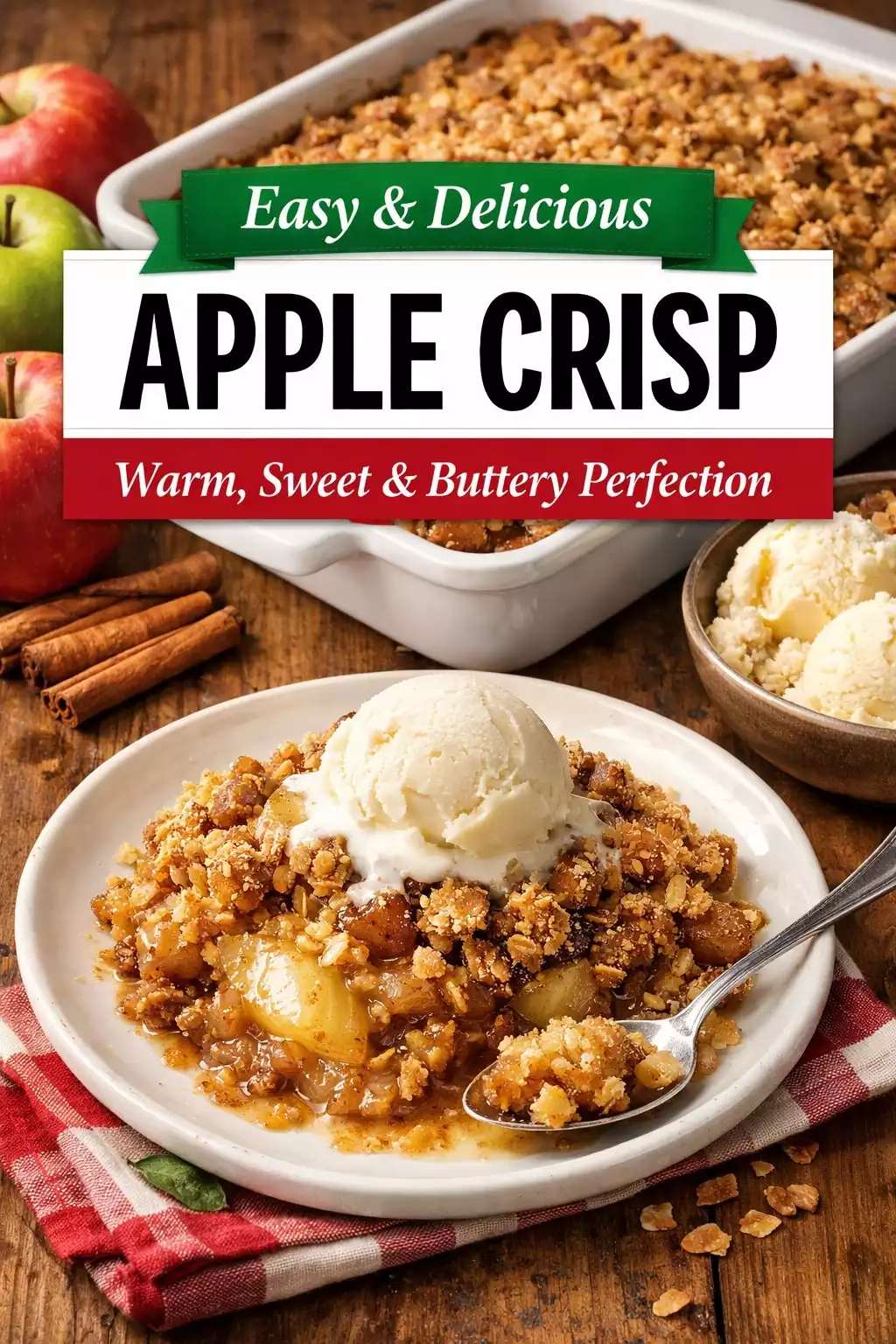
You want the secret? It’s patience. And good apples. Apple crisp is the autumn dessert that doesn’t require a pie crust, doesn’t require an electric mixer, and produces something warm and fragrant and deeply satisfying from about thirty minutes of prep and forty minutes in the oven. Done correctly, the topping crumbles — it doesn’t compact into a thick, doughy slab or crumble into fine powder. It’s a coarse, buttery, slightly crunchy streusel that cradles pools of caramelized apple beneath it.
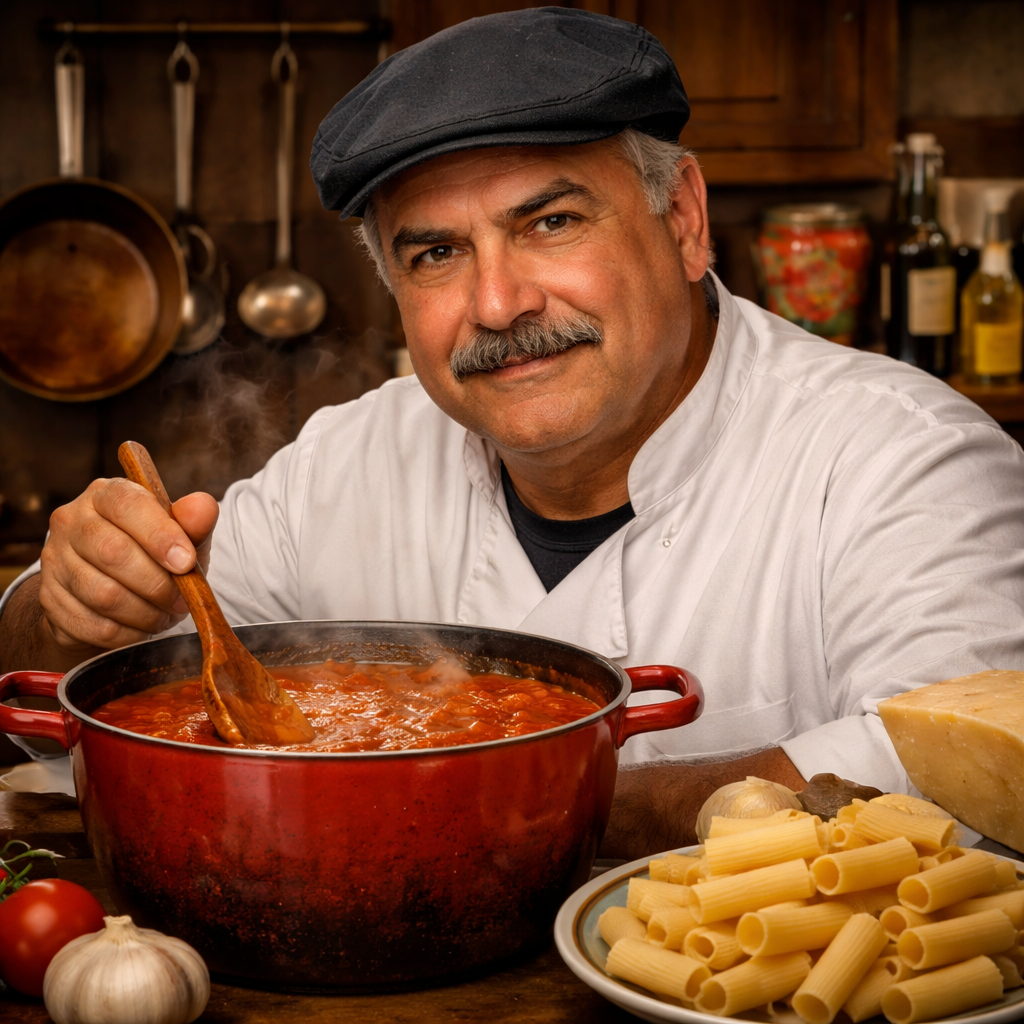
No-nonsense home cooking from a retired sous chef. Apple crisp is one of the first things I taught my kids to make because the technique is forgiving and the result is genuinely wonderful. You can vary the apples, vary the spices, vary the topping. The bones are always the same: properly textured topping, properly prepared fruit that doesn’t release too much water, correct oven temperature so everything crisps and bubbles at the right time.
This is the fall. This is the smell in the kitchen on a Sunday when the season has just turned and the good apples are in the market. Make it.
Why This Recipe Works
The topping uses cold butter cut into the dry ingredients until the mixture resembles coarse, pea-sized crumbs. This is the same technique as shortbread and pie crust — the cold butter coats the oat and flour particles in fat, and when it hits the oven, the steam from the water in the butter creates flaky, distinct layers rather than a dense, compacted mass. Over-mixed, warm-butter toppings produce paste. Cold-butter, coarse-crumb toppings produce the brittle, crispy streusel that defines a good crisp.
Tossing the apples with a small amount of cornstarch before baking thickens the juices they release in the oven into a caramelized, syrupy sauce rather than watery puddle. The cornstarch doesn’t taste like anything; it just keeps the filling from being soupy beneath the topping.
Ingredients
The Apple Filling
- 3 lbs mixed apples (Honeycrisp + Granny Smith recommended) — about 6 medium, peeled, cored, sliced ¼-inch thick
- ¼ cup granulated sugar
- 2 tbsp cornstarch
- 1 tsp cinnamon
- ¼ tsp nutmeg
- Pinch of kosher salt
- 1 tsp lemon juice
The Oat Crisp Topping
- 1 cup (90g) old-fashioned rolled oats
- ¾ cup (90g) all-purpose flour
- ¾ cup (150g) light or dark brown sugar, packed
- 1 tsp cinnamon
- ¼ tsp kosher salt
- ½ cup (113g) cold unsalted butter, cut into small cubes
- ½ cup chopped pecans or walnuts (optional)
How to Make It
1 Prepare the Apple Filling
Preheat oven to 350°F. Peel, core, and slice the apples into ¼-inch pieces. In a large bowl, toss the sliced apples with the granulated sugar, cornstarch, cinnamon, nutmeg, salt, and lemon juice until evenly coated. Transfer to a buttered 9×13 baking dish (or a deep 10-inch cast iron skillet) and spread in an even layer.
2 Make the Oat Topping
In a bowl, combine the oats, flour, brown sugar, cinnamon, and salt. Add the cold butter cubes. Work the butter into the dry ingredients using your fingertips or a pastry cutter, squeezing and pressing until the mixture resembles coarse crumbs with distinct pea-sized pieces of butter throughout. Don’t overwork — you want some larger chunks of butter that will melt and create crispy pockets in the oven. Stir in the nuts if using. The topping should hold together when squeezed but crumble when dropped. Keep cold.
3 Apply the Topping
Scatter the topping evenly over the apple layer in large, irregular clumps — don’t press it down or compact it. The clumps produce the varied texture of a good crisp: some spots are more crumbly, some are more solid. Even coverage is the goal; a solid pressed layer is not. Leave a few gaps for the apple juices to bubble up through.
4 Bake Until Bubbling and Golden
Bake at 350°F for 40 to 50 minutes until the topping is golden brown, the edges are bubbling, and the apples are tender when pierced with a knife through the topping. If the topping is browning faster than the apples are cooking, tent loosely with foil for the last 10 minutes. Remove the foil for the final 5 minutes to re-crisp the top.
5 Rest and Serve
Let the crisp rest for 10 to 15 minutes before serving. The juices continue to thicken as it cools. Serve warm with a generous scoop of vanilla ice cream or a drizzle of heavy cream. The combination of warm crisp and cold ice cream is the correct serving temperature contrast.
Where Most People Blow It
Warm butter in the topping. Room temperature or melted butter produces a dense, pasty topping that bakes into a thick slab instead of a crispy, crumbly streusel. Cold butter, worked in quickly. Keep it cold until it goes on the apples.
Using only one type of apple. One sweet apple (Honeycrisp, Fuji) and one tart apple (Granny Smith) produces a more complex, more interesting filling than a single variety. The tart apple keeps the filling from tasting like sweetened applesauce.
Skipping the cornstarch. Without it, the apple juices are watery and the topping gets soggy on the bottom. The cornstarch turns those juices into a syrupy glaze that holds its texture under the crisp.
Pressing the topping down. The topping should be scattered in loose clumps, not pressed firmly against the apples. Pressing it creates a dense layer that doesn’t crisp properly.
Under-baking. A fully golden, bubbling crisp is the goal. If the topping looks set but the apples don’t yield to a knife, it needs more time. 40 minutes is a starting point, not a guarantee.
Not using enough apple. Apple filling shrinks significantly during cooking. What looks like too many apples going in will look like the right amount coming out.
What Goes on the Table With Apple Crisp
Vanilla ice cream is the non-negotiable companion. Cold ice cream against warm crisp — that temperature and texture contrast is the whole point of serving it warm. Whipped cream if no ice cream is available. Heavy cream drizzled over the top. Nothing else is needed.
For other fruit desserts in the same seasonal direction, the southern peach cobbler is the summer counterpart. The strawberry shortcake recipe is the other fresh fruit dessert worth knowing. The classic chocolate chip cookies, best snickerdoodles, and easy fudgy brownies round out the baked dessert options for any season.
Variations Worth Trying
Pear Crisp. Replace the apples with ripe pears (Bosc or Anjou), reduce the cinnamon by half, and add a pinch of cardamom. Pear crisp is more delicate and more floral than apple. A beautiful fall and winter variation.
Blueberry Crisp. Use 6 cups of fresh or frozen blueberries in place of the apples. Reduce the cornstarch to 1 tablespoon (blueberries have more pectin than apples). Add lemon zest to the filling. Bake at 375°F for 35 to 40 minutes.
Apple Cranberry Crisp. Add 1 cup of fresh or frozen cranberries to the apple filling. The cranberries add tartness, color, and a festive character that makes this version ideal for the holiday table. Increase the sugar in the filling by 2 tablespoons to balance the cranberry bitterness.
Gluten-Free Crisp. Replace the all-purpose flour in the topping with almond flour or a 1:1 gluten-free flour blend. Certified gluten-free oats are widely available. The technique is identical; the topping will be slightly more crumbly and slightly denser but very good.
Storage and Reheating
Apple crisp keeps at room temperature for 1 day or refrigerated for up to 4 days. The topping softens overnight in the refrigerator as it absorbs moisture from the apple filling. To restore crispiness: reheat in a 350°F oven for 15 to 20 minutes uncovered until the topping is warm and beginning to crisp again. The microwave reheats quickly but produces a soft topping with no crunch — acceptable but not the best version.
Freezes well for up to 3 months. Freeze baked and cooled crisp covered tightly. Reheat from frozen at 350°F covered for 20 minutes, then uncovered for 15 more until hot throughout and the topping is re-crisped.
FAQ
What are the best apples for apple crisp?
A blend of sweet and tart is ideal. Honeycrisp, Fuji, or Golden Delicious for sweetness and softness; Granny Smith for tartness and structure. Avoid very soft apples like McIntosh — they turn to applesauce during baking instead of holding their shape. Firm apples that hold up to heat are the correct choice.
Can I use instant oats instead of old-fashioned?
Instant oats produce a finer, more compact topping that’s less distinct and less interesting in texture. Old-fashioned rolled oats produce larger flakes that crisp up individually and create the varied, interesting texture that defines a good crisp topping. Old-fashioned oats are the correct choice; instant is an acceptable substitute when that’s what’s available.
My topping burned before the apples were done — what happened?
The oven temperature was too high, the topping was applied too thinly in spots, or the topping contained too much sugar. If the top is browning faster than expected, tent loosely with foil at the 25-minute mark and continue baking. The foil protects the topping from direct heat while the apples finish cooking beneath it. Remove the foil for the last 5 minutes to re-crisp.
Can I make apple crisp ahead of time?
Yes — two ways. Assemble completely, cover, and refrigerate unbaked for up to 24 hours. Bake from cold, adding 5 to 10 minutes to the baking time. Or bake fully and reheat before serving as described above. Both approaches work. For the best fresh topping crunch, the first approach (assemble ahead, bake when needed) is preferred.