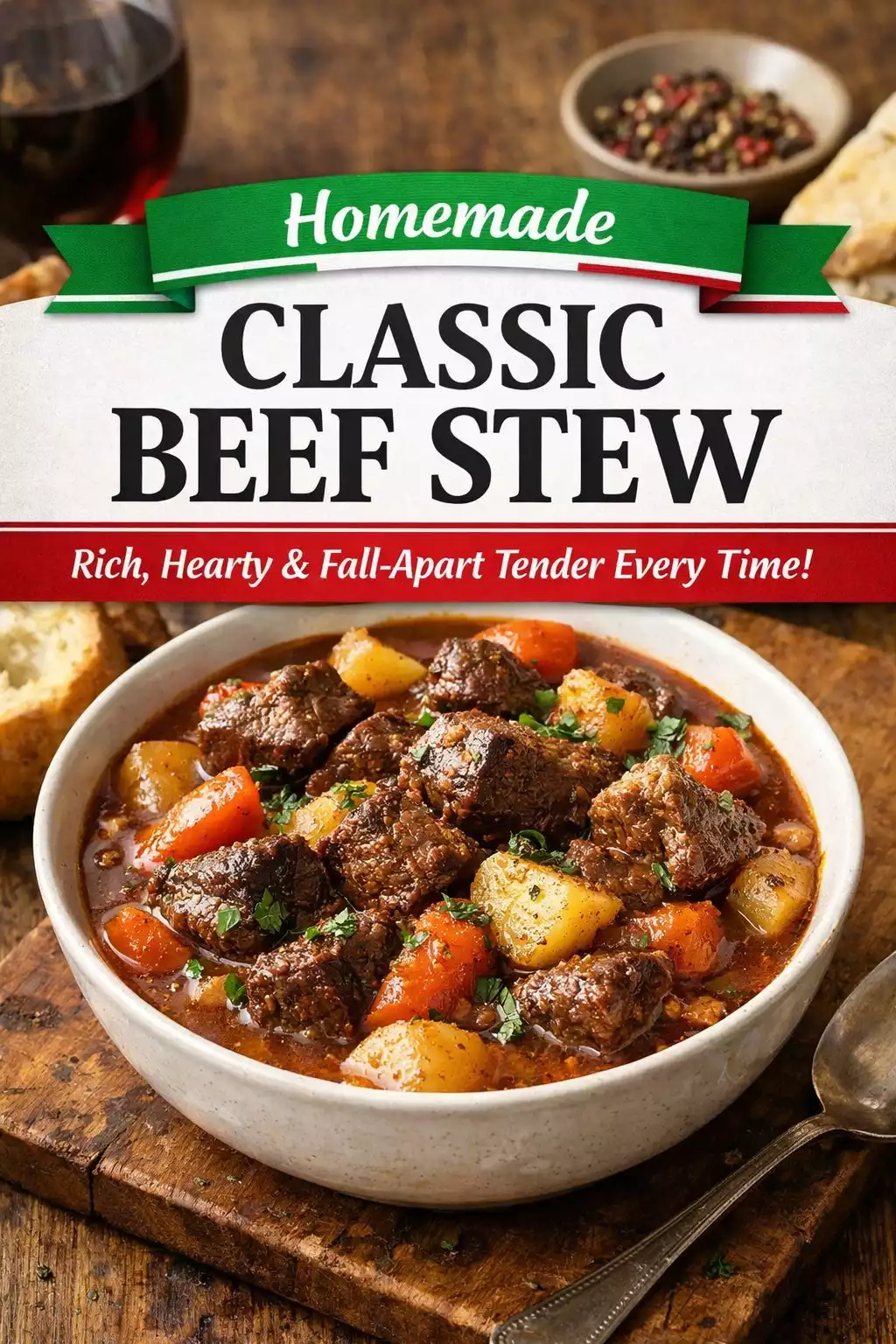
If you’re using jarred sauce for this, we need to talk. Classic beef stew is the cold-weather dish that can’t be faked — the kind that fills the kitchen with a smell that gets people off the couch and into the room asking when it’s going to be ready. Rich, deeply flavored broth. Beef that falls apart under a fork. Vegetables that are soft but not dissolved. This is what a Sunday is for.
The professional kitchen truth about beef stew is that most home cooks ruin it in the first five minutes. The sear. The meat has to be dry, in batches, at high heat, without crowding. If you crowd the pan, you steam the beef instead of brown it, and you lose the whole foundation of the stew’s flavor before a single vegetable has gone in.
This recipe uses the right cut, the right sear, and the right braise time. Low and slow — two hours minimum in the oven. The oven heat is more even than stovetop heat and it produces a gentler, more consistent braise that keeps the beef tender without turning it stringy. Make this right and you’ll never use a slow cooker for beef stew again.
Why This Recipe Works
Chuck roast is the correct cut — not stew meat pre-cut at the grocery store (which is inconsistently sized and often from inferior cuts), but a whole 3-pound chuck roast that you cut into 2-inch cubes yourself. The larger cubes hold their shape through the long braise while still becoming tender. Pre-cut stew meat in smaller pieces turns to shreds before the braise is done.
Red wine and tomato paste in the base provide acid and umami that round out the beef flavor and give the broth the depth that a plain beef-and-water stew can never achieve. The tomato paste is cooked in the fat for two minutes before the liquid goes in — this concentrates its flavor and removes the raw tomato edge.
Ingredients
The Beef
- 3 lbs boneless chuck roast, cut into 2-inch cubes
- 2 tsp kosher salt
- 1 tsp black pepper
- 2 tbsp all-purpose flour
- 3 tbsp neutral oil
The Stew Base
- 1 large yellow onion, diced
- 4 garlic cloves, minced
- 3 tbsp tomato paste
- 1 cup red wine (Cabernet or Merlot — something you’d drink)
- 3 cups low-sodium beef broth
- 2 bay leaves
- 1 tsp dried thyme
- 1 tsp Worcestershire sauce
The Vegetables
- 3 medium carrots, cut into 1-inch pieces
- 3 medium Yukon Gold potatoes, cut into 1-inch cubes
- 2 celery stalks, cut into 1-inch pieces
- 1 cup frozen peas (added at the end)
How to Make It
1
1 Dry, Season, and Sear the Beef in Batches
Preheat oven to 325°F. Pat the beef cubes completely dry with paper towels — thoroughly dry. Season with salt and pepper, then dust lightly with flour on all sides. Heat the oil in a Dutch oven over high heat until just smoking. Add the beef in a single layer, without crowding — work in 2 to 3 batches. Sear without moving for 3 to 4 minutes per side until deeply browned. Remove each batch and set aside. The browning is the flavor foundation. Don’t rush it and don’t crowd the pan.
2
2 Build the Base
Reduce heat to medium. In the same pot, cook the onion for 5 to 6 minutes until softened, scraping up any browned bits. Add the garlic and cook 1 minute. Add the tomato paste and cook, stirring, for 2 minutes until it darkens slightly. Pour in the red wine and scrape the bottom of the pot thoroughly — every brown bit is flavor. Cook for 2 minutes until the wine reduces slightly.
3
3 Add the Liquid and Braise
Return the seared beef and any accumulated juices to the pot. Add the beef broth, bay leaves, thyme, and Worcestershire sauce. The liquid should come about two-thirds up the beef — not submerge it. Bring to a simmer, cover tightly, and transfer to the preheated 325°F oven. Braise for 1.5 hours.
4
4 Add the Vegetables and Finish Braising
Remove the pot from the oven. Add the carrots, potatoes, and celery. Return to the oven uncovered and braise for another 30 to 40 minutes until the vegetables are tender and the beef is fall-apart soft. The uncovered period allows the braising liquid to reduce slightly and thicken into a sauce.
5
5 Finish and Serve
Remove the bay leaves. Stir in the frozen peas — they warm through in 2 minutes. Taste for seasoning and adjust salt and pepper. The broth should be rich, slightly thick, and deeply flavorful. Serve in deep bowls with crusty bread for the broth. A glass of the same red wine you used in the stew is the correct pairing.
Where Most People Blow It
Wet beef going into the pan. Steam, not sear. Dry the beef thoroughly before it touches the oil. Every bit of surface moisture must be gone or you’ll never develop the crust that makes the stew’s flavor foundation.
Crowding the pan for the sear. Too many pieces = steam = grey, steamed beef instead of brown, seared beef. Work in batches. The extra ten minutes are worth it.
Using pre-cut “stew meat.” It’s inconsistently sized, inconsistently trimmed, and often from inferior cuts. Buy a whole chuck roast and cut it yourself. Two-inch cubes, consistent size.
Stovetop braising instead of oven. Stovetop heat is inconsistent and can produce hot spots that overcook the bottom of the stew while the top simmers unevenly. Oven heat is even from all directions. 325°F in the oven, covered.
Adding vegetables at the start. Potatoes and carrots added at the beginning of a two-hour braise turn to mush. They need 40 minutes, not two hours. Add them in the final stage.
Under-browning the tomato paste. Raw tomato paste tastes sharp and metallic. Cook it in the fat for two full minutes until it darkens. That’s when the flavor transforms from raw to savory.
What Goes on the Table With Classic Beef Stew
The Beef
- 3 lbs boneless chuck roast, cut into 2-inch cubes
- 2 tsp kosher salt
- 1 tsp black pepper
- 2 tbsp all-purpose flour
- 3 tbsp neutral oil
The Stew Base
- 1 large yellow onion, diced
- 4 garlic cloves, minced
- 3 tbsp tomato paste
- 1 cup red wine (Cabernet or Merlot — something you’d drink)
- 3 cups low-sodium beef broth
- 2 bay leaves
- 1 tsp dried thyme
- 1 tsp Worcestershire sauce
The Vegetables
- 3 medium carrots, cut into 1-inch pieces
- 3 medium Yukon Gold potatoes, cut into 1-inch cubes
- 2 celery stalks, cut into 1-inch pieces
- 1 cup frozen peas (added at the end)
1 Dry, Season, and Sear the Beef in Batches
Preheat oven to 325°F. Pat the beef cubes completely dry with paper towels — thoroughly dry. Season with salt and pepper, then dust lightly with flour on all sides. Heat the oil in a Dutch oven over high heat until just smoking. Add the beef in a single layer, without crowding — work in 2 to 3 batches. Sear without moving for 3 to 4 minutes per side until deeply browned. Remove each batch and set aside. The browning is the flavor foundation. Don’t rush it and don’t crowd the pan.
2 Build the Base
Reduce heat to medium. In the same pot, cook the onion for 5 to 6 minutes until softened, scraping up any browned bits. Add the garlic and cook 1 minute. Add the tomato paste and cook, stirring, for 2 minutes until it darkens slightly. Pour in the red wine and scrape the bottom of the pot thoroughly — every brown bit is flavor. Cook for 2 minutes until the wine reduces slightly.
3 Add the Liquid and Braise
Return the seared beef and any accumulated juices to the pot. Add the beef broth, bay leaves, thyme, and Worcestershire sauce. The liquid should come about two-thirds up the beef — not submerge it. Bring to a simmer, cover tightly, and transfer to the preheated 325°F oven. Braise for 1.5 hours.
4 Add the Vegetables and Finish Braising
Remove the pot from the oven. Add the carrots, potatoes, and celery. Return to the oven uncovered and braise for another 30 to 40 minutes until the vegetables are tender and the beef is fall-apart soft. The uncovered period allows the braising liquid to reduce slightly and thicken into a sauce.
5 Finish and Serve
Remove the bay leaves. Stir in the frozen peas — they warm through in 2 minutes. Taste for seasoning and adjust salt and pepper. The broth should be rich, slightly thick, and deeply flavorful. Serve in deep bowls with crusty bread for the broth. A glass of the same red wine you used in the stew is the correct pairing.
Where Most People Blow It
Wet beef going into the pan. Steam, not sear. Dry the beef thoroughly before it touches the oil. Every bit of surface moisture must be gone or you’ll never develop the crust that makes the stew’s flavor foundation.
Crowding the pan for the sear. Too many pieces = steam = grey, steamed beef instead of brown, seared beef. Work in batches. The extra ten minutes are worth it.
Using pre-cut “stew meat.” It’s inconsistently sized, inconsistently trimmed, and often from inferior cuts. Buy a whole chuck roast and cut it yourself. Two-inch cubes, consistent size.
Stovetop braising instead of oven. Stovetop heat is inconsistent and can produce hot spots that overcook the bottom of the stew while the top simmers unevenly. Oven heat is even from all directions. 325°F in the oven, covered.
Adding vegetables at the start. Potatoes and carrots added at the beginning of a two-hour braise turn to mush. They need 40 minutes, not two hours. Add them in the final stage.
Under-browning the tomato paste. Raw tomato paste tastes sharp and metallic. Cook it in the fat for two full minutes until it darkens. That’s when the flavor transforms from raw to savory.
Crusty bread is the non-negotiable companion — something to drag through the broth and eat off your hand. A simple green salad if you want to round out the meal. A glass of the same wine used in the stew. Nothing elaborate. The stew is the dinner.
For other cold-weather beef dishes, the Sunday pot roast uses the same braising technique for a larger cut. The hamburger steak with onion gravy, beef tacos, slow cooker beef chili, and slow cooker beef stew round out the beef comfort food rotation.
Variations Worth Trying
Slow Cooker Version. Sear the beef and build the base in a skillet, then transfer to the slow cooker. Add the broth and cook on LOW for 7 to 8 hours. Add the vegetables in the last 2 hours. A legitimate alternative when hands-off time is the priority.
Guinness Beef Stew. Replace the red wine with a can of Guinness stout. The bitterness and malt of the stout produce a darker, more complex broth. Add 1 tablespoon of brown sugar to balance the bitterness. A deeply satisfying Irish-inspired variation.
With Mushrooms. Add 8 oz of quartered cremini mushrooms with the onions. The mushrooms add umami and an earthy depth that elevates the broth from good to exceptional. Sauté them until golden before adding the onions.
French-Style Bourguignon. Add pearl onions (blanched and peeled) with the vegetables. Use a full bottle of Burgundy instead of 1 cup. Cook the lardons of bacon before the beef and use the rendered fat for the sear. A more formal, more complex version of the same fundamentals.
Storage and Reheating
Beef stew keeps refrigerated for up to 4 days and actually improves as the flavors continue to deepen overnight. Reheat gently on the stovetop over medium-low heat, stirring occasionally, until warmed through. Add a splash of broth if the stew has thickened too much during refrigeration. Microwave on medium power in 90-second intervals, stirring between each.
Freezes beautifully for up to 3 months. The potatoes will be slightly softer after thawing — if texture is important, remove them before freezing and add freshly cooked potatoes when reheating. Cool completely before freezing in quart-sized containers.
FAQ
What’s the best cut of beef for stew?
Chuck roast is the definitive answer. It has the right fat content, connective tissue (collagen), and structure to become tender and flavorful over a long braise without falling apart. Short ribs are excellent but more expensive. Brisket works but is leaner and drier. Avoid round — it’s too lean for braising and turns tough. Chuck is the standard for a reason.
Do I need to use wine? Can I substitute?
The wine adds acid and complexity to the braising liquid. If you don’t want to use alcohol, substitute with an equal amount of beef broth plus 1 tablespoon of red wine vinegar and 1 tablespoon of tomato paste for acid and depth. The result is slightly less complex but very good. Grape juice isn’t a recommended substitute — the sugar is too high and the result is noticeably sweet.
Why is my stew thin and watery?
The flour on the beef, combined with the reduction of the braising liquid during the uncovered period, should produce a moderately thick broth. If it’s still too thin: remove the beef and vegetables, bring the broth to a simmer on the stovetop uncovered for 10 to 15 minutes to reduce it further. Or mix 1 tablespoon of cornstarch with 2 tablespoons of cold water and stir into the simmering broth.
Can I use chicken or vegetable broth instead of beef?
Yes. Chicken broth produces a lighter-colored, less intensely beefy broth. It works well but the final flavor is different — more subtle and less deep. Beef broth or a combination of beef and chicken broth produces the richest result. Vegetable broth works for a lighter dish but lacks the body and depth that bone-based stocks provide.