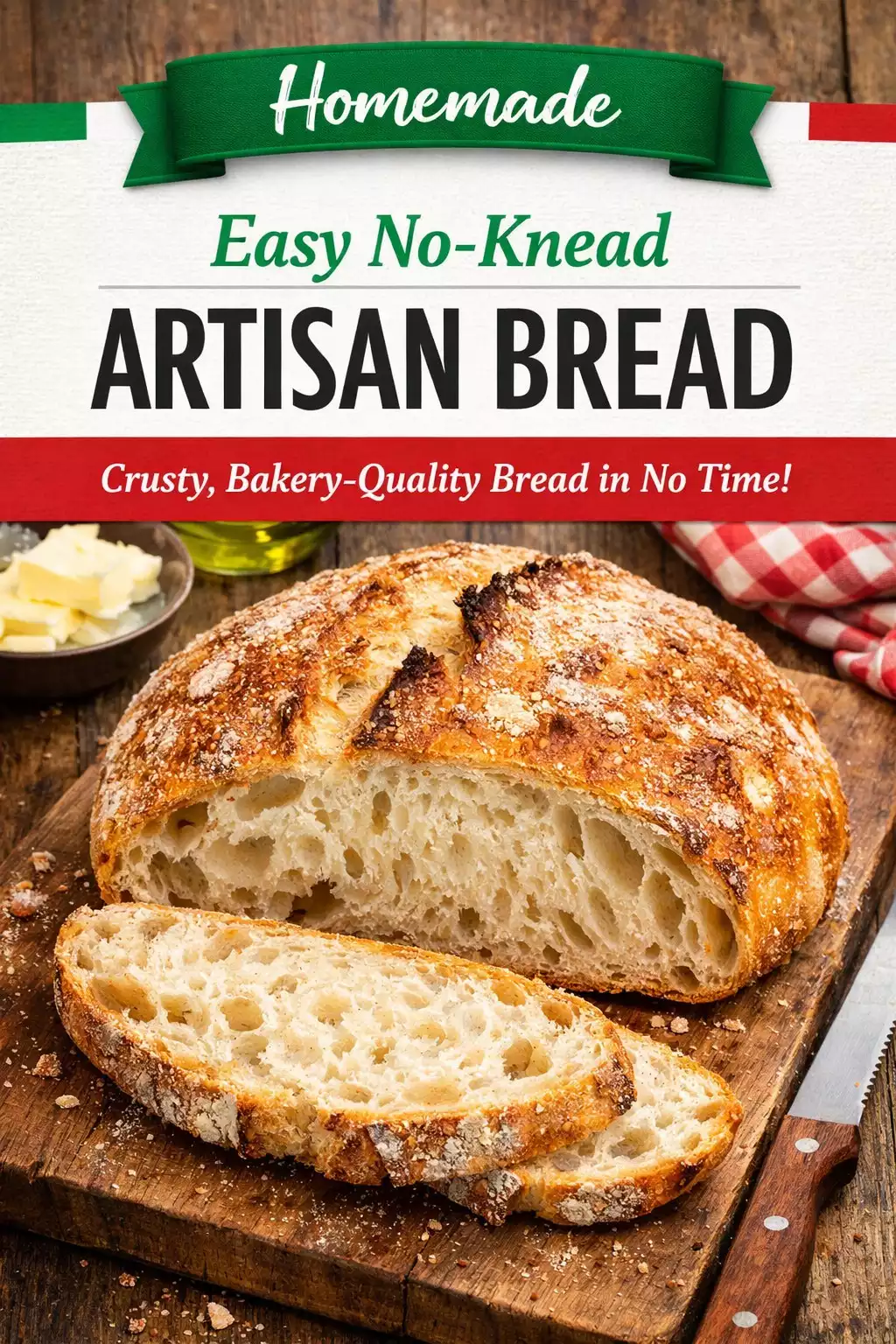
If you can boil water and follow directions, you can make this. Easy No-Knead Artisan Bread — the loaf that convinced a generation of home cooks that professional-quality bread was possible without a stand mixer, a proofing drawer, or any special skill whatsoever. Jim Lahey’s original technique changed home baking forever, and my version refines it into something even more reliable. Crusty exterior, open crumb, deeply complex flavor from a long, cold fermentation. You’ll never buy the artisan bakery loaf again.
The genius of no-knead bread is that time replaces work. A twelve to eighteen-hour ferment develops the gluten structure that kneading would normally build in ten minutes. The result is bread that tastes like it was made by someone who’s been doing this for decades — because in a sense, the yeast has been doing just that, slowly, while you slept.
For the complete bread-baking journey, this connects naturally to Buttermilk Biscuits from Scratch, Honey Butter Drop Biscuits, Homemade Cinnamon Rolls, Sourdough Starter Guide, and Homemade Pizza Dough.
Why This No-Knead Bread Actually Works
- Long fermentation builds flavor: Twelve-plus hours allows enzymatic activity and yeast metabolism to develop organic acids and flavor compounds that fast bread simply can’t achieve.
- Time = gluten development: The hydration of the dough combined with extended rest allows gluten to align and develop without manual kneading.
- Dutch oven = steam trap: Baking in a covered Dutch oven traps the steam released by the dough in the first 20 minutes, producing the crispy, blistered crust of a bakery loaf.
- High hydration: A wet dough (higher water ratio) produces the open, irregular crumb structure associated with artisan bread.
- Preheat the Dutch oven: A cold pot causes the dough to stick and bakes unevenly. A 450°F preheated vessel produces an instant oven spring and perfect bottom crust.
Ingredients
The Dough
- 3 cups (360g) all-purpose flour
- 1¼ tsp kosher salt
- ¼ tsp instant yeast (yes, that’s all)
- 1½ cups (345g) lukewarm water (about 100°F)
Optional Additions
- 1 tsp honey (adds slight sweetness and feeds yeast)
- 1 tbsp olive oil (slightly softer crumb)
- Additions: rosemary, olives, roasted garlic, walnuts (fold in after first rise)
Instructions
Step 1: Mix the Dough (12–18 Hours Ahead)
Combine flour, salt, and yeast in a large bowl and whisk to distribute. Pour in lukewarm water (and optional honey or olive oil) and stir with a wooden spoon or rubber spatula until no dry flour remains. The dough will be sticky, shaggy, and loose — this is correct. Cover the bowl tightly with plastic wrap and leave at room temperature 12–18 hours. The dough is ready when it has more than doubled, looks bubbly, and has a slightly fermented smell.
Step 2: Shape (2–3 Hours Before Baking)
Generously flour a work surface. Scrape the sticky dough out of the bowl — it will be very wet and stretchy. Using floured hands or a bench scraper, fold the dough over itself four times (pull one edge up and over to the center, rotate, repeat). Flip seam-side down. The dough won’t look perfectly round — that’s fine. Place seam-side up on a heavily floured kitchen towel or parchment paper. Dust the top with flour and cover loosely. Let rest 1–2 hours until puffy and not springy when gently poked.
Step 3: Preheat
30 minutes before baking, place a Dutch oven (with lid) in the oven at 450°F. Allow it to fully preheat — this is non-negotiable. The shock of hitting a 450°F vessel is what produces the dramatic initial rise and crust.
Step 4: Bake Covered
Carefully remove the hot Dutch oven. Lower the dough in seam-side up (using parchment as a sling if needed). Score the top with a sharp knife or razor (a single slash is fine). Cover with the lid and bake 30 minutes. The covered environment traps steam and allows maximum oven spring before the crust sets.
Step 5: Bake Uncovered
Remove the lid and continue baking 15–20 minutes until the crust is deep golden-brown to dark amber. The internal temperature should read 200–210°F. Remove and cool on a wire rack at least 1 hour before slicing — the interior continues cooking as it cools and cutting too early produces a gummy crumb.
Pro Tips & Common Mistakes
- Don’t rush the ferment: 8 hours produces an okay loaf. 12–18 hours produces an exceptional one. The longer ferment is where the flavor lives.
- Flour your hands generously: The dough is supposed to be sticky. Don’t add more flour to compensate — use well-floured hands and a bench scraper. Additional flour creates a denser loaf.
- Fully preheat the Dutch oven: A cold or lukewarm Dutch oven does not produce the same result. Budget the full 30 minutes of preheating time.
- Let it cool: Cutting into hot bread collapses the steam-puffed crumb structure and produces a gummy, undercooked-seeming interior. One hour minimum.
- Score confidently: A hesitant score tears the dough surface. One decisive slash with a razor or very sharp knife.
Variations Worth Trying
- Rosemary and Sea Salt: Add 2 tbsp fresh rosemary and 1 tsp flaky sea salt to the dough during the initial mix. Finish the baked loaf with a drizzle of olive oil and more flaky salt.
- Roasted Garlic: Fold 1 head of roasted garlic cloves into the dough during the shaping step. The garlic softens and sweetens into pockets throughout the crumb.
- Whole Wheat: Substitute up to ½ of the all-purpose flour with whole wheat flour. Increase water by 2 tablespoons to compensate for the thirstier whole grain flour.
- Olive and Herb: Fold in ½ cup Kalamata olives and 1 tsp each of rosemary and thyme during shaping. A Mediterranean-inspired loaf that pairs with everything.
- Cheddar and Jalapeño: Fold in 1 cup shredded sharp cheddar and 2 diced jalapeños during shaping. The cheese pockets melt and form golden crispy spots on the crust.
Storage
- Room temperature: Wrap in a kitchen towel or paper bag (not plastic — plastic traps moisture and softens the crust). Best within 2 days at room temperature.
- Freezer: Slice before freezing. Wrap individual slices in plastic and store in a freezer bag up to 2 months. Toast directly from frozen for the closest to fresh result.
- Reviving day-old bread: Run the cut surface under water quickly, then place in a 350°F oven for 8–10 minutes. The crust re-crisps dramatically.
Frequently Asked Questions
Can I use active dry yeast instead of instant?
Yes. Activate it first by combining with the lukewarm water and a pinch of sugar — let stand 5 minutes until foamy before proceeding. The long fermentation time means the difference between instant and active dry yeast is minimal here.
My dough didn’t rise much — what happened?
Usually yeast that was killed by water that was too hot (above 110°F), yeast past its expiration date, or a room that was too cold. Ideal fermentation temperature is 68–75°F. In a cold kitchen, extend the fermentation time or proof in the oven with just the light on.
Can I bake this without a Dutch oven?
Yes, with compromises. Use a heavy oven-safe pot with a tight-fitting lid, or bake on a preheated cast-iron skillet and add steam by placing a pan of boiling water on the oven floor. The crust will be slightly less dramatic but still good.
Why is my crumb gummy?
Almost always cut too soon. The bread needs to cool completely — the starch structure continues setting as the loaf cools. A loaf cut hot will always appear gummy even when it’s fully baked.