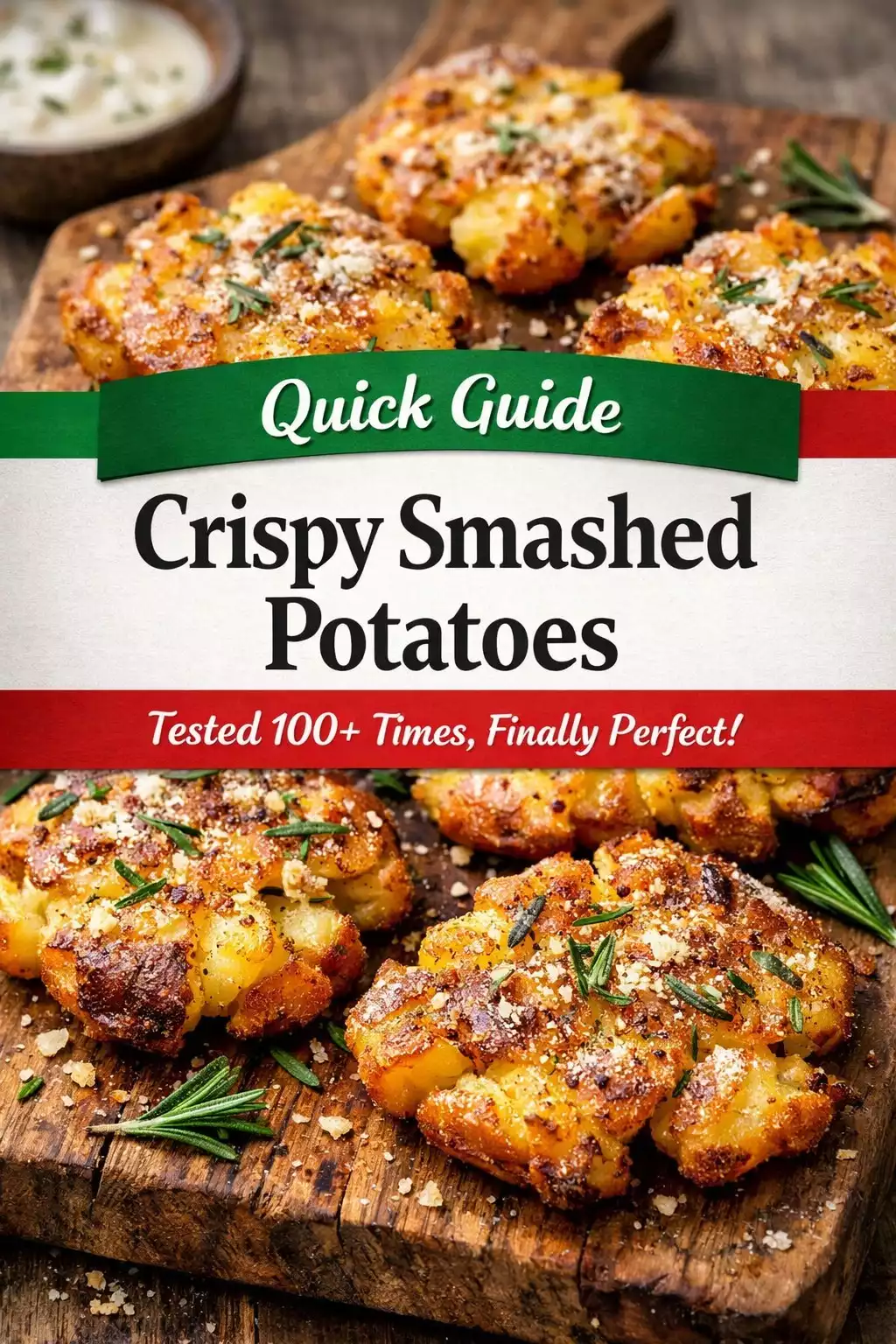
Three generations of this recipe. You’re welcome. Crispy Smashed Potatoes — the technique that produces more crust-to-potato ratio than any other preparation in existence. More than roasted. More than fried. You cook a small potato all the way through, smash it flat into a surface-area-maximizing disc, coat every inch in fat, and roast at high heat until the edges are deeply golden and slightly lacey. The result is a potato preparation that people eat like potato chips and ask about for weeks afterward.
The concept is simple. The technique requires one point of attention: the parboil must make the potato completely soft before smashing. A partially cooked potato resists the smash, splits unevenly, and doesn’t develop the same crispy edges. Fully cooked, completely yielding potato — then smash. It sounds like I’m overstating the importance of cooking the potato. I am not.
The full potato family: Crispy Roasted Potatoes, Au Gratin Potatoes, Perfect Mashed Potatoes, Twice Baked Potatoes, and Loaded Baked Potato Bar.
Why These Smashed Potatoes Are Crispy
- Fully cooked before smashing: The starch needs to be completely gelatinized for the potato to smash flat without cracking into dry pieces. A fork should offer zero resistance.
- Maximum surface area: Smashing creates an irregular, textured disc with peaks, valleys, and ragged edges — all of which crisp at different rates for a varied, complex texture in every bite.
- Generous oil coating: The potato needs to fry in the oven, not bake. A thin oil coating produces pale, dry edges. A generous coating produces golden crust.
- High heat and preheated pan: A hot baking sheet produces an instant sear on the bottom. A cold sheet starts steaming.
- Don’t move them until they release: The crust adheres to the pan until it’s fully formed. Moving them too early tears the crust off the bottom.
Ingredients
Serves 4
- 1½ lbs small Yukon Gold or baby potatoes (about golf-ball size)
- 3 tbsp olive oil (divided)
- 1 tsp kosher salt
- ½ tsp black pepper
- 1 tsp garlic powder
- ½ tsp smoked paprika
- Optional: 2 tbsp Parmesan, finely grated
- Fresh rosemary or thyme for finishing
Instructions
Step 1: Parboil to Fully Tender
Place potatoes in a large pot. Cover with cold, generously salted water. Bring to a boil and cook 15–20 minutes — longer than you think necessary. The potatoes should be completely tender, yielding to a fork with zero resistance. Undercooked potatoes will not smash properly. Drain and let steam-dry for 5 minutes.
Step 2: Preheat the Pan
While potatoes dry, place a large rimmed baking sheet in the oven and preheat to 450°F. Allow 15–20 minutes for the pan to fully heat. This is the step most home cooks skip and then wonder why the bottoms are pale.
Step 3: Smash
Using the bottom of a heavy mug, a glass, or a flat spatula, press down on each potato firmly until it spreads into a disc about ½ inch thick. Apply even pressure. The edges should spread outward and ruffle. If a potato falls apart completely, it was either overcooked (rare) or too small. Press firmly but not aggressively.
Step 4: Oil, Season, and Roast
Carefully remove the hot baking sheet from the oven. Drizzle 2 tablespoons of oil over the pan surface. Place smashed potatoes on the hot, oiled pan. Brush or drizzle remaining oil over each potato — every surface should glisten. Season with salt, pepper, garlic powder, and paprika. Roast at 450°F for 20–25 minutes without touching. Flip and roast another 10–15 minutes until deeply golden on both sides.
Step 5: Finish
Optional: scatter Parmesan over the potatoes in the last 5 minutes for a savory, crispy cheese layer. Serve hot with fresh herbs. These do not hold. They must be eaten immediately.
Pro Tips & Common Mistakes
- Fully cook the potato before smashing: I’ve said this three times for a reason. Undercooked potato = cracked, uneven smash = uneven cooking = some pieces burned, some still soft.
- Preheat the baking sheet: The single most impactful step for bottom crust development. A cold pan produces pale, slightly steamed bottoms regardless of everything else.
- Don’t crowd the pan: Smashed potatoes need air circulation. Touching potatoes trap steam between them and reduce crust development.
- Serve immediately: The crispy edges become chewy as the potatoes cool and internal steam migrates to the surface. These are best eaten within 10 minutes of leaving the oven.
Variations Worth Trying
- Herbed: Combine 3 tbsp softened butter with minced rosemary, thyme, and garlic. Brush over potatoes before the second bake instead of oil. Aromatic and rich.
- Loaded: After smashing, top each potato with cheddar and bacon bits. Roast as directed. Serve with sour cream and chives. Fully loaded smashed potato energy.
- Truffle: Drizzle warm potatoes with truffle oil the moment they come from the oven. Finish with Parmesan and flaky salt. A five-minute elevation that feels luxurious.
- Za’atar: Season with za’atar instead of paprika and garlic powder. Serve with labneh (strained yogurt) and fresh mint. Middle Eastern flavor profile on a simple potato preparation.
Storage
- Best served fresh: Smashed potatoes are definitively a serve-immediately dish. They lose their crispiness as they cool and steam.
- Leftovers: Store in the refrigerator up to 3 days. Reheat at 425°F for 8–10 minutes on a rack — some crispiness returns but not the original quality.
- Air fryer reheat: 375°F for 4–5 minutes is the best re-crisp method for leftovers. Better than oven for small quantities.
Frequently Asked Questions
What size potato works best?
Golf-ball-sized baby Yukons or small fingerlings. Too small and they disintegrate; too large and they need longer cooking and produce a thicker disc that doesn’t crisp as dramatically. The 1.5–2 inch diameter range is the sweet spot.
Can I smash them the day before?
Yes. Parboil, smash, and refrigerate on a parchment-lined tray up to 24 hours. Roast from cold — add 3–4 minutes to the initial roast time. Cold, dry smashed potatoes actually develop a slightly better crust because the surface has dried further in the refrigerator.
How do I stop them from sticking?
A well-oiled, preheated baking sheet is the answer. If they’re sticking when you try to flip, wait another 3–4 minutes — the crust will release cleanly when it’s fully formed. Forcing them before they release destroys the bottom crust.