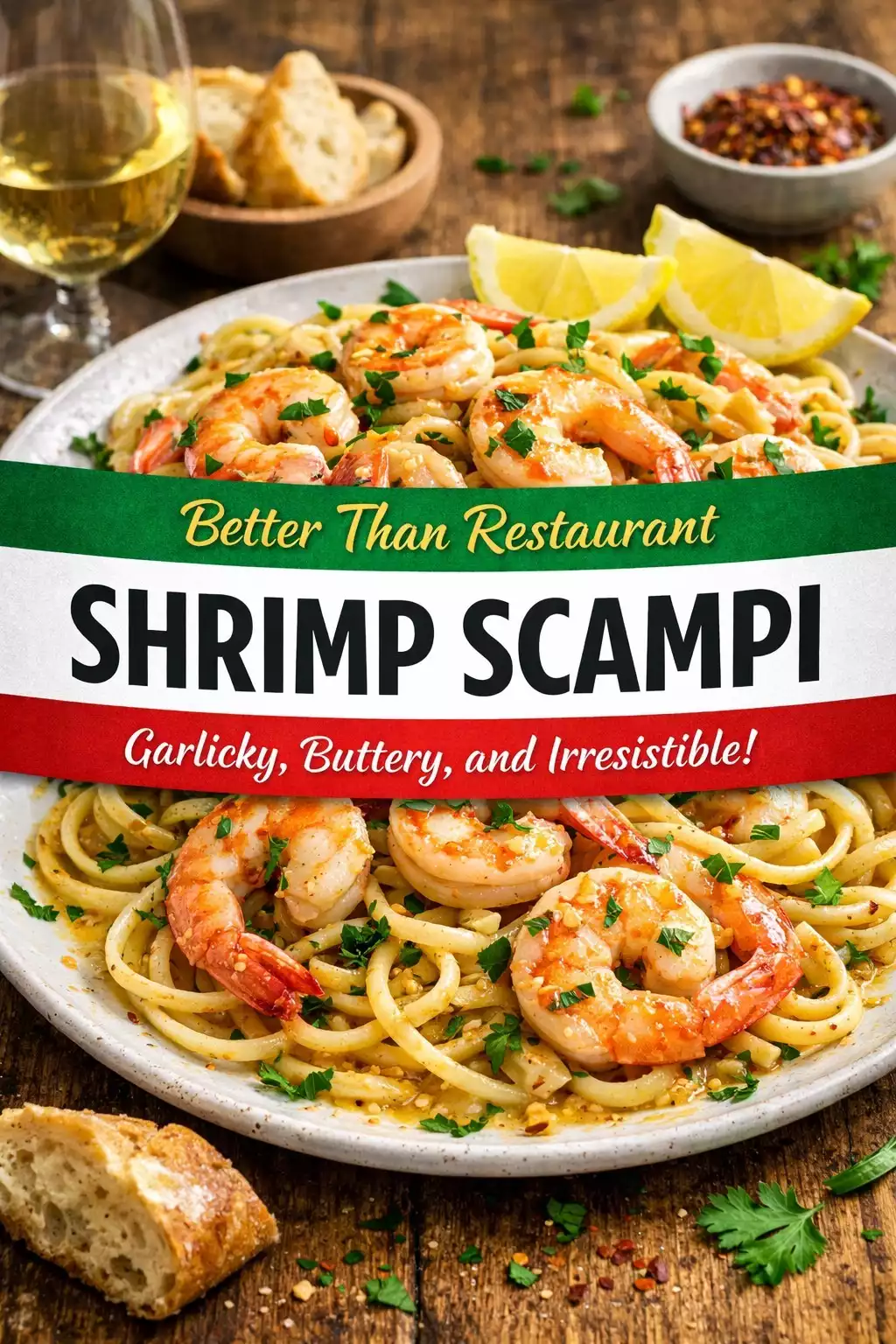
I‘ve made this a thousand times. It gets better every time. Shrimp Scampi — the Italian-American restaurant dish that built reputations and that I watched home cooks spend years trying to replicate without quite getting there. The gap is always the same two things: the shrimp are overcooked (10 seconds past the curl), and the sauce is under-emulsified (butter and wine floating separately instead of creating one cohesive, glossy thing). Fix both and you have the dish people keep ordering at the restaurant, made at home in 20 minutes.
Shrimp scampi is, technically, butter-wine-garlic sauce. That’s it. The shrimp are in it, but the sauce is the whole point. A loose, buttery, garlicky white wine sauce that clings to both the shrimp and to whatever pasta or bread you serve it with. Watching it come together in the pan — the garlic turning golden, the white wine reducing, the butter emulsifying into a glossy sauce — is one of the most satisfying things to cook in a home kitchen.
For weeknight Italian-American cooking, pair with 30-Minute Chicken Dinners, 5-Ingredient Dinner Recipes, One-Pan Dinner Ideas, Easy Chicken Quesadillas, and Oven Baked Pork Chops.
Why This Shrimp Scampi Actually Works
- Don’t overcook the shrimp: Shrimp are done at 120–135°F internally — the moment the curl closes into a “C” and the flesh turns opaque and pink, they’re done. Beyond that, they turn to rubber.
- Cold butter to emulsify: Adding cold butter in pieces off heat (or at very low heat) to the wine sauce creates a proper emulsion — a glossy, cohesive sauce rather than a separated pool of butter and wine.
- Reserve pasta water: Starchy pasta cooking water is the secret emulsifier that brings pasta and sauce together in the pan. Don’t skip it.
- Toast the garlic, don’t burn it: Golden garlic is sweet and nutty; dark brown garlic is bitter. The line between them is about 30 seconds at medium heat.
- Lemon at the end, not the beginning: Lemon juice added too early loses its brightness. Added just before serving, it provides lift and freshness that balances the richness of the butter.
Ingredients
Serves 4
- 1½ lbs large shrimp (16–20 count), peeled and deveined
- 12 oz linguine or spaghetti
- 6 tbsp unsalted butter (divided)
- 4 tbsp olive oil
- 6–8 garlic cloves, thinly sliced
- ½ cup dry white wine (Pinot Grigio, Sauvignon Blanc)
- Juice of 1 lemon
- 1 tsp red pepper flakes
- ½ cup fresh parsley, chopped
- Kosher salt and black pepper
- ¼ cup reserved pasta water
Instructions
Step 1: Cook the Pasta
Cook linguine in heavily salted water to al dente (1 minute less than package directions). Before draining, reserve ½ cup of pasta cooking water. Drain pasta but don’t rinse.
Step 2: Season and Sear the Shrimp
Pat shrimp dry. Season with salt, pepper, and a pinch of red pepper flakes. Heat 2 tbsp olive oil in a large skillet over high heat. Sear shrimp in a single layer 1 minute per side until pink and just curled. Remove immediately — they will finish cooking in the sauce. Do not overcook here.
Step 3: Build the Sauce
Reduce heat to medium. In the same pan, add remaining olive oil and 2 tbsp butter. Add sliced garlic and red pepper flakes. Cook, stirring, 60–90 seconds until garlic is golden and fragrant. Do not let it brown further. Add white wine, increase heat, and simmer 2–3 minutes until reduced by half, scraping up the shrimp fond.
Step 4: Emulsify and Combine
Reduce heat to low. Add remaining 4 tbsp cold butter in pieces, swirling the pan as each piece melts. This technique (monte au beurre) creates the emulsion. Add pasta to the pan and toss with tongs, adding reserved pasta water a splash at a time until the sauce coats every strand. Return shrimp to the pan. Add lemon juice and half the parsley. Toss everything together 60 seconds over low heat.
Step 5: Serve
Plate immediately. Garnish with remaining parsley, a drizzle of good olive oil, and extra lemon wedges. Crusty bread for the sauce at the bottom of the bowl is not optional.
Pro Tips & Common Mistakes
- Don’t overcook the shrimp: Remove them from the pan the second they curl and turn pink. They’ll finish cooking when returned to the sauce. Overcooked shrimp are tough, rubbery, and no amount of sauce saves them.
- Use dry wine, not cooking wine: “Cooking wine” is low-quality wine with added salt. Use any dry white wine you’d drink — it costs an extra dollar and produces dramatically better results.
- Pasta water is the key to sauce cohesion: Starch from the pasta water helps emulsify the sauce and creates that coating quality. Without it, the sauce and pasta remain separate.
- Cold butter for emulsion: Hot butter added all at once breaks into the sauce. Cold butter added piece by piece at low heat emulsifies into it. This is the difference between a glossy sauce and a greasy one.
Variations Worth Trying
- No Wine: Substitute chicken broth + a squeeze of lemon. Not identical but produces a similar deglazed, slightly acidic sauce.
- Cherry Tomato Scampi: Add 1 cup halved cherry tomatoes with the garlic. Cook until they burst and release juice into the sauce. A more complex, slightly sweet variation.
- Breadcrumbs: Toast ¼ cup panko in 2 tbsp olive oil until golden. Scatter over the finished scampi for texture contrast. An Italian-American trattoria touch.
- With Crusty Bread Instead of Pasta: Make the shrimp and sauce, skip the pasta, and serve in a shallow bowl with a thick slice of toasted sourdough. The bread absorbs the sauce and becomes the base.
Storage
- Best served immediately: Shrimp scampi doesn’t hold well — the shrimp continue cooking in residual heat and the pasta absorbs the sauce. Make fresh for best results.
- Leftovers: Reheat gently in a skillet over low heat with a splash of white wine or water. Don’t microwave — the shrimp become rubbery. Leftovers are acceptable for 2 days but don’t represent the dish at its best.
Frequently Asked Questions
What size shrimp works best?
16–20 count (large shrimp) for the best visual impact and satisfying bite. Smaller shrimp cook too fast and lose their texture contrast. Jumbo shrimp (under 15 count) are impressive but require slightly longer cooking — watch the curl.
Can I use frozen shrimp?
Yes. Thaw overnight in the refrigerator or under cold running water for 5 minutes. Pat completely dry before searing — frozen thawed shrimp release more water than fresh, and excess moisture prevents proper searing.
What wine should I use?
Dry, crisp white wine: Pinot Grigio, Sauvignon Blanc, or unoaked Chardonnay. Avoid heavily oaked or sweet wines — they change the flavor profile of the sauce dramatically. The rule: if you’d drink it, it works. If you wouldn’t drink it, don’t cook with it.
Why is my sauce broken (separated)?
Usually from adding butter to a pan that’s too hot or adding all the butter at once. Remove from heat, add butter piece by piece while swirling. If already broken, add a splash of pasta water and whisk vigorously — the starch in the pasta water can re-emulsify a slightly broken sauce.