This is the recipe that ends arguments at Sunday dinner. Not the ones between me and my wife about whose family makes better sauce (hers, technically, but don’t tell her I admitted that), but the argument about whether homemade hummus is worth the trouble. It is. Obviously it is. And after one batch of this Classic Hummus, the question stops coming up.
I’ve eaten hummus in Israeli kitchens, Lebanese homes, Palestinian restaurants, and çeşme shops in Tel Aviv that serve nothing else. The version I’m giving you here respects all of those sources. I’m not claiming cultural ownership over this dish — I’m a retired Italian-American sous chef and this isn’t my culinary heritage. What I am claiming is 30 years of professional cooking experience that tells me when something is done correctly versus when it’s done adequately.
This homemade hummus recipe is done correctly. That means: properly cooked or sourced chickpeas, good tahini (this matters enormously), fresh lemon juice, raw garlic used judiciously, and an ice water technique that produces a creamier texture than any food processor alone can achieve. The process takes 20 minutes. The result tastes like the hummus at the places where hummus is taken seriously.
Why This Hummus Recipe Works
- Good tahini is non-negotiable — tahini is the second most important ingredient in hummus after chickpeas. Bitter, old, or low-quality tahini makes bitter hummus. Use a high-quality, well-stirred sesame paste (Soom, Beirut, or Seed + Mill brands are excellent).
- Ice water creates creaminess — adding ice water during processing creates an aeration effect that produces a dramatically smoother, fluffier texture than hummus made without it. This is the professional technique.
- Blend the tahini and lemon before adding chickpeas — processing tahini and lemon juice first creates a light, aerated base before chickpeas are added. This sequence produces a more even, creamy result than adding everything at once.
- Peel the chickpeas (optional but significant) — removing the thin outer skin from each chickpea before blending produces an ultra-smooth texture. Time-consuming but the difference is noticeable.
This is a cornerstone of the sauces, dips & condiments collection alongside tzatziki sauce, restaurant-style guacamole, and salsa verde.
Ingredients for Classic Hummus
Serves 8-10 | Prep: 15 min | No cook (using canned chickpeas)
The Hummus
- 2 cans (15 oz each) chickpeas, drained (reserve the liquid)
- Or 1.5 cups dried chickpeas, soaked overnight and cooked until very soft
- ½ cup good-quality tahini, well-stirred
- 3-4 tablespoons fresh lemon juice (start with 3, adjust)
- 2 cloves garlic, minced or pressed (raw garlic is pungent — start with 1 and taste)
- 2-3 tablespoons ice water
- ½ teaspoon cumin
- 1 teaspoon kosher salt (adjust to taste)
- 2 tablespoons extra virgin olive oil
Serving and Toppings
- Paprika or sumac for dusting
- Good quality olive oil for drizzling
- Fresh parsley, finely chopped
- Whole chickpeas reserved from can
- Za’atar, toasted pine nuts, or red pepper flakes (optional)
- Warm pita bread, sliced vegetables, crackers for serving
How to Make Classic Hummus
Step 1: Warm and Prep the Chickpeas
If using canned chickpeas, heat them briefly in their liquid or in water until warm — warm chickpeas blend more smoothly than cold ones. Reserve a few whole chickpeas for garnish. Drain and pat dry the rest. If you want the ultra-smooth texture: pinch the skin off each chickpea (the thin outer skin pops off easily). This takes 5-10 extra minutes and produces noticeably silkier hummus.
Step 2: Process Tahini and Lemon First
Add the tahini to the food processor first. Process for 1-2 minutes until it lightens in color and becomes fluffy and aerated. Add the lemon juice and garlic. Process for another 1-2 minutes until fully combined. Scrape down the sides. This preliminary step creates an aerated tahini base that makes the final hummus significantly creamier.
Step 3: Add Chickpeas
Add the warm chickpeas, cumin, and salt to the food processor. Process for 1-2 minutes, stopping to scrape down the sides as needed.
Step 4: Add Ice Water
With the processor running, stream in the ice water through the feed tube — 1 tablespoon at a time. Process for 3-4 minutes total, until the hummus is completely smooth and light. This is where the creaminess and texture develop. Don’t rush this step. The extended processing and ice water together produce the silky, restaurant-quality texture.
Step 5: Taste and Adjust
Taste the hummus. Needs more lemon? Add it. Needs more salt? Add it. Too thick? Add another tablespoon of ice water. Too thin? Process for another minute. Needs more tahini richness? Add a tablespoon. The garlic flavor should be present but not dominant — raw garlic intensifies after 30 minutes, so if it tastes right now, pull back slightly.
Step 6: Serve
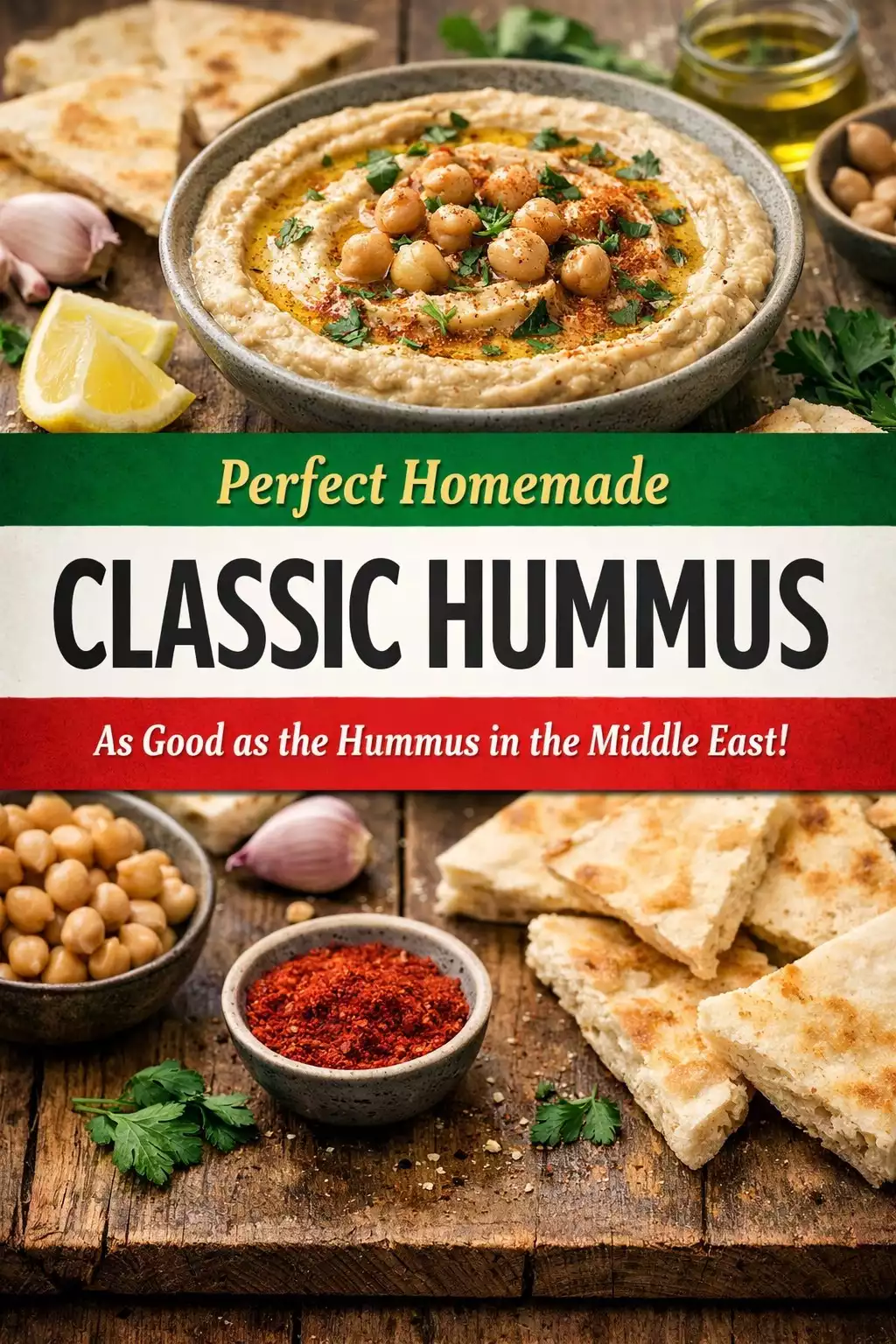
Spread the hummus on a plate or shallow bowl using the back of a spoon in a circular motion — push from the center outward to create a well in the middle. Drizzle olive oil generously into the well. Dust with paprika or sumac. Scatter whole chickpeas, fresh parsley, and any additional toppings. Serve with warm pita bread and sliced vegetables. The hummus should be at room temperature — cold hummus tastes muted.
Pro Tips for Better Hummus
- Quality tahini changes everything. Cheap or old tahini is bitter and can ruin the whole batch. Buy a high-quality brand and stir it thoroughly before measuring — the oil separates and needs to be fully incorporated.
- Process longer than you think. Most home cooks stop processing too early. The silkiest hummus requires 4-5 minutes of total processing time. Keep going past the point where it looks done.
- Ice water is the professional secret. The cold temperature creates an emulsification effect during blending that produces a lighter, creamier texture. Warm or room-temperature water does not have the same effect.
- Process tahini first. Starting with tahini alone (before adding the chickpeas) aerates it into a light, whipped base. Adding chickpeas to already-whipped tahini produces a more uniform final texture.
- Warm chickpeas blend better. Room temperature or slightly warm chickpeas break down more completely in the processor. Cold canned chickpeas from the refrigerator don’t blend as smoothly.
Hummus Variations
- Roasted Garlic Hummus: Roast an entire head of garlic (slice the top off, drizzle with oil, wrap in foil, 40 minutes at 400°F). Squeeze the roasted cloves in place of raw garlic. Much sweeter, more mellow, no harsh garlic edge.
- Roasted Red Pepper Hummus: Add a jarred roasted red pepper (blotted dry) to the processor with the chickpeas. Creates a slightly sweet, smoky variation with beautiful color.
- Spicy Harissa Hummus: Add 1-2 tablespoons of harissa paste for heat and complex spice. Finish with a drizzle of harissa over the top instead of paprika.
- Black Bean Hummus: Substitute black beans for chickpeas. Not traditional but excellent — a slightly earthier, darker variation that works well with Mexican-flavored spreads.
- Hummus Plate: Serve alongside tzatziki sauce and restaurant-style guacamole for a full Mediterranean-inspired dipping spread that pairs with any appetizer board.
Storage Notes
- Refrigerator: 5-7 days in an airtight container with a thin layer of olive oil on the surface (prevents oxidation and keeps it moist).
- Freezer: Up to 3 months. Freeze without toppings. Thaw overnight in the refrigerator. Stir vigorously after thawing — it may look separated initially but comes back together. Drizzle with fresh olive oil before serving.
- Room temperature serving: Always bring to room temperature before serving. Cold hummus from the refrigerator tastes muted and the texture is stiffer than intended.
Frequently Asked Questions
What’s the best tahini brand for hummus?
Soom, Beirut, and Seed + Mill are the best widely available premium brands. Joyva is the most widely distributed mainstream option and is decent. Avoid any tahini that smells bitter or rancid — sesame oil goes rancid and it ruins everything it touches. Tahini keeps refrigerated for months after opening.
How do I make hummus smoother?
Three techniques, in order of impact: 1) Peel the chickpeas (remove the outer skin from each), 2) Process longer — minimum 4 minutes total, 3) Add more ice water while processing. The combination of all three produces restaurant-quality smoothness.
Can I make hummus without tahini?
You can make a chickpea dip without tahini. It won’t be hummus in the classical sense — tahini is one of the defining flavor components. Substitutes like sunflower seed butter or almond butter produce a different flavor profile that some people enjoy, but they’re not traditional.
Is hummus healthy?
Genuinely yes. Chickpeas provide protein and fiber; tahini provides healthy fats and minerals; olive oil provides monounsaturated fats. A 2-tablespoon serving is around 70-80 calories with 2-3g protein and 2g fiber. It’s one of the most nutritionally complete snack dips available.