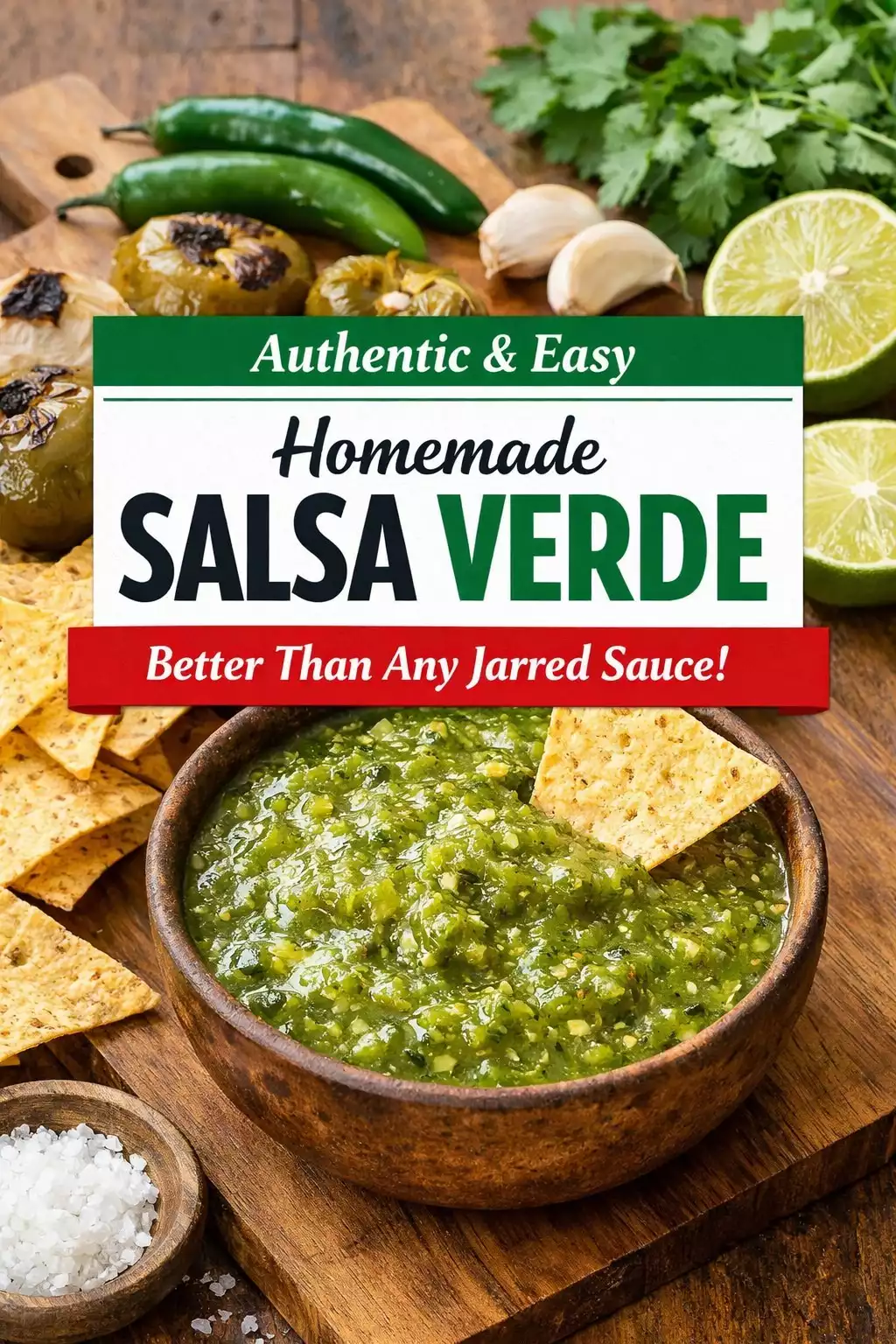
This is the recipe my sous chefs used to steal from my station. I’d come back from prep and find the container a third lighter than I left it, and all the evidence pointed directly at the same two people. I was never angrier and more flattered simultaneously. If the professional cooks in your kitchen are eating your sauce on their break, you’ve made something worth protecting. Easy Salsa Verde was that sauce.
Good food is good food, no matter where it comes from. I’m Italian-American and I learned salsa verde — both the Italian parsley-based version and the Mexican tomatillo version — from Mexican and Central American cooks I worked alongside for decades in professional kitchens. Both versions are in my regular rotation. What I’m giving you here is the Mexican tomatillo version — roasted tomatillos, a handful of aromatics, and a blender. It takes 20 minutes and produces a sauce with depth, brightness, and heat that no jarred version can replicate.
This best salsa verde can be made blended smooth or left chunky (salsa verde cruda). It works as a taco sauce, an enchilada sauce, a chip dip, a grilled meat companion, or a straight ingredient in a dozen other dishes. A jar of this in your refrigerator changes what’s possible for dinner on a weeknight.
Why This Salsa Verde Works
- Roasting the tomatillos first — raw tomatillo salsa is bright and tangy. Roasted tomatillo salsa is deeper, slightly smoky, and more complex. Broiling caramelizes the sugars and concentrates the flavor dramatically.
- Charred chiles add smokiness — broiling the serranos or jalapeños alongside the tomatillos creates char that adds a characteristic smoke without a smoker.
- Garlic and onion roasted in the same batch — raw garlic in salsa is harsh. Roasted garlic in salsa is mellow and sweet. A 10-minute broil transforms both.
- Lime juice added after blending — lime juice added to the hot salsa off the heat preserves its fresh, bright flavor. Lime juice cooked loses its character.
Part of the complete sauces, dips & condiments range alongside restaurant-style guacamole and homemade salsa.
Ingredients for Easy Salsa Verde
Makes about 2 cups | Prep: 10 min | Roast: 10 min | Total: 20 min
Roasted Base
- 1 lb fresh tomatillos, husks removed, halved
- 2-3 serranos or jalapeños (serranos are hotter; use what you want for your heat level)
- 4 cloves garlic, unpeeled
- 1 small white onion, quartered
- 1 tablespoon olive oil
Finishing
- 1 cup fresh cilantro, loosely packed (stems included — they have more flavor)
- Juice of 1-2 limes (to taste)
- 1 teaspoon kosher salt (adjust)
- ½ teaspoon cumin
- 2-3 tablespoons water (to adjust consistency)
How to Make Salsa Verde
Step 1: Broil the Vegetables
Preheat your broiler to high. On a foil-lined baking sheet, arrange the halved tomatillos cut-side up, the whole chiles, unpeeled garlic cloves, and onion quarters. Drizzle everything lightly with olive oil. Broil 4-6 inches from the element for 8-12 minutes until the tomatillos are charred and blistered on top and the chiles have dark spots. The garlic should be soft inside its skin. Flip the tomatillos and chiles halfway through if desired for more even charring.
Step 2: Cool Slightly, Prep the Chiles and Garlic
Remove from the broiler. Let cool for 5 minutes — you’re handling hot vegetables. Remove the stems from the chiles. If you want less heat, slice the chiles open and scrape out some seeds. Squeeze the roasted garlic out of its skins — it will be soft and sweet now, not harsh.
Step 3: Blend
Add all the roasted vegetables (including any juices from the pan) to a blender. Add the cilantro, lime juice, salt, and cumin. Blend to your preferred consistency — pulse 3-4 times for chunky salsa verde, blend continuously for 30-60 seconds for smooth. Add water if needed to adjust consistency. Taste and adjust: more lime if it needs brightness, more salt if it’s flat, more cilantro if it needs freshness.
Step 4: Rest Before Serving
Pour into a container and let rest for at least 15 minutes before serving. The flavors meld as the salsa sits — freshly blended salsa is good; 15-minutes-rested salsa is better. Serve at room temperature for the fullest flavor.
Pro Tips for Better Salsa Verde
- Don’t skip the broil. You can boil tomatillos (simmer in water for 10 minutes) for a quicker version, but broiling builds a depth and slight smokiness that makes this salsa significantly better. The 10 extra minutes are worth it.
- Adjust heat by seed management. Serrano seeds dramatically increase heat. Remove seeds and membranes for a milder salsa. Keep them for full heat. Test a tiny piece of raw chile before deciding — heat levels vary significantly between individual peppers.
- Use cilantro stems. The stems are more flavorful than the leaves. Use both — trim only the very end, not the full stems.
- Lime juice at the end. Add lime juice to the blended, slightly cooled salsa — not while the vegetables are still hot. Heat destroys the fresh, bright citrus flavor.
- Make extra and freeze. Salsa verde freezes beautifully for 3 months. Make a double batch and freeze in 1-cup portions for instant sauce availability.
Salsa Verde Variations
- Salsa Verde Cruda: Skip the roasting. Blend raw tomatillos, raw chile, raw onion, raw garlic, and cilantro with lime and salt. Brighter, more acidic, completely different flavor profile. Good for fish tacos.
- Avocado Salsa Verde: Add one ripe avocado to the blender. Creates a creamier version that’s halfway between guacamole and salsa verde. Excellent with chips. See restaurant-style guacamole for the comparison.
- Salsa Verde Chicken: Brown chicken thighs, cover in this salsa verde, braise in the oven at 325°F for 45 minutes. The chicken shreds and absorbs the salsa. Use for tacos, burritos, or rice bowls.
- Enchilada Sauce: Thin with ½ cup chicken broth and use directly as green enchilada sauce. Significantly better than any canned version.
- Queso Companion: Serve alongside queso dip and restaurant-style guacamole for a complete Mexican dipping trifecta.
Storage Notes
- Refrigerator: 7-10 days in a sealed container. The flavor deepens after a day or two.
- Freezer: 3 months in portioned freezer bags (freeze flat). Thaw overnight in the refrigerator. Stir after thawing — some separation is normal and re-emulsifies with stirring.
Frequently Asked Questions
What are tomatillos?
Tomatillos are small, green fruits related to tomatoes — though they’re actually closer to gooseberries botanically. They’re covered in a papery husk that you remove before cooking. Their flavor is bright, tangy, and slightly herbal. They’re the defining ingredient of Mexican green salsa and can’t be substituted with green tomatoes (different flavor) or any other ingredient.
Can I use canned tomatillos?
Yes. Drain and use in place of fresh. Skip the broiling step and blend directly. The flavor won’t be as deep as roasted fresh tomatillos, but it’s still significantly better than jarred salsa verde and works well for a quick weeknight sauce.
How spicy is this?
Medium-hot with 2 serranos and seeds intact. For mild: remove all seeds, use 1 jalapeño. For hot: keep all seeds, use 3 serranos. Serrano peppers are significantly hotter than jalapeños. When in doubt, start with 1 pepper with seeds removed and add more heat after tasting the blended salsa.
What do I serve salsa verde with?
Tacos, burritos, enchiladas, quesadillas, chips, grilled chicken, grilled fish, roasted pork, scrambled eggs, and as a dipping sauce for virtually anything from the Mexican food tradition. It’s one of the most versatile sauces in home cooking.