I‘ve made this a thousand times. It gets better every time. Rack of Lamb with Herb Crust is one of those show-stopping centerpieces that looks like it came from a high-end restaurant kitchen but is genuinely achievable at home — as long as you respect the meat, respect the heat, and don’t overthink the crust. I’ve served this at family holidays, at dinner parties, and on random Tuesday nights when I felt like doing something right.
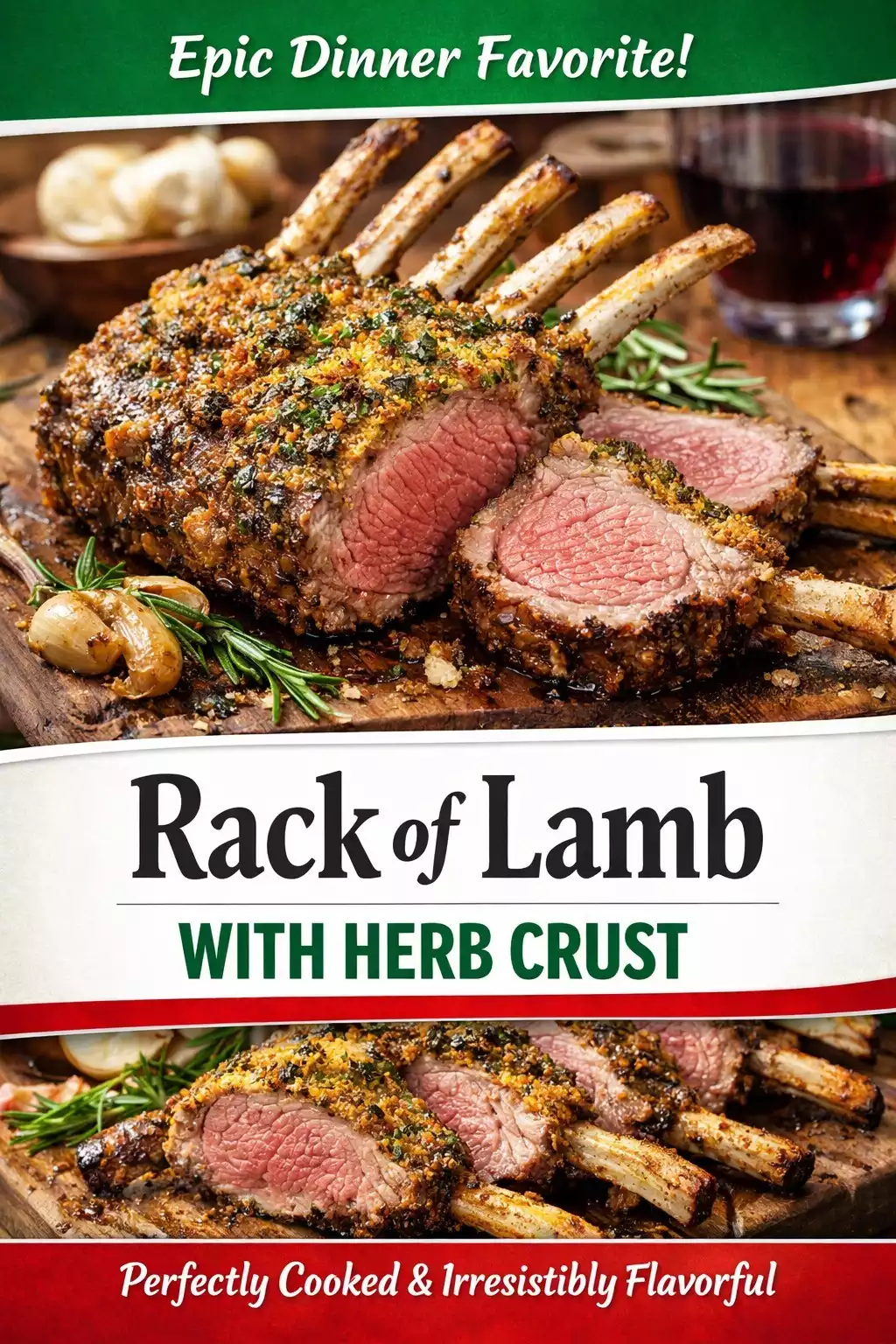
The herb crust is the signature move: a paste of fresh herbs, garlic, breadcrumbs, and mustard that clings to the meat and toasts into something golden and aromatic during the final minutes of roasting. Underneath it, the lamb develops a proper sear — caramelized and dark on the outside, rosy pink at the center. This is precision cooking, but it’s not complicated precision. It’s the kind you build with confidence, not anxiety.
A full rack of lamb is generally 7–8 ribs, enough to feed two to three people as a main course. It’s naturally lean but has enough intramuscular fat to stay juicy at medium-rare. The French trim (frenching the bones) is presentation — ask your butcher to do it if you haven’t before. The technique does the rest.
Why This Rack of Lamb with Herb Crust Works
- Mustard as the adhesive: Dijon mustard creates a sticky layer that holds the herb crust perfectly during roasting. Without it, the crust slides off every time.
- Sear then roast method: Starting with a hot pan sear locks in juices and builds crust, then finishing in the oven brings the center to the perfect temperature without burning the exterior.
- Room temperature lamb: Pulling lamb from the fridge 30 minutes before cooking ensures even heat penetration. Cold lamb from the refrigerator cooks unevenly every time.
- Resting after cooking: A mandatory 10-minute rest redistributes the juices. Cut into rested lamb and it stays rosy. Cut too early and it bleeds dry onto the board.
Ingredients
For the Lamb
- 1 frenched rack of lamb (7–8 ribs, approximately 1.5 lbs)
- 2 tbsp olive oil
- 1 tsp kosher salt
- ½ tsp black pepper
- 2 tbsp Dijon mustard
For the Herb Crust
- ¾ cup fresh breadcrumbs (from day-old bread)
- 3 cloves garlic, minced
- 2 tbsp fresh rosemary, finely chopped
- 2 tbsp fresh flat-leaf parsley, finely chopped
- 1 tbsp fresh thyme leaves
- 2 tbsp olive oil
- Zest of ½ lemon
- ¼ tsp salt
Instructions
Step 1: Prep the Lamb
Remove the rack of lamb from the refrigerator 30–40 minutes before cooking. Pat dry with paper towels — every surface. Season all sides generously with salt and pepper. Preheat oven to 400°F. While lamb comes to temperature, mix the herb crust: combine breadcrumbs, garlic, rosemary, parsley, thyme, olive oil, and lemon zest. Mix until the breadcrumbs are moistened and fragrant. Set aside.
Step 2: Sear the Rack
Heat an oven-safe skillet (cast iron preferred) over high heat. Add olive oil. When oil is shimmering, place the rack fat-side down in the pan. Sear without moving for 3–4 minutes until deeply golden. Flip and sear the meat side for 1–2 minutes. Sear the ends briefly as well. The entire surface should have color. Remove from heat but leave in the skillet.
Step 3: Apply the Crust
Brush the fat-side and meat-side of the rack with Dijon mustard — a thin, even coat. Press the herb crust firmly onto the mustard-coated surfaces, patting it in so it adheres. It should form a ¼-inch layer over the top of the rack. The mustard is the glue — coat generously and press the crumbs in firmly. Loose crust falls in the oven.
Step 4: Roast to Temperature
Place the skillet (or transfer the rack to a roasting pan, crust side up) into the preheated 400°F oven. Roast for 15–20 minutes for medium-rare (internal temp 125–130°F). Use an instant-read thermometer — not guessing. The crust should be golden and fragrant. Pull it from the oven when it’s 5 degrees below target — carryover cooking will bring it to temperature during the rest.
Step 5: Rest and Carve
Transfer rack to a cutting board and tent loosely with foil. Rest for 10 minutes minimum — no exceptions. Then carve between ribs into individual chops. Each chop should show a rosy pink center ringed by a thin layer of fat and a golden herb crust. Serve immediately with the pan drippings spooned over the top.
Tips & Common Mistakes
- Buy frenched racks: Ask your butcher to french the rack if it isn’t already. It’s purely aesthetic but it matters for presentation at the table.
- Use a thermometer: Guessing on rack of lamb is how you end up with overcooked, gray meat. A $15 instant-read thermometer eliminates all the guesswork.
- Fresh herbs only: Dried herbs in the crust turn bitter and dusty when roasted. Use fresh rosemary, fresh parsley, fresh thyme. The difference is enormous.
- Don’t crowd the pan: If cooking two racks for a larger group, use two separate skillets or pans. Crowding causes steaming instead of searing.
- Guard the bones: Wrap the exposed rib bones in foil before roasting to prevent them from burning and turning dark. Unwrap before serving for presentation.
Variations
- Pistachio crust: Replace half the breadcrumbs with finely chopped pistachios. Adds a slight sweetness and textural crunch that pairs beautifully with lamb.
- Moroccan spice crust: Replace fresh herbs with a mix of cumin, coriander, cinnamon, and paprika. Serve with yogurt sauce and couscous.
- Garlic-anchovy version: Add 2 finely minced anchovies to the herb mixture. They dissolve during roasting but add incredible savory depth without any fishiness.
- Reverse sear method: Start at 250°F until internal temp reaches 115°F, then apply crust and blast at 475°F for 8–10 minutes. More even cooking throughout.
This rack of lamb pairs naturally with the broader lamb family: slow roasted leg of lamb, garlic herb lamb chops, Greek lamb gyro, Irish lamb stew, and lamb kofta. Each one builds on core lamb technique in a different direction.
Storage & Reheating
- Refrigerator: Wrap leftover rack tightly in foil or store in an airtight container. Keeps for up to 3 days.
- Reheating: Reheat in a 300°F oven for 10–12 minutes, covered with foil. This preserves the moisture better than a microwave, which turns the lamb rubbery.
- Leftover use: Slice cold leftover chops thin and serve over arugula with lemon and olive oil for an exceptional next-day salad.
- Freezing: Not recommended for rack of lamb — the herb crust doesn’t survive freezing and thawing. Better to cook what you need and serve fresh.
Frequently Asked Questions
What temperature is medium-rare for lamb?
125–130°F internal temperature. Lamb is best served medium-rare to medium — pink, juicy, and tender. At 145°F it starts to dry out. Above 155°F you’ve overcooked it and no sauce will save it.
Can I prepare this ahead of time?
Yes — sear the rack and apply the herb crust up to 4 hours ahead. Refrigerate uncovered so the crust sets. Remove from the fridge 30 minutes before roasting. Don’t apply the crust days ahead as the breadcrumbs will absorb moisture and become soggy.
What sides go with rack of lamb?
Roasted garlic mashed potatoes, white bean puree, or a simple arugula salad. The lamb is the star — sides should be supporting, not competing. Avoid anything too acidic or sweet that will overpower the herb crust.
How many ribs per person?
Two to three chops per person as a main course. A full 8-rib rack serves two to three people comfortably. If feeding four, cook two racks.