Don’t rush this. Good food doesn’t have a timer. And Japanese Sloppy Joes — Katsu Sando — might be the best argument for that philosophy. This is a dish that rewards every extra minute of care you give it: properly tenderized pork, a panko crust that actually shatters, a sauce that balances sweet and savory with precision. Skip any one of those steps and it’s just a sandwich. Do all of them right, and it’s something worth calling your friends over for.
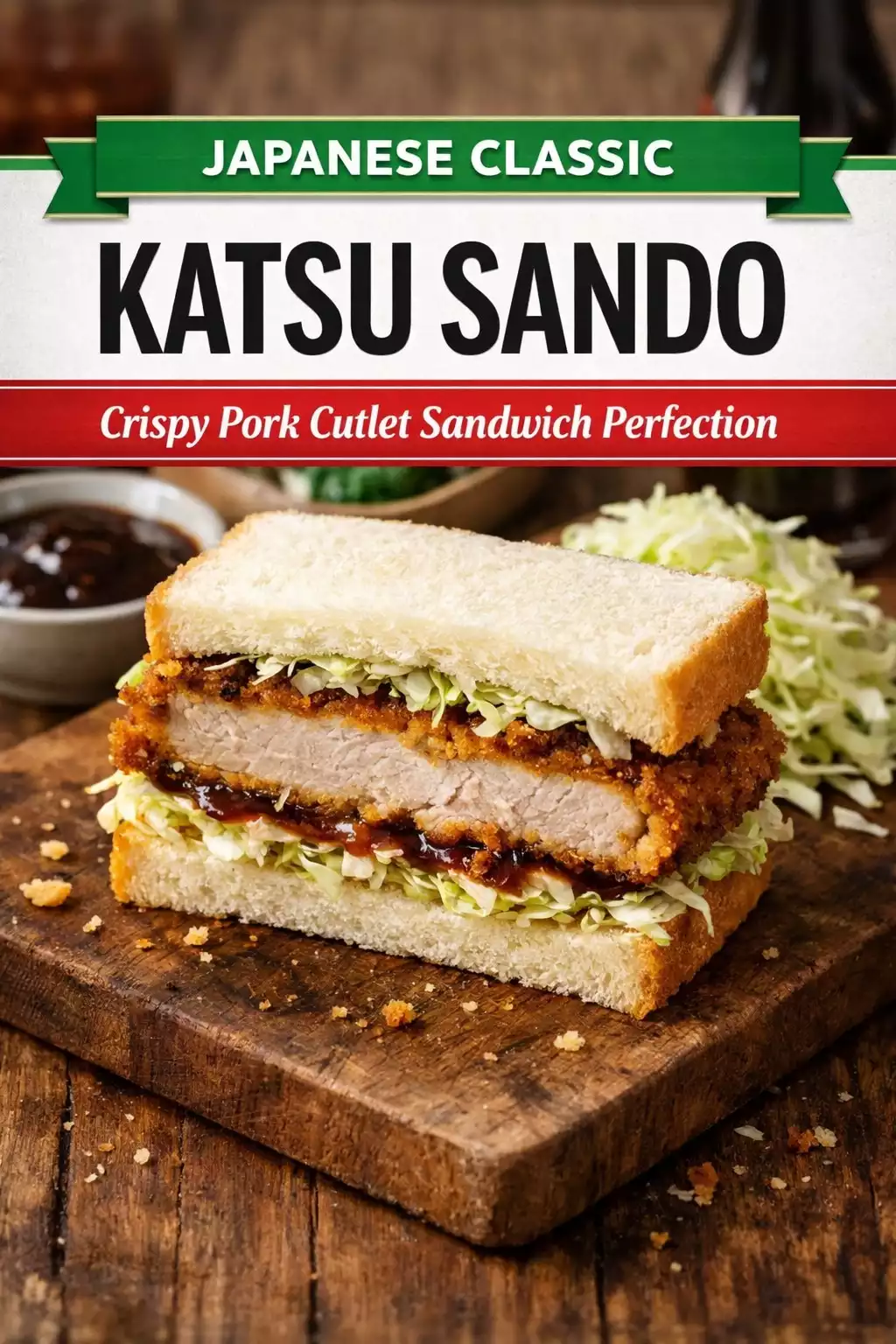
Katsu Sando is Japan’s iconic breaded pork cutlet sandwich — the word “sando” being Japanese shorthand for sandwich. The katsu part refers to the tonkatsu preparation: pork cutlet pounded thin, dredged in flour, dipped in egg, pressed in panko, and fried until the crust is shattering-crispy while the pork inside stays juicy. In between thick slices of Japanese milk bread with tangy tonkatsu sauce and shredded cabbage. That’s the sandwich. That’s all it needs.
The “sloppy” part of this naming is a loose American nod to how enthusiastically these get eaten — there’s nothing actually messy about the preparation. The technique is exact. The execution is clean. The experience, however, tends to get enthusiastic.
Why This Katsu Sando Works
- Panko over regular breadcrumbs: Panko creates a dramatically lighter, crispier crust than standard breadcrumbs. The large, irregular flakes shatter on bite and don’t compress into a dense coating.
- Pound the pork thin: Even thickness ensures the pork cooks through completely before the crust overbrowns. Pork that’s too thick = burnt crust, raw center.
- Two-step frying: Initial fry at lower temp cooks the pork through; brief second fry at higher temp crisps and sets the final crust. Restaurant-quality result at home.
- Tonkatsu sauce is non-negotiable: The slightly sweet, Worcestershire-forward sauce is the defining flavor of the dish. Ketchup is not a substitute. Make the sauce or buy a bottle.
Ingredients
For the Katsu Cutlets
- 2 boneless pork loin chops (about 6 oz each)
- ½ cup all-purpose flour
- 2 eggs, beaten
- 1½ cups panko breadcrumbs
- 1 tsp kosher salt
- ½ tsp black pepper
- Neutral oil for frying (canola, vegetable, or peanut)
For the Tonkatsu Sauce
- 3 tbsp Worcestershire sauce
- 2 tbsp ketchup
- 1 tbsp soy sauce
- 1 tsp Dijon mustard
- 1 tsp honey or brown sugar
For the Sandwich
- 4 thick slices Japanese milk bread (shokupan) or brioche
- 1 cup green cabbage, very finely shredded
- 2 tsp Japanese mayonnaise (Kewpie preferred)
- Softened butter for the bread
Instructions
Step 1: Prep the Pork
Place pork chops between two sheets of plastic wrap. Using a meat mallet or rolling pin, pound to an even ¾-inch thickness. Season both sides with salt and pepper. Set up a breading station: flour in one shallow bowl, beaten eggs in another, panko in the third. Dredge each cutlet in flour, shaking off excess. Dip in egg, coating completely. Press firmly into panko on both sides, ensuring full, even coverage. Press the panko in — it shouldn’t fall off when you lift the cutlet.
Step 2: Make the Tonkatsu Sauce
Combine Worcestershire, ketchup, soy sauce, Dijon, and honey in a small bowl. Whisk until smooth. Taste — it should be sweet, savory, and slightly tangy with a Worcestershire backbone. Adjust honey for sweetness or soy for salt. This sauce keeps refrigerated for weeks. Make extra.
Step 3: Fry the Cutlets
Heat 1½ inches of neutral oil in a wide, heavy pan to 325°F. Carefully lower the breaded cutlets in — don’t splash. Fry for 4–5 minutes per side until the crust is pale golden and the pork is cooked through (internal temp 145°F). Remove and drain on a wire rack, not paper towels. Paper towels trap steam and soften the crust. Then raise oil temperature to 375°F. Return cutlets for 60–90 seconds per side until deep golden and shattering-crispy. This double-fry method is the professional technique that separates excellent katsu from ordinary katsu.
Step 4: Prep the Bread and Cabbage
Shred cabbage as finely as possible — this is important. Coarse cabbage shreds make the sandwich hard to bite through cleanly. Toss shredded cabbage with Kewpie mayonnaise and a pinch of salt. Butter bread slices on one side. Toast lightly in a dry pan until golden — just the buttered side. Japanese milk bread gets slightly crispy on the toasted side while remaining soft elsewhere.
Step 5: Assemble
Spread tonkatsu sauce on the inside of both bread slices. Add a layer of dressed cabbage on one slice. Place the hot katsu cutlet on top. Trim the crusts if going full traditional Japanese presentation. Cut cleanly in half — crosswise or diagonal. Serve immediately. The crust should still be audibly crispy when you bite into it.
Tips & Common Mistakes
- Drain on a rack, not paper towels: This is the single biggest mistake home cooks make with fried foods. Paper towels trap steam underneath and soften the crust within minutes. A wire rack keeps air circulating around the entire cutlet.
- Don’t skip the double fry: The first fry cooks the pork. The second fry crisps the crust. Doing it all in one fry at one temperature means either undercooked pork or overbrowned crust. Two fries, two jobs.
- Pound evenly: Uneven thickness leads to uneven cooking. The thin parts overcook while thick parts are still raw. A few extra minutes pounding is worth the effort.
- Kewpie mayo is worth finding: Japanese mayonnaise has more egg yolk, rice vinegar instead of white vinegar, and a richer flavor than American mayo. Look for it at Asian grocery stores or online. The difference is significant.
Variations
- Chicken katsu sando: Use boneless, skinless chicken thighs instead of pork. Pound thin, bread, and fry the same way. Chicken thigh has more moisture than breast and stays juicy through frying.
- Wagyu beef katsu sando: A premium version using thin-sliced wagyu beef. Pan-fry quickly at high heat — wagyu doesn’t need the double fry method. The marbling does the work.
- Eggplant katsu: Slice eggplant ¾-inch thick, salt and drain for 30 minutes, then bread and fry the same way. A vegetarian version that works because the panko crust is the star.
- Curry katsu version: Serve the cutlet with Japanese curry sauce instead of tonkatsu sauce. Classic Japanese comfort food combination.
The katsu sando shares fusion DNA with kimchi fried rice burrito, masala shakshuka, banh mi burger, miso glazed salmon tacos, and Korean BBQ tacos. All of them apply technique with respect to the source cuisine.
Storage & Reheating
- Cooked cutlets: Keep refrigerated on a wire rack (not stacked) for up to 2 days to preserve crust texture.
- Reheating: Reheat cutlets in a 375°F oven for 8–10 minutes until hot and crispy. Avoid the microwave — it completely destroys the panko crust.
- Breaded uncooked cutlets: Can be refrigerated uncovered for up to 4 hours before frying. The resting time helps the breading adhere better.
- Tonkatsu sauce: Keeps refrigerated in a jar for up to 3 months. Make a large batch.
Frequently Asked Questions
What is Japanese milk bread (shokupan)?
Shokupan is a soft, slightly sweet Japanese white bread with a pillowy texture. It’s made using the tangzhong method (a cooked flour-water paste that makes the bread exceptionally soft). Available at Asian bakeries and grocery stores. Brioche is the closest substitute if unavailable.
Can I air fry the katsu instead?
Yes, but the result is different. Spray the breaded cutlet generously with oil spray and air fry at 400°F for 10–12 minutes, flipping once. The crust will be crispy but lacks the deep golden color and shattering texture of oil-fried katsu. Acceptable as a lighter alternative.
How do I know when the pork is cooked?
An instant-read thermometer reading 145°F internal temperature means the pork is safe and juicy. Above 160°F it starts to dry out. The visual cue is no pink remaining in the center of the cutlet when cut.
Why trim the bread crusts?
Traditional Japanese katsu sando presentation removes crusts for aesthetic reasons and to make the sandwich easier to eat cleanly. It also makes the layering more visible from the side. It’s a stylistic choice, not a requirement.