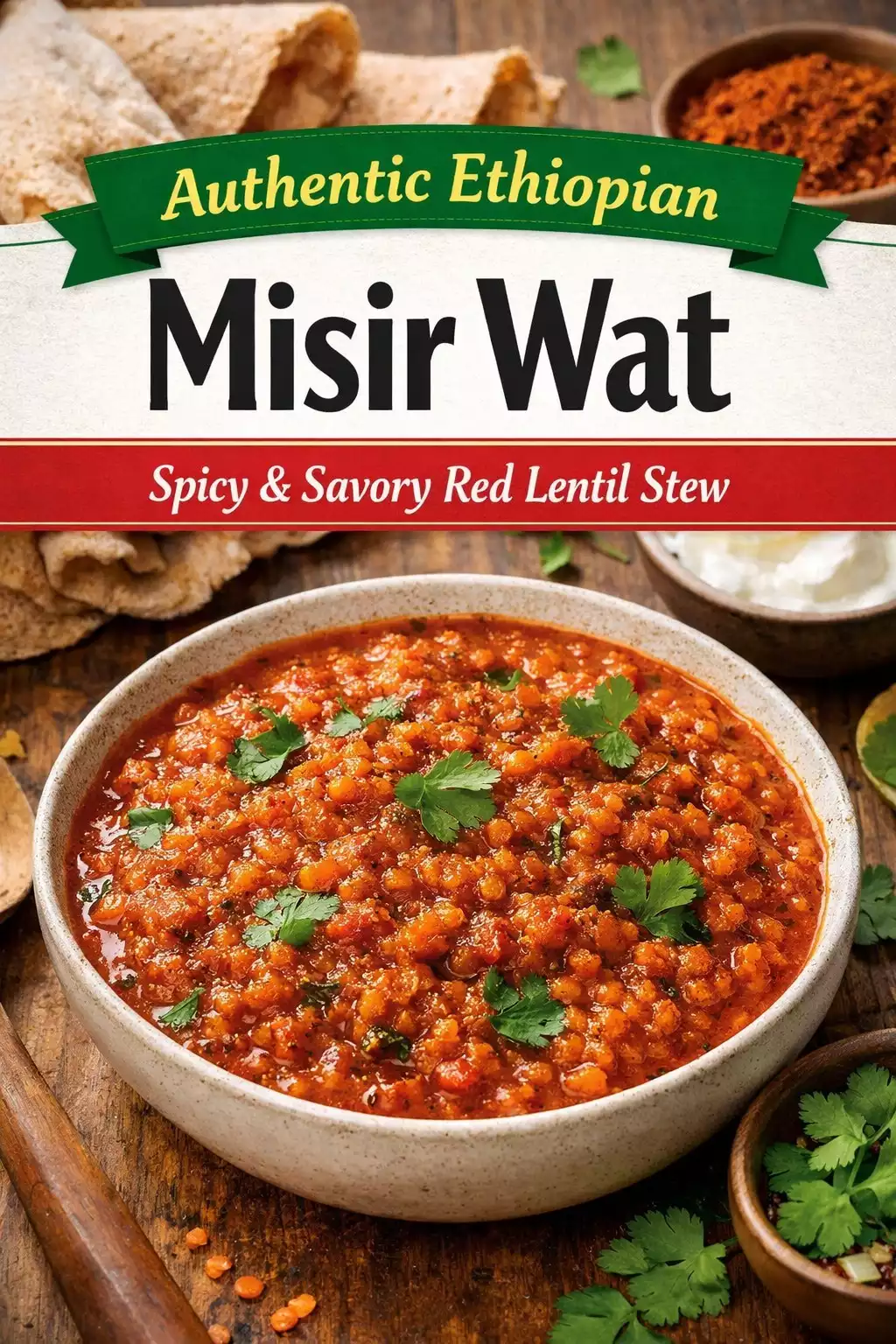
My old head chef used to say — if the aroma doesn’t hit the hallway, start over. Ethiopian Misir Wat is the dish I think of every time he said that. When berbere spice meets caramelized onions and simmering red lentils in a pot, the smell is something that stops everyone in the building and demands an explanation. It’s warm, complex, earthy, and slightly smoky all at once — and it comes entirely from one spice blend and one technique done correctly.
Misir Wat (also written Misir Wot) is a deeply spiced Ethiopian red lentil stew — one of the country’s most beloved dishes, traditionally served as part of a larger spread on injera (a spongy fermented flatbread that is both plate and utensil). The “wat” family of Ethiopian stews is defined by its base: a very long-cooked, caramelized onion foundation combined with niter kibbeh (spiced clarified butter) and berbere spice paste. This base takes patience and cannot be rushed.
The lentils themselves cook relatively quickly once the base is established. The entire complexity of the dish comes from the first 30–40 minutes of cooking the onions until deeply caramelized, then building the berbere and niter kibbeh into them. Give it that time. It’s worth every minute.
Why This Ethiopian Misir Wat Works
- Long-caramelized onion base: Ethiopian wat cooking begins with onions cooked dry (no fat initially) for 15–20 minutes until they’re a deep amber paste. This dry caramelization creates sweetness and depth that defines the final dish.
- Berbere spice paste: A complex blend of chili, fenugreek, coriander, cardamom, cinnamon, and other spices that gives misir wat its signature color and warm, layered heat.
- Niter kibbeh: Ethiopian spiced clarified butter infused with onion, garlic, ginger, and whole spices. Even a small amount transforms the flavor of the entire dish.
- Red lentils cook into the sauce: Red (split) lentils dissolve partially during cooking and thicken the sauce naturally, creating a stew that is silky and cohesive rather than watery.
Ingredients
For a Quick Niter Kibbeh
- 4 tbsp unsalted butter
- ¼ small onion, minced
- 2 cloves garlic, minced
- ½ tsp fresh ginger, grated
- ¼ tsp turmeric
- Pinch of cardamom
For the Misir Wat
- 2 cups red lentils, rinsed
- 2 large onions, finely diced
- 4 cloves garlic, minced
- 1 tsp fresh ginger, grated
- 3–4 tbsp berbere spice paste or powder (adjust to heat preference)
- 2 tbsp tomato paste
- 4 cups vegetable or chicken stock
- 1 tsp salt
- Fresh cilantro for garnish
For Serving
- Injera (traditional, from Ethiopian grocery or homemade)
- Or rice, pita, or crusty bread as substitute
- Plain yogurt on the side (optional)
Instructions
Step 1: Make Quick Niter Kibbeh
Melt butter in a small saucepan over medium-low heat. Add minced onion, garlic, ginger, turmeric, and cardamom. Cook very gently for 10–12 minutes until the onion is soft and the butter has taken on a golden color and the aromatics have infused into it. Do not brown — gentle heat only. Strain through a fine mesh strainer to remove solids. The spiced butter left behind is a simplified niter kibbeh. If you have pre-made or purchased niter kibbeh, use 3 tbsp of that instead.
Step 2: Caramelize the Onions (The Critical Step)
Place diced onions in a dry, heavy pot over medium heat with absolutely no oil or fat. This is the Ethiopian dry-caramelization technique. Cook for 15–20 minutes, stirring every 2–3 minutes, until onions are deeply golden and reduced to a sticky, almost jammy consistency. The dry cooking concentrates the sugars. Only after this caramelization is complete do you add the niter kibbeh. This step is not optional and cannot be shortened.
Step 3: Build the Base
Add niter kibbeh to the caramelized onions. Stir in garlic and ginger and cook 2 minutes. Add berbere spice paste and tomato paste. Stir and cook for 3–4 minutes until the berbere is cooked into the fat and onion base and the raw spice smell mellows. The base will be very dark and intensely fragrant. This is correct.
Step 4: Cook the Lentils
Add rinsed red lentils and stock. Stir to combine. Bring to a boil, then reduce to a gentle simmer. Cook uncovered for 20–25 minutes, stirring occasionally, until lentils are completely broken down and the stew is thick and cohesive. Season with salt. Taste and adjust berbere for heat and salt for seasoning. The final stew should be thick enough to mound on injera — not thin like a soup.
Step 5: Serve
Serve scooped onto injera if available. The injera is torn and used to scoop up the stew — there are no utensils in traditional Ethiopian eating. If injera is unavailable, serve with rice, pita, or crusty bread. Garnish with fresh cilantro. A dollop of plain yogurt alongside provides cooling contrast to the berbere heat.
Tips & Common Mistakes
- Don’t add fat too early: The dry onion caramelization at the beginning is a specific technique. Adding oil or butter immediately creates fried onions, not the deeply caramelized base that defines the dish. Dry heat first, fat second.
- Berbere quantity: Berbere is hot. Start with 2 tbsp if unfamiliar with the spice level and add more to taste. Commercial berbere powder varies widely in heat — taste before adding the full amount.
- Red lentils need no soaking: Unlike whole lentils or dried beans, red split lentils cook quickly and need no pre-soaking. They break down naturally during cooking and thicken the stew.
- Don’t cook too thin: Misir wat should be a very thick stew, not a soup. If it’s too thin after 20 minutes, continue simmering uncovered until the right consistency is reached.
Variations
- Ye’misir kik alicha: The mild (non-spiced) version using turmeric and very little berbere. Less fiery but equally comforting. Good for people new to Ethiopian cuisine.
- Ethiopian feast spread: Serve misir wat alongside tibs (sautéed meat), gomen (collard greens), and ayib (fresh cheese) on a large shared injera. The communal eating tradition is part of the experience.
- Vegan version: Replace niter kibbeh with coconut oil infused with the same aromatics. The dish remains deeply flavorful and is naturally vegan without butter.
- Instant Pot version: After the dry onion caramelization on sauté mode, add all remaining ingredients and cook on high pressure for 10 minutes with natural release. The result is slightly different in texture but equally flavorful.
Explore more global cuisines: West African Jollof rice, Nigerian pepper soup, peri peri chicken, Jamaican jerk chicken, and lomo saltado.
Storage & Reheating
- Refrigerator: Misir wat keeps beautifully for up to 5 days. The flavor intensifies and improves significantly over 24–48 hours as the berbere spices continue to meld.
- Reheating: Reheat on the stovetop with a splash of water — it thickens significantly in the refrigerator. Stir gently over medium-low heat until warmed through.
- Freezing: Freezes excellently for up to 3 months. Portion into individual servings. Thaw overnight and reheat with a splash of water on the stovetop.
- Make ahead: This is one of the best make-ahead dishes in the collection. Make it 1–2 days before serving for optimal flavor. The difference between fresh and day-old misir wat is dramatic.
Frequently Asked Questions
Where do I find berbere spice?
Ethiopian grocery stores always carry it in paste and powder form. Specialty spice shops carry it dried. It’s increasingly available at whole food and specialty grocery stores. Online spice retailers are reliable if local sources aren’t available. Berbere paste and berbere powder can be used interchangeably in this recipe — powder is more common and easier to find.
What is injera?
Injera is a large, spongy, slightly sour flatbread made from teff flour (a gluten-free grain native to Ethiopia). It has a unique fermented flavor and a sponge-like texture that makes it ideal for scooping stews. Available at Ethiopian grocery stores and restaurants. If unavailable, the stew is still excellent with naan, pita, or rice — but injera is the authentic experience.
Is misir wat spicy?
Yes — berbere spice blend contains a significant amount of chili. Traditional misir wat is moderately to very spicy depending on how much berbere is used. Reduce the berbere to 1 tbsp for a milder version. The spiced butter (niter kibbeh) and caramelized onion base provide warmth and complexity even at lower heat levels.
Can I use green or brown lentils instead?
Green or brown lentils will not break down into the sauce the same way red lentils do. They’ll produce a more textured stew where the lentils remain whole rather than creamy and integrated. Both are edible but the texture and consistency of the final dish will be different from the traditional preparation.