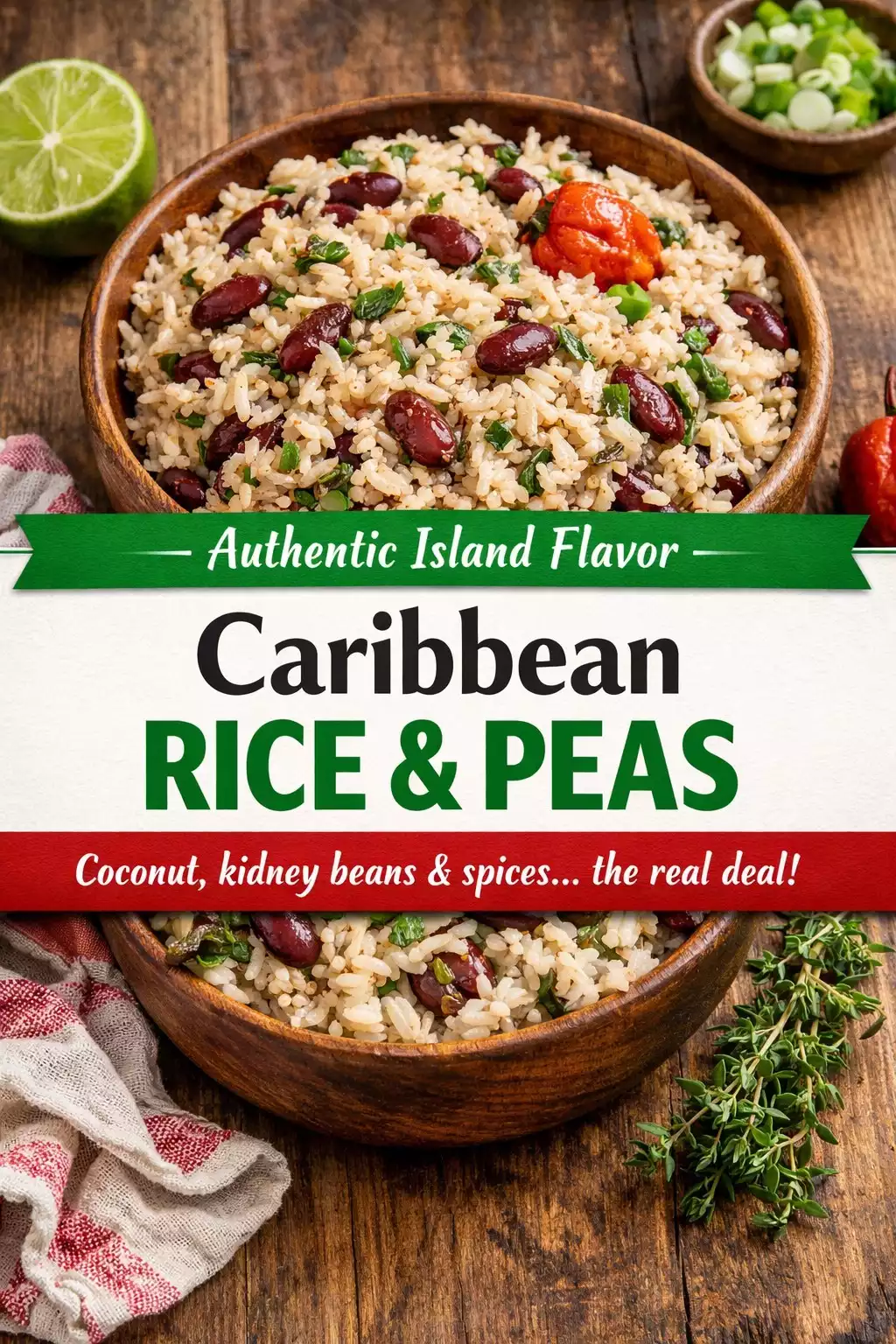
This isn’t the fancy restaurant version. This is the real one. Caribbean Rice and Peas — and when they say peas in Jamaica, they mean kidney beans, so let’s settle that immediately — is the cornerstone side dish of Caribbean cooking. It is served at every family gathering, every Sunday dinner, every holiday table. It is not optional. And done properly, with coconut milk, scotch bonnet, thyme, and garlic simmered into every grain of rice, it is one of the most satisfying things a pot can produce.
The technique is specific and non-negotiable. The beans go into the coconut milk first, along with the aromatics, and everything simmers together before the rice is ever added. This is how the rice absorbs layers of flavor from the infused coconut liquid rather than just being steamed in plain water. The scotch bonnet sits in the pot whole — not chopped, not crushed — so it imparts flavor and fragrance without making the dish unbearably spicy. When it’s done, every grain of rice should be separate, lightly fragrant, and a pale golden color from the coconut milk.
This is a side dish that holds up any main course: jerk chicken, peri peri, oxtail stew, or grilled fish. Make it the way they make it in Kingston and let it speak for itself.
Why This Caribbean Rice and Peas Works
- Kidney beans simmered in coconut milk first: The beans release starch into the coconut milk during this initial simmer, creating a naturally thick, creamy base that coats every grain of rice during cooking.
- Whole scotch bonnet: A whole, uncut scotch bonnet floated in the cooking liquid gives aromatic heat without the full chili bomb of chopped or crushed peppers. Essential technique.
- Long-grain rice: Long-grain rice (jasmine or basmati) stays separate after cooking and absorbs the coconut-bean liquid without clumping. Short-grain or medium-grain rice turns too sticky.
- Tight lid, low heat: Once the rice goes in, the pot is sealed and left alone. Lifting the lid during rice cooking releases steam and leads to unevenly cooked, crunchy-on-top rice.
Ingredients
For the Rice and Peas
- 1½ cups long-grain white rice (jasmine or basmati)
- 1 can (15 oz) kidney beans, drained and rinsed
- 1 can (13.5 oz) coconut milk, full fat
- 1¼ cups water
- 1 whole scotch bonnet pepper (uncut)
- 3 cloves garlic, minced
- 3 green onions, whole (tied in a bundle if possible)
- 2 sprigs fresh thyme (or ½ tsp dried)
- 1 tsp salt
- ½ tsp black pepper
- 1 tsp allspice (optional but traditional)
Instructions
Step 1: Infuse the Coconut Base
In a medium saucepan, combine coconut milk, water, kidney beans, garlic, green onions, thyme, salt, pepper, and allspice. Add the whole scotch bonnet carefully — do not cut it open. Bring to a boil, then reduce to a simmer and cook for 10–12 minutes. This infuses the coconut liquid with the aromatics and flavors the beans before the rice is added. The coconut liquid will turn a golden color.
Step 2: Add the Rice
Wash the rice under cold water until the water runs clear — this removes excess starch that would make the final rice gummy. Add washed rice to the simmering coconut-bean liquid. Stir once to combine everything evenly. Bring back to a low boil, then immediately reduce to the lowest heat setting possible. Cover tightly with a lid. Do not stir or lift the lid for the next 18–20 minutes.
Step 3: Steam and Finish
After 18–20 minutes, check the rice by lifting the lid quickly — all liquid should be absorbed and the rice should look dry on the surface with small steam holes. Remove the scotch bonnet (discard or use separately — it’s very hot), remove the green onion bundle and thyme sprigs. Fluff the rice gently with a fork, lifting from the bottom. Cover and rest for 5 minutes off the heat. The residual steam finishes cooking any remaining starch and separates the grains.
Tips & Common Mistakes
- Do NOT cut the scotch bonnet: A whole, intact scotch bonnet imparts flavor and gentle heat. A cut or crushed one makes the entire dish intolerably spicy. The whole pepper technique is traditional and correct.
- Don’t lift the lid during cooking: Steam is the mechanism that cooks the top layer of rice. Every time you lift the lid, you release steam and the rice on top stays undercooked while the bottom burns. Set the timer and step away.
- Wash the rice properly: Washing until the water runs clear removes surface starch. Unwashed rice produces a sticky, gummy dish instead of the separate, fluffy grains that are the goal.
- Use full-fat coconut milk: Reduced-fat coconut milk doesn’t have the richness to properly flavor the rice. Full-fat is the correct choice — this is not the dish to reduce calories in.
Variations
- Red peas (pigeon peas) version: Use pigeon peas instead of kidney beans for the Puerto Rican variation (arroz con gandules). Different bean, same technique.
- Black beans version: Substitute black beans for kidney beans and reduce coconut milk slightly for a Cuban-influenced variation.
- Brown rice version: Use long-grain brown rice but increase water by ½ cup and extend cooking time to 35–40 minutes. Same flavor, more nutritional density.
- With bacon or salt pork: Render 2 oz of diced bacon or salt pork in the pot before adding the coconut liquid. The rendered fat enriches the rice and adds a savory depth that complements the coconut beautifully.
Caribbean Rice and Peas is the perfect partner for West African Jollof rice, Ethiopian misir wat, peri peri chicken, and Jamaican jerk chicken. Also check out Australian lamingtons to round out the world cuisine exploration.
Storage & Reheating
- Refrigerator: Store in an airtight container for up to 4 days. Coconut rice gets slightly firmer when cold — this is normal.
- Reheating: Reheat with a splash of water in a covered pot over medium-low heat, or microwave with a damp paper towel laid over the top. The steam from the water/towel re-fluffs the grains.
- Freezing: Freeze in portions for up to 2 months. Thaw overnight and reheat with a splash of water. The texture changes slightly but the flavor remains excellent.
- Making ahead: This dish can be made 1–2 days ahead. Reheat just before serving. The flavors actually improve after a day in the fridge as the coconut and aromatics continue to develop.
Frequently Asked Questions
Why are they called “peas” if they’re kidney beans?
In Caribbean culinary tradition, “peas” refers to any legume — kidney beans, pigeon peas, gungo peas, red beans. The term predates modern botanical distinctions and is rooted in regional dialect and tradition. Saying “rice and peas” in Jamaica means kidney beans. No argument.
Can I use dried kidney beans instead of canned?
Yes — soak dried beans overnight, then boil until tender before using. Use the bean cooking liquid as part of the total liquid for extra bean flavor. The result is more flavorful than canned. Add 1 hour to your total prep time.
Can I make this without a scotch bonnet?
Yes — the scotch bonnet adds flavor and gentle heat. If unavailable, use a whole habanero as a substitute. If avoiding heat entirely, add a whole pimento (allspice) berry instead for aromatics without the chili element. The dish will be milder but still flavorful.
Why is my rice sticky?
Sticky rice usually means either the rice wasn’t washed properly (excess surface starch), too much liquid was used, or the heat was too high causing steam buildup before the liquid could absorb evenly. Wash rice thoroughly, measure liquid precisely, and cook on the absolute lowest heat.