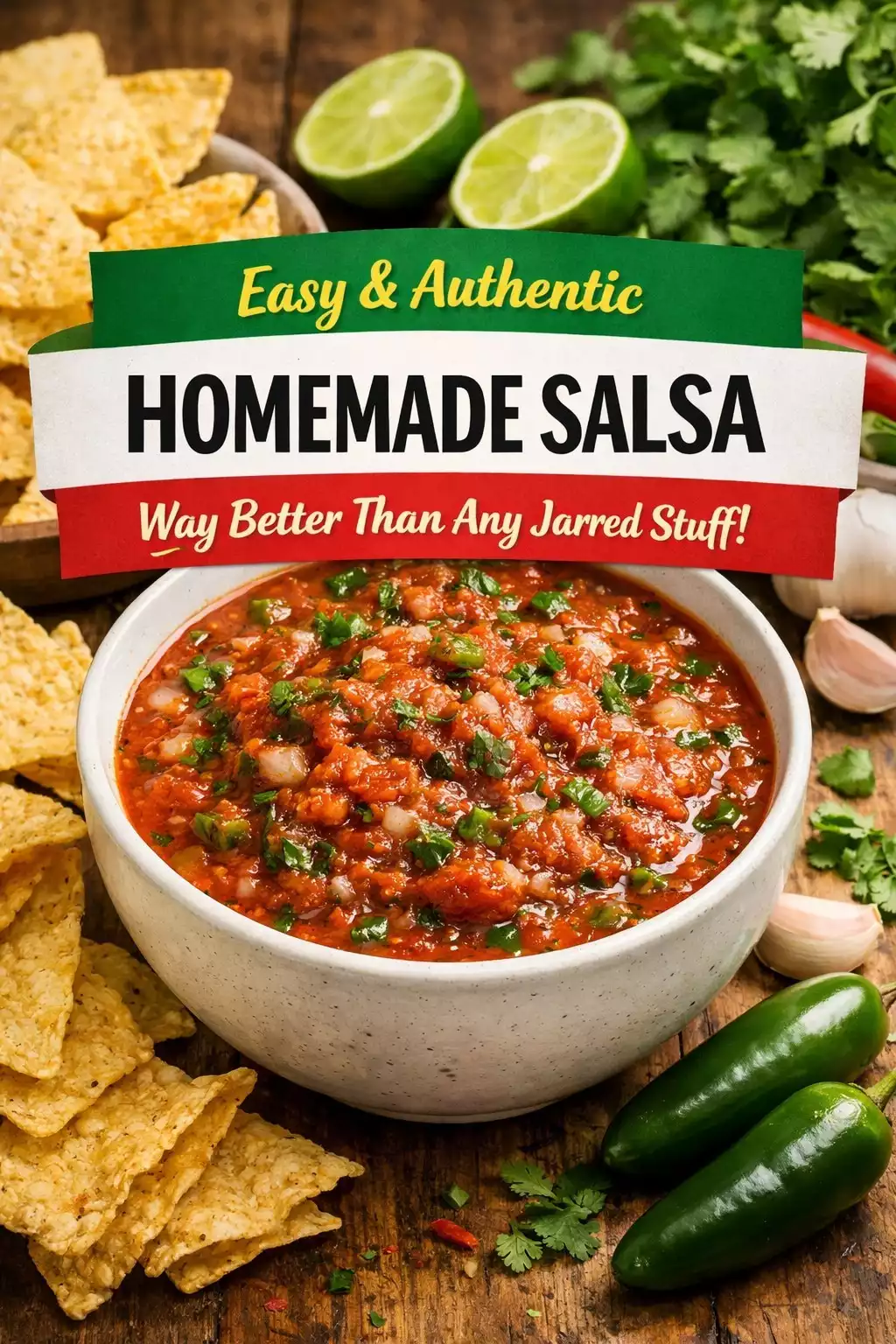
This is the recipe that ends arguments at Sunday dinner. Easy Homemade Salsa — the real stuff, not the jarred kind with a list of ingredients you can’t pronounce — takes about ten minutes to make and tastes like someone actually cared. Which they did. Because when you make it yourself, with real tomatoes, real jalapeño, real cilantro, and real lime, you’re not just making a dip. You’re making the difference between “here are some chips” and “why is everyone hovering around the appetizer table?”
I’ve made salsa a thousand ways over the years. Roasted. Raw. Blended smooth. Chunky. Smoky. Bright. The version here is a crowd-pleasing restaurant-style blended salsa — the kind that pairs with everything and disappears in under twenty minutes at any party. Simple. Honest. Completely better than anything in a jar.
Why This Homemade Salsa Works
- Canned fire-roasted tomatoes: Canned fire-roasted tomatoes have a depth and consistency that fresh tomatoes (especially out of season) can’t match for a blended salsa. The roasting adds smokiness without any extra steps.
- Raw aromatics in the blender: Garlic, jalapeño, and onion go in raw — processing them with the tomatoes gives sharp, bright flavor that cooked aromatics don’t provide for this style of salsa.
- Fresh lime juice: Added after blending, not before. This preserves the brightness — lime juice loses its punch when blended or cooked.
- Resting time: 30 minutes in the refrigerator allows the flavors to merge and mellows the raw edge of the garlic and onion.
- Pulse, don’t puree: A few pulses give you control over the texture. The difference between great salsa and green juice is about three seconds of blender time.
Ingredients
The Salsa
- 1 can (14.5 oz) fire-roasted tomatoes (or diced tomatoes)
- 1 can (14.5 oz) whole peeled tomatoes, drained slightly
- 2 jalapeños, roughly chopped (seeds in for heat, seeds out for mild)
- ½ small white onion, roughly chopped
- 3 garlic cloves
- ½ cup fresh cilantro, loosely packed
- Juice of 1–2 limes
- 1 tsp salt (or to taste)
- ½ tsp cumin
- Optional: ½ tsp sugar (balances acidity if tomatoes are very tart)
Instructions
Step 1: Blend the Base
Add garlic cloves to the blender first and pulse 3–4 times to mince. Add jalapeños and white onion. Pulse 3–4 more times. You want them minced, not liquefied. Add both cans of tomatoes (with juices), cilantro, salt, and cumin.
Step 2: Pulse to Your Texture
Pulse 8–10 times for a chunky salsa, 12–15 times for a smoother restaurant-style texture. Check after every few pulses by removing the lid and checking consistency — once over-blended, there’s no going back. Taste immediately and add lime juice, adjusting to your preference. Taste for salt. Add sugar if the tomatoes taste very acidic.
Step 3: Rest and Serve
Transfer to a bowl, cover, and refrigerate at least 30 minutes before serving. This step is not optional — fresh salsa tastes sharp and disjointed immediately after making. The resting period allows the flavors to harmonize. Taste again after resting and adjust seasoning if needed. Serve with chips, on tacos, or over anything that needs it.
Tips & Common Mistakes
- Over-blending: The number one mistake. Salsa becomes thin, airy, and loses its color when over-processed. Pulse in short bursts and check frequently. You can always blend more; you can’t unblend.
- Skipping the rest: Fresh-blended salsa tastes raw and aggressive. Thirty minutes in the fridge makes an enormous difference. One hour is better. Make it ahead whenever possible.
- Too much onion: Raw onion is powerful and can overpower everything else. ½ of a small onion is enough for this recipe. If you love onion, use slightly more but taste carefully.
- Fresh vs. canned tomatoes: In-season fresh tomatoes, roasted under a broiler or on a grill until charred, make an extraordinary fresh salsa. Out of season, good quality canned fire-roasted tomatoes outperform fresh every single time.
- Cilantro haters: Swap fresh flat-leaf parsley for cilantro. Same herbaceous quality, completely different flavor profile. Works surprisingly well.
Variations
- Roasted salsa: Broil tomatoes, onion, garlic, and jalapeños until charred in spots. Blend while hot. The smokiness and depth are exceptional.
- Salsa verde: Replace tomatoes with tomatillos (husked, halved, roasted). Completely different flavor profile — tart, bright, and addictive.
- Mango salsa: Add 1 cup diced fresh mango to the finished blended base. Reduce jalapeño to taste. Outstanding with fish tacos.
- Corn and black bean salsa: Stir in ½ cup roasted corn and ½ cup black beans to the finished base. More of a chunky salsa fresca — great as a side dish.
For the full condiment spread, add the Restaurant Style Guacamole, the Salsa Verde, and a bowl of Queso Dip. Round the table with the Homemade Ranch Dressing — because sometimes you want a break from the heat.
Storage
- Refrigerator: Keeps for 1 week in an airtight container. The flavor actually peaks at day 2 or 3 as everything continues to meld.
- Freezer: Freezes for up to 3 months. Texture softens somewhat after thawing but flavor remains excellent. Great for using at the end of tomato season.
- Note: Salsa made with fresh tomatoes has a shorter fridge life (3–4 days) because fresh tomatoes hold more moisture and oxidize faster.
Frequently Asked Questions
Can I use fresh tomatoes instead of canned?
Yes, especially in peak summer. Use Roma or plum tomatoes — 4–5 medium tomatoes. Core and roughly chop, or for better flavor, halve them, drizzle with oil, and broil until charred before blending. Fresh tomatoes need to be very ripe to compete with good canned tomatoes in flavor.
How do I make it spicier?
Include the jalapeño seeds and ribs, add a serrano pepper alongside the jalapeño, or add a pinch of cayenne. For maximum heat, use habanero instead of jalapeño — use caution and reduce quantity.
Why does my salsa taste flat?
Usually one of three things: not enough salt (salt lifts all the other flavors), not enough lime (acid brightens and focuses the taste), or the tomatoes were low quality. Taste and adjust in small increments — add more lime and salt before reaching for more tomatoes.
Is this the same as pico de gallo?
No. Pico de gallo is always freshly diced, never blended, and relies entirely on fresh ingredients cut by hand. This recipe is a blended restaurant-style salsa — smooth-to-chunky with a longer shelf life. Both are excellent; they serve slightly different purposes at the table.