Every Italian-American family has their version of a stew that gets cooked low and slow until the whole house smells like something worth coming home to. This one’s mine — except it’s New Orleans Creole Gumbo, and it has nothing to do with my grandmother’s kitchen. But that’s the thing about serious cooking: technique respects no borders. A dark roux is a dark roux whether you learned it from a Creole grandmother or a Louisiana chef who trained you on your first professional job. And this gumbo? This is professional-grade. This is the real thing.
The roux is the foundation. You cannot rush it. Brown roux takes 20 minutes of attentive stirring over medium heat. Dark chocolate roux takes 45 minutes. The gumbo I make is dark roux — the full commitment. That deep, nutty, almost bitter base is what makes New Orleans gumbo taste like New Orleans and nothing else.
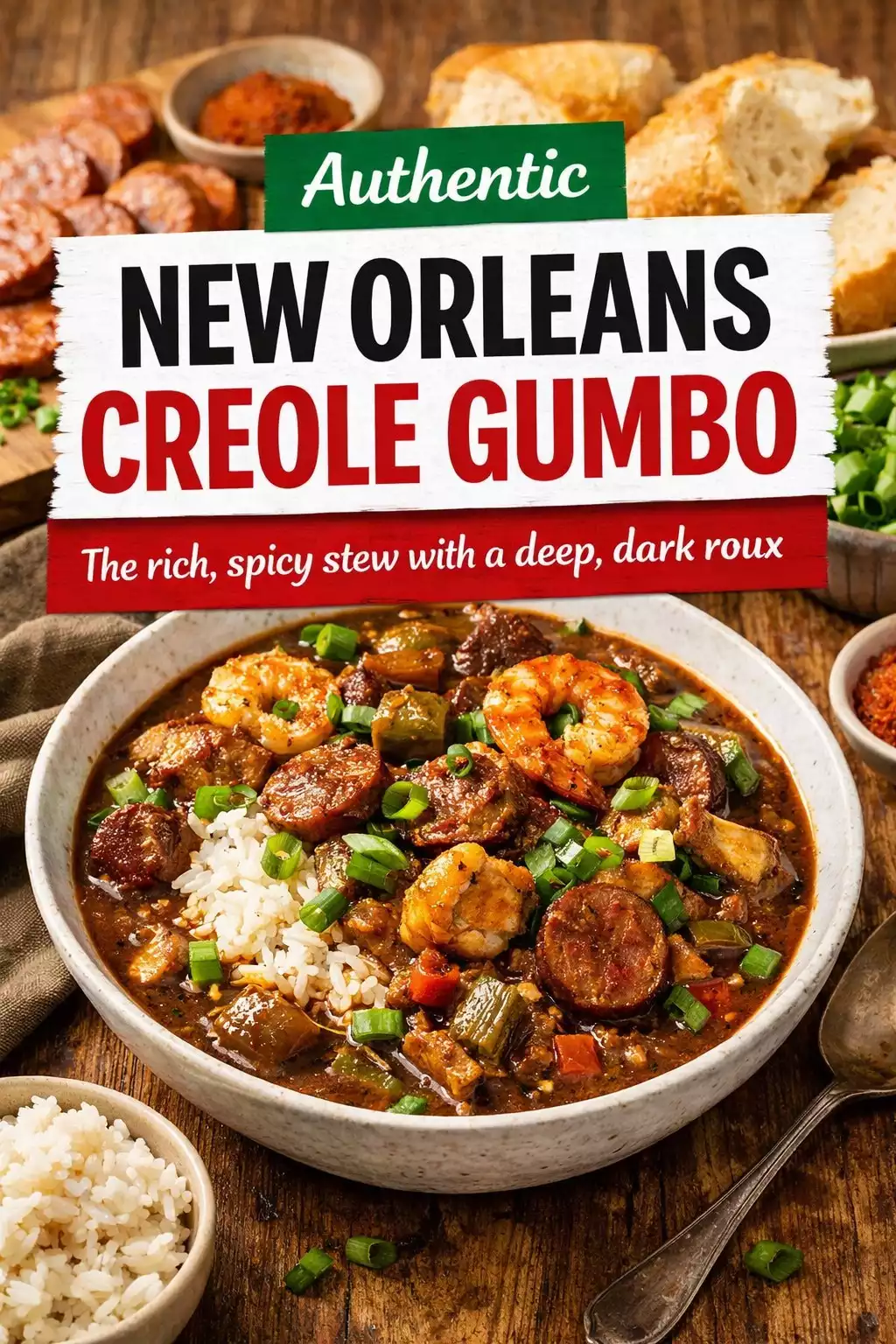
This is the gumbo recipe that doesn’t cut corners. Okra, andouille sausage, gulf shrimp, chicken, the Holy Trinity of Cajun cooking (onion, celery, bell pepper), and a roux so dark it looks like chocolate. The best new orleans creole gumbo is a project — but it’s worth every minute.
Why This Gumbo Works
- Dark roux foundation — the deep, nutty flavor that defines New Orleans gumbo and cannot be faked or skipped
- The Holy Trinity — onion, celery, and green bell pepper in equal parts; the aromatic foundation of all Cajun and Creole cooking
- Layered protein additions — chicken and andouille added early for flavor development; shrimp added at the end so it doesn’t overcook
- Filé powder finishing — ground sassafras adds earthy depth and thickens the gumbo naturally
- Served over white rice — the rice absorbs the broth and rounds out the meal completely
Ingredients
Serves 6–8
- ¾ cup vegetable oil or lard
- ¾ cup all-purpose flour
- 1 large onion, diced
- 3 stalks celery, diced
- 1 large green bell pepper, diced
- 5 garlic cloves, minced
- 12 oz andouille sausage, sliced into rounds
- 1 lb chicken thighs, boneless, cut into bite-sized pieces
- 1 lb large shrimp, peeled and deveined
- 1 cup okra, sliced into rounds (fresh or frozen)
- 6 cups chicken stock
- 1 can (14 oz) diced tomatoes
- 2 bay leaves
- 1 teaspoon dried thyme
- 1 teaspoon smoked paprika
- 1 teaspoon cayenne pepper (adjust to heat preference)
- 2 teaspoons Creole seasoning (Tony Chachere’s or homemade)
- Salt and black pepper to taste
- 1 teaspoon filé powder (added at the end)
- White rice for serving
- Sliced scallions, for garnish
How to Make New Orleans Creole Gumbo
Step 1: Make the Dark Roux
In a large, heavy-bottomed pot or Dutch oven, heat oil over medium heat. Add flour all at once and stir immediately with a wooden spoon or heat-resistant whisk. Cook, stirring constantly, for 30–45 minutes until the roux reaches a dark chocolate color. Don’t rush this. Don’t leave the stove. The roux will go through tan, peanut butter, and milk chocolate phases before reaching dark chocolate. That final stage is what you want. It will smell nutty and slightly bitter. If it smells burnt, start over.
Step 2: Build the Base
Add onion, celery, and bell pepper to the dark roux at once. The cold vegetables will stop the roux from continuing to darken. Stir vigorously — the vegetables will sizzle intensely. Cook, stirring frequently, for 5–7 minutes until softened. Add garlic and cook 1 minute more.
Step 3: Brown the Andouille and Add Stock
Add andouille sausage and cook 3–4 minutes until lightly browned. Add chicken stock gradually, stirring constantly to incorporate the roux into the liquid without lumps. Add diced tomatoes, bay leaves, thyme, smoked paprika, cayenne, and Creole seasoning. Bring to a boil, then reduce to a simmer.
Step 4: Add Chicken and Okra, Simmer
Add chicken pieces and okra. Simmer, partially covered, for 45 minutes to 1 hour. The gumbo should thicken and the chicken should be very tender. Taste and adjust seasoning throughout this period.
Step 5: Add Shrimp and Finish
Add shrimp in the last 5–7 minutes of cooking. Shrimp cooks fast — remove from heat when they’re just pink and curled. Stir in filé powder off the heat. Taste for final seasoning. Discard bay leaves.
Step 6: Serve Over Rice
Place a scoop of white rice in the center of a wide bowl. Ladle gumbo around and over the rice. Garnish with sliced scallions. Serve hot.
Tips & Common Mistakes
- Never rush the roux — a pale roux makes thin, flour-tasting gumbo. A dark roux is the entire difference between gumbo and stew.
- Don’t burn the roux — a burnt roux has a harsh, acrid bitterness that ruins the entire pot. If it smells burnt, discard and start over. Your nose knows.
- Add vegetables when the roux is done — the Trinity goes in immediately after achieving target roux color to stop the darkening process.
- Shrimp goes in last — overcooked shrimp is rubbery and sad. Add in the final 5–7 minutes only.
- Filé off heat — filé powder added to boiling liquid becomes stringy. Always add after removing from heat.
Variations
- Seafood Gumbo: Omit chicken, double the shrimp, and add crab claws or lump crab meat. Pure coastal Louisiana.
- Chicken and Andouille Only: A landsman’s version — no seafood, just chicken and sausage. Simmer longer for deeper flavor.
- Vegetarian Gumbo: Vegetable stock, smoked paprika for smokiness, mushrooms for umami. Substantially different but achievable.
- File-Forward Version: Add filé powder during cooking as well as at the end for maximum thickening and earthy depth.
What to Pair With
- The centerpiece alongside chicken and andouille gumbo for a Cajun feast
- A natural companion to authentic jambalaya at a Southern-themed dinner
- Pairs with shrimp étouffée for a full New Orleans spread
- Serve alongside southern fried catfish for a classic Southern table
- Pairs with crawfish étouffée for the complete Louisiana experience
Storage & Reheating
- Refrigerator: Keeps beautifully for 4–5 days. Gumbo is one of those dishes that tastes better the next day as the flavors deepen.
- Freezer: Freeze in portions for up to 3 months. Freeze without rice — cook fresh rice when reheating. The seafood texture suffers slightly after freezing.
- Reheat: Low heat on the stovetop with a small splash of stock or water to loosen. Do not microwave shrimp — it turns rubbery. Remove shrimp before reheating if possible and add back at the end.
Frequently Asked Questions
What’s the difference between Creole and Cajun gumbo?
Creole gumbo typically includes tomatoes and may use file powder; it reflects the more urban, French-influenced New Orleans tradition. Cajun gumbo skips the tomatoes and leans more heavily on the roux and smoked sausage. Both are authentic; this recipe is Creole-style.
Can I use frozen okra?
Yes, and it works well. Frozen okra doesn’t need to be thawed before adding to the gumbo. Fresh okra provides slightly better texture, but frozen is a reliable year-round substitute.
How dark should the roux be?
For authentic New Orleans gumbo: dark chocolate color, about 45 minutes of continuous stirring. Some cooks go even darker (almost black) for maximum flavor. Milk chocolate roux makes a less deep, Cajun-adjacent gumbo. Dark chocolate is the New Orleans standard.
Is gumbo better the next day?
Without question. The fat redistributes, the spices bloom further, and the entire flavor deepens overnight. If time allows, make gumbo the day before and reheat gently before serving.
What is filé powder?
Ground sassafras leaves. It’s both a thickener and a flavoring agent, adding earthy, slightly root beer-adjacent depth to gumbo. It’s an essential finishing ingredient in the Creole tradition and available at most grocery stores in the spice aisle.