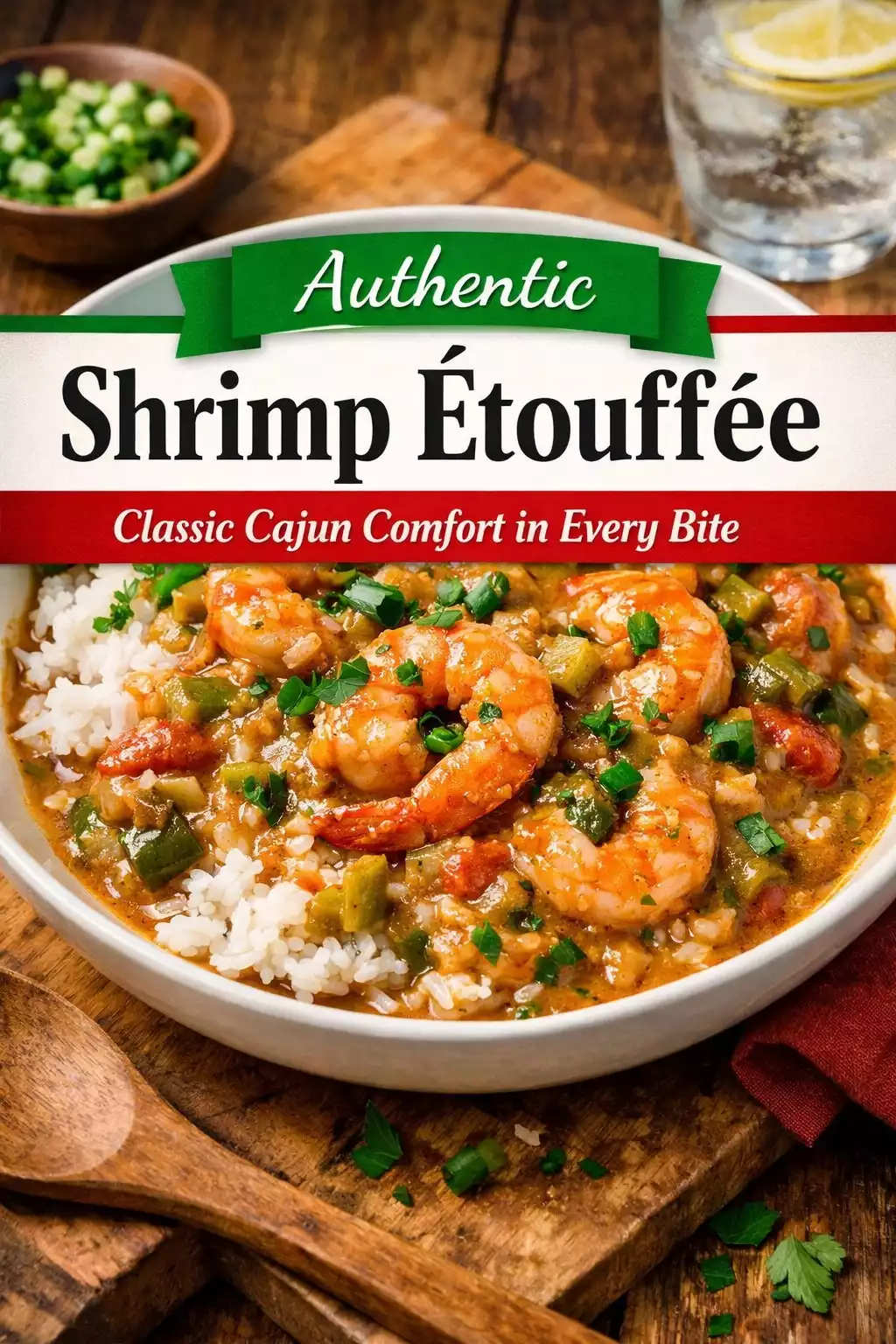
This is Jersey comfort food, and I won’t apologize for it. Shrimp Étouffée has been part of my cooking rotation since the first time I had it at a New Orleans restaurant in the early nineties — I was working a catering contract and we had a night off. The chef at the table next to us sent over his étouffée as a greeting. That was it. That silky, rich, butter-and-shrimp-scented sauce over white rice was something I had never encountered before. I spent the rest of the week figuring out how to make it myself.
Étouffée means “smothered” in French — and that’s exactly what it is. Shrimp smothered in a deeply savory sauce built on the Holy Trinity, butter, and shrimp stock. The shrimp gives twice: once in the stock that builds the sauce, and again at the end when the whole shrimp go in and cook in three minutes. It’s a dish that rewards the stock-making step enormously.
This is the shrimp etouffee recipe done the way it should be done — from-scratch shrimp stock, proper roux, and finished with butter. The best shrimp étouffée is luxurious, deeply savory, and ready in about an hour once the stock is made.
Why This Shrimp Étouffée Works
- Shrimp stock from the shells — making a quick stock from the shrimp shells amplifies the seafood flavor exponentially
- Blonde roux base — lighter than gumbo roux; golden and nutty rather than dark and bitter
- Butter finish — cold butter stirred in off the heat creates a silky, glossy sauce
- Shrimp added last — 3 minutes cooking time; overcooking ruins the texture
- Creole seasoning control — built into the sauce throughout, not just at the end
Ingredients
Serves 4
- 1½ lbs large shrimp (21/25 count), peeled and deveined, shells reserved
- 4 tablespoons unsalted butter, divided
- 2 tablespoons all-purpose flour
- 1 medium onion, finely diced
- 2 stalks celery, finely diced
- 1 green bell pepper, finely diced
- 4 garlic cloves, minced
- 1½ cups shrimp stock (below) or seafood stock
- 1 tablespoon Worcestershire sauce
- 1 teaspoon Creole seasoning
- 1 teaspoon smoked paprika
- ½ teaspoon cayenne pepper
- Salt and black pepper to taste
- 2 tablespoons cold unsalted butter, for finishing
- Sliced scallions and fresh parsley for garnish
- White rice for serving
Quick Shrimp Stock (15 minutes)
- Reserved shrimp shells
- 2 cups water
- 1 small onion, halved
- 1 celery stalk
- 1 bay leaf
- 5 black peppercorns
How to Make Shrimp Étouffée
Step 1: Make the Shrimp Stock
Combine shrimp shells with water, onion, celery, bay leaf, and peppercorns in a small saucepan. Bring to a boil, reduce heat, and simmer for 15 minutes. Strain and set aside. This takes 15 minutes and makes an enormous difference in the final flavor.
Step 2: Make the Roux
In a large skillet or saucepan, melt 2 tablespoons butter over medium heat. Add flour and stir constantly for 5–7 minutes until the roux is golden blonde — similar in color to peanut butter. Don’t go dark here; this is a lighter roux than gumbo.
Step 3: Build the Sauce
Add remaining 2 tablespoons butter. Add onion, celery, and bell pepper to the roux. Cook 5–6 minutes until softened. Add garlic, Creole seasoning, smoked paprika, and cayenne. Cook 1 minute. Gradually whisk in the shrimp stock — add it slowly to avoid lumps. Add Worcestershire sauce. Bring to a simmer and cook 10–12 minutes until the sauce thickens and the flavors develop. Taste for seasoning.
Step 4: Add Shrimp and Finish with Butter
Add shrimp to the simmering sauce. Cook 3–5 minutes until shrimp are pink and just cooked through — don’t overcook. Remove from heat. Stir in 2 tablespoons cold butter in pieces until the sauce is glossy and silky. Taste for final seasoning.
Step 5: Serve
Serve over white rice in wide bowls. Garnish with sliced scallions and fresh parsley. Serve immediately — étouffée does not sit well; the shrimp overcooks and the butter sauce breaks.
Tips & Common Mistakes
- Make the shrimp stock — it’s 15 minutes and it makes the étouffée taste professional instead of amateur. The shells have enormous flavor; don’t discard them.
- Don’t overcook the shrimp — 3–5 minutes from raw to done. Overcooked shrimp in étouffée turns the dish from luxurious to rubbery.
- Cold butter for finishing — warm butter won’t emulsify into the sauce. Use butter straight from the refrigerator and stir in quickly off the heat.
- Season throughout — Creole food is layered seasoning. Taste at each step and build flavor intentionally.
- Serve immediately — étouffée doesn’t hold. Make it, serve it, eat it while the butter sauce is glossy and the shrimp is perfect.
Variations
- Crawfish Étouffée: Replace shrimp with crawfish tails (fresh or frozen). The classic Louisiana version uses crawfish; shrimp is widely available outside Louisiana.
- Crab Étouffée: Use lump crab meat. Add it at the very end — 90 seconds to warm through, no more.
- Spicier Version: Double the cayenne. A proper Cajun étouffée has real heat.
What to Pair With
- A luxurious companion to southern fried catfish
- Pairs with crawfish étouffée for a comparison tasting
- Natural companion to new orleans creole gumbo at a Louisiana feast
- Pairs with authentic jambalaya for a full New Orleans spread
- Alongside louisiana red beans and rice for a complete Southern table
Storage & Reheating
- Best eaten fresh — the shrimp texture and butter emulsion degrade with storage. Eat immediately after cooking for best results.
- Refrigerator: Keeps 2 days. Reheat gently over low heat with a splash of water or stock. The butter sauce will need to be re-emulsified with gentle stirring.
- Freezer: Not recommended. The shrimp becomes rubbery and the butter sauce breaks permanently after freezing.
Frequently Asked Questions
What’s the difference between étouffée and gumbo?
Étouffée is a smothered dish — the protein is cooked in a thick, buttery sauce and served over rice. Gumbo is a soup — a thinner, more liquid preparation with multiple proteins and vegetables. Étouffée is richer and more concentrated; gumbo is more of a communal stew.
Can I use frozen shrimp?
Yes — frozen shrimp is often fresher than “fresh” shrimp at the counter, which may have been previously frozen. Thaw completely before using and pat dry. Keep the shells for stock regardless of whether they were previously frozen.
What size shrimp is best for étouffée?
21/25 count (large) is ideal — substantial enough to be a presence in each bite but not so large they require extended cooking time. 16/20 (extra large) also works well.
Is shrimp étouffée spicy?
Mildly to moderately by default. The cayenne and Creole seasoning add noticeable heat without being aggressive. Adjust cayenne up or down to your tolerance. Traditional Louisiana étouffée has real heat — this recipe is slightly tamed for broader audiences.
Can I substitute fish stock for shrimp stock?
Yes, commercially prepared seafood or fish stock works. It won’t have the same intensity as homemade shrimp shell stock, but it’s a solid substitute. Clam juice (sold in small bottles) diluted 50/50 with water is another excellent option.