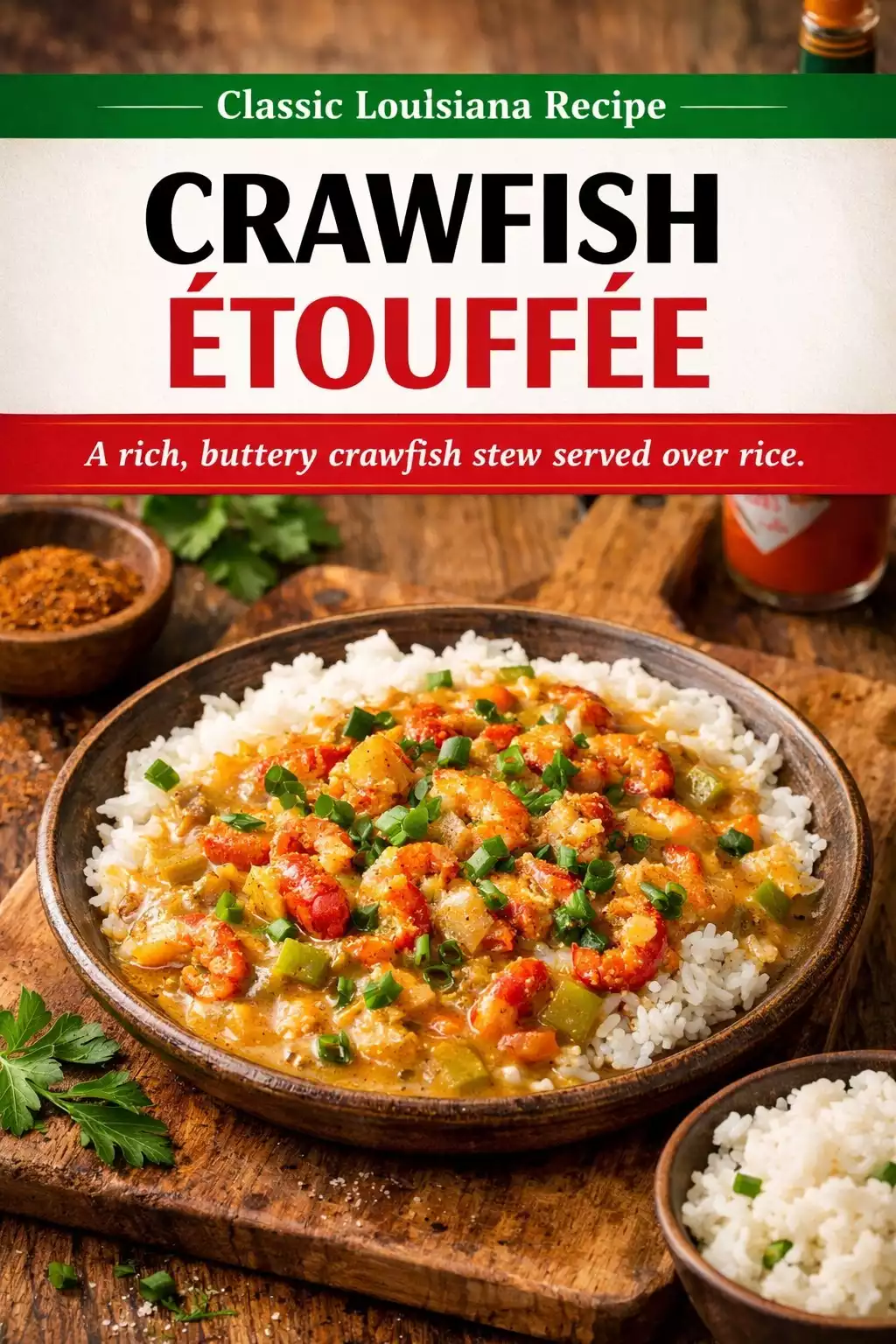
I spent 30 years in kitchens so you don’t have to mess this up. Crawfish Étouffée is the dish that separates people who learned to cook in Louisiana from everyone else. It looks simple: crawfish tails in a butter sauce, served over rice. And technically, it is simple. The complexity is in the layering — the roux, the Trinity, the shrimp stock, the butter finish. Each step takes five minutes. Together, they produce something that tastes like it took all day.
Crawfish Étouffée is inherently a Louisiana dish. Outside Louisiana, crawfish tails are sold frozen at most Asian markets and some grocery stores — they work perfectly in this preparation. Don’t let the sourcing challenge stop you. The frozen tails are already cooked and need only a few minutes in the finished sauce.
This is the crawfish etouffee recipe built the right way — from-scratch stock, a proper blonde roux, and a butter finish that makes the sauce glossy and rich. The best crawfish étouffée is served over white rice with a generous amount of hot sauce available at the table.
Why This Crawfish Étouffée Works
- Blonde roux — the correct base for étouffée; lighter than gumbo roux, adds body without bitterness
- The Holy Trinity, finely diced — fine dice means even cooking and a sauce-like texture rather than chunky vegetable bits
- Seafood stock — shrimp shell stock or bottled clam juice amplifies the seafood character enormously
- Crawfish tails added at the end — already cooked; just needs warming through to prevent toughening
- Cold butter finish — the butter emulsification is what makes the sauce glossy and restaurant-quality
Ingredients
Serves 4
- 1 lb crawfish tails, cooked (fresh Louisiana or frozen; thaw and drain if frozen)
- 4 tablespoons unsalted butter, divided
- 2 tablespoons all-purpose flour
- 1 medium onion, finely diced
- 2 stalks celery, finely diced
- 1 green bell pepper, finely diced
- 4 garlic cloves, minced
- 1½ cups shrimp stock or clam juice + water (50/50)
- 1 tablespoon Worcestershire sauce
- 1 teaspoon Creole seasoning
- 1 teaspoon smoked paprika
- ½ teaspoon cayenne pepper
- Salt and white pepper to taste
- 2 tablespoons cold butter, for finishing
- Sliced scallions and fresh parsley, for garnish
- White rice, for serving
How to Make Crawfish Étouffée
Step 1: Make the Roux
In a heavy-bottomed saucepan or skillet, melt 2 tablespoons butter over medium heat. Add flour and stir constantly for 5–7 minutes until golden blonde — peanut butter color. The roux should smell nutty, not burnt. This is the body of the étouffée.
Step 2: Build the Vegetable Base
Add remaining 2 tablespoons butter to the roux. Add onion, celery, and bell pepper. Cook over medium heat for 5–7 minutes until softened. The fine dice should melt almost into the sauce rather than remaining chunky. Add garlic and cook 1 minute. Add Creole seasoning, smoked paprika, and cayenne, stirring to coat.
Step 3: Build the Sauce
Gradually whisk in shrimp stock or diluted clam juice. Add Worcestershire sauce. Bring to a simmer and cook 10–12 minutes until the sauce thickens to a gravy-like consistency. Taste and adjust seasoning — this is where the étouffée’s flavor is established. It should be savory, slightly spicy, and deeply aromatic.
Step 4: Add Crawfish and Finish
Add crawfish tails to the simmering sauce. Stir gently to coat. Cook only 3–5 minutes — they’re already cooked and just need warming. Over-cooking makes them rubbery. Remove from heat, stir in 2 tablespoons cold butter until the sauce becomes glossy. Taste for final seasoning.
Step 5: Serve
Place white rice in a bowl, ladle étouffée generously over and around the rice. Garnish with scallions and parsley. Serve immediately with hot sauce on the table.
Tips & Common Mistakes
- Don’t overcook the crawfish — cooked crawfish in heat for more than 5 minutes starts turning rubbery. They’re already done; you’re just warming them.
- Fine dice the Trinity — étouffée is a sauce, not a vegetable stew. Small, even dice means the vegetables melt into the sauce rather than overwhelming the crawfish.
- Cold butter finish off heat — this is critical for the glossy, restaurant-quality sauce. Warm butter breaks; cold butter emulsifies properly.
- Season the sauce before the crawfish — taste the sauce at the correct level before adding protein. You can’t properly season once the crawfish are in.
- Use real seafood stock — chicken stock works but produces a blander result. Shrimp stock or clam juice adds the briny depth that makes this dish taste of the Gulf.
Variations
- Shrimp Étouffée: Replace crawfish with 1.5 lbs peeled shrimp. The most widely available version; cook the shrimp 3–5 minutes from raw.
- Creamy Étouffée: Add ¼ cup heavy cream with the stock for a richer, more indulgent sauce.
- Tomato Étouffée: Add ½ cup diced tomato with the vegetables. A slight Creole twist on the classic Cajun preparation.
What to Pair With
- A natural companion to shrimp étouffée for a comparison spread
- Pairs with southern fried catfish for a classic Southern seafood table
- Natural companion to new orleans creole gumbo at a Louisiana feast
- Alongside authentic jambalaya for the full experience
- Pairs with louisiana red beans and rice for a complete Southern spread
Storage & Reheating
- Best fresh: Like shrimp étouffée, the crawfish version is best the moment it’s made. The crawfish texture and butter sauce degrade with storage.
- Refrigerator: 2 days maximum. Reheat very gently over low heat with a splash of stock. The butter will need to be re-emulsified.
- Freezer: Not recommended. Crawfish tail texture degrades significantly after freezing and reheating.
Frequently Asked Questions
Where can I buy crawfish tails outside Louisiana?
Asian supermarkets and international grocery stores frequently stock frozen cooked crawfish tails. Online seafood retailers are another option. In a pinch, large shrimp make an excellent substitute — the preparation is identical.
Are frozen crawfish tails as good as fresh?
For étouffée, yes — the cooking process involves warming in the sauce, not showcasing raw shellfish. Frozen crawfish tails that are properly thawed and drained perform very well. Louisiana-origin frozen tails are preferred over imported when available.
What’s the difference between étouffée and bisque?
Bisque is a smooth, cream-based soup. Étouffée is a thick, butter-based sauce served over rice with whole pieces of shellfish. Both use seafood as the primary flavor, but they’re completely different in technique, texture, and service.
Why is my étouffée sauce thin?
Roux wasn’t cooked long enough, or not enough roux was made relative to the liquid. Simmer longer to reduce. You can also mix a tablespoon of softened butter with a tablespoon of flour (beurre manié) and stir it into the simmering sauce to thicken quickly.
Can I make étouffée spicier?
Yes — increase cayenne and Creole seasoning. A dash of hot sauce directly in the sauce (Crystal or Tabasco) during cooking also works. In Louisiana, proper étouffée has noticeable heat. Adjust to your preference.