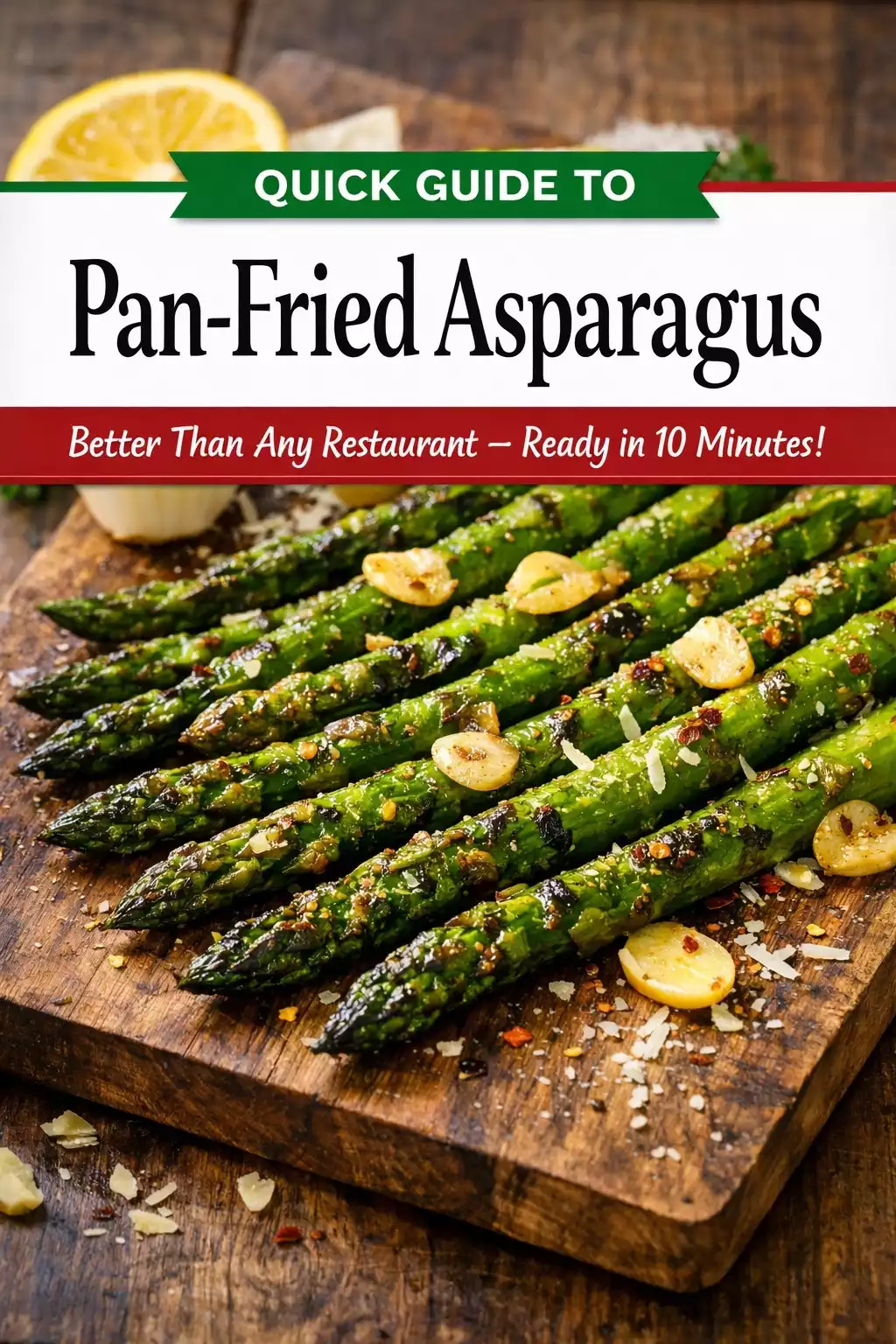
I‘ve made this a thousand times. It gets better every time. Pan-fried asparagus is the stovetop answer to the question you’re asking at 6 PM when the oven feels like too much: how do I make asparagus great in under ten minutes on the stove? High heat, enough oil, and the patience to leave it alone for two minutes before you start tossing. That’s the whole method.
I’ve roasted asparagus, I’ve blanched and grilled asparagus, I’ve done the fancy French version with hollandaise and hazelnut butter. But when I need something fast, something reliable, and something that makes people say “this is the best asparagus I’ve ever had” — this pan-fried version is what I reach for. The stovetop caramelization gives you blistered, slightly charred edges and a tender-crisp interior that roasting can’t always match for speed.
This is the pan fried asparagus technique that works on any stove, in any pan, in under ten minutes. Whether you go the Italian garlic-lemon direction or keep it simple with oil and salt, this is the version worth having.
Why This Pan-Fried Asparagus Works
- High heat — creates char and blistering at the contact points; moderate heat just steams
- Leave it alone initially — the first 2 minutes undisturbed builds the caramelized contact layer
- Enough oil to coat — oil conducts heat to all surfaces; dry asparagus in a hot pan scorches unevenly
- Salt at the beginning — seasons from inside out as the asparagus cooks
- Garlic and lemon finish — both added off or near the end to preserve freshness
Ingredients
Serves 4
- 1 lb asparagus, woody ends trimmed
- 2 tablespoons olive oil or butter (or both)
- 3 garlic cloves, minced or thinly sliced
- 1 teaspoon kosher salt
- ¼ teaspoon black pepper
- Red pepper flakes (optional)
- Juice of ½ lemon
- Lemon zest (optional)
- Grated Parmesan for finishing (optional)
How to Make Pan-Fried Asparagus
Step 1: Trim and Dry
Trim woody ends from asparagus — snap one to find the break point, use it as a guide for the rest. Dry thoroughly with paper towels. Wet asparagus on a hot pan creates steam and prevents caramelization.
Step 2: Heat the Pan
Heat a large skillet (cast iron or stainless) over medium-high heat until very hot — a drop of water should evaporate immediately. Add oil and let heat 30 seconds until shimmering.
Step 3: Add Asparagus and Don’t Touch
Add asparagus in a single layer. Season immediately with salt and pepper. Do not move for 2 minutes — let the caramelization build undisturbed on the bottom of each spear. Toss or turn, then cook another 2–3 minutes, tossing occasionally, until the asparagus is bright green, blistered in spots, and tender-crisp.
Step 4: Add Garlic and Finish
Add garlic to the pan. Toss for 30–60 seconds — it cooks fast in the hot oil and asparagus environment. Don’t let it brown past golden. Remove from heat. Add red pepper flakes if using. Squeeze lemon juice over immediately. Add lemon zest and Parmesan if desired. Serve straight from the pan.
Tips & Common Mistakes
- Very hot pan — medium heat produces steamed asparagus. You need high heat for blistering and caramelization.
- Don’t move immediately — the caramelization happens on contact. Moving it in the first 2 minutes prevents any browning from forming.
- Dry the asparagus — same rule as always with high-heat cooking: water prevents browning and creates steam.
- Watch the garlic — it goes from golden to burnt in 30 seconds. Add it at the end and keep moving it in the pan.
- Lemon off heat or at the very end — lemon juice in a hot pan evaporates immediately and turns bitter. Add it after the heat is off or reduced.
Variations
- Butter-Basted: Use half olive oil, half butter. Tilt the pan and baste the asparagus with the foaming butter during the last minute of cooking.
- With Egg: Add two cracked eggs over the asparagus in the final minute. Cover and let the whites set while the yolk stays runny. A quick breakfast or brunch.
- Asian-Style: Use sesame oil, add a splash of soy sauce and a pinch of ginger. Finish with sesame seeds instead of Parmesan.
- With Prosciutto: Add thin slices of prosciutto to the pan with the asparagus. The prosciutto crisps and the asparagus absorbs the pork fat. Effortlessly elegant.
What to Pair With
- A quick alternative to oven roasted asparagus
- Natural companion to roasted butternut squash on a vegetable plate
- Pairs with sautéed garlic green beans for a quick green vegetables spread
- Partners with crispy roasted broccoli
- Beautiful alongside garlic baby bok choy
Storage
- Best immediately: Pan-fried asparagus is at peak quality right out of the skillet. Eat within 20 minutes for optimal texture.
- Refrigerator: 3 days in an airtight container. Good cold in salads and grain bowls.
- Reheat: Quick hot skillet with a splash of oil, 2–3 minutes. Don’t microwave.
Frequently Asked Questions
What’s better — pan-fried or oven-roasted asparagus?
Different tools for different situations. Oven-roasted produces more even caramelization across the entire spear and is better for larger quantities. Pan-fried is faster, more interactive, and produces excellent char on the contact points. On a weeknight, pan-fried wins for speed.
Can I pan-fry frozen asparagus?
Not with great results. Frozen asparagus contains significant water from the freezing process. It will release steam in the pan and won’t caramelize properly. Thaw and dry very thoroughly if using frozen — the results will still be less crispy than fresh.
What pan is best for pan-frying asparagus?
Cast iron is ideal — retains heat well and produces excellent browning. Stainless steel also works well. Non-stick pans don’t get hot enough for proper caramelization and should be avoided for this application.
How do I prevent garlic from burning in the pan?
Add garlic only in the last 45–60 seconds of cooking, after the asparagus is already done. The residual oil and pan temperature will cook the garlic quickly. Keep stirring it and remove from heat as soon as it’s golden.
Should the asparagus be tender or crispy when pan-fried?
Tender-crisp is the goal — yielding when you bite but with a slight resistance, not mushy. The exterior should have visible char spots; the interior should be cooked through but not limp. Overcooked asparagus turns army green and loses its snap entirely.