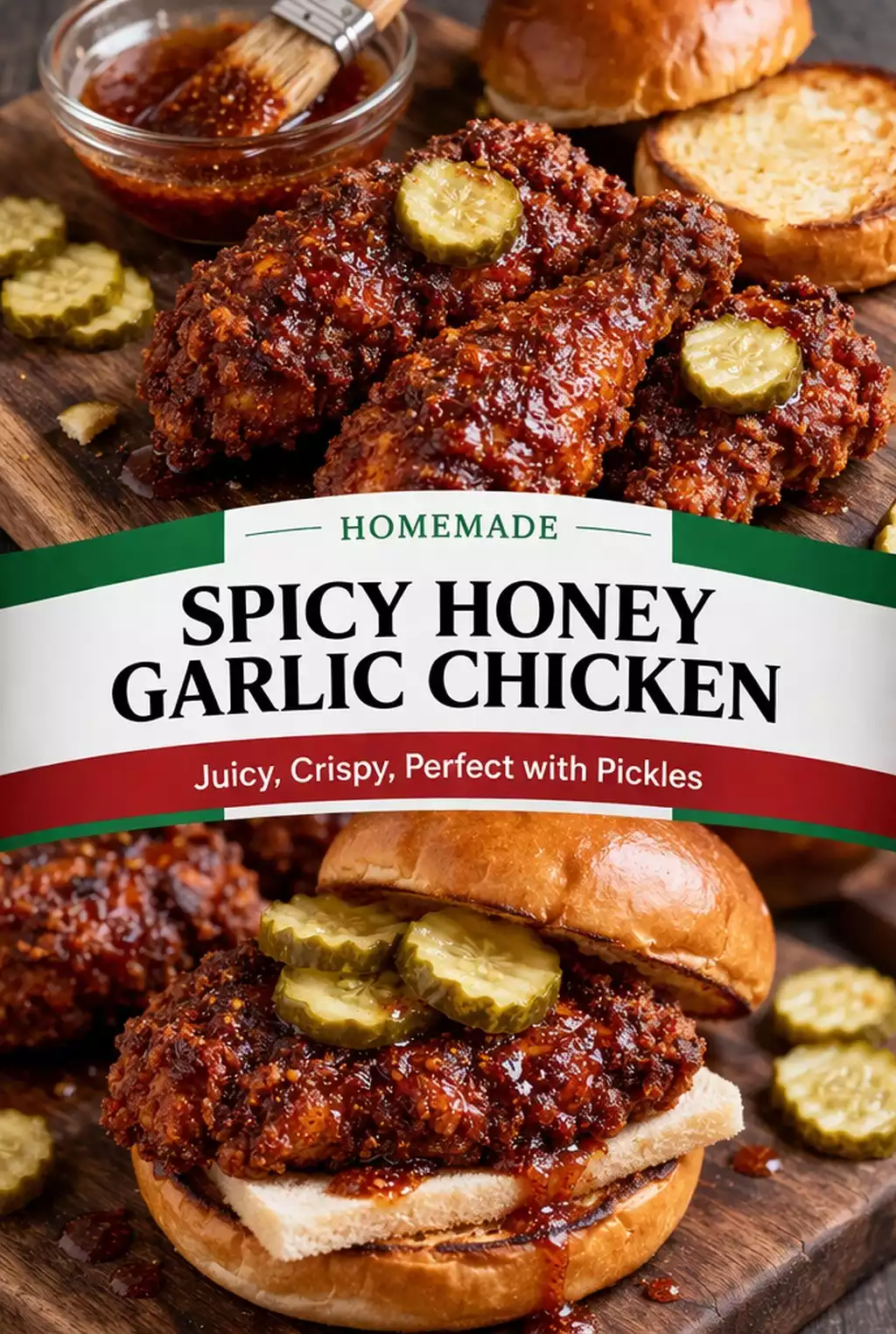
My old head chef used to say — if the aroma doesn’t hit the hallway, start over. The Nashville Hot Chicken Sandwich sends that aroma three floors up. That combination of hot oil, cayenne, brown sugar, and perfectly fried chicken — all landing on a toasted brioche bun with pickles and slaw — is one of the great smell-and-taste combinations in American food history. Prince’s Hot Chicken in Nashville created this style and changed the country’s relationship with fried chicken. This is the home version that doesn’t require a flight to Tennessee.
The magic of Nashville hot chicken is the spice paste applied immediately after frying — while the chicken is still screaming hot — which blooms the spices in the residual frying oil and creates a finish that’s simultaneously crunchy, spicy, rich, and impossible to stop eating. The heat level is adjustable. The technique is not. Fry it right, paste it immediately, and rest it for two minutes. That sequence is the whole secret.
I made my first Nashville hot chicken sandwich after eating through four different versions in Nashville and coming home determined to get the paste ratio right. The original is aggressively hot — sweat-inducing, hiccup-producing, genuinely test-your-tolerance hot. This recipe is adjustable from warm to incendiary. Start at medium heat and work your way up. Or go straight to the deep end. I won’t judge either way.
Why This Recipe Works
- Buttermilk marinade — Marinating chicken in seasoned buttermilk tenderizes the meat through the acidity and creates a wet surface for the flour coating to adhere to. The result is a consistently juicy interior even after deep frying.
- Double-dredge technique — Dipping in flour, then back in the buttermilk, then back in the flour creates a thicker, more textured crust that stays crunchy longer and provides more surface area for the spice paste to cling to.
- Hot spice paste applied immediately — The traditional technique — applying the cayenne-butter-sugar paste to the chicken straight from the hot oil — blooms the spices and creates a glossy, deeply flavored finish that no pre-coating technique can replicate.
- Pickles on the sandwich — Non-optional. The acid and crunch of dill pickles cuts through the richness of the fry and the heat of the paste. It’s the only topping a Nashville hot chicken sandwich actually needs.
Ingredients
For the Chicken Marinade
- 2 pounds boneless, skinless chicken thighs (pounded to even thickness)
- 1 cup buttermilk
- 1 teaspoon hot sauce
- 1 teaspoon garlic powder
- 1 teaspoon onion powder
- 1 teaspoon salt
- ½ teaspoon black pepper
For the Dredge
- 2 cups all-purpose flour
- 2 teaspoons salt
- 1 teaspoon black pepper
- 1 teaspoon garlic powder
- 1 teaspoon paprika
For the Nashville Hot Paste
- 4 tablespoons hot frying oil (ladled from the fryer)
- 2-3 tablespoons cayenne pepper (2 = medium, 3 = hot, more = Nashville-style serious)
- 1 tablespoon brown sugar
- 1 teaspoon smoked paprika
- 1 teaspoon garlic powder
- ½ teaspoon salt
For the Sandwich
- 4 brioche buns, toasted in butter
- Dill pickles, sliced (generous amount)
- White bread (traditional underneath the chicken) or slaw
- Neutral oil for frying (vegetable, canola, or peanut oil)
Instructions
Step 1: Marinate the Chicken
Combine buttermilk, hot sauce, garlic powder, onion powder, salt, and pepper in a bowl. Add chicken thighs and turn to coat completely. Marinate in the refrigerator for at least 4 hours, preferably overnight. The longer it marinates, the more tender and flavorful the chicken will be. Don’t skip this step — the buttermilk marinade is what keeps the chicken juicy through frying.
Step 2: Set Up the Dredging Station
Whisk together flour, salt, pepper, garlic powder, and paprika in a large bowl. Set up a station: marinated chicken, seasoned flour, marinating buttermilk (reuse it for double-dredge), seasoned flour again. Pull each piece of chicken from the marinade, dredge in flour (pressing firmly), dip back in the buttermilk, then dredge in flour again. Press the flour coating firmly onto the chicken each time. Set coated chicken on a wire rack for 10 minutes before frying — this sets the crust.
Step 3: Heat the Oil
In a large Dutch oven or cast iron skillet, heat 2-3 inches of neutral oil to 350°F. Use a thermometer — oil temperature is the variable that determines everything about the fry. Too cool and the chicken absorbs oil and becomes greasy. Too hot and the outside burns before the center cooks. 350°F is the correct temperature and it’s non-negotiable.
Step 4: Fry the Chicken
Fry chicken in batches of 2 — don’t crowd the pot. Maintain oil temperature at 340-360°F throughout. Fry for 5-7 minutes per side until deep golden brown and the internal temperature reaches 165°F. Remove with tongs to a wire rack (not paper towels, which soften the bottom crust).
Step 5: Make and Apply the Hot Paste
Immediately after the chicken comes out of the oil, ladle 4 tablespoons of the hot frying oil into a heat-safe bowl. Add cayenne, brown sugar, smoked paprika, garlic powder, and salt. Stir to combine — it should look like a dark reddish paste. Brush or spoon this paste over the top of each piece of hot fried chicken. Let sit for 2 minutes before plating so the paste adheres and the spices bloom fully.
Step 6: Build the Sandwich
Toast brioche buns in butter until golden. Place a piece of white bread on the bottom bun (traditional base that absorbs the extra dripping spice paste — this is the authentic Nashville technique). Lay the hot chicken on top. Add a generous layer of dill pickle slices. Top bun goes on. Serve immediately — Nashville hot chicken does not wait.
Tips & Common Mistakes
- Don’t rush the marinade: Four hours minimum. Overnight is better. The buttermilk needs time to tenderize the meat and penetrate the chicken. Short marinating produces tough, less flavorful chicken.
- Maintain oil temperature: Buy a thermometer if you don’t have one. Guessing at oil temperature produces inconsistent results. $15 investment, lifetime of perfectly fried chicken.
- Apply paste while hot: The residual heat from the chicken and the hot oil in the paste is what blooms the spices. Applying it to cold chicken produces a flat, grainy paste that doesn’t integrate. Do this step immediately.
- Don’t skip the pickles: The acid and crunch are functional, not decorative. They balance the heat, cut the fat, and provide textural contrast. Nashville hot chicken without pickles is technically incomplete.
- Start with less cayenne: You can always add more paste at the table. You cannot remove it once applied. Two tablespoons is already a serious amount of heat for most people.
Variations Worth Trying
- Tenders Version: Cut chicken into strips instead of thighs for Nashville hot chicken tenders. Shorter fry time (4-5 minutes), same paste. Excellent for dipping into ranch or honey.
- Waffle Sandwich: Replace the brioche bun with a Belgian waffle. The sweet, slightly crisp waffle against the spicy chicken is the version that went viral and deserved to.
- Air Fryer Version: Spray dredged chicken with cooking spray and air fry at 400°F for 12-15 minutes, flipping halfway. Apply the paste while hot but use melted butter instead of frying oil as the base.
- Hot Chicken Biscuit: Serve the hot chicken on a freshly baked buttermilk biscuit instead of a brioche bun. This is the morning version and it’s obscenely good for brunch.
For more fried chicken recipes and spicy chicken variations, try Southern fried chicken, spicy chicken tacos, chicken pot pie, shredded chicken tacos, and creamy chicken casserole.
Storage & Reheating
- Best eaten immediately: Nashville hot chicken is a fresh dish. The crust softens significantly within an hour of frying.
- Refrigerator: Store fried chicken separately from buns and toppings for up to 3 days. Don’t assemble sandwiches ahead of time.
- Reheating: Reheat chicken on a wire rack in a 375°F oven for 10-12 minutes until the crust crisps back up. Do not microwave — it makes the crust soft and gummy. Apply a fresh brush of paste after reheating.
Frequently Asked Questions
How hot is “Nashville hot”?
The original Prince’s version is genuinely intense — the kind of heat that builds with each bite and lingers for 20 minutes after you finish. The medium version here (2 tablespoons cayenne) is noticeable and building but manageable. Adjust to your threshold. More brown sugar in the paste softens the heat slightly while keeping the flavor profile.
Can I use chicken breasts?
Yes, but pound them to an even thickness (about ¾ inch) before marinating. Uneven breasts cook unevenly — the thin ends overcook while the thick center finishes. Thighs are more forgiving and have more flavor, but breasts work with proper preparation.
Why white bread on the sandwich?
This is the Nashville tradition — a piece of plain white bread under the chicken acts as a sponge for the dripping spice paste and oil. It becomes something extraordinary: saturated with spice and grease, simultaneously a utensil and part of the meal. Eat it or skip it, but know it’s there for a reason.
Can I make this less spicy?
Absolutely. Reduce cayenne to 1 teaspoon for a mild version that still has the flavor profile of the paste without serious heat. Add more smoked paprika to compensate for the visual color and smoky depth.
What oil is best for frying?
Peanut oil is traditional for fried chicken — high smoke point, neutral flavor, and adds a slight background richness. Vegetable or canola oil are excellent alternatives. Avoid olive oil (smoke point too low) and coconut oil (flavor too distinctive for this application).