Don’t rush this. Good food doesn’t have a timer — and that includes the timing of the fry, the temperature of the oil, and the patience to let the wings sit in the hot sauce properly before serving. Spicy Buffalo Chicken Wings are one of the great American bar-food inventions: simple ingredients, executed with technique, producing something that’s simultaneously crispy, saucy, tangy, and addictively spicy. When they’re right, you can’t stop eating them. When they’re wrong — when the skin is rubbery, the sauce is watery, the heat is artificial — they’re a disappointment no amount of blue cheese dressing can fix.
The original Buffalo wings were invented at the Anchor Bar in Buffalo, New York in 1964 by Teressa Bellissimo. Butter and hot sauce. That’s the original recipe. No cornstarch slurry, no honey, no fancy additions. The genius was in the ratio and the technique — frying the wings crispy, then tossing them immediately in warm, buttery hot sauce that coats every surface and clings without running off. Everything since then has been variation on that foundation.
My version adds one wrinkle the original doesn’t have: a dry brine and an overnight rest in the refrigerator before frying. This step dries out the skin, seasons the meat, and produces a wing that fries with a crust that would make Teresa Bellissimo nod with approval. The sauce stays traditional. The method gets an upgrade.
Why This Buffalo Wings Recipe Works
- Overnight dry brine — Salting the wings and leaving them uncovered in the refrigerator overnight draws out surface moisture, seasons the meat deeply, and creates a skin that fries to an extraordinary crunch.
- Double fry method — A first fry at lower temperature renders out the fat under the skin and cooks the meat through. A second fry at higher temperature crisps the exterior to glass-like perfection. The double fry produces a crunch that holds up under sauce far better than a single fry.
- Butter in the sauce — Cold butter whisked into hot sauce emulsifies into the sauce and creates a glossy, clingy finish that adheres to every wing. Sauce without butter runs off immediately — sauce with butter becomes a coating.
- Toss while both are hot — Hot wings + warm sauce = proper coating. Cold wings or cold sauce produces a sticky mess that doesn’t integrate. The toss happens immediately after the second fry.
Ingredients
For the Wings
- 3 pounds chicken wings, split into drumettes and flats
- 1½ teaspoons salt (for dry brine)
- 1 teaspoon baking powder (not baking soda — changes the skin texture)
- ½ teaspoon black pepper
- ½ teaspoon garlic powder
- Neutral oil for frying
For the Buffalo Sauce
- ¾ cup Frank’s RedHot sauce (the original and correct choice)
- 6 tablespoons unsalted butter, cold, cut into cubes
- 1 tablespoon white vinegar
- 1 teaspoon garlic powder
- Pinch of cayenne (optional, for extra heat)
- Pinch of salt
For Serving
- Blue cheese dressing or ranch
- Celery sticks
- Carrot sticks
Instructions
Step 1: Dry Brine the Wings
Pat wings completely dry with paper towels. Combine salt, baking powder, black pepper, and garlic powder. Toss wings in this dry mixture until evenly coated. Arrange in a single layer on a wire rack set over a baking sheet. Refrigerate uncovered for at least 4 hours, ideally overnight. The baking powder raises the pH of the skin, which accelerates browning and crisping dramatically during frying. Don’t skip this.
Step 2: First Fry (280°F)
Heat oil in a large Dutch oven to 280°F. Fry wings in batches of 8-10 for 8-10 minutes until cooked through and the skin has tightened, but not yet browned. The wings should look pale and cooked but not crispy — that comes in the second fry. Remove to a wire rack and let rest for at least 10 minutes. The wings can sit at room temperature for up to 1 hour at this stage before the second fry.
Step 3: Second Fry (400°F)
Increase oil temperature to 400°F. Return wings in batches and fry for 4-5 minutes until deeply golden, crispy, and blistered on the skin. The skin should crunch when you bite it. Remove to a wire rack immediately — not paper towels, which steam the bottom and soften the crust you just created.
Step 4: Make the Buffalo Sauce
Warm Frank’s RedHot in a small saucepan over medium-low heat until just barely simmering. Remove from heat and whisk in cold butter cubes one at a time until fully emulsified into a glossy, smooth sauce. Add white vinegar, garlic powder, cayenne, and salt. The sauce should look thick, glossy, and orange-red. Taste and adjust — more butter for richness and mellowness, more hot sauce for heat.
Step 5: Toss and Serve
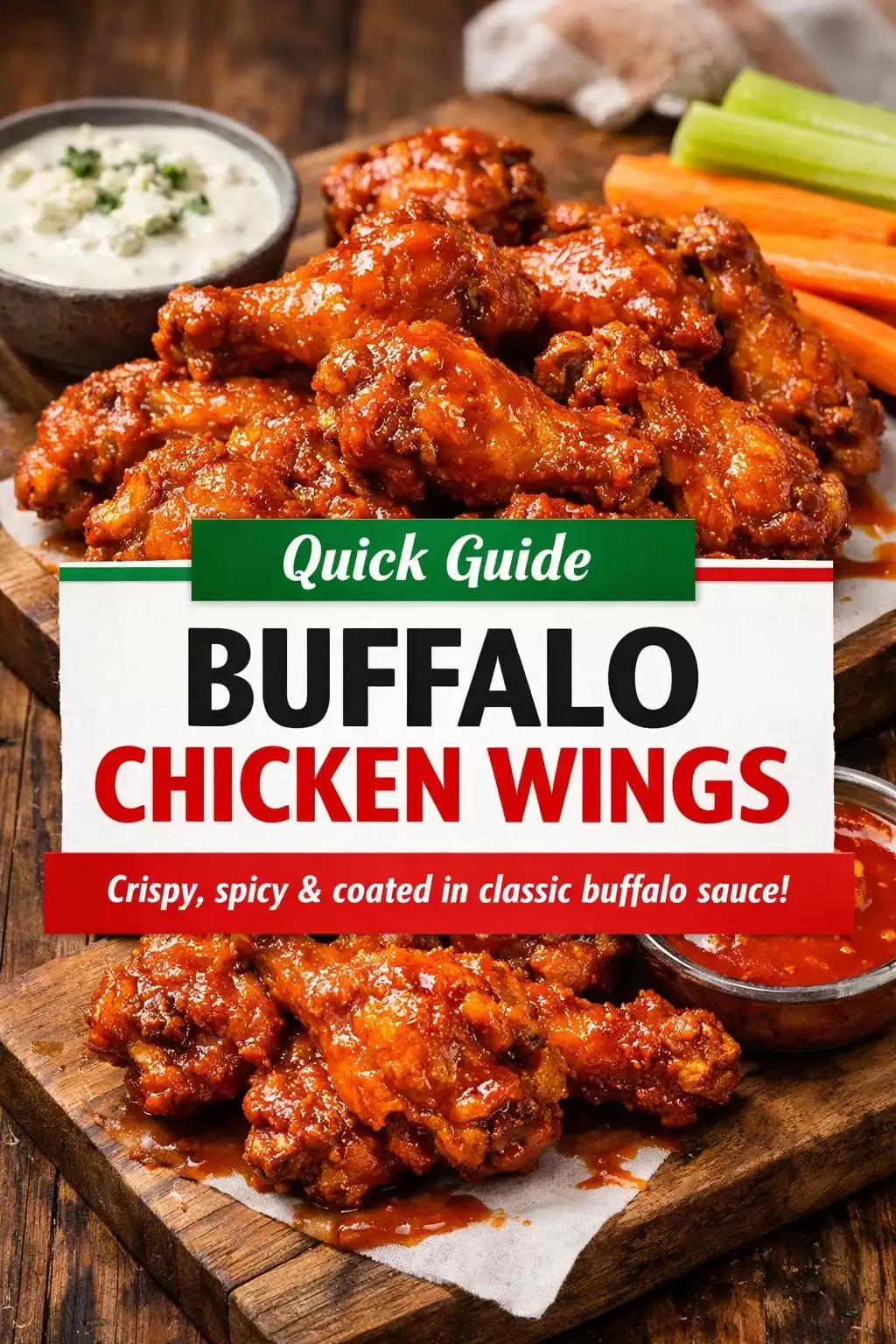
Add hot wings to a large bowl. Pour warm buffalo sauce over them and toss vigorously until every surface is completely coated. The wings should look lacquered and glossy — not swimming in sauce, not barely coated. Serve immediately with blue cheese or ranch, celery, and carrots.
Tips & Common Mistakes
- Baking powder in the dry brine: It’s not baking soda — they’re different. Baking powder raises the pH of the skin and creates a faster, more dramatic browning and crisping reaction during frying. This is a real technique used by professional fry cooks.
- Don’t skip the overnight rest: Dry skin = crispy skin. The refrigerator overnight rest removes surface moisture that would otherwise steam the exterior during frying. It’s not optional for maximum crunch.
- Cold butter into warm sauce: Emulsifying cold butter into warm (not hot) hot sauce creates a thick, clingy coating. If the hot sauce is boiling, the butter will break and you’ll get a greasy, separated sauce that runs off the wings.
- Use Frank’s RedHot: Other hot sauces work, but Frank’s is the traditional choice and the flavor profile is calibrated specifically for this application. It’s vinegar-forward and the right level of heat. Don’t substitute with a different brand without adjusting the butter ratio.
- Serve immediately: Buffalo wings begin losing their crunch within minutes of saucing. They’re a finish-before-you-sit-down food. Plan accordingly.
Variations Worth Trying
- Baked Buffalo Wings: Skip the frying entirely. Dry-brine the wings as directed, then bake on a wire rack at 425°F for 45-50 minutes, flipping once at 30 minutes. The result is crispier than most baked wings but not quite the same as fried — still very good.
- Korean-Style Spicy Wings: Replace the buffalo sauce with a gochujang-based sauce (gochujang, soy, honey, garlic, sesame oil). Same frying technique, completely different flavor profile. Excellent for a different occasion.
- Honey Buffalo: Add 2 tablespoons of honey to the buffalo sauce for a sweet heat balance. Reduces the sharpness of the vinegar and adds caramelization when the wings are finished under a broiler for 2 minutes.
- Garlic Parmesan Wings: Skip the hot sauce entirely. Toss fried wings in melted butter, minced garlic (cooked briefly in the butter), and freshly grated Parmesan. Finish with parsley and lemon. This is the white sauce wing variation that everyone should have in their rotation.
For more game-day appetizers and fried chicken recipes, try buffalo chicken dip, slow cooker buffalo chicken, chicken 65, Nashville hot chicken sandwich, and homemade chicken nuggets.
Storage & Reheating
- Best eaten immediately: Wings lose crunch quickly after saucing. Make what you’ll eat.
- Refrigerator: Unsauced fried wings keep for 3-4 days. Reheat on a wire rack in a 400°F oven for 10-12 minutes to restore crunch, then toss in fresh sauce.
- Do not microwave: Microwaved fried chicken becomes soft and rubbery. Always reheat in the oven or air fryer for a usable result.
Frequently Asked Questions
What’s the difference between drumettes and flats?
Drumettes are the meatier, drumstick-shaped portion. Flats (also called wingettes) are the two-boned, flatter section. They have different meat-to-skin ratios and cook at slightly different rates. Splitting them ensures even cooking. Most people prefer one over the other — order extra whichever you prefer.
Can I use an air fryer?
Yes. Air fry at 400°F for 20-25 minutes, shaking every 7 minutes. Dry-brine first for best results. The crust is good — not quite as crunchy as double-fried but significantly better than most oven-baked versions. Toss in sauce immediately after cooking.
Why Frank’s RedHot specifically?
Frank’s is the original hot sauce used at the Anchor Bar and it’s calibrated for this application: vinegar-forward, medium heat, and an acidity level that emulsifies with butter beautifully. Other hot sauces work but will change the flavor profile. If substituting, use a hot sauce with a similar vinegar-forward base (Louisiana-style hot sauces generally work).
How do I keep the wings crispy at a party?
Keep fried wings on a wire rack in a 200°F oven until ready to sauce. Don’t sauce until serving — sauced wings lose their crunch within 10-15 minutes. Sauce in batches, serve immediately, and return to the oven between batches.
Can I make these without frying?
Yes. The baked method (425°F for 45-50 minutes on a wire rack) produces surprisingly crispy wings when you dry-brine them first. They’re not identical to fried, but they’re genuinely good and much easier to make for a large crowd without managing hot oil.