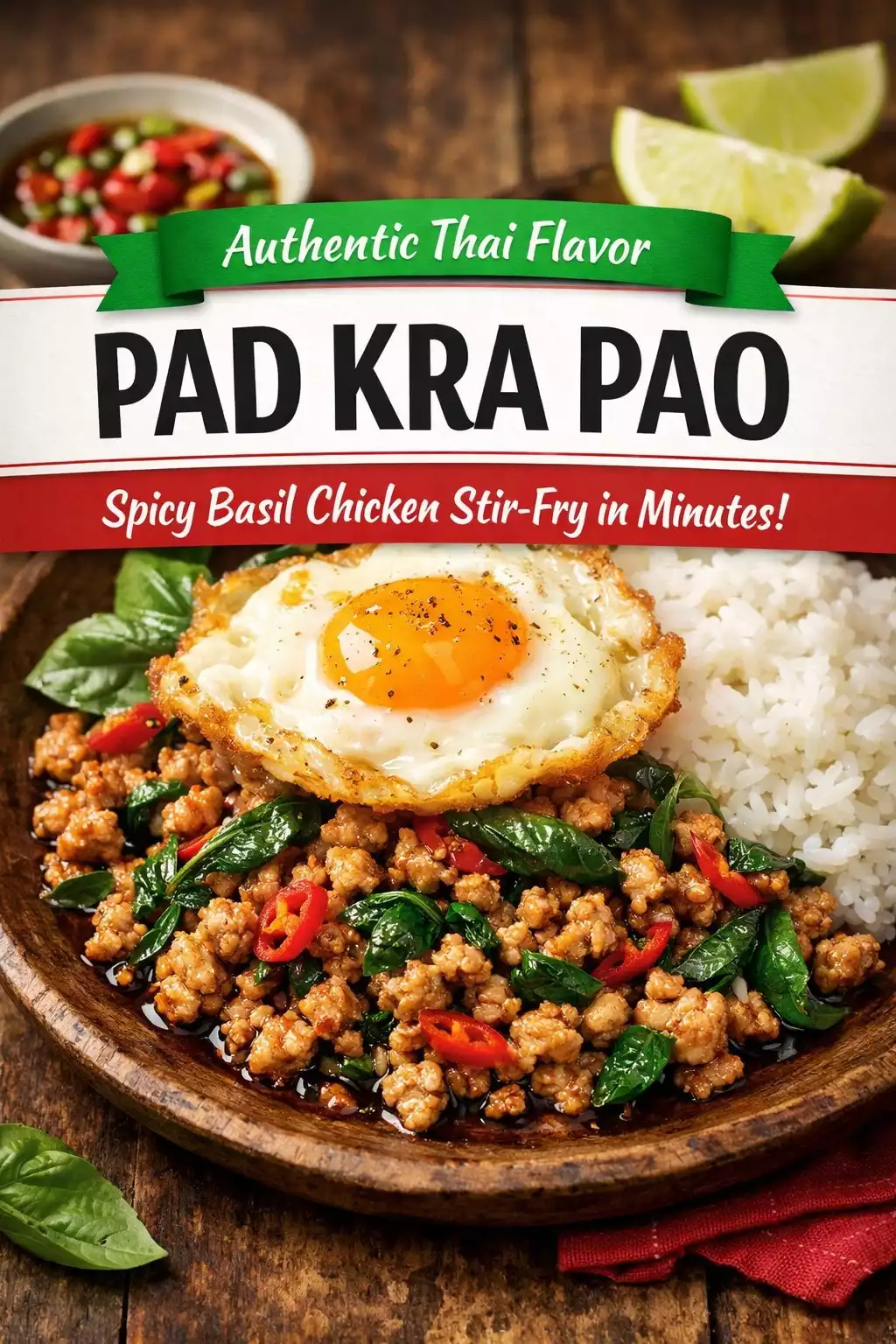
My nonna would’ve smacked me with a wooden spoon if I got this wrong — and she would’ve understood why I had to learn it anyway. Thai Basil Chicken, Pad Kra Pao, is one of those dishes that exists in a completely different flavor universe from Italian cooking and is simultaneously one of the most brilliantly constructed dishes I’ve ever tasted. Thai holy basil. Fish sauce. Oyster sauce. High heat. Thirty-year wok technique from cooks who could produce this in ninety seconds flat. It changed how I thought about quick cooking forever.
Pad Kra Pao translates roughly to “basil stir-fry” and it’s one of Thailand’s most beloved everyday dishes — the equivalent of pasta with marinara in Italian culture. It’s what Thai home cooks make when they don’t feel like cooking something elaborate, which means it gets made often, which means it’s been refined to absolute perfection over generations. Ground chicken, fragrant Thai basil, fish sauce, oyster sauce, a hit of heat from fresh chiles, and the kind of wok heat that most home kitchens struggle to achieve but can approximate with the right technique.
The key ingredient is Thai holy basil (krapao), which is significantly more peppery and pungent than Italian or Thai sweet basil. If you can find it at an Asian grocery store, use it. If you can’t, regular Thai basil works well. Italian basil is a distant third but will still produce a good dish. This is a recipe that rewards hunting for the right ingredients — and a good dish even when you can’t.
Why This Recipe Works
- High heat, fast cooking — Pad Kra Pao lives at high heat. The rapid sear of the ground chicken, the quick charring of the garlic and chiles, and the fast wilt of the basil are all possible only at high heat. Medium heat produces stewed chicken, not stir-fried.
- Fish sauce + oyster sauce combination — Fish sauce provides a deep, fermented umami saltiness. Oyster sauce adds thickness, sweetness, and a different umami note. Together they create a sauce with more depth than either produces alone.
- Dark soy sauce for color — A small amount of dark soy sauce gives the dish its characteristic deep brown color and adds a slightly sweet, slightly caramel note that regular soy sauce can’t replicate.
- Basil added off heat — Thai basil wilts and cooks beautifully but loses its fragrance if overcooked. Adding it off heat (or in the last 30 seconds) preserves the volatile aromatic compounds that make the dish smell and taste distinctly of basil.
Ingredients
For the Pad Kra Pao
- 1 pound ground chicken (or minced chicken thighs)
- 1½ cups fresh Thai holy basil leaves (or Thai sweet basil)
- 6 garlic cloves, minced
- 3-5 fresh Thai bird’s eye chiles, thinly sliced (adjust to heat preference)
- 2 tablespoons neutral oil (high smoke point — vegetable, canola, or avocado)
For the Sauce
- 2 tablespoons oyster sauce
- 1½ tablespoons fish sauce
- 1 tablespoon dark soy sauce
- 1 teaspoon light soy sauce
- 1 teaspoon sugar
- 2 tablespoons water
For Serving
- Jasmine rice
- Fried egg (traditional — crispy fried in a generous amount of oil)
- Extra fresh chiles and lime wedges
Instructions
Step 1: Mix the Sauce
Combine oyster sauce, fish sauce, dark soy sauce, light soy sauce, sugar, and water in a small bowl. Stir until sugar dissolves. Having the sauce mixed and ready before the heat goes on is essential — this dish cooks in under 5 minutes and you don’t have time to measure while the wok is screaming hot.
Step 2: Fry the Egg (Optional but Traditional)
Heat a generous amount of oil (2-3 tablespoons) in a small skillet over high heat until shimmering. Crack an egg into the hot oil — it will spit and sizzle dramatically. The edges of the white should bubble, frill, and turn golden-crispy while the yolk stays runny. This takes about 90 seconds. Remove and set aside on a plate. The crispy-edged, runny-yolk fried egg placed on top of the finished dish is the traditional Thai presentation and it’s not decorative — the runny yolk mixes with the sauce and rice and becomes part of the eating experience.
Step 3: Build the Aromatic Base
Heat oil in a wok or large, heavy-bottomed skillet over the highest heat your stove produces. When the oil is shimmering and just beginning to smoke, add garlic and chiles. Stir-fry for 30-45 seconds until fragrant and the garlic turns golden at the edges. This step happens fast — don’t walk away.
Step 4: Cook the Ground Chicken
Add ground chicken to the wok. Break it apart with a spatula and press it into the hot surface — let it sear for 30-45 seconds before stirring. This initial sear on the chicken creates browned, slightly caramelized meat with real flavor and texture. Continue cooking and breaking up the chicken for 2-3 minutes until cooked through with no pink remaining.
Step 5: Add Sauce and Basil
Pour the pre-mixed sauce over the cooked chicken. Stir to coat completely and cook for 30-45 seconds until the sauce reduces slightly and clings to the meat. Remove from heat (or keep on low) and add fresh basil leaves. Toss quickly — the residual heat will wilt the basil in about 30 seconds. Don’t overcook the basil or it loses its fragrance entirely.
Step 6: Plate and Serve
Serve over jasmine rice. Top with the crispy-edged fried egg. Serve with extra fresh chiles, fish sauce on the side, and lime wedges. The traditional Thai way to eat this dish — break the yolk over everything and let it run through the chicken and rice — is the correct approach and the most satisfying one.
Tips & Common Mistakes
- Use the hottest burner you have: High heat is not optional. If the wok isn’t screaming hot, the chicken steams instead of sears and you lose all the caramelization and wok flavor that defines this dish.
- Don’t skip the fish sauce: It smells aggressive in the bottle. It transforms in the heat of the wok into something deeply savory and complex. This dish isn’t the same without it. Trust the process.
- Find Thai holy basil if you can: Holy basil has a peppery, slightly clove-like flavor that’s distinctly different from sweet basil. Worth seeking out at Asian grocery stores. It’s not decorative — it’s the star of the dish.
- Mix the sauce before cooking: This dish cooks in 5 minutes total. There’s no time to measure sauces while the wok is hot. Mise en place is critical here.
- The fried egg is traditional for a reason: The crispy-edged, runny-yolk egg is the traditional topping and it’s not decorative. It completes the dish. Fry it separately in its own oil for the right texture.
Variations Worth Trying
- Pork Version (Pad Kra Pao Moo): Substitute ground pork for chicken. The higher fat content produces a richer, more deeply browned result with more fond in the wok. This is many Thai home cooks’ preferred protein for this dish.
- Tofu Version: Use firm tofu crumbled to resemble ground meat texture. Press and dry it well before adding to the wok. The sauce and basil carry the flavor — tofu is an excellent vehicle.
- Spicy Chicken Stir-Fry Version: Add sliced bell peppers and onions for a more substantial, vegetable-forward version. Increase the sauce by 50% to coat the additional vegetables.
- Over Rice Noodles: Serve over wide rice noodles instead of jasmine rice for a different textural experience. The sauce clings to the noodles beautifully.
For more spicy chicken recipes and Asian-inspired dishes, try spicy chicken stir-fry, spicy chicken fried rice, spicy chicken ramen, gochujang chicken thighs, and teriyaki chicken bowl.
Storage & Reheating
- Refrigerator: Store cooked Pad Kra Pao (without egg) in an airtight container for up to 4 days.
- Reheating: Reheat in a wok or skillet over high heat for 2-3 minutes. Add a splash of water if it seems dry. This is one of those dishes that reheats exceptionally well — the flavors deepen overnight.
- Freezer: Freeze for up to 3 months. Thaw overnight and reheat as above. The basil loses some of its freshness after freezing — add a few fresh leaves when reheating if available.
Frequently Asked Questions
What’s the difference between Thai holy basil and sweet basil?
Thai holy basil (krapao) has jagged-edged leaves, a dark green or slightly reddish color, and a peppery, slightly clove-like flavor. Sweet basil (horapa) is the common Italian-style basil with smoother, shinier leaves and a sweeter, more anise-forward flavor. For Pad Kra Pao, holy basil is the authentic choice. Sweet basil is a good substitute. Italian basil works in a pinch but has a significantly different flavor profile.
Can I use pre-minced garlic?
You can, but fresh garlic is significantly better here. Pre-minced garlic has a muted, slightly fermented flavor from the jar that doesn’t caramelize the same way fresh garlic does in a hot wok. For a dish this simple, fresh garlic matters more than in complex recipes where it’s one of many flavors.
How spicy is this dish?
Three Thai bird’s eye chiles is medium-hot by Western standards — noticeable, building heat. The traditional Thai version uses more chiles and is significantly hotter. Start with two and taste before adding more. You can always serve extra chiles on the side for heat seekers.
Why is dark soy sauce different from regular soy sauce?
Dark soy sauce is aged longer and has a sweeter, thicker consistency with a deeper color. It’s used primarily for color and subtle sweetness rather than saltiness. Regular soy sauce is saltier and thinner. In this dish, dark soy provides the characteristic deep brown color. If you only have regular soy sauce, use it — the flavor will be similar but the dish won’t have the same deep, rich color.
Can I make this without a wok?
Yes. Use the largest, heaviest skillet you have — cast iron is excellent. Heat it until very hot before adding oil. The goal is the same: high heat, fast cooking. A wok produces slightly more “wok hei” (smoky, charred flavor from the curved surface and high-heat exposure), but a hot cast iron skillet produces very good results.