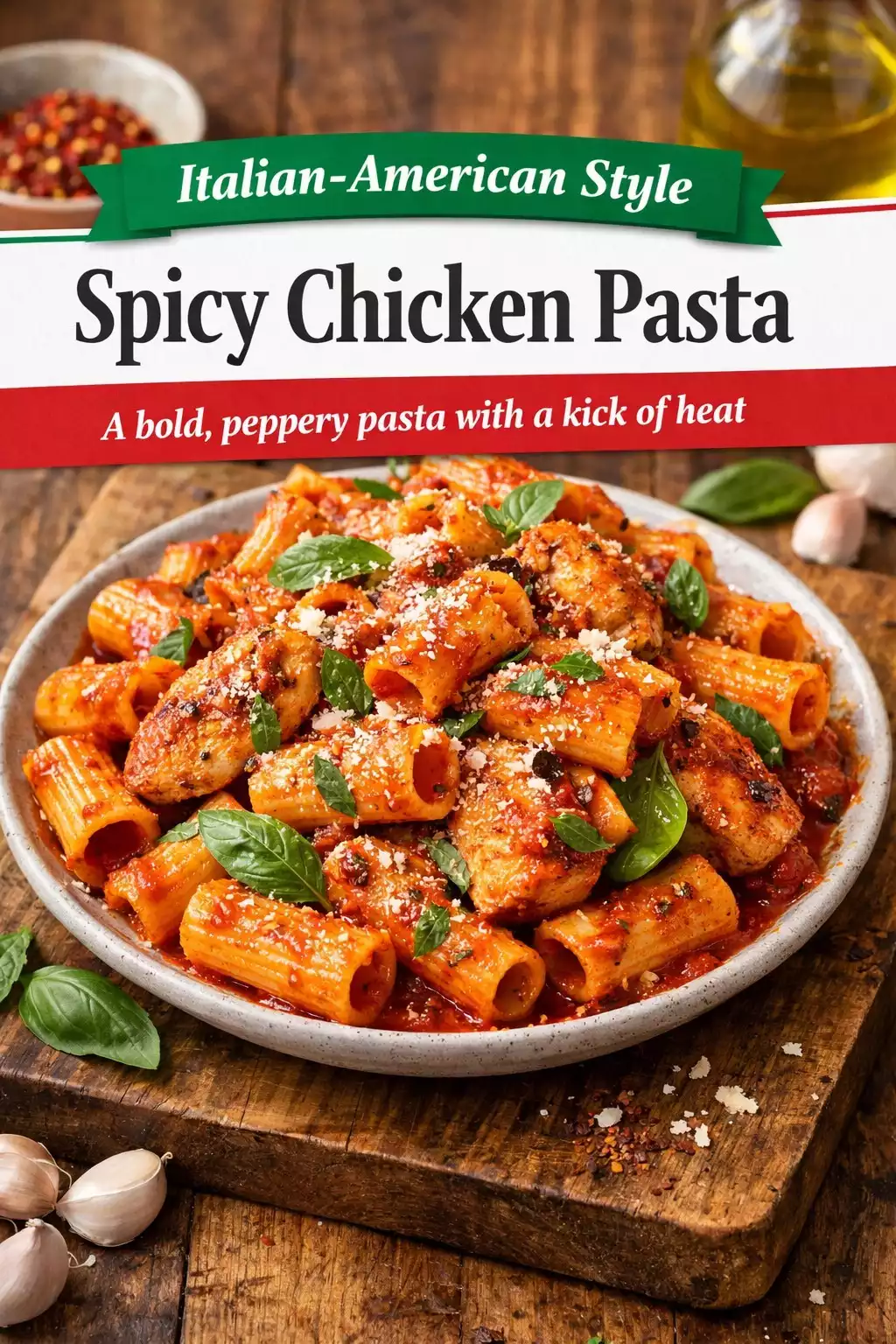
If you can boil water and follow directions, you can make this — and what you’ll end up with is a Spicy Chicken Pasta that belongs on any Italian table, including the ones where my family argues about whether something is authentic. This is the Italian-American home version: bold, peppery, saucy, with a heat element that builds as you eat instead of hitting you all at once. Pasta with chicken is not a traditional Italian combination — the Italians are right about that — but the sauce is traditional and the chicken is just the vehicle. If it tastes good, the argument loses.
The foundation of this dish is the arrabiata-style sauce — all’arrabbiata translates to “angry” in Italian, which is exactly how the sauce behaves when you add enough chili. Crushed San Marzano tomatoes, good olive oil, garlic, and red pepper flakes cooked down into something concentrated and alive. Add properly seared chicken, the right pasta, and enough pasta water to bring everything together, and you have a dinner that respects both the Italian tradition it borrows from and the American kitchen it was made in.
This is a 30-minute dinner on a weeknight and a proper meal worth eating on a Sunday. The spice level is yours to control. The pasta shape is yours to choose. The argument about authenticity is yours to have — or skip. Just make the pasta.
Why This Recipe Works
- Bloomed red pepper flakes — Cooking the chili flakes in olive oil at the start blooms their heat and color into the fat, distributing it evenly through the entire sauce instead of leaving spicy pockets.
- San Marzano tomatoes — San Marzano tomatoes have lower acidity, more sweetness, and a deeper, more complex flavor than generic canned tomatoes. In a simple sauce with few ingredients, the quality of the tomato is everything.
- Pasta water is the secret — The starchy cooking water emulsifies with the olive oil and tomato sauce, creating a glossy, clingy sauce that coats each piece of pasta instead of pooling at the bottom of the bowl.
- Finish pasta in the sauce — Adding pasta to the sauce 1-2 minutes before it’s fully cooked allows it to finish in the sauce, absorbing the flavors and creating a unified dish rather than pasta with sauce poured on top.
Ingredients
For the Dish
- 1 pound rigatoni or penne pasta
- 1.5 pounds boneless, skinless chicken breast or thigh, thinly sliced
- 1 can (28 oz) whole San Marzano tomatoes, crushed by hand
- 6 garlic cloves, thinly sliced
- 1-2 teaspoons red pepper flakes (1 = medium, 2 = spicy)
- ¼ cup good olive oil
- Salt and black pepper
- ½ cup pasta cooking water (reserved)
- Fresh basil leaves
- Freshly grated Parmigiano-Reggiano, for serving
Instructions
Step 1: Season and Sear the Chicken
Season chicken slices generously with salt and pepper. Heat 2 tablespoons of olive oil in a large, wide pan over high heat. Add chicken in a single layer and sear without stirring for 2-3 minutes until golden on one side. Flip and cook another 2 minutes. Remove and set aside — it doesn’t need to be fully cooked through at this stage; it will finish in the sauce.
Step 2: Build the Sauce Base
In the same pan over medium heat, add the remaining 2 tablespoons of olive oil. Add sliced garlic and red pepper flakes. Cook slowly for 2-3 minutes until garlic is golden and the oil has turned fragrant and slightly red from the chili. Don’t rush this step and don’t let the garlic burn — this infused oil is the flavor foundation of the entire dish.
Step 3: Add Tomatoes and Simmer
Add crushed San Marzano tomatoes with all their juices. Stir to combine with the infused oil. Season with salt and a pinch of sugar if the tomatoes taste very acidic. Simmer over medium heat for 15-20 minutes until the sauce thickens, darkens slightly in color, and the raw tomato taste cooks off. The sauce should taste rich, slightly sweet, and properly spicy.
Step 4: Cook the Pasta
Cook pasta in heavily salted water (the water should taste like the sea) until 2 minutes shy of al dente. Reserve 1 cup of pasta cooking water before draining. The starchy pasta water is not optional — it’s the binding agent that brings sauce and pasta together.
Step 5: Bring It All Together
Return chicken to the sauce and stir to coat. Add the drained pasta directly to the sauce pan. Add ¼ cup of pasta water. Toss vigorously over medium heat for 1-2 minutes, adding more pasta water as needed to create a glossy, coating sauce that clings to every piece of pasta. The pasta will absorb some sauce and continue cooking. Remove from heat and add fresh basil, tearing it by hand.
Step 6: Plate and Serve
Serve immediately in warm bowls. Drizzle with a thread of good olive oil. Finish with freshly grated Parmigiano-Reggiano at the table. Pasta waits for no one — serve it the moment it’s done.
Tips & Common Mistakes
- Salt the pasta water aggressively: The water should taste noticeably salty. Pasta cooked in undersalted water tastes flat regardless of how good the sauce is. This is the one place where Italian cooks don’t hold back on salt.
- Save more pasta water than you think you need: A cup seems like a lot. You’ll use most of it. Pasta water is the emulsifying agent that makes the sauce coat the pasta instead of pooling at the bottom. Don’t pour it down the drain before you’ve finished cooking.
- Don’t overcook the chicken: Chicken seared to golden (not cooked through) finishes in the sauce without drying out. Fully cooked chicken added to the sauce becomes tough and dry within minutes.
- Use a wide pan: Surface area matters when finishing pasta in the sauce. A narrow pot means poor tossing, uneven coating, and steamed rather than sauced pasta. A wide, shallow pan lets you move everything freely.
- Tear the basil — don’t chop it: Cut basil oxidizes and turns black quickly. Torn basil releases its oils differently and stays brighter. Add it at the very end, off heat.
Variations Worth Trying
- Vodka Sauce Version: Add ¼ cup of vodka to the sauce after the tomatoes and let it cook off for 3-4 minutes. Finish with ½ cup of heavy cream for a spicy vodka sauce with chicken that’s genuinely extraordinary.
- Sausage and Chicken: Replace half the chicken with sliced hot Italian sausage. The fat and spice from the sausage enriches the sauce and adds a porky depth that elevates the entire dish.
- Roasted Pepper Version: Add 1 cup of roasted red peppers (from a jar, drained) blended into the tomato sauce. Reduces the heat slightly while adding sweet depth and a beautiful color.
- Creamy Arrabiata: Stir in ½ cup of heavy cream at the finish. The cream tames the heat and creates a richer, restaurant-style presentation. This is the version that gets requests.
For more pasta and chicken dishes, try chicken pasta with tomato sauce, butter chicken pasta, chicken piccata, chicken marsala, and spicy honey garlic chicken.
Storage & Reheating
- Refrigerator: Store in an airtight container for up to 4 days. The pasta continues absorbing sauce as it sits — add a splash of water when reheating to loosen it back up.
- Reheating: Warm in a skillet over medium heat with a few tablespoons of water. Stir gently until heated through and the sauce coats the pasta again. Microwave works but can make the chicken slightly tough.
- Freezer: The sauce (without pasta) freezes well for 3 months. Make a large batch of the sauce and freeze portions. Cook fresh pasta when serving.
Frequently Asked Questions
What pasta shape works best?
Rigatoni and penne are the standard choices — their ridges and tubes trap the chunky tomato sauce and chicken. Ziti and mezze penne work equally well. For a more substantial bite, paccheri (large tubes) are extraordinary in this sauce.
Can I make this less spicy?
Yes. Reduce chili flakes to ½ teaspoon for a very mild warmth. The dish loses some of its character without the heat — the sauce name literally means “angry” in Italian — but it’s still excellent as a straightforward tomato chicken pasta.
What canned tomatoes should I use?
Whole San Marzano DOP tomatoes are the standard for Italian-style sauces. They’re lower in acidity and have a more complex, sweeter flavor than regular canned tomatoes. Crush them by hand directly into the pan for the right chunky texture. Good quality generic whole peeled tomatoes are an acceptable substitute.
Can I make the sauce ahead?
Yes — the sauce improves overnight as the flavors develop. Make the tomato base up to 3 days ahead and refrigerate. Add chicken and pasta fresh when serving. This is the make-ahead weeknight play that turns a 30-minute dinner into a 10-minute assembly.