The first time I made this for my wife, she called her mother. Not to show off — to get the recipe. She assumed it came from somewhere. It came from my kitchen. That’s what a properly made Chicken Marsala does to people — it makes them assume someone’s grandmother was involved. And in a way, she was. I learned the fundamentals of this sauce from an old Sicilian line cook who had no patience for shortcuts and an encyclopedic knowledge of mushrooms and wine.
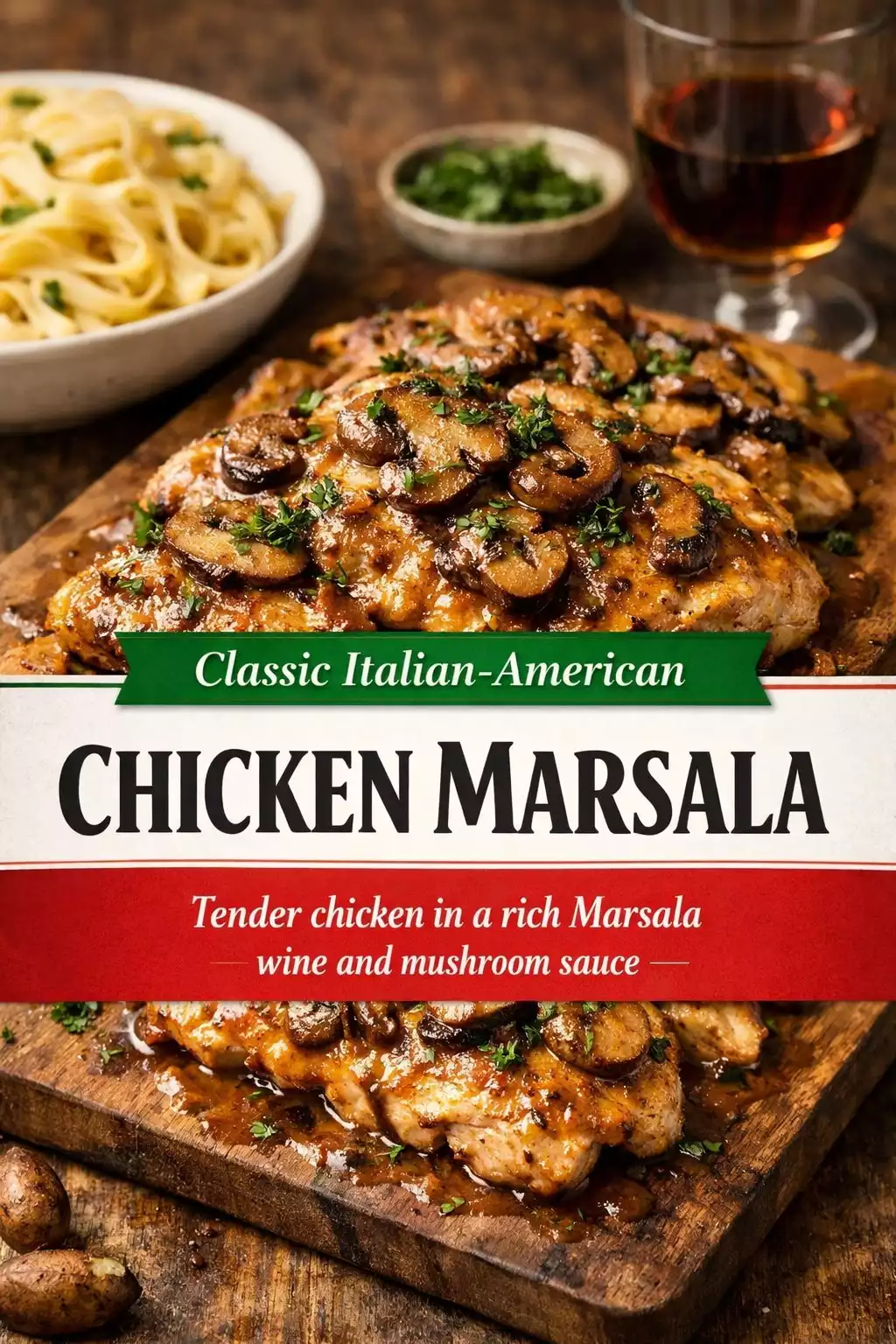
Chicken Marsala is old-school Italian-American at its finest. Thin-pounded chicken, a proper flour dredge, cremini mushrooms cooked until they actually caramelize instead of just sweating, and a Marsala wine sauce that’s reduced, rich, and built with real butter. This is not a dish that works with cheap wine and margarine. The wine is in the name. Use something you’d actually drink.
What makes this the best easy chicken marsala is the same thing that makes any classic great: understanding why each step exists. Not following a recipe blindly, but cooking with intention. The fond in the pan, the reduction, the final butter mount — every step is there for a reason. Skip one and you’ll know it the moment you taste the dish.
Why This Chicken Marsala Recipe Works
- Pounding the chicken thin is non-negotiable. Even thickness = even cooking. Thick spots stay raw while thin spots dry out. Pound to ¼ inch and the problem disappears entirely.
- Cooking mushrooms properly is where most home cooks fail. Wet, overcrowded mushrooms steam instead of caramelize. Use high heat, small batches, and patience. The golden-brown mushroom is what gives the sauce its depth.
- Dry Marsala is preferred over sweet. Sweet Marsala makes the sauce cloying. Dry Marsala gives you a more complex, sophisticated result. If you can only find sweet, reduce the quantity slightly and add a splash of dry white wine.
- The fond is the foundation. Those browned bits left in the pan after searing the chicken are packed with flavor. The wine dissolves them and they become part of the sauce — this is deglazing and it’s essential.
- Cold butter swirled in at the end creates the silky finish. This is mounting — the technique that separates a restaurant-quality Marsala from something that tastes like wine with chicken floating in it.
Ingredients
For the Chicken
- 2 large boneless, skinless chicken breasts (cut and pounded to ¼-inch cutlets)
- ½ cup all-purpose flour
- 1 tsp kosher salt
- ½ tsp black pepper
- 2 tbsp olive oil
- 2 tbsp unsalted butter
For the Marsala Sauce
- 8 oz cremini mushrooms, sliced
- 3 cloves garlic, minced
- ¾ cup dry Marsala wine
- ¾ cup low-sodium chicken broth
- 1 tsp fresh thyme leaves
- 3 tbsp cold unsalted butter, cut into cubes
- 2 tbsp fresh parsley, chopped
- Salt and pepper to taste
Instructions
Step 1: Prepare and Season the Chicken
Slice each chicken breast horizontally into two thin cutlets, then place between plastic wrap and pound to ¼-inch thickness. Pat completely dry. Season both sides with salt and pepper. Dredge lightly in flour, shaking off all excess.
Step 2: Sear the Chicken
Heat olive oil and butter in a large heavy skillet over medium-high heat until the butter foams and subsides. Add chicken cutlets in a single layer — work in batches if needed. Don’t crowd the pan. Sear 3–4 minutes per side until golden brown and cooked through. Remove to a plate and tent with foil.
Step 3: Cook the Mushrooms
In the same pan over high heat, add the sliced mushrooms without stirring for the first 2 minutes. Let them sit against the hot pan until they start to brown on the bottom. Then toss and cook another 2–3 minutes until deeply golden. Don’t salt them yet — salt draws moisture and prevents browning.
Add the minced garlic and thyme, cook 30 seconds until fragrant. Now season with salt and pepper.
Step 4: Build the Marsala Sauce
Pour in the Marsala wine and scrape up all the browned bits from the bottom of the pan. Let it bubble and reduce by half, about 3 minutes. Add the chicken broth and continue to simmer until the total sauce has reduced by about one-third and coats the back of a spoon, another 4–5 minutes.
Step 5: Mount the Butter and Finish
Remove the pan from heat. Add the cold butter pieces one at a time, swirling constantly between each addition. The sauce will become glossy and silky. Return the chicken to the pan and spoon sauce and mushrooms over each cutlet. Heat briefly over low to warm through, then garnish with fresh parsley.
Serve immediately over egg noodles, mashed potatoes, or with crusty bread to handle the sauce. The sauce is too good to leave on the plate.
Tips & Common Mistakes
- Don’t crowd the mushrooms. Steam is your enemy here. If mushrooms pile up, they release moisture and boil instead of caramelize. One layer in the pan, high heat, patience.
- Use a stainless or cast iron pan. Nonstick doesn’t build fond. The fond is the foundation of this sauce. This is non-negotiable.
- Don’t skip the pound-out. Thick cutlets won’t cook evenly and the delicate sauce will be overwhelmed by dry, dense chicken. Pound them thin.
- Real Marsala wine. Not “cooking wine” from the grocery shelf. Cooking wines are loaded with salt and lack the depth of actual Marsala. Spend a few extra dollars on the real thing.
- Rest the chicken before returning to sauce. If you put raw-off-the-heat chicken directly into the reducing sauce, it continues cooking and dries out. Let it rest while the sauce finishes, then return at the end.
Variations
- Creamy Chicken Marsala: Stir in ¼ cup heavy cream at the end before mounting the butter. Richer, more indulgent, and excellent over pasta.
- Chicken Marsala with Prosciutto: Drape a thin slice of prosciutto over each chicken cutlet before returning to the sauce. The salt and fat from the prosciutto elevates the entire dish.
- Mushroom Variety Upgrade: Mix cremini with shiitake or porcini for a deeper, more complex mushroom flavor in the sauce. Dried porcini reconstituted in warm broth and added to the sauce is outstanding.
- Veal Marsala: Substitute veal scallopini for chicken. This is the original Italian preparation and worth experiencing at least once.
Chicken Marsala is part of a beautiful family of Italian-American pan sauce dishes. Explore chicken piccata for the lemon and caper version, or try cheap chicken pasta with tomato for something heartier. For a complete Italian-American dinner spread, butter chicken pasta is perfect alongside.
Storage & Reheating
- Refrigerator: Store chicken and sauce in an airtight container for up to 3 days. The mushrooms continue to absorb the sauce and it actually gets better on day two.
- Freezer: Not ideal — the butter-mounted sauce tends to separate when frozen and thawed. If freezing, store chicken separately from sauce. Thaw overnight and reheat sauce gently, re-mounting with fresh butter if needed.
- Reheating: Low and slow in a skillet with a splash of chicken broth to loosen the sauce. Gentle heat only — high heat will toughen the chicken and break the sauce. 5–7 minutes on low, covered.
Frequently Asked Questions
What is Marsala wine and where do I find it?
Marsala is a fortified wine from Sicily with a deep, complex flavor that’s both slightly sweet and nutty. Find it in the wine section of most liquor stores or well-stocked grocery stores. Look for “dry” Marsala for this recipe — the sweet version is better suited to desserts.
Can I make Chicken Marsala without wine?
You can substitute chicken broth with a tablespoon of balsamic vinegar for depth, but the result will be noticeably different. The Marsala wine is central to the dish’s identity. It’s worth finding the real thing.
My sauce is too thin. How do I fix it?
Continue reducing over medium heat until it reaches the desired consistency. Alternatively, mix 1 tsp cornstarch with 1 tbsp cold broth and whisk it into the simmering sauce — it will thicken within 60 seconds. Don’t over-thicken; the sauce should coat a spoon, not stand up on its own.
Can I make this ahead for a dinner party?
Yes — cook the chicken and sauce separately, store refrigerated, and reheat gently before serving. Re-mount the sauce with a small knob of cold butter just before serving to restore the gloss. This is exactly how restaurants prep this dish for service.