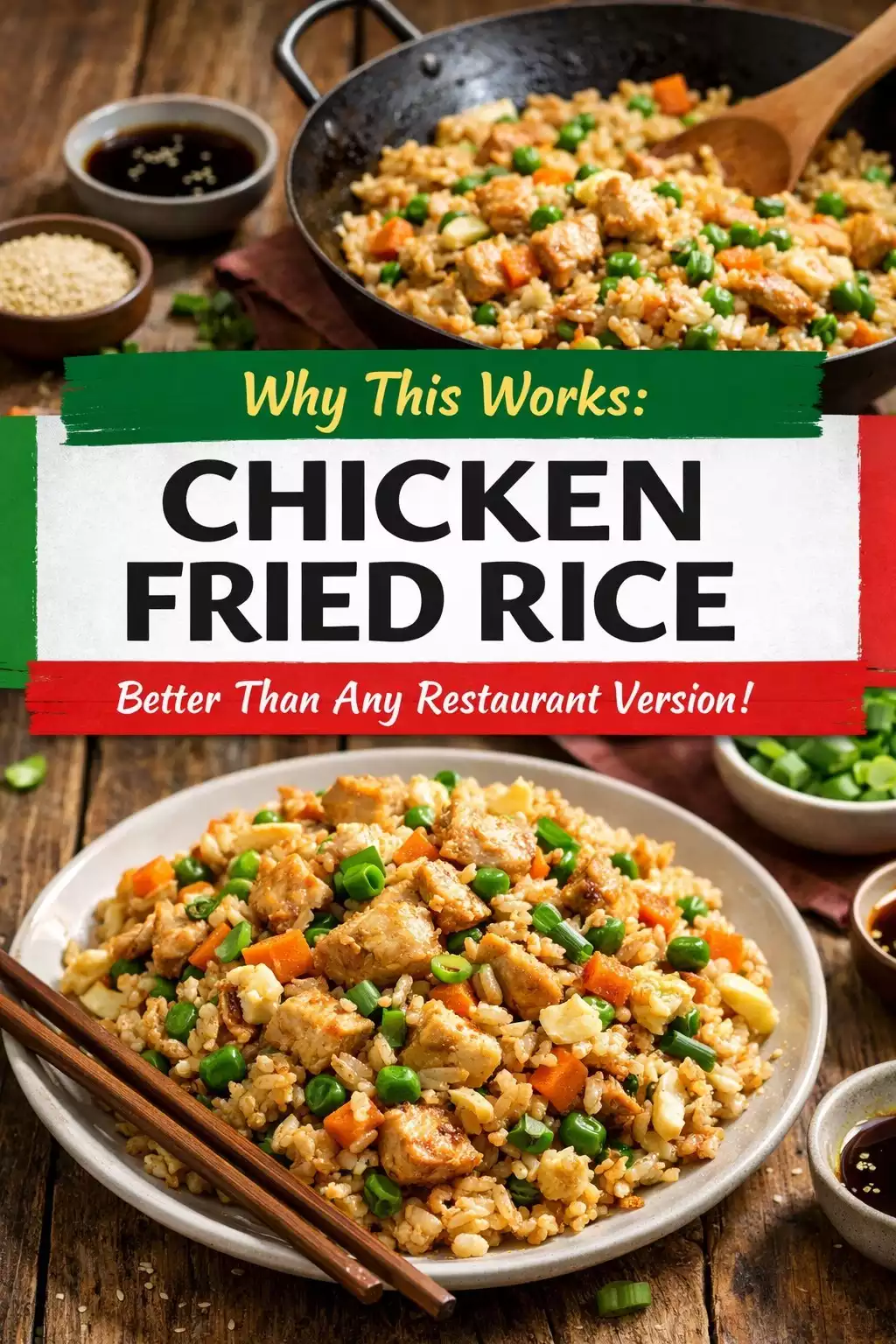
This is Jersey comfort food, and I won’t apologize for it. Chicken Fried Rice made with leftover rice is one of the greatest examples of deliberate cooking with what you have — and it produces results that are genuinely better than the fresh-rice version. Day-old rice from the fridge is the secret ingredient every fried rice recipe in every restaurant is using. If you’ve been making fried rice with freshly cooked rice and wondering why it comes out clumpy and wet, that’s the answer. Leftover rice, high heat, fast hands. That’s the whole recipe.
Fried rice done correctly at home requires acknowledging that your stove probably doesn’t match a commercial wok burner’s BTU output. But there are compensations: smaller portions, proper oil temperature, and constant motion. You don’t need a restaurant wok burner to make excellent fried rice at home. You need to cook less at once and keep things moving.
The best homemade chicken fried rice uses cold leftover rice, properly seasoned chicken, good soy sauce, and sesame oil added at the very end. The technique is simple, the ingredients are simple, and the result is a meal that disappears from the table before everyone has sat down. That’s the mark of a recipe that works.
Why This Chicken Fried Rice Recipe Works
- Cold leftover rice is the only correct choice. Freshly cooked rice has too much moisture and will steam and clump in the pan. Day-old refrigerated rice has dried out slightly and separated. Each grain stays individual in the wok instead of merging into a starchy mass. This is not a preference — it’s the technique.
- Extremely high heat creates the wok hei. That smoky, slightly charred quality that defines great fried rice comes from high heat and fast movement. Use the highest burner on your stove, cook in small batches, and don’t stop moving.
- A small amount of oil, not a lot. Too much oil makes fried rice greasy. A light coating is enough for the rice to fry and separate. The sesame oil added at the end is for flavor, not frying.
- The eggs go in scrambled at the end, not at the beginning. Some recipes scramble the eggs first and push them aside. For cleaner, more distinct egg pieces in the finished rice, scramble them last — pour over the rice, let set for 30 seconds, then fold and break up.
- Soy sauce should be added from the edge of the pan, not directly on the rice. Pouring soy sauce on the hot edge of the wok before it hits the rice slightly sizzles the sauce, caramelizing it and adding depth that direct application can’t produce.
Ingredients
For the Fried Rice
- 3 cups cold day-old cooked white rice
- 1½ cups cooked chicken, diced or shredded
- 2 eggs, beaten
- 3 tbsp soy sauce (low-sodium preferred)
- 1 tbsp oyster sauce
- 1 tbsp sesame oil
- 2 tbsp neutral oil (for cooking)
- 3 cloves garlic, minced
- 1 tsp fresh ginger, grated
- ½ cup frozen peas and carrots, thawed
- 3 green onions, sliced
- ½ tsp white pepper
Instructions
Step 1: Prep Everything First
Mix soy sauce, oyster sauce, and white pepper in a small bowl. Beat eggs in another bowl. Have all ingredients measured and staged next to the stove before you heat the pan. Fried rice moves fast — there’s no time to measure once you start cooking.
Step 2: Sear the Chicken
Heat 1 tbsp oil in a wok or large skillet over the highest heat available until smoking. Add the diced chicken in a single layer. Let it sear for 60 seconds without stirring to develop some color, then toss and cook another 60 seconds. Remove to a bowl.
Step 3: Cook Aromatics and Vegetables
Add remaining oil. Add garlic and ginger — they’ll sizzle intensely. Stir for 20 seconds. Add peas and carrots, toss for 1 minute. Don’t let anything sit still — everything should be moving.
Step 4: Fry the Rice
Add the cold rice in a pile. Break up any clumps with the back of a spatula, pressing them flat against the hot pan surface. Toss and press repeatedly for 2–3 minutes until each grain is separate, slightly crispy, and starting to toast. This is the most critical step — the rice needs this heat contact time.
Pour the soy sauce mixture around the edge of the pan — not directly on the rice. Let it sizzle for 5 seconds, then toss everything together. Return the chicken and toss to distribute.
Step 5: Add Eggs and Finish
Push the rice to the sides of the pan, creating a well in the center. Pour the beaten eggs into the well. Let them set slightly — about 30 seconds — then use the spatula to fold and scramble them into large, soft curds. Once the egg is about 80% cooked, fold it into the rice, tossing everything together. Add green onions and drizzle sesame oil over everything. Toss once more and serve immediately.
Tips & Common Mistakes
- Fresh rice will not work properly. Spread freshly cooked rice on a sheet pan and refrigerate for at least 1 hour to dry it out if you don’t have leftover rice. Hot, moist rice will steam and clump. This cannot be overcommunicated.
- Work in small batches. A full serving of fried rice for 4 people all at once in a home pan results in steamed rice, not fried rice. Cook in two batches and combine at the end. This is the home cook’s most important compensation for a lower-BTU stove.
- Break up cold rice clumps before they go in the pan. Cold rice from the fridge is often in solid clumps. Break them apart with your hands or two forks before adding to the hot pan. Clumps don’t separate once they hit the heat.
- Don’t add too much soy sauce. More soy sauce makes the rice wet and salty, not more flavorful. The amounts here are calibrated. Taste before adding more — you can always add, never remove.
- Sesame oil goes in at the very end. Sesame oil has a low smoke point and burns easily. It’s a finishing flavor, not a cooking fat. Never use it to heat the pan or cook the rice.
Variations
- Spicy Chicken Fried Rice: Add 1–2 tsp chili oil or sriracha to the soy sauce mixture. Add dried red chili peppers to the oil when cooking the aromatics. For the full spicy version, see spicy chicken fried rice.
- Garlic Butter Fried Rice: Replace the neutral oil with 2 tbsp butter for cooking the aromatics and rice. The butter caramelizes against the hot pan and creates an extraordinary richness. A Japanese-inspired approach.
- Kimchi Fried Rice: Add ½ cup chopped kimchi with the vegetables. Let it cook for 1 minute before adding rice. Add 1 tbsp gochujang to the sauce. Finish with a fried egg on top. The definitive Korean-inspired fried rice.
- Pineapple Chicken Fried Rice: Add ½ cup diced pineapple (fresh or canned, drained) with the vegetables. The sweetness-acid contrast is excellent with the soy and sesame.
For the dedicated spicy version, see spicy chicken fried rice. The chicken stir fry with rice covers the stir fry approach to similar ingredients. For more high-heat Asian-inspired chicken dishes, crispy baked chicken thighs and southern fried chicken are worth exploring. Chicken 65 is an excellent companion recipe for spice-forward chicken.
Storage & Reheating
- Refrigerator: Store for up to 4 days in an airtight container. Fried rice is an excellent make-ahead meal — it reheats better than almost any other rice preparation.
- Freezer: Freezes well for up to 2 months. The texture changes slightly — the rice becomes a bit denser — but the flavor is unaffected. Reheat directly from frozen in a hot skillet.
- Reheating: Hot skillet with a few drops of oil for 3–4 minutes, tossing frequently. A splash of soy sauce during reheating refreshes the flavor. Microwave works in a pinch — cover with a damp paper towel and stir halfway through.
Frequently Asked Questions
What kind of rice is best for chicken fried rice?
Long-grain jasmine rice is the classic choice — the grains are firm, individual, and have a slightly floral aroma that complements the soy and sesame. Short-grain rice is too sticky for fried rice. Medium-grain is acceptable. Always cook the rice the day before and refrigerate.
Can I use brown rice?
Yes — brown rice makes an excellent fried rice with a nuttier flavor and more texture. It behaves slightly differently in the pan (denser, takes longer to heat through) but responds well to the same technique. Day-old refrigerated brown rice is essential.
How do I get the rice crispy at the bottom?
Let the rice sit undisturbed against the hot pan surface for 60–90 seconds before tossing. This creates the slightly crispy, golden bottom layer. Then toss to redistribute and repeat. You’re not making a crust — you’re just developing light toast on individual grains.
Can I make this vegetarian?
Yes — replace chicken with extra-firm tofu, pressed and cubed. Fry the tofu first until golden on two sides, remove, and proceed exactly as the recipe directs. Or simply skip the protein and increase the egg. Both produce excellent vegetarian fried rice.