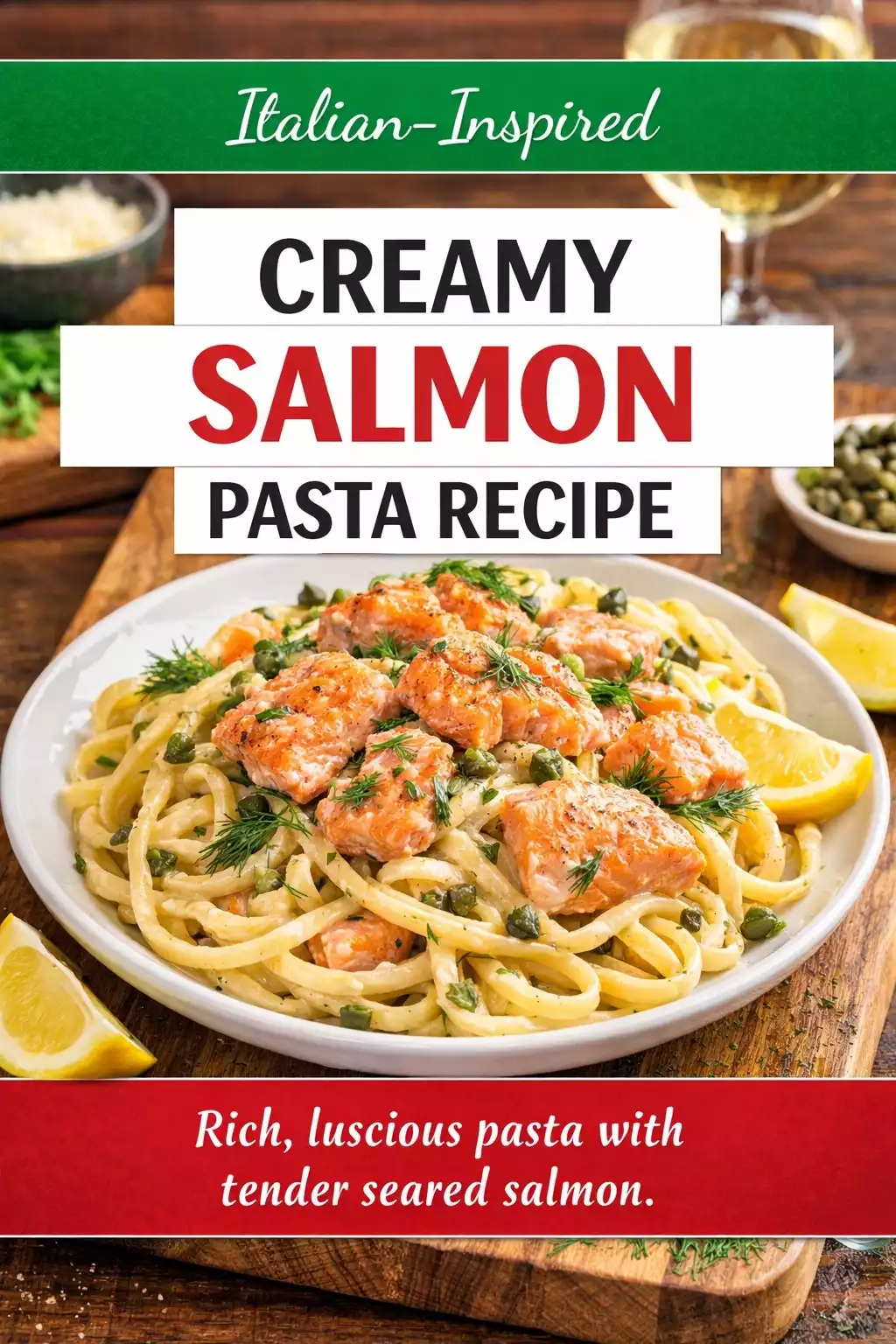
I‘ve been making this since before you were born. Trust me. Creamy Salmon Pasta is one of those dishes that immediately elevates a weeknight dinner into something that feels considered and special, without requiring more than 30 minutes or unusual technique. The combination of salmon and pasta in a cream sauce has roots in coastal Italian and Scandinavian cooking, and in Italian-American kitchens it found its natural home — adapted, enriched, and treated with the same respect we give to every pasta dish that comes out of this tradition.
The soul of this dish is the salmon. Good salmon, properly seared so it has a golden crust and a slightly underdone center, then flaked into the cream sauce in large, luxurious pieces. Not shredded into the sauce, not stirred until it disintegrates — flaked. Large enough to be present, delicate enough to meld with the cream. That’s the texture goal. Hit it and you have something memorable. Shred it into oblivion and you have salmon sauce with some pasta in it.
The best Italian creamy salmon pasta requires one non-negotiable: fresh salmon, not canned. This is one of the few recipes where that distinction is the difference between a genuinely great dish and an acceptable one. Fresh salmon provides a completely different texture and flavor. Buy the best you can afford and treat it accordingly.
Why This Creamy Salmon Pasta Recipe Works
- Searing the salmon creates a golden crust that survives the sauce. Properly seared salmon has a caramelized exterior that gives it texture and flavor in the finished dish. Poached or steamed salmon would break up completely. The sear gives each flake structural integrity.
- Slightly undercooked salmon in the center is the target. Salmon finishes cooking in the warm cream sauce. Fully cooked salmon will be overdone (dry and crumbly) by the time it’s been through the sauce. Sear to golden on the exterior with a pink, slightly translucent center.
- Capers and lemon are the counterpoints to the cream’s richness. The cream sauce for salmon needs acidity and brine to prevent it from being cloying. Capers provide both; fresh lemon juice provides brightness. Together they are the balance that makes the cream feel light despite being heavy cream.
- Shallots instead of onion provide a more delicate base. Salmon’s flavor is subtle and can be overpowered by strong aromatics. Shallots are mild enough to support without competing.
- Long, flat pasta is the right shape for a cream sauce with flaked fish. Linguine or fettuccine holds delicate flaked salmon on its surface without breaking the pieces. Tubular pasta tends to crush the salmon as you toss it. The shape matters with fragile proteins.
Ingredients
For the Salmon
- 1½ lbs skin-on salmon fillets (2–3 pieces)
- ½ tsp kosher salt
- ¼ tsp white pepper
- ½ tsp garlic powder
- 1 tbsp olive oil
For the Creamy Sauce
- 3 shallots, minced
- 4 cloves garlic, minced
- 1 tbsp capers, drained
- Zest and juice of 1 lemon
- ½ cup dry white wine
- 1 cup heavy cream
- ½ cup pasta cooking water
- 2 tbsp cold unsalted butter
- ¼ cup freshly grated Parmigiano-Reggiano
- 2 tbsp fresh dill or flat-leaf parsley, chopped
- Salt and white pepper to taste
For the Pasta
- 12 oz linguine or fettuccine
- Kosher salt for pasta water
Instructions
Step 1: Sear the Salmon
Pat salmon fillets completely dry. Season with salt, white pepper, and garlic powder. Heat olive oil in a large skillet over medium-high heat. Place salmon skin-side up. Sear undisturbed for 3–4 minutes until a golden crust forms. Flip and cook skin-side down for 2 more minutes — the center should still be slightly pink. Remove to a plate. When cool enough to handle, remove skin and flake into large pieces. Don’t break it too small.
Step 2: Cook Pasta and Build the Sauce Base
Cook linguine in heavily salted boiling water until 1 minute short of al dente. Reserve 1 cup pasta water before draining.
In the same pan used for the salmon (keep the fond), reduce heat to medium. Add shallots and sauté 3–4 minutes until soft. Add garlic and cook 30 seconds. Add capers and lemon zest, cook 30 seconds more.
Step 3: Build the Cream Sauce
Add white wine to deglaze, scraping up the salmon fond. Reduce by half, about 3 minutes. Add heavy cream. Bring to a gentle simmer and cook 4–5 minutes until slightly thickened. Add lemon juice and stir. Taste — the sauce should be bright, creamy, slightly briny from the capers. Season with salt and white pepper.
Step 4: Add Salmon and Pasta
Add the flaked salmon to the sauce gently — just fold it in, don’t stir. Add the drained pasta and toss carefully with pasta water to loosen the sauce. The goal is to coat the pasta without breaking the salmon flakes further. A light touch with tongs is ideal.
Step 5: Finish and Serve
Remove from heat. Add cold butter and Parmigiano-Reggiano, folding gently. Stir in fresh dill or parsley. Taste and adjust lemon and salt. Serve immediately in warm, shallow bowls with additional dill and a lemon wedge alongside.
Tips & Common Mistakes
- Don’t overcook the salmon. The salmon continues cooking in the warm cream sauce. Sear it to golden outside with a pink center and let the sauce finish it. Fully-cooked salmon in the sauce becomes dry and crumbly before the pasta is served.
- Flake the salmon gently and keep the pieces large. Large flakes of salmon are luxurious. Over-stirred salmon disappears into the sauce. Use a fork to break it into 1–1.5-inch pieces and then fold gently, minimizing the number of times you touch it.
- Fresh lemon juice at the end, not just at the start. Lemon juice cooked for 5 minutes loses much of its brightness. Add the lemon zest at the start (it holds up to heat better) and the juice at the end for maximum citrus impact.
- Capers are not optional. The briny, acidic punch of capers is what prevents this cream sauce from being cloying. Without them, the dish is one-dimensional. Even a tablespoon is sufficient — their impact is large relative to their quantity.
- Handle the pasta toss gently. Aggressive tossing with salmon breaks the flakes. Use tongs or two spoons and fold rather than toss. This is the most delicate pasta preparation in this collection — treat it accordingly.
Variations
- Smoked Salmon Version: Replace fresh seared salmon with 6 oz high-quality smoked salmon, added at the very end — no cooking required. The sauce is built the same way, the smoked salmon is folded in off-heat. Different flavor profile, equally excellent, significantly faster.
- With Asparagus: Add blanched asparagus spears to the sauce when adding the salmon. The slight bitterness and crunch of asparagus is outstanding with the cream and salmon.
- Dill-Forward Version: Double the fresh dill and add a tablespoon of dill to the cream sauce as it simmers. Scandinavian-influenced and exceptional with the lemon and capers.
- Shrimp and Salmon: Use half the salmon and add ½ lb shrimp (seared 1–2 minutes per side). Two seafood proteins in one cream sauce — impressive and outstanding.
For more Italian-American seafood pasta, explore creamy garlic shrimp pasta. The creamy pasta collection continues with creamy Tuscan chicken pasta, creamy mushroom pasta, and the pork-forward creamy sausage rigatoni.
Storage & Reheating
- Refrigerator: Store for up to 2 days. Salmon pasta doesn’t keep as long as other pasta dishes — the fish quality degrades more quickly. Consume within 48 hours for best quality.
- Reheating: Gentle heat in a skillet over medium-low with a splash of cream, 3–4 minutes. The salmon will break down further during reheating — this is unavoidable. A squeeze of fresh lemon juice before serving restores the brightness. Avoid microwave if possible — it makes the salmon very soft and the cream can separate.
- Freezer: Not recommended. Cooked salmon doesn’t freeze well once in cream sauce. The texture becomes mealy and the cream separates. This is a fresh-made dish.
Frequently Asked Questions
What type of salmon is best?
Wild-caught sockeye or king salmon have the deepest flavor and the most vibrant color. Atlantic farm-raised salmon is more consistent, milder, and widely available — it works very well in this recipe. Arctic char is an excellent alternative with a slightly milder, more delicate flavor. Any fresh salmon you trust is the right answer.
Can I use canned salmon?
You can, but the dish will be significantly different in texture and flavor. Canned salmon is fully cooked and wet-packed — it has no sear, no golden crust, and a softer, fishier flavor. It works as a budget version but it’s not the same dish. For the best result, fresh salmon is the requirement.
Can I omit the Parmesan in a seafood pasta?
Traditional Italian cooking avoids combining cheese with seafood. In Italian-American kitchens, this convention is often relaxed. The Parmigiano-Reggiano in this recipe is a small amount used for its umami and salt rather than its cheese character. You can omit it and compensate with additional salt and a touch more lemon juice — the dish is still excellent without it.
Why is my cream sauce too thin?
The cream wasn’t simmered long enough before the pasta was added. Let it reduce for a full 5 minutes — it should coat the back of a spoon before the salmon or pasta go in. If the sauce is too thin after everything is combined, add a teaspoon of cornstarch dissolved in 1 tablespoon of cold water and stir over medium heat for 60 seconds.