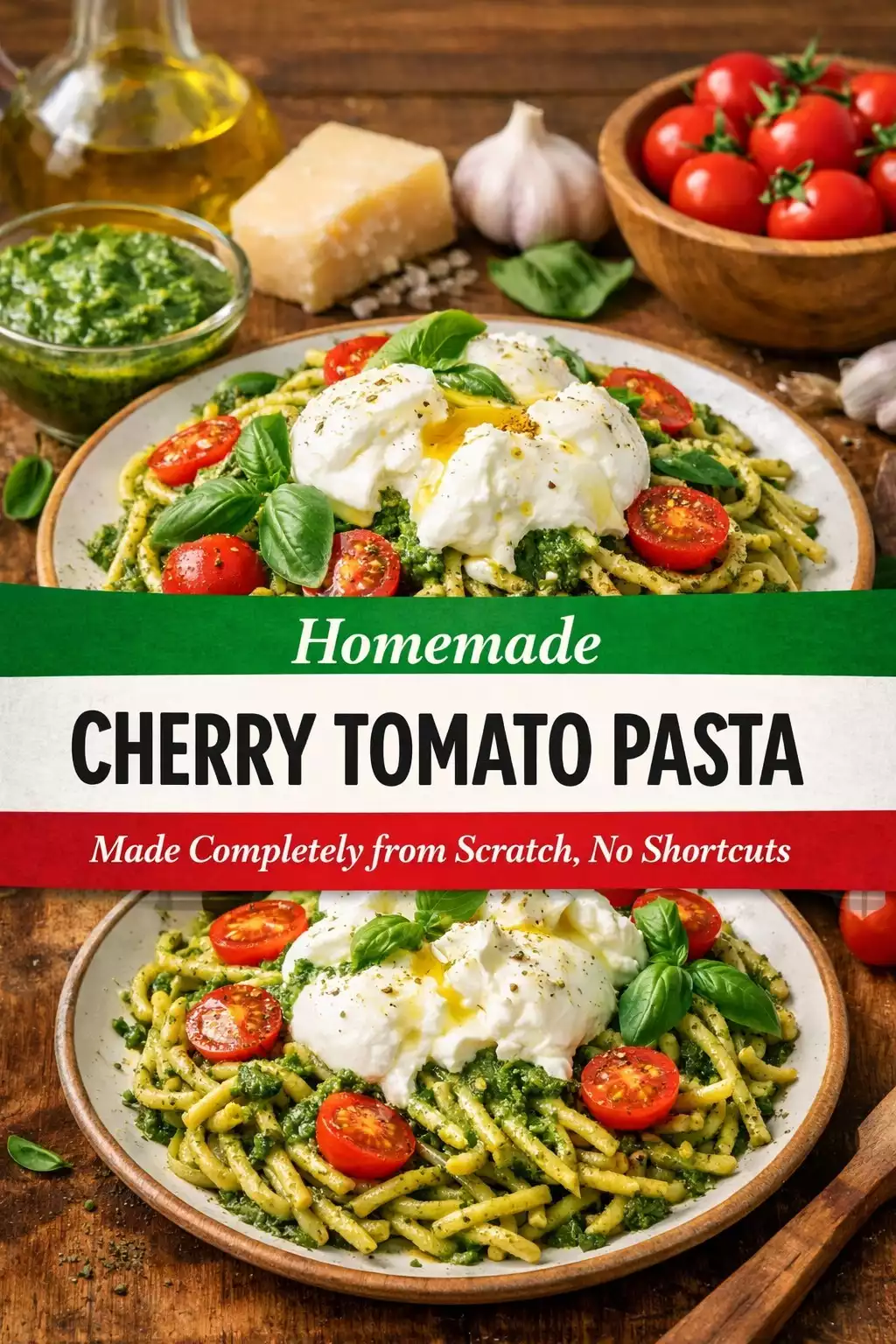
This is the recipe my sous chefs used to steal from my station. Not a joke. I’d make pasta with pesto and burrata for staff meal and it would disappear before the line cooks could plate their own portions. It’s one of those dishes that looks like a lot of effort and requires almost none — a quality burrata from a good Italian deli, a real pesto made in under five minutes, and pasta cooked properly. That’s the whole formula.
My Italian-American roots are all through this dish. In the old neighborhood in Jersey, good burrata was the mark of a serious Italian household. You didn’t buy the cheap stuff. You found the shop that made it fresh that morning and you treated it like gold. Burrata on hot pasta melts slightly at the edges while the center stays cool and creamy — the contrast of temperatures is the whole point.
This pasta with pesto and burrata is a warm-weather dish at heart — the green brightness of the pesto against the white cream of the burrata against the pale pasta is as beautiful as it is delicious. Learn to make your own pesto and this goes from impressive to essential.
Why This Pesto Burrata Pasta Works
- Pesto is added off heat — heat kills fresh basil flavor and turns pesto brown; room-temperature or cold pesto on hot pasta is correct
- Burrata is served at room temperature — cold burrata straight from the fridge doesn’t melt into the pasta properly; always temper it first
- Pasta water loosens the pesto — pesto alone is too thick and coats unevenly; pasta water creates the right saucy consistency
- Good Parmigiano in the pesto — the cheese is part of the sauce’s body, not just a topping
- Fresh basil at finish — pesto gets mixed in the pasta; extra leaves on top provide fresh, un-wilted aromatics
Ingredients
For the Fresh Pesto
- 2 cups fresh basil leaves, packed
- 3 cloves garlic
- ¼ cup pine nuts (or walnuts, toasted)
- ½ cup freshly grated Parmigiano-Reggiano
- ½ cup good-quality extra virgin olive oil
- ½ teaspoon kosher salt
- 2 teaspoons lemon juice
For the Pasta
- 1 pound trofie, linguine, or spaghetti
- ¼ cup reserved pasta water
- Kosher salt for pasta water
For Serving
- 2 balls (8 oz total) fresh burrata, at room temperature
- Handful fresh basil leaves
- Flaky sea salt and freshly cracked black pepper
- Best-quality olive oil for drizzling
- Cherry tomatoes, halved (optional)
Instructions
Step 1: Make the Pesto
Add basil, garlic, pine nuts, and salt to a food processor. Pulse 8–9 times until roughly chopped. With the machine running, stream in olive oil until smooth. Transfer to a bowl and stir in Parmigiano and lemon juice by hand — the lemon and cheese are added after processing so heat from the machine doesn’t cook them. Taste and adjust salt. Pesto can be made up to 3 days ahead; press plastic wrap directly on the surface to prevent oxidation.
Step 2: Cook the Pasta
Bring a large pot to a boil. Salt it aggressively. Cook pasta to al dente according to package directions. Reserve ½ cup pasta water before draining. Don’t rinse the pasta — rinsing removes the starch needed to help pesto adhere.
Step 3: Dress the Pasta with Pesto
Transfer drained pasta to a large mixing bowl. Add the pesto and ¼ cup pasta water immediately. Toss vigorously for 1 minute until every strand is coated in bright green sauce. If the pasta looks dry or the pesto is clumping, add more pasta water one tablespoon at a time. The finished pasta should be saucy and flowing, not clumped. Taste and adjust salt.
Step 4: Plate and Add Burrata
Divide pasta among warm bowls. Tear or cut each burrata ball in half and place on top of the hot pasta. The outer shell will hold its shape briefly while the creamy stracciatella interior begins to ooze slowly into the pasta from the heat. Do not mix the burrata in — let each diner break into it at the table for the full dramatic effect.
Step 5: Finish and Serve
Add fresh basil leaves on top, a pinch of flaky sea salt, freshly cracked black pepper, and a drizzle of your best olive oil. Serve immediately. The temperature contrast between the hot pasta and the cool, creamy burrata center is the whole point of the dish — serve it while both temperatures are present.
Chef’s Tips & Common Mistakes
- Never heat the pesto — fresh pesto turns brown and loses flavor the moment it hits direct heat; add to hot pasta off heat
- Temper the burrata — let it sit at room temperature 30 minutes before serving; cold burrata doesn’t yield at the right texture
- Don’t over-process the pesto — a slightly coarse pesto has better texture; smooth pesto gets gummy from overworking
- Reserve enough pasta water — pesto clumps without it; keep at least ½ cup ready
- Toast the pine nuts — raw pine nuts taste flat; toasted ones have a warm, buttery depth that elevates the pesto significantly
- Use the best burrata available — fresh that day from an Italian deli is the standard; supermarket burrata works but the difference is noticeable
Variations
- Pesto with Cherry Tomatoes: Toss in blistered cherry tomatoes before adding burrata — a combination related to cherry tomato pasta and just as beautiful
- Walnut Pesto Version: Substitute walnuts for pine nuts — earthier, more robust flavor that pairs well with autumn pasta shapes
- Arugula Pesto: Substitute arugula for half the basil — peppery, slightly bitter variation that cuts through the burrata richness
- Lemon Pesto: Add extra lemon zest and juice for brightness — related technique to lemon pasta
- Pesto Rigatoni: Use rigatoni instead of long pasta and add sautéed mushrooms — a heartier, autumn version of the same dish
- Pesto Genovese Purist Version: Mortar and pestle only, no food processor — the traditional method gives a different texture and keeps the basil from oxidizing as quickly
Storage & Reheating
Pesto: Store in an airtight jar with olive oil pressed on the surface for up to 5 days in the refrigerator or 3 months frozen in ice cube trays.
Assembled Pasta: Store without burrata for up to 2 days. Add fresh burrata when reheating.
Reheating: Warm pasta gently in a skillet over low heat with a splash of water or extra olive oil. Never microwave pesto pasta — heat kills the fresh basil flavor. Add fresh burrata at the table after reheating.
Burrata: Never freeze burrata. Use within 24 hours of purchase for optimal texture.
Frequently Asked Questions
Why is my pesto turning brown?
Oxidation and heat. Blanching basil briefly in boiling water and shocking in ice water before making pesto slows oxidation significantly. Adding pesto to hot pasta (not into a hot pan) minimizes heat exposure. Lemon juice in the pesto also slows browning. Press plastic directly onto stored pesto to block air contact.
What’s the difference between burrata and fresh mozzarella?
Burrata is a fresh mozzarella shell filled with stracciatella — torn mozzarella mixed with heavy cream. When you cut into it, creamy filling flows out. Fresh mozzarella is uniform throughout. For this dish, burrata is the point — the flowing center is the whole appeal. Fresh mozzarella torn on top is a reasonable substitute but it’s a different dish.
Can I use store-bought pesto?
In a pinch, yes. Homemade is significantly better — jarred pesto is cooked and has preservatives that give it a slightly tinny flavor. If using store-bought, add fresh basil leaves and a squeeze of lemon juice to brighten it up. The technique and burrata still make it worth eating. See penne alla vodka for a recipe where jarred sauce is never an acceptable substitute.
What pasta shape is best for pesto?
Trofie is the traditional Ligurian pairing — the twisted shape catches pesto in its grooves perfectly. Linguine and spaghetti coat well. Trenette (similar to linguine) is classic. Avoid large tube shapes where pesto fills the inside but doesn’t coat the outside evenly. See also creamy mushroom pasta for shape-sauce pairing principles.
Can I make the pesto ahead?
Yes — up to 3 days refrigerated, 3 months frozen. To freeze, portion into ice cube trays, freeze solid, then transfer to a freezer bag. Thaw in the fridge or add frozen directly to hot pasta — it melts quickly. Storing pesto separately and assembling fresh gives the best results every time.