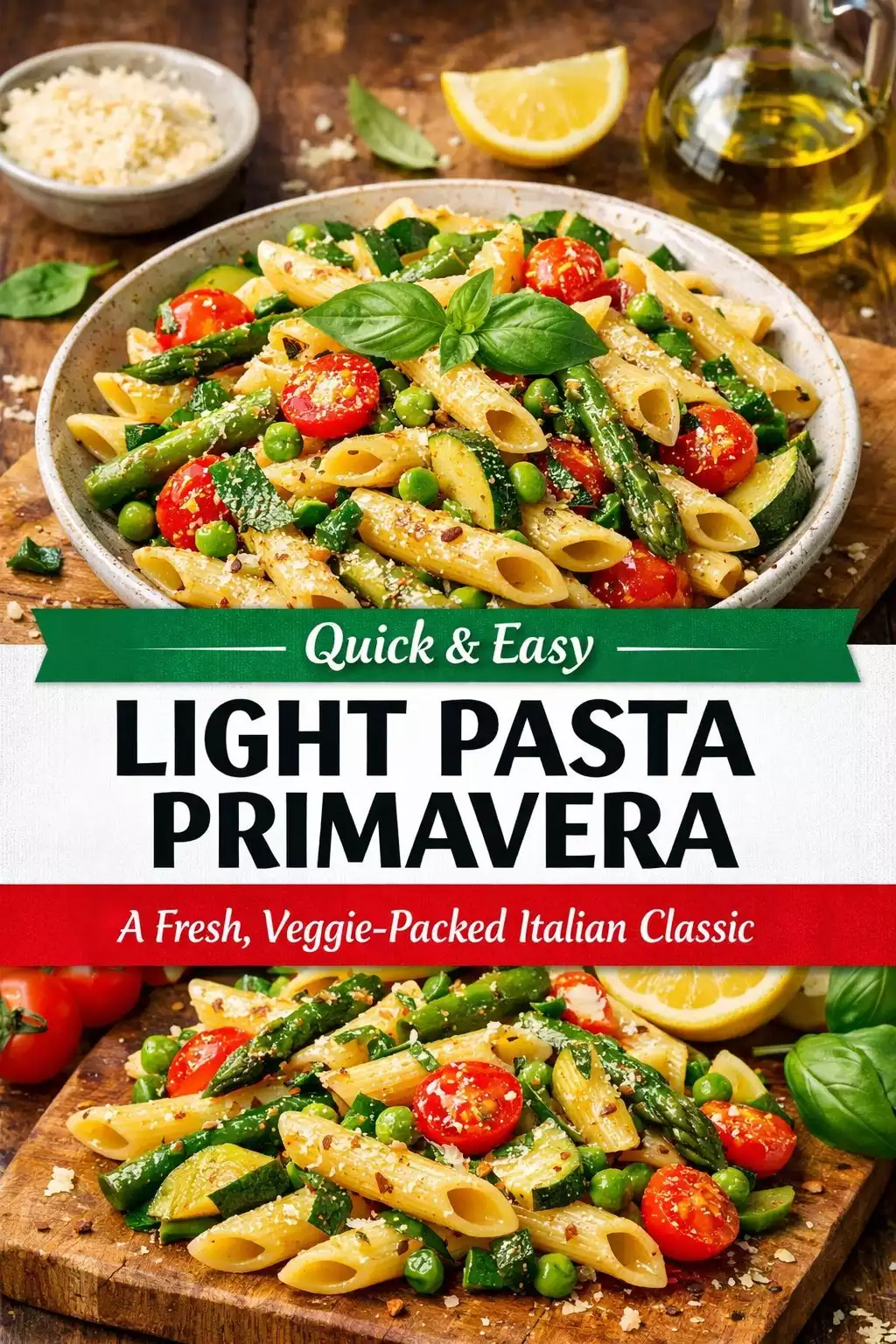
If you can boil water and follow directions, you can make this. Pasta primavera — the light version — is the Italian-American spring and summer pasta that uses what’s actually growing instead of burying vegetables under cream. The original pasta primavera at Le Cirque in New York City, created in the 1970s, was a butter-cream preparation. My version takes the same concept and removes the cream entirely, using olive oil, pasta water, garlic, and lemon to create a sauce that’s still silky but allows the vegetables to be the actual point of the dish.
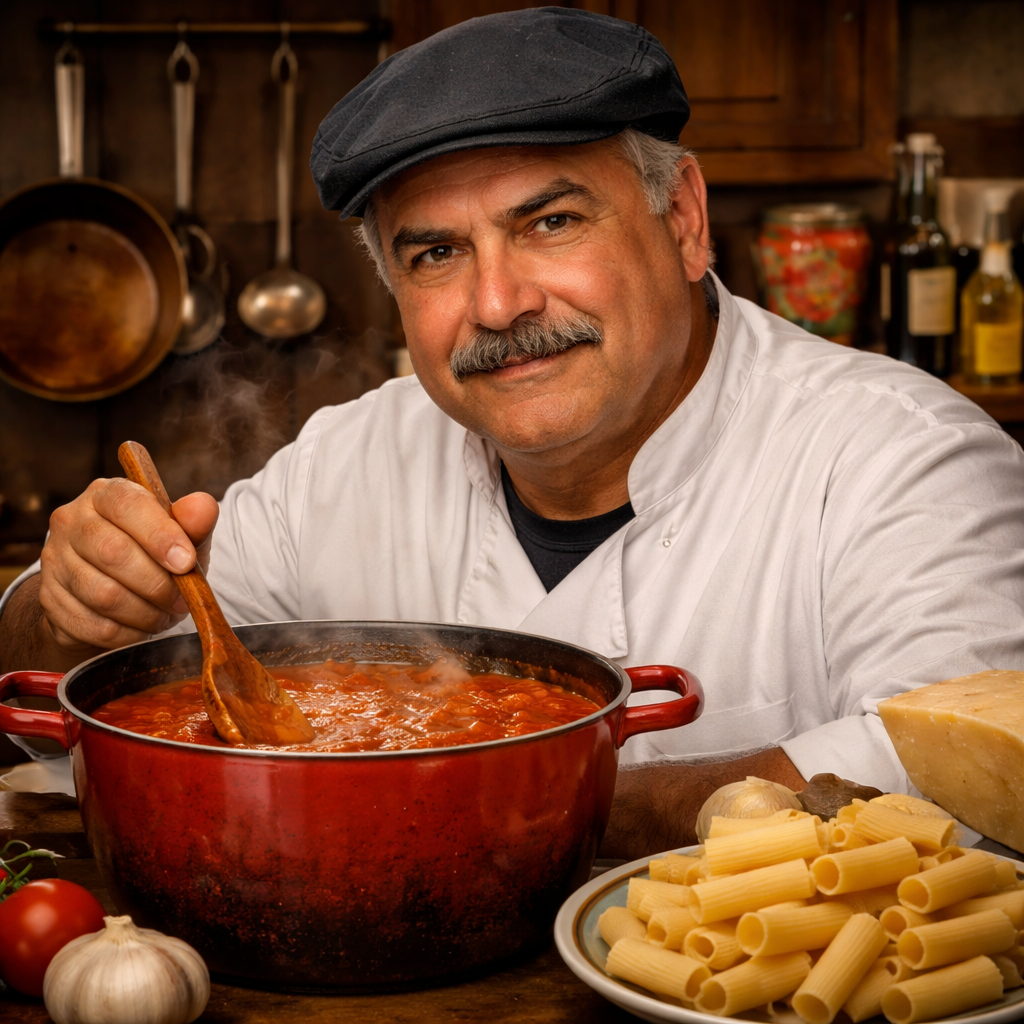
My Italian-American roots inform every vegetable dish I cook. The cucina povera tradition — poor kitchen cooking — is built on vegetables prepared with technique and respect rather than disguised under heavy sauces. A good spring pea deserves to taste like a spring pea. Asparagus has its own flavor. Cherry tomatoes don’t need cream to be excellent. This pasta gives all of them space to be themselves.
This light pasta primavera is the fastest weeknight dinner in the Italian-American repertoire. Twenty minutes from concept to table. Whatever vegetables are in season. A technique that works whether the vegetables are asparagus and peas in spring, zucchini and corn in summer, or broccoli and cherry tomatoes year-round. Learn the method once and improvise forever.
Why This Light Pasta Primavera Works
- Vegetables cooked separately from pasta — cooking vegetables in the pasta water or directly in the pan gives them different textures; the best primavera has each vegetable cooked to its own ideal
- Olive oil emulsified with pasta water — creates a light sauce without cream; the starch emulsifies the fat into a silky coating
- Garlic is sautéed first — fat-bloomed garlic distributes flavor throughout the entire dish rather than staying in isolated spots
- Lemon zest and juice at the finish — acid brightens all the vegetable flavors and provides the contrast that makes the dish feel complete
- Parmigiano adds body without cream — cheese off-heat creates a light, silky coating that satisfies without the weight of a cream sauce
Ingredients
Core Ingredients
- 1 lb penne, farfalle, or fettuccine
- ½ lb asparagus, woody ends removed, cut into 1-inch pieces
- 1 cup frozen or fresh peas
- 1 zucchini, halved and sliced into half-moons
- 1 pint cherry tomatoes, halved
- 4 cloves garlic, thinly sliced
- ½ cup extra virgin olive oil
- Zest and juice of 1 lemon
- ¾ cup freshly grated Parmigiano-Reggiano
- ¾ cup reserved pasta water
- Kosher salt and red pepper flakes
- Fresh basil or parsley, torn
Optional Vegetables
- Broccoli florets (blanched 2 minutes)
- Bell peppers, diced and sautéed
- Spinach or arugula (wilted in the pan at the end)
- Corn kernels (charred in a dry pan)
- Sun-dried tomatoes for winter depth
Instructions
Step 1: Cook the Pasta
Bring a large pot to a boil. Salt generously. Cook pasta 2 minutes shy of al dente. Reserve 1 cup pasta water. In the last 3 minutes of pasta cooking, add asparagus directly to the pasta pot — it cooks perfectly in the same water while the pasta finishes. Drain pasta and asparagus together.
Step 2: Cook the Aromatics
While pasta cooks, heat olive oil in a large wide skillet over medium heat. Add sliced garlic and cook slowly 3–4 minutes until golden and fragrant. Add red pepper flakes and cook 30 seconds. Don’t rush this step — properly toasted garlic in olive oil is the flavor foundation.
Step 3: Cook the Zucchini
Add zucchini to the garlic oil over medium-high. Cook undisturbed 2–3 minutes until golden on one side. Toss and cook 1 more minute. Season with salt. Add cherry tomatoes and cook 2 minutes until they begin to blister. Add peas (no cooking needed if frozen and thawed). Add ¼ cup pasta water to the pan.
Step 4: Finish the Pasta in the Vegetables
Add the drained pasta and asparagus to the vegetable skillet. Toss over medium heat for 2 minutes, adding more pasta water to reach a flowing consistency. The pasta water starch emulsifies with the olive oil and vegetable juices into a light sauce. Remove from heat. Add lemon zest, lemon juice, and Parmigiano. Toss to combine.
Step 5: Plate and Serve
Plate in warm bowls. Add fresh basil or parsley, more Parmigiano, a drizzle of extra virgin olive oil, and a final crack of black pepper. Serve immediately. This is a dish that rewards immediate eating — the vegetables keep their texture and the sauce is at its silkiest right off the stove.
Chef’s Tips & Common Mistakes
- Cook asparagus in the pasta water — one-pot technique; the asparagus cooks perfectly in the last 3 minutes without requiring a separate blanching pot
- Don’t skip the lemon — light pasta primavera without acid tastes flat and oily; lemon is the element that ties everything together
- Seasonal vegetables make this better — spring primavera with asparagus and peas is different from summer primavera with zucchini and corn; the technique is the same; the dish changes with the season
- Don’t crowd the vegetables — zucchini and cherry tomatoes that are crowded steam instead of sauté; use a wide pan and cook in batches if necessary
- Pasta water is the sauce — this is an oil-based sauce; the pasta water emulsification is what creates a sauce rather than just oily noodles
- Serve with your best olive oil — the finishing drizzle is not decorative; this dish has no cream; the quality of the olive oil you taste at the end is the dish
Variations
- Creamy Primavera: Add a spoonful of ricotta or mascarpone at the same stage as the Parmigiano for a creamier version — similar to the béchamel approach in white sauce pasta but much lighter
- With Shrimp: Add peeled shrimp to the garlic oil after toasting, cook 2 minutes per side, then add vegetables — see penne alla vodka for the shrimp-pasta pairing
- One-Pot Version: Cook everything in one pot instead of two — see one-pot pasta primavera for the simplified single-pot approach
- Zucchini Noodle Version: Skip the pasta entirely and use spiralized zucchini — see zucchini noodles with pesto for the vegetable-only approach
- Lentil Pasta Base: Use lentil or chickpea pasta for a higher-protein version — same technique, related to lentil pasta sauce
- Winter Primavera: Use roasted root vegetables instead of spring vegetables — butternut squash, brussels sprouts, and mushrooms with the same olive oil and Parmigiano technique
Storage & Reheating
Refrigerator: Store up to 3 days. The vegetables soften further but the flavors deepen.
Reheating: Reheat in a skillet over medium-low with a splash of water and a drizzle of olive oil. Add fresh lemon juice and more Parmigiano after reheating to revive the brightness.
Freezer: Not recommended — the vegetables lose their texture entirely when frozen and reheated.
Best Practice: This is a fifteen-minute dish. Make it when you’re ready to eat. The ingredients are always available; there’s no reason to store it.
Frequently Asked Questions
What vegetables work best in pasta primavera?
Asparagus, peas, zucchini, cherry tomatoes, broccoli, bell peppers, and corn are the most reliable choices. The principle is that each vegetable is cooked to its own ideal texture: tender vegetables like peas need only warming; denser vegetables like broccoli and asparagus need brief blanching or sautéing; cherry tomatoes need only slight blistering. The combination is seasonal — use what’s peak.
Why is my pasta primavera oily instead of saucy?
Not enough pasta water was used to emulsify the olive oil. Add more pasta water and toss vigorously over medium heat — the starch in the pasta water bonds with the fat to create a sauce. The same principle applies here as in aglio e olio — olive oil plus pasta water plus starch equals sauce; olive oil alone equals grease.
Can I make pasta primavera ahead?
The vegetable sauté can be made up to 2 days ahead. Cook pasta fresh and combine when ready. Adding pasta to pre-made vegetable sauce and finishing in the pan takes 5 minutes. This is the most practical approach for entertaining — do the vegetable prep ahead, cook pasta to order.
Is pasta primavera Italian or Italian-American?
Italian-American in origin — created at Le Cirque restaurant in New York City in the 1970s, adapted from Italian spring cooking traditions. The concept of pasta with fresh vegetables and olive oil is genuinely Italian; the specific pasta primavera dish is a New York Italian-American creation. Like many Italian-American classics, it draws on Italian technique and Italian-American abundance simultaneously. See penne alla vodka for another Italian-American creation with a similar story.
Can I make this vegan?
Yes — skip the Parmigiano and use nutritional yeast instead for umami, or simply increase the lemon and olive oil to compensate. All other ingredients are naturally vegan. The result is lighter and slightly less rich but completely satisfying. See lentil pasta sauce for a vegan pasta dish with more substance through the legume base.