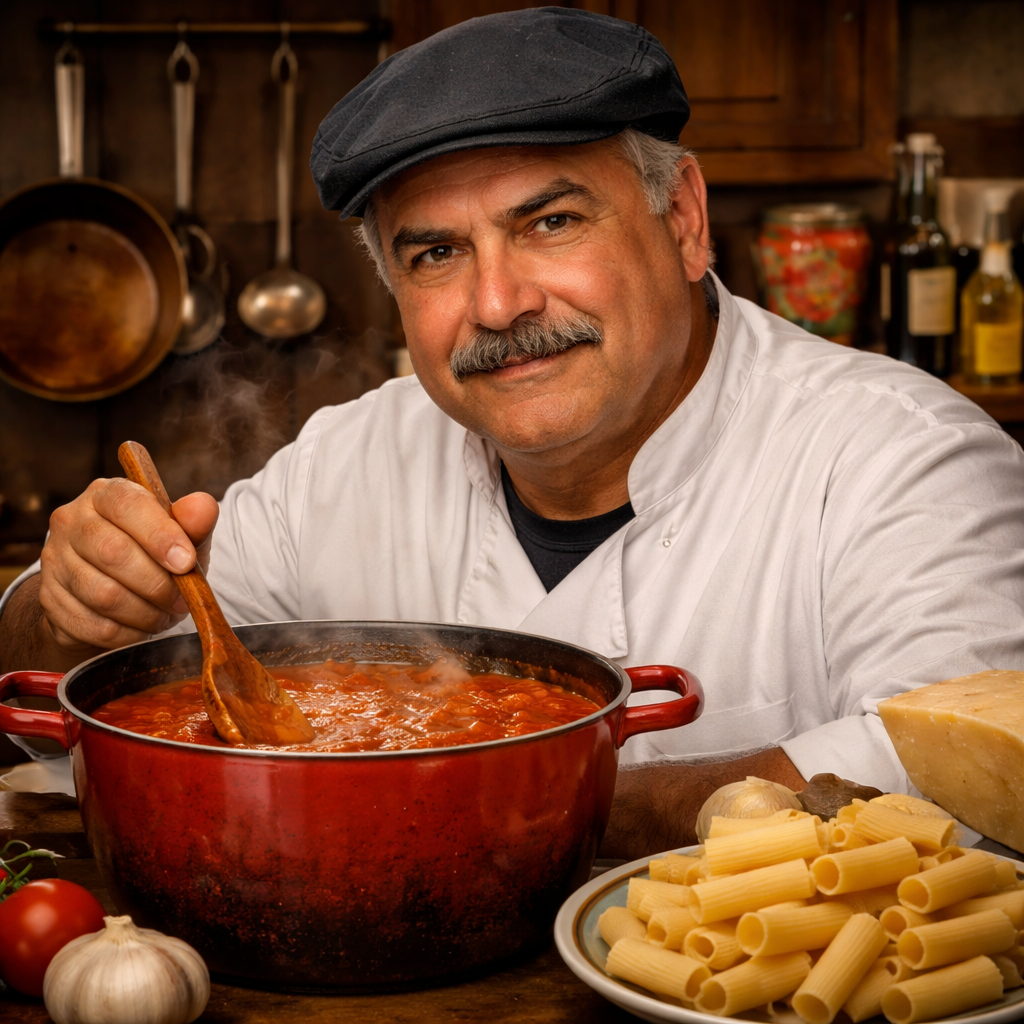
My old head chef used to say — if the aroma doesn’t hit the hallway, start over. Lentil pasta sauce gets the hallway. Brown lentils simmered with soffritto, San Marzano tomatoes, and Italian herbs produce a sauce that fills the kitchen with the kind of smell that makes people wander in and lift the lid. It smells meaty. It smells deep. It smells like Sunday, and there’s not a gram of meat in it.
The Italian-American tradition of cucina povera — poor kitchen cooking — built entire meals around lentils, beans, and other legumes not because people were vegetarian but because legumes were cheap, filling, and when cooked correctly, deeply satisfying. Lentil pasta sauce is that tradition at its most practical. It’s also one of the most naturally nutritious pasta dishes in the entire repertoire — high in protein, high in fiber, rich in iron, and it tastes nothing like diet food.
This lentil pasta sauce is built with the same technique I’d use for a meat Bolognese: soffritto, deglazing with wine, long simmer, pasta finishing in the sauce. The lentils don’t need soaking (French green or brown lentils work best here), they break down slightly during the long simmer, and the result has a texture that resembles a meat ragù more than anyone expects from legumes.
Why This Lentil Pasta Sauce Works
- Brown or French green lentils hold their shape — red lentils dissolve into mush; brown and green lentils partially break down while maintaining some texture
- Soffritto is the Bolognese technique applied to a vegetarian sauce — the carrot-celery-onion base builds sweetness and depth that makes lentil sauce taste complex
- Tomato paste cooked until dark — caramelizing the tomato paste before adding tomatoes builds concentrated umami that compensates for the missing meat flavor
- Long simmer develops lentil texture — 45 minutes minimum lets the lentils soften, partially break down, and absorb all the aromatic flavors surrounding them
- Pasta water finishes the sauce — the pasta cooks directly in the sauce for the last 2 minutes; the starch thickens and the pasta absorbs the lentil flavors
Ingredients
For the Lentil Sauce
- 1½ cups brown or French green lentils, rinsed
- 1 medium onion, finely minced
- 2 stalks celery, finely minced
- 1 medium carrot, finely minced
- 5 cloves garlic, minced
- 1 can (28 oz) crushed San Marzano tomatoes
- 3 tablespoons tomato paste
- 3 cups vegetable stock or water
- ½ cup dry red wine (optional but recommended)
- 2 teaspoons dried Italian seasoning (or a combination of oregano, thyme, and basil)
- 1 teaspoon smoked paprika
- 1 bay leaf
- 1 teaspoon kosher salt
- ½ teaspoon black pepper
- 3 tablespoons extra virgin olive oil
- Red pepper flakes to taste
For Serving
- 1 lb pappardelle, penne, or rigatoni
- Freshly grated Parmigiano-Reggiano (skip for vegan; use nutritional yeast)
- Fresh flat-leaf parsley, chopped
- Drizzle of your best olive oil
Instructions
Step 1: Build the Soffritto
Heat olive oil in a wide, heavy Dutch oven or deep skillet over medium heat. Add the finely minced onion, celery, and carrot. Cook over medium-low, stirring occasionally, for 10–12 minutes until completely softened and starting to caramelize lightly. Don’t rush this — the soffritto is the flavor base. Add garlic and red pepper flakes and cook 1 more minute.
Step 2: Cook the Tomato Paste and Deglaze
Add tomato paste to the soffritto. Cook, stirring, for 2–3 minutes until the paste darkens from red to a deep brick-red. This caramelization step builds concentrated tomato umami that gives the sauce depth. Add red wine (if using) and cook until completely evaporated, scraping any browned bits from the bottom. The fond from the wine deglazing adds another layer of flavor.
Step 3: Add Lentils and Simmer
Add rinsed lentils, crushed tomatoes, vegetable stock, Italian seasoning, smoked paprika, bay leaf, salt, and pepper. Stir to combine. Bring to a simmer, reduce heat to low, and cook uncovered for 40–50 minutes, stirring occasionally, until lentils are completely tender. Some lentils will break down into the sauce, thickening it naturally; others will retain their shape. This variation in texture is correct and appealing. Remove bay leaf. Taste and adjust salt and seasoning.
Step 4: Adjust Consistency
The sauce should be thick and clinging but not dry. If too thick, add a splash of vegetable stock or pasta water. If too thin, simmer uncovered for 10 more minutes. The ideal consistency coats the back of a spoon and falls in slow drops, not streams. This consistency ensures the sauce clings to pasta rather than pooling at the bottom of the bowl.
Step 5: Cook Pasta and Finish
Cook pasta in well-salted water to al dente. Reserve ¾ cup pasta water. Add drained pasta to the lentil sauce over low heat. Toss for 2 minutes, adding pasta water to achieve a saucy, flowing consistency. Plate in warm bowls. Top with Parmigiano-Reggiano (or nutritional yeast), fresh parsley, and a generous drizzle of your best olive oil. Serve immediately.
Chef’s Tips & Common Mistakes
- Use brown or green lentils, not red — red lentils dissolve completely into the sauce; brown and green lentils give the meaty, chunky texture that makes this sauce satisfying
- Cook the tomato paste until it darkens — pale tomato paste tastes raw and tinny; caramelized tomato paste tastes deep and complex; 2–3 minutes of stirring makes this happen
- Smoked paprika is not optional — it adds a subtle smoky depth that bridges the gap between the vegetarian sauce and the meat flavors most people associate with pasta ragù
- 45-minute simmer minimum — at 20 minutes, this tastes like lentil soup over pasta; at 45 minutes, it tastes like Sunday dinner
- Season in layers — season the soffritto, season after adding lentils, taste and adjust before serving; lentils absorb salt as they cook and the sauce needs several seasoning passes
- Pappardelle carries the sauce — wide flat pasta gives the chunky lentil sauce the surface area it needs; thin pasta gets overwhelmed
Variations
- Spicy Arrabbiata Lentil Sauce: Double the red pepper flakes and add extra garlic — a heat-forward version that works particularly well with rigatoni
- Lentil Bolognese Style: Add ½ cup whole milk or cream at the same stage as the wine — the same milk technique used in turkey Bolognese applied to lentils; adds richness without meat
- With Mushrooms: Add 1 cup finely chopped cremini mushrooms with the soffritto — mushrooms add umami that makes the sauce taste even more like meat ragù
- Healthy Pasta Comparison: Contrast with light pasta primavera — both are healthy pasta dishes but one is vegetable-forward while this is protein-forward through legumes
- With Penne alla Vodka Base: Add a splash of vodka at the wine stage and finish with a tablespoon of cream — see penne alla vodka for that technique applied to a tomato sauce
- Pasta e Fagioli Cousin: This sauce is related in spirit to pasta e fagioli — both are Italian-American legume-and-pasta dishes; this one is thicker and clings as a sauce, while pasta e fagioli is looser as a soup
Storage & Reheating
Refrigerator: Store sauce (without pasta) up to 5 days. Lentil sauce improves significantly on days 2–3 as the flavors develop. The sauce thickens in the refrigerator — add a splash of water or stock when reheating.
Reheating: Reheat sauce in a saucepan over medium-low with a splash of water or stock. Add freshly cooked pasta and toss. Never combine sauce and pasta for storage — the pasta absorbs all the sauce overnight.
Freezer: Freeze sauce in portions for up to 6 months. Lentil sauce is one of the best freezer proteins in the plant-based cooking world. Thaw overnight in the refrigerator and reheat gently. Always make a double batch and freeze half.
Meal Prep: This sauce is ideal for batch cooking. One double batch of sauce produces 6–8 weeknight dinners. Reheat a portion, cook pasta fresh, combine in 10 minutes. Whole-week meal prep from one cooking session.
Frequently Asked Questions
Do I need to soak the lentils?
No. Brown and green lentils (unlike dried beans) cook fully without soaking in 40–50 minutes. Soaking reduces cooking time slightly but is not required. Rinse the lentils before using to remove any debris. Do not use red lentils without soaking — though for this recipe, red lentils aren’t appropriate anyway as they dissolve completely.
Why does my lentil sauce taste bland?
Three causes: insufficient soffritto cooking time, underdeveloped tomato paste, or under-seasoning. The soffritto needs 10–12 minutes. The tomato paste needs to caramelize to brick-red. Lentils absorb salt aggressively — taste and season multiple times throughout cooking. Smoked paprika and good olive oil at the finish add depth that rescues a flat sauce. See penne alla vodka for the contrast of a tomato sauce that uses cream for depth vs. this technique-based approach.
Can I use canned lentils?
Yes, with adjustments. Canned lentils are already cooked — add them in the last 15 minutes of simmering rather than at the beginning. Reduce the vegetable stock to 1½ cups since the lentils won’t absorb as much liquid during cooking. The flavor development is slightly less compared to cooking dried lentils from the start, but the result is still very good and the total cooking time drops to 30 minutes.
Is this sauce vegan?
Yes — the sauce itself is completely vegan. Top with nutritional yeast instead of Parmigiano for a vegan finish. Nutritional yeast provides similar umami and a slightly cheesy flavor. Add 2–3 tablespoons in place of the Parmigiano. The olive oil drizzle and fresh parsley at the end are both vegan. This is one of the most nutritionally complete vegan pasta sauces in the Italian-American repertoire.
Can I make this in a slow cooker?
Yes — build the soffritto and caramelize the tomato paste in a skillet first (these steps need direct heat), then transfer everything to the slow cooker. Cook on low 6–8 hours or high 3–4 hours. The lentils will be very tender and the sauce deeply developed. Finish the pasta on the stovetop separately and combine at serving. See pasta e fagioli for another Italian-American legume soup that benefits from slow cooker cooking.