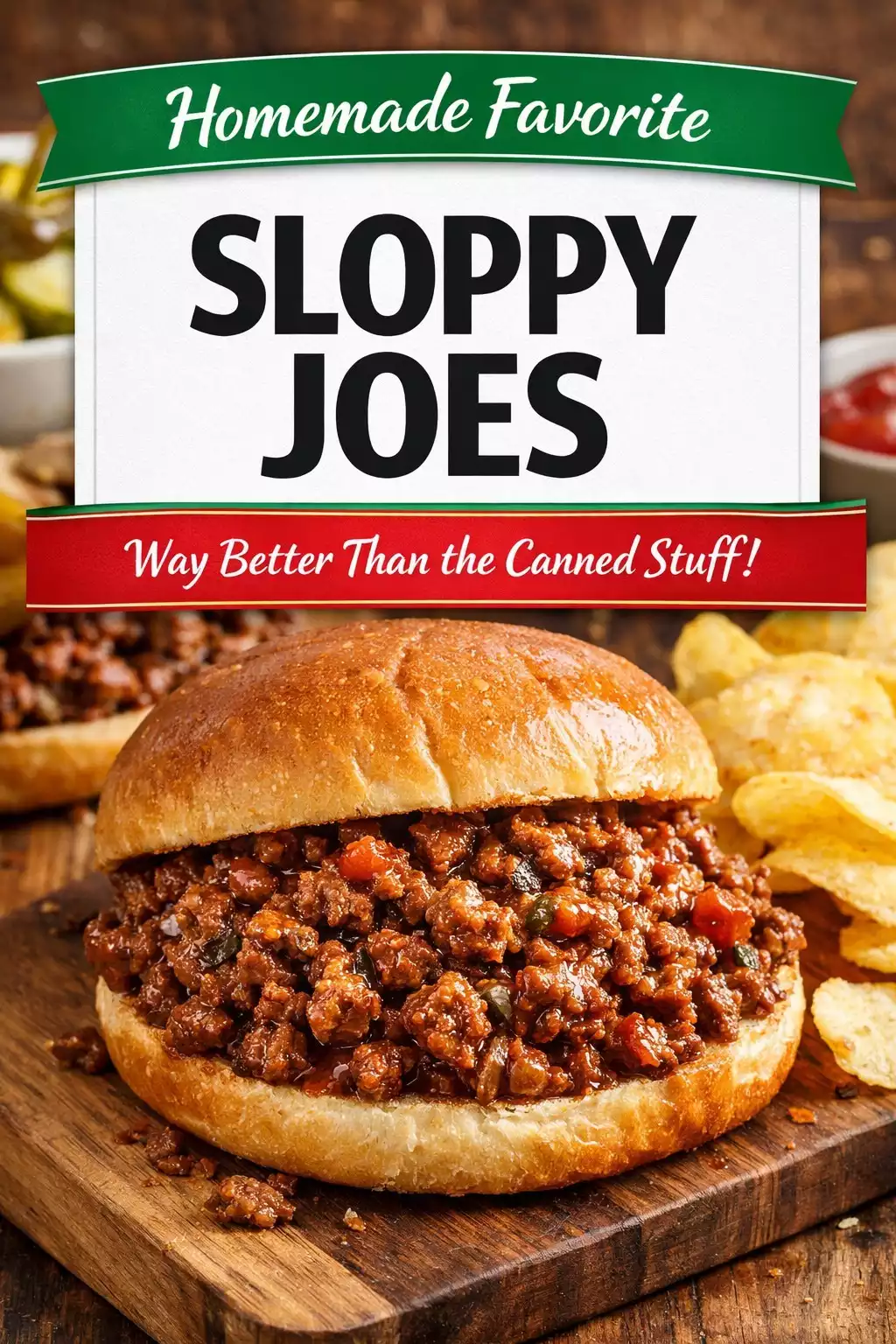
Homemade sloppy joes are an American classic that most people have only ever eaten from a can. The canned version — sweet, one-dimensional, uniform in a way that processed food always is — does the job. But it does the job the way a frozen dinner does the job: technically, without conviction. A from-scratch sloppy joe has depth, balance, a tanginess from vinegar and Worcestershire that the canned version can’t replicate, and a sauce consistency that clings to the beef rather than pooling in the bun.
Finally — Homemade Sloppy Joes done right. The formula is simple: properly browned beef, aromatics built in the same pan, a sauce that has acidity and sweetness and savory depth all working together, simmered until it’s thick enough to pile high without flowing off the bun completely. The sauce is the whole game. Get it right and you understand why the canned version exists as a compromise.
This family dinner recipe is for weeknights, game days, and any evening that calls for something informal and genuinely satisfying. No pretension. Full flavor.
Why This Recipe Works
- Brown the beef properly: The Maillard reaction in well-browned ground beef contributes flavor compounds that the sauce builds on. Grey steamed beef has no foundation for the sauce to elevate.
- Acid-sweet-savory balance in the sauce: Ketchup provides the sweet-tomato base; Worcestershire adds umami and depth; mustard adds tang; brown sugar adds sweetness; apple cider vinegar adds bright acidity. None of these should dominate — together they produce complexity.
- Simmer until thick: Thin sloppy joe sauce falls off the bun. Properly reduced sauce clings to every piece of beef and holds up to a proper bite.
- Aromatics in the beef fat: Onion and bell pepper cooked in the rendered beef fat absorb the flavor and then contribute it back to the sauce.
- Toasted buns: A toasted bun resists moisture absorption longer, preventing structural failure during eating. Untoasted buns become soggy within minutes of filling.
Ingredients
Main Ingredients
- 2 lbs ground beef (80/20)
- 1 medium onion, finely diced
- 1 green bell pepper, finely diced
- 4 cloves garlic, minced
- ¾ cup ketchup
- 2 tablespoons Worcestershire sauce
- 1 tablespoon yellow mustard
- 2 tablespoons apple cider vinegar
- 2 tablespoons brown sugar
- 1 teaspoon chili powder
- ½ teaspoon smoked paprika
- Salt and black pepper
- ¼ cup beef broth or water
- 6–8 hamburger buns, toasted
Instructions
Step 1: Brown the Beef
Heat a large skillet over medium-high heat. Add ground beef and cook, breaking into small pieces, until deeply browned, about 8–10 minutes. Drain all but 1 tablespoon of fat. Thorough browning is the non-negotiable first step.
Step 2: Cook Aromatics
Add onion and bell pepper to the skillet. Cook 4–5 minutes until softened. Add garlic and cook 60 seconds until fragrant. The vegetables should be soft and slightly caramelized from the beef fat in the pan.
Step 3: Build the Sauce
Add ketchup, Worcestershire sauce, mustard, vinegar, brown sugar, chili powder, and smoked paprika. Stir to combine thoroughly. Add beef broth. Stir again and taste — the sauce should have a balance of sweet, tangy, and savory at this point before reducing.
Step 4: Simmer and Reduce
Reduce heat to medium-low. Simmer uncovered 10–15 minutes, stirring occasionally, until the sauce has thickened and reduced to a consistency that holds its shape when piled on a bun rather than running freely. Taste and adjust — more vinegar for tanginess, more brown sugar for sweetness, more Worcestershire for depth.
Step 5: Toast Buns and Serve
Toast buns in a dry skillet, toaster, or under the broiler until golden. Pile the sloppy joe mixture generously onto the bottom bun. Serve immediately with pickle slices, coleslaw, and whatever sides the table demands.
Pro Tips & Common Mistakes
- Don’t drain all the fat: Leave one tablespoon of rendered beef fat in the pan to cook the vegetables. The fat carries flavor that olive oil or vegetable oil can’t replace in this recipe.
- Balance the sauce by taste: The acid-sweet-savory formula is a starting point. Taste at step 3 and adjust before reducing. Every ketchup brand is different, so personal adjustment is necessary.
- Reduce until thick: Thin sloppy joe sauce is soggy bun territory. Reduce until a spoon dragged through the mixture leaves a trail that holds for a second before filling back in.
- Toast the buns: This is non-optional. Untoasted buns disintegrate from moisture within 3 minutes. Toast them properly and they hold up through the meal.
- Don’t rush the browning: The flavor of this dish comes from properly browned beef, not from the sauce alone. Take the time to genuinely brown the beef before building the sauce.
Variations Worth Trying
- Turkey Sloppy Joes: Substitute ground turkey for beef. Add an extra tablespoon of olive oil to compensate for lower fat content. Lighter result with the same flavor profile.
- Spicy Version: Add 1–2 diced jalapeños with the onion and increase chili powder to 2 teaspoons. A significant heat upgrade that’s very good.
- Mushroom Bolognese Style: Add 8 oz finely diced cremini mushrooms with the onion. The mushrooms absorb the beef fat and nearly disappear into the sauce while adding umami and texture.
- Slow Cooker Version: Brown beef and aromatics first, transfer with all sauce ingredients to a slow cooker, cook on LOW 3–4 hours. Texture is slightly different but convenient for parties.
- Sloppy Joe Stuffed Peppers: Use the filling to stuff halved bell peppers, top with cheese, and bake at 375°F for 25 minutes. An unexpected and excellent use of the same mixture. See also this one pot chili mac, this dutch oven pot roast, this taco night, and this pizza casserole for more beef family dinners.
Storage & Reheating
- Refrigerator: Filling up to 4 days. Better the second day as flavors deepen overnight.
- Freezer: Up to 3 months. Freeze the filling in portioned bags. Thaw overnight and reheat in a covered pan. One of the best batch-cook and freeze dinners.
- Reheating: Covered pan over medium heat with a splash of water. Or microwave covered. The sauce usually tightens overnight — add water to loosen to the correct consistency.
Frequently Asked Questions
What’s the difference between homemade and Manwich?
Manwich (canned sloppy joe sauce) is sweet, one-dimensional, and thick with corn syrup. Homemade has acid-sweet-savory balance from real vinegar and Worcestershire, adjustable seasoning, no artificial sweeteners, and actual depth from browned beef and cooked aromatics. The difference is significant and noticeable.
Can I use ground pork or turkey?
Both work. Ground pork adds a different, fattier flavor. Ground turkey is leaner and lighter. The sauce formula works with any ground meat.
What bun type is best?
A soft, squishy potato roll or brioche bun holds up to the sloppy filling while providing a mild, slightly sweet base that complements the tangy sauce. Avoid hard rolls or overly crusty buns — the filling cuts through them unevenly.
Is this the same as bolognese?
Similar category, very different flavor. Bolognese is Italian and wine-based with slow-cooked vegetables; sloppy joes are American with a ketchup and Worcestershire-based sauce. Related in technique, entirely different in flavor destination.
Can I make this for a crowd?
Scale up easily — every element multiplies proportionally. For large groups, keep the filling warm in a slow cooker on the low setting and toast buns in batches. One of the most practical crowd-feeding formats possible.