Every bite should remind you of somebody’s kitchen. That’s the whole point. Cheeseburger Pasta Skillet isn’t trying to be gourmet — it’s trying to be exactly what it sounds like: a cheeseburger and pasta, cooked together in one pan, tasting like both and better than either separately. I made this for the first time during a slow Tuesday service when a line cook dared me to do something with a pound of ground beef, leftover pasta, and half a block of cheese. We ate it standing up at the prep table. Nobody talked. That’s always the sign of a winner.
The Italian-American way is no shortcuts, no compromises. That means browning the beef properly, building a real sauce base, and cooking the pasta in the same liquid so it absorbs every bit of flavor. This is not boiling pasta separately and mixing it in — that’s two steps where one will do. The result is a creamy, hearty skillet that pulls from the cheeseburger flavor profile: beef, mustard, ketchup, pickles on the side if you’re into it.
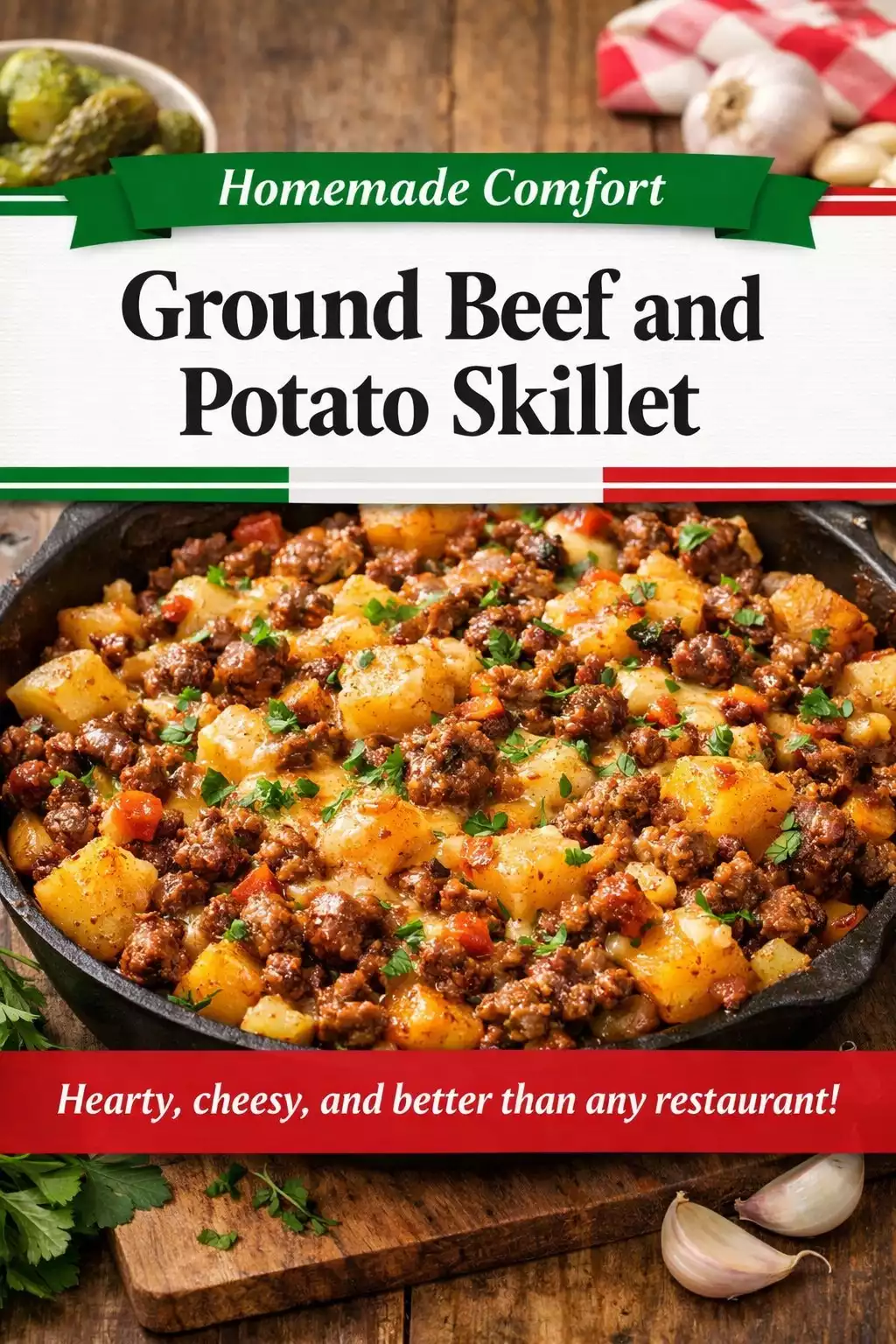
If ground beef is your protein of choice, keep exploring with a ground beef potato skillet or check the full list of ground beef recipes for more one-pan winners. The technique here transfers directly.
Why This Works
- Pasta cooked in the sauce: Instead of boiling pasta in plain water and combining later, cooking it directly in the beef broth and tomato base means every bite is seasoned all the way through, not just coated on the outside.
- Cheese added off heat: Stirring cheese into a boiling pan causes it to break and go greasy. Pull the heat, add the cheese, stir slowly. Creamy every time.
- Mustard in the sauce: This is the flavor bridge to the cheeseburger profile. Dijon or yellow mustard adds a sharpness that ties the beef, cheese, and tomato together in a way that just makes it click.
- Proper beef browning: Steam-cooked beef is gray and flavorless. A real sear — no stirring for the first two minutes — creates crust and depth that carries the whole dish.
Ingredients
For the Skillet
- 1½ lbs ground beef (80/20)
- 8 oz rotini or elbow macaroni (uncooked)
- 1 medium yellow onion, diced
- 3 cloves garlic, minced
- 1 tablespoon olive oil
- 1 tablespoon yellow or Dijon mustard
- 2 tablespoons ketchup
- 1 tablespoon Worcestershire sauce
- 1 can (14 oz) diced tomatoes
- 2 cups beef broth
- 1 teaspoon garlic powder
- 1 teaspoon onion powder
- 1 teaspoon smoked paprika
- Salt and black pepper to taste
- 2 cups shredded sharp cheddar cheese
- Fresh parsley or chives for garnish
Instructions
Step 1: Brown the Beef
Heat olive oil in a large, deep skillet or sauté pan over medium-high heat. Add ground beef in a single mass. Don’t break it up yet — let it sear for 2 minutes to build a crust on the bottom. Then break it apart and cook until fully browned, about 6-8 minutes total. Season with garlic powder, onion powder, paprika, salt, and pepper. Drain excess fat if needed, but leave about a tablespoon in the pan for flavor.
Step 2: Add Aromatics
Add diced onion to the browned beef. Cook 3-4 minutes until softened and translucent. Add garlic and cook 60 seconds more. Add Worcestershire sauce, mustard, and ketchup, stirring to coat everything. This is where the cheeseburger flavor starts building — cook it for 1 minute to let those condiment flavors meld with the beef fat.
Step 3: Add Liquid and Pasta
Pour in the diced tomatoes (with juices) and beef broth. Stir to combine, scraping up any browned bits from the bottom of the pan. Bring to a boil, then add the uncooked pasta. Stir to submerge. Reduce heat to medium, cover, and cook for 10-12 minutes, stirring every 3-4 minutes, until the pasta is al dente and most of the liquid has absorbed.
Step 4: Add Cheese
Remove the pan from heat entirely. Wait 30 seconds, then add the shredded cheddar in two additions, stirring gently after each. The residual heat melts the cheese without breaking it. If the mixture seems too thick, add a splash of broth. If too thin, let it sit covered for 2 minutes — the pasta will absorb the excess.
Step 5: Taste and Serve
Taste one more time for salt and pepper. Garnish with fresh parsley or chives and serve directly from the skillet. Put pickles on the table — they cut through the richness and complete the cheeseburger experience.
Tips & Common Mistakes
- Use the right pasta shape: Rotini, elbow, or shells work best because they hold the sauce in their curves and cook evenly in this amount of liquid. Long pasta or large shapes won’t work here.
- Don’t skip the mustard: It might seem wrong, but mustard is the flavor backbone that makes this taste like a cheeseburger rather than just a beef pasta. Use it.
- Stir the pasta periodically: Pasta sitting in thickening liquid without movement will stick to the bottom. Stir every few minutes and add a splash of broth if it’s absorbing too fast.
- Cheese off heat only: The most common mistake is adding cheese while the pan is still on the burner. It goes grainy and greasy. Pull it completely off heat before adding cheese.
- Cover while the pasta cooks: Trapping steam is what allows the pasta to cook evenly in limited liquid. Don’t skip the lid.
Variations Worth Trying
- Bacon cheeseburger: Add 4 strips of cooked, crumbled bacon with the cheese. The smokiness takes this from great to exceptional.
- Spicy version: Add ½ teaspoon cayenne and a tablespoon of hot sauce with the condiments. A jalapeño diced in with the onions works beautifully too.
- Double cheese: Mix half sharp cheddar with half Velveeta for an extra-creamy, ultra-indulgent finish. It’s not subtle, and that’s the point.
- Mushroom addition: Sauté 8 oz of sliced mushrooms with the onions for extra depth and umami. Works especially well with Swiss cheese instead of cheddar.
- Classic cheeseburger bowl: Serve over shredded lettuce with diced tomatoes and pickles on top for a deconstructed burger bowl. Kids love it. So do adults. For the original burger experience, try the classic cheeseburger recipe.
Storage & Reheating
- Refrigerator: Store in an airtight container for up to 4 days. The pasta will absorb remaining liquid overnight, so it thickens up considerably.
- Freezer: Freeze without the cheese topping for up to 2 months. Cream-based cheese sauces can separate when frozen, but the base holds well.
- Reheating: Add a splash of beef broth or water when reheating, whether in the microwave or stovetop. Stir well and heat gently to prevent the cheese from going grainy. Don’t overheat.
- Meal prep: This is an excellent meal prep dish — reheats well, fills containers efficiently, and the flavor deepens after a day in the fridge.
Frequently Asked Questions
Can gluten-free pasta be used?
Yes, with adjustments. Gluten-free pasta absorbs liquid differently and can go mushy faster. Start checking doneness 2-3 minutes earlier than the recipe suggests and reduce the broth by ¼ cup. Stir more frequently to prevent sticking.
What’s the best beef-to-pasta ratio?
The recipe as written is balanced, but if feeding big appetites, go up to 2 lbs of beef and increase broth to 2½ cups. The pasta amount stays the same — more beef doesn’t require more pasta. Check out ground beef rice skillet for a rice-based variation with a similar ratio approach.
Can this be made ahead?
Yes. Make through Step 3, cool completely, then refrigerate. Reheat on the stovetop with a splash of broth, then add cheese fresh when reheating. The pasta will be softer but the flavor will be even better the next day.
What cheese works best?
Sharp cheddar is the classic cheeseburger choice, but American cheese (the real deli kind, not singles) melts exceptionally well and gives an authentic fast-food cheeseburger flavor. Colby Jack, Monterey Jack, or even Gruyère all work — each gives a different flavor profile.
How do I prevent the pasta from getting mushy?
Don’t overcook — pull it when it still has a slight bite (al dente). The pasta continues cooking in the residual heat for about 2 minutes after the burner goes off. Factor that in. Also, best meatloaf recipe and classic beef stew use similar timing principles that apply here.