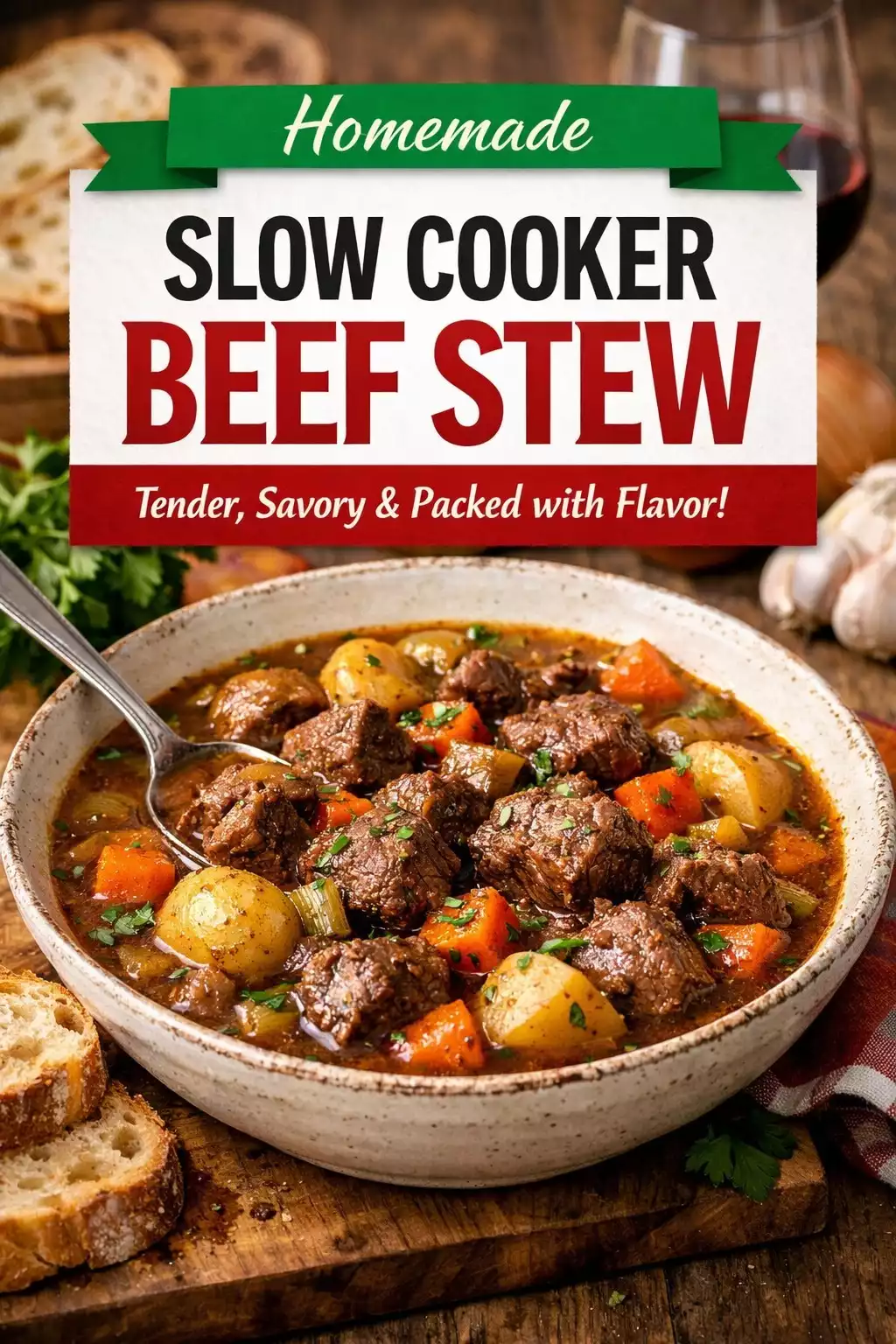
People pay $30 for this at restaurants. You’re making it for six bucks. Slow Cooker Beef Stew is one of the most satisfying things a home kitchen can produce — not because it’s technically complicated, but because it transforms cheap, tough beef into something tender, complex, and deeply comforting. The slow cooker does the work. The cook’s job is to set it up correctly and then get out of the way.
Most slow cooker beef stew recipes miss the mark in one of two ways: they either skip the sear (gray beef, watery broth) or they overload the pot with too many vegetables too early (mushy by hour four). This recipe does it the right way. The beef gets a proper sear. The vegetables go in at the right time. The broth gets built, not just poured. The result is a stew with body, color, and the kind of depth that makes people ask what’s in it.
If comfort food in a slow cooker is the theme, also explore the classic beef stew done stovetop or Dutch oven, the slow cooker beef chili for a spicier variation, and the mississippi pot roast for another slow cooker beef masterpiece.
Why This Works
- Searing the beef first: Browning beef cubes before slow cooking creates a crust through the Maillard reaction that adds color and flavor to both the meat and the broth. Skipping this step results in gray, bland stew.
- Tomato paste and Worcestershire: Two ingredients that add umami depth and body to the broth without making it taste like tomato soup. Just enough of each to build complexity.
- Flour coating the beef: Tossing beef in flour before searing serves two purposes: better browning and natural thickening of the stew as it cooks. No cornstarch slurry needed at the end.
- Potatoes and carrots added midway: Dense root vegetables don’t need eight hours in a slow cooker — they go in for the last 3-4 hours to prevent mushiness while still absorbing all the stew flavors.
Ingredients
For the Stew
- 2 lbs beef chuck, cut into 1½-inch cubes
- 3 tablespoons all-purpose flour
- 2 tablespoons olive oil
- 3 medium carrots, cut into 1-inch pieces
- 3 medium Yukon Gold potatoes, cut into 1-inch cubes
- 3 stalks celery, sliced
- 1 large yellow onion, diced
- 4 cloves garlic, minced
- 2 tablespoons tomato paste
- 1 tablespoon Worcestershire sauce
- 2 cups beef broth
- 1 cup red wine (or additional beef broth)
- 1 teaspoon dried thyme
- 1 teaspoon dried rosemary
- 2 bay leaves
- Salt and black pepper to taste
- Fresh parsley for garnish
Instructions
Step 1: Prepare and Sear the Beef
Pat beef cubes completely dry. Season generously with salt and pepper, then toss with flour to coat lightly. Heat olive oil in a large skillet over high heat. Sear beef in batches — 2-3 minutes per side, not moving until a crust forms. Don’t crowd the pan. Transfer browned beef to the slow cooker. Each batch should take about 6 minutes.
Step 2: Build the Base
In the same skillet, add onion and celery, cooking over medium heat for 3-4 minutes, scraping up the browned beef bits from the bottom of the pan. Add garlic and tomato paste — cook 1 minute, stirring constantly. Add wine and let it reduce by half, about 2 minutes. Pour this mixture over the beef in the slow cooker.
Step 3: Add Liquid and Aromatics
Add beef broth, Worcestershire sauce, thyme, rosemary, and bay leaves to the slow cooker. Stir gently to combine. The liquid should come about halfway up the beef — not cover it completely. Cover and cook on LOW for 5 hours (without vegetables yet).
Step 4: Add Vegetables
After 5 hours, add potatoes and carrots to the slow cooker, submerging them in the stew liquid. Cover and continue cooking on LOW for an additional 2-3 hours, until vegetables are tender and beef shreds easily with a fork. Total cooking time: 7-8 hours on LOW.
Step 5: Finish and Serve
Remove bay leaves. Taste for salt and pepper — the stew should be well-seasoned and the broth should have body and depth. If broth is too thin, remove the lid and cook on HIGH uncovered for 20-30 minutes to reduce. Garnish with fresh parsley and serve in deep bowls with crusty bread.
Tips & Common Mistakes
- Cut beef uniformly: 1½-inch cubes cook evenly. Smaller pieces turn to mush. Larger pieces may not fully tenderize. Uniform sizing is the goal.
- Don’t skip the wine: Red wine adds an acidity and complexity that beef broth alone can’t replicate. Use a wine worth drinking — it doesn’t need to be expensive, but it should be something you’d pour in a glass.
- Vegetables go in late: Adding potatoes and carrots at the start results in complete mush after eight hours. The staggered approach is the key to proper texture.
- LOW over HIGH: The difference is significant. LOW heat allows the collagen in the chuck roast to break down gradually into gelatin, which gives the stew that silky, rich body. HIGH heat can toughen the meat.
- Don’t lift the lid repeatedly: Every time the lid comes off, heat escapes and cooking time increases by 20-30 minutes. Check once at the vegetable addition point, then again at the end.
Variations Worth Trying
- Guinness beef stew: Replace the red wine with a bottle of Guinness stout. The malty, bitter notes of the stout add a different layer of complexity that’s extraordinary with the beef.
- Italian-style beef stew: Add a can of diced tomatoes, olives, and capers. Use red wine and add a rind of Parmesan to the slow cooker. Serve over polenta instead of with bread.
- Herb-heavy version: Double the thyme and rosemary, add sage and a bay-heavy herb bundle. Tie herbs in cheesecloth for easy removal.
- Mushroom addition: Add 8 oz of cremini mushrooms with the onions in Step 2. They add an earthy depth and a meaty texture that complements the beef exceptionally well.
- Swap the protein: This technique works equally well with lamb shoulder. Same timing, same technique, deeply different flavor. See classic beef chili for a different approach to slow-cooked beef.
Storage & Reheating
- Refrigerator: Store in an airtight container for up to 5 days. One of the best next-day meals — the flavors deepen and the broth thickens beautifully overnight.
- Freezer: Freezes well for up to 3 months. Potatoes can become slightly grainy after freezing but are still perfectly edible. To avoid this, freeze without potatoes and add fresh ones when reheating.
- Reheating: Reheat on the stovetop over medium-low heat with a splash of broth to loosen if needed. Microwave in covered containers in 2-minute intervals, stirring between each.
Frequently Asked Questions
Why is my stew broth watery?
Two likely causes: too much liquid added at the start, or the beef wasn’t floured before searing. If it’s already cooked and too thin, remove the lid and cook on HIGH for 20-30 minutes to reduce. For future batches, the flour coating on the beef is essential for natural thickening.
Can frozen vegetables be used?
For the peas, yes — stir them in during the last 30 minutes on HIGH and they’ll be perfect. For carrots and potatoes, fresh is strongly recommended — frozen root vegetables turn to complete mush in a slow cooker.
What if the beef isn’t tender after 8 hours?
Usually this means the slow cooker is running slightly cool. Continue on LOW for another hour. Alternatively, the beef may have been too lean — leaner cuts (like round) don’t tenderize as well as chuck regardless of cooking time.
Can beef stew be made in an Instant Pot instead?
Yes. Use the sauté function for Steps 1-2, then pressure cook on HIGH for 35-40 minutes with a 15-minute natural release. Add vegetables and pressure cook an additional 10 minutes. The result is excellent, though the broth won’t have quite the same body as 8-hour low-and-slow. For more slow cooker beef options, compare with slow cooker beef chili and mississippi pot roast.
Do I have to use red wine?
No. Replace with an equal amount of additional beef broth and a tablespoon of balsamic vinegar for a similar depth and acidity. The stew will still be excellent without wine — just slightly less complex in the background notes of the broth.