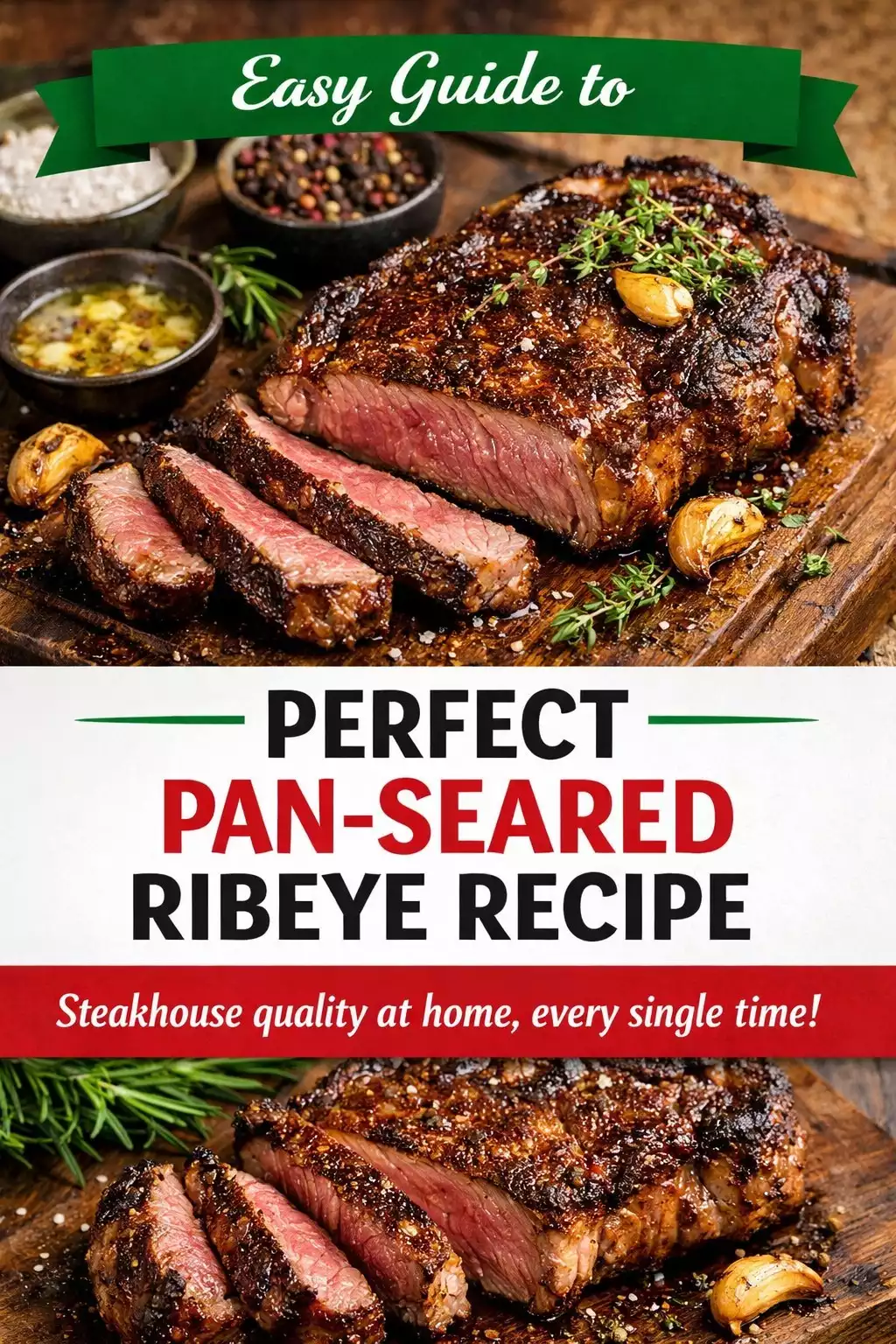
This is the recipe that ends arguments at Sunday dinner. Reverse Sear NY Strip is the technique that changed how serious home cooks approach thick-cut steaks — and once you understand why it works, there’s no going back to the old way. I spent years searing first, finishing in the oven, and wondering why the edges were overcooked while the center was just right. The reverse method fixes that. Low oven first, ripping-hot sear at the end. Even doneness from edge to edge, a crust that forms in 90 seconds because the surface is bone dry. It’s a better way to cook a steak.
The New York strip is the ideal cut for this technique — firm enough to maintain its structure through the oven phase, marbled enough to stay juicy through the high-heat sear, and with a fat cap along one edge that renders beautifully in the cast iron. This is not a complicated recipe. It’s a patient one. The oven phase takes 40-50 minutes at low temperature. The sear takes 90 seconds. The rest takes 5 minutes. What lands on the plate is as good as anything a steakhouse produces, and the technique is learnable by anyone who can follow temperature readings.
For complementary steak dishes and beef applications, try best meatloaf recipe or homemade meatballs for Italian-American beef classics. And classic beef stew uses similar patient technique for a different cut and result.
Why This Works
- Low oven dries the surface: As the steak sits in a 250°F oven for 40-50 minutes, the exterior surface dries out completely. This is the key to the reverse sear — a dry surface sears in 60-90 seconds instead of 3-4 minutes, meaning less heat penetration into the interior and more even doneness overall.
- Gradual temperature rise: The low oven raises the internal temperature slowly and evenly. Traditional searing-then-oven creates a heat gradient: crusty exterior, overcooked gray band, small perfect center. Reverse sear eliminates the gray band entirely.
- Short, intense final sear: Because the surface is dry and the interior is already close to target temperature, the final sear in screaming hot cast iron takes under 2 minutes and creates a crust without overcooking the center.
- Salt early, rest after searing: Salting the steak 1-2 hours before cooking (or the night before) allows the salt to penetrate, season the meat throughout, and draw surface moisture out then back in. After the final sear, a 5-minute rest redistributes internal juices.
Ingredients
For the NY Strip
- 2 NY strip steaks, 1.5 to 2 inches thick
- Kosher salt (generous — apply 1-2 hours before or the night before)
- Black pepper, coarsely ground (applied just before the oven)
- 2 tablespoons avocado oil or high-smoke-point oil
- 3 tablespoons unsalted butter
- 4 cloves garlic, smashed
- 4 sprigs fresh thyme
- Flaky sea salt for finishing
Instructions
Step 1: Salt and Set Up
Season steaks generously with kosher salt on all sides including the edges. Place on a wire rack over a sheet pan and refrigerate uncovered for at least 1 hour, up to overnight. The longer, the better — overnight salting produces noticeably more seasoned, more tender steak. Remove from refrigerator and let come to room temperature (30 minutes) before cooking.
Step 2: Low Oven Phase
Preheat oven to 250°F. Season steaks with coarsely ground black pepper (salt was applied earlier). Place on the wire rack-sheet pan setup and put in the preheated oven. Cook until the internal temperature reads 115-120°F for medium-rare (the temperature will rise during the sear and rest). This takes approximately 40-55 minutes depending on thickness. Check with an instant-read thermometer starting at 35 minutes.
Step 3: Rest Before Searing
Remove steaks from the oven when at 115-120°F. Let rest on the wire rack for 5-10 minutes while the cast iron preheats. This resting period allows the surface to dry even further, enhancing the final sear. Pat the surface dry with paper towels immediately before searing.
Step 4: The Final Sear
Place cast iron over the highest heat setting and preheat for 5 minutes until smoking. Add oil and immediately place the steaks in the pan. Sear each side for 60-90 seconds — because the surface is bone dry and the pan is extremely hot, the crust forms almost instantly. Use tongs to sear the edges, especially the fat cap. In the last 30 seconds, add butter, garlic, and thyme and baste continuously.
Step 5: Rest and Finish
Transfer steaks to a cutting board. Rest 5 minutes — the internal temperature will rise to 130-135°F (medium-rare) during this time. Do not tent. Finish with flaky sea salt and serve whole or sliced against the grain.
Tips & Common Mistakes
- This technique requires thick steaks: Reverse sear on a thin steak (under 1.5 inches) overcooks it in the oven before reaching the sear phase. This technique is specifically for 1.5-2 inch steaks. Thin steaks get the standard high-heat sear.
- Use a thermometer, not a timer: Oven temperatures vary. The only reliable measure is internal temperature. Pull at 115-120°F for medium-rare. Every degree over 125°F before the sear results in overcooked steak after the sear and rest.
- Smoke detector warning: The final sear in a screaming-hot cast iron with butter creates significant smoke. Open windows, turn on the exhaust fan, and be ready. This is unavoidable and worth it.
- Wire rack is essential: Placing the steak directly on the sheet pan traps moisture on the bottom. The wire rack allows air circulation all around the steak for even drying.
- Don’t skip overnight salting if time allows: The difference between 1-hour salted steak and overnight-salted steak is meaningful. The salt penetrates deeply, the moisture fully reabsorbs, and the seasoning is throughout the entire thickness of the steak.
Variations Worth Trying
- Coffee and pepper crust: Add 1 teaspoon finely ground espresso to the pepper before seasoning. The coffee creates a bolder crust and adds a subtle roasted note to the steak’s flavor.
- Compound butter: Rest the steaks on a slice of compound butter (softened butter mixed with roasted garlic, fresh herbs, and a pinch of lemon zest). It melts into the crust as it rests.
- Red wine reduction finish: After the sear, use the butter and drippings in the pan to make a quick 3-minute red wine reduction sauce. Serve alongside for dipping or drizzling.
- Chimichurri: Skip the butter baste and serve with fresh chimichurri — parsley, oregano, garlic, red wine vinegar, olive oil, and red pepper flakes. Brightens the rich steak without competing.
- Smoked reverse sear: Skip the oven and use a smoker at 225°F instead. The steak picks up gentle smoke flavor during the low phase before the final cast-iron sear. Outstanding result. Pair with beef stuffed bell peppers or classic beef stew for a full beef dinner spread.
Storage & Reheating
- Refrigerator: Store cooked steak wrapped in foil for up to 3 days. Slice thin and use in steak salads, steak and eggs, or steak sandwiches with the remaining cooking juices.
- Freezer: Raw NY strip freezes well for up to 6 months, tightly wrapped. Thaw overnight in the refrigerator and proceed with the recipe as directed. Cooked steak freezes poorly — texture degrades significantly.
- Reheating: Best method for cooked steak: 250°F oven on a wire rack for 20-25 minutes until warmed through, then 30-second sear per side in a hot pan to restore crust. Microwave ruins steak — don’t use it for reheating a steak worth eating.
Frequently Asked Questions
How is reverse sear different from finishing in the oven after searing?
Traditional method: sear first (high external heat), finish in 400°F oven (high ongoing heat). Result: overcooked gray band between crust and center. Reverse sear: low oven (250°F) first (slow, even heat), then brief hot sear. Result: edge-to-edge even doneness with a thin, perfect crust. The difference in the cross-section of the steak is visually dramatic.
What if the steak overshoots in the oven?
Pull it immediately and do a very brief sear — 30-45 seconds per side. The steak is already close to its final temperature, so the sear is just for crust. If it reads 125°F coming out of the oven, after the sear and 5-minute rest it will be medium (135°F). Work with it rather than panic.
Can this work with a gas vs. electric oven?
Yes, both work. Gas ovens cycle more aggressively and can have hot spots; electric ovens are more consistent. In both cases, use a thermometer rather than trusting oven temperature accuracy. The 250°F setting is the goal — verify with an oven thermometer if possible.
Why NY strip specifically?
The strip has a firm, tight grain structure that holds up well through the extended oven phase without drying out. Its fat distribution (mostly along one edge with some interior marbling) renders beautifully in the final sear. Ribeye also works excellently. Filet mignon, being leaner, requires careful timing to avoid drying — see best meatloaf recipe for another approach to precision beef cooking.
Is this technique worth the extra time?
For steaks 1.5 inches and thicker: absolutely yes. The difference in edge-to-edge doneness is significant enough that anyone who cares about steak will notice immediately. For steaks under 1.5 inches, stick with the standard sear-and-baste method — the reverse sear benefit is less pronounced with thinner cuts.