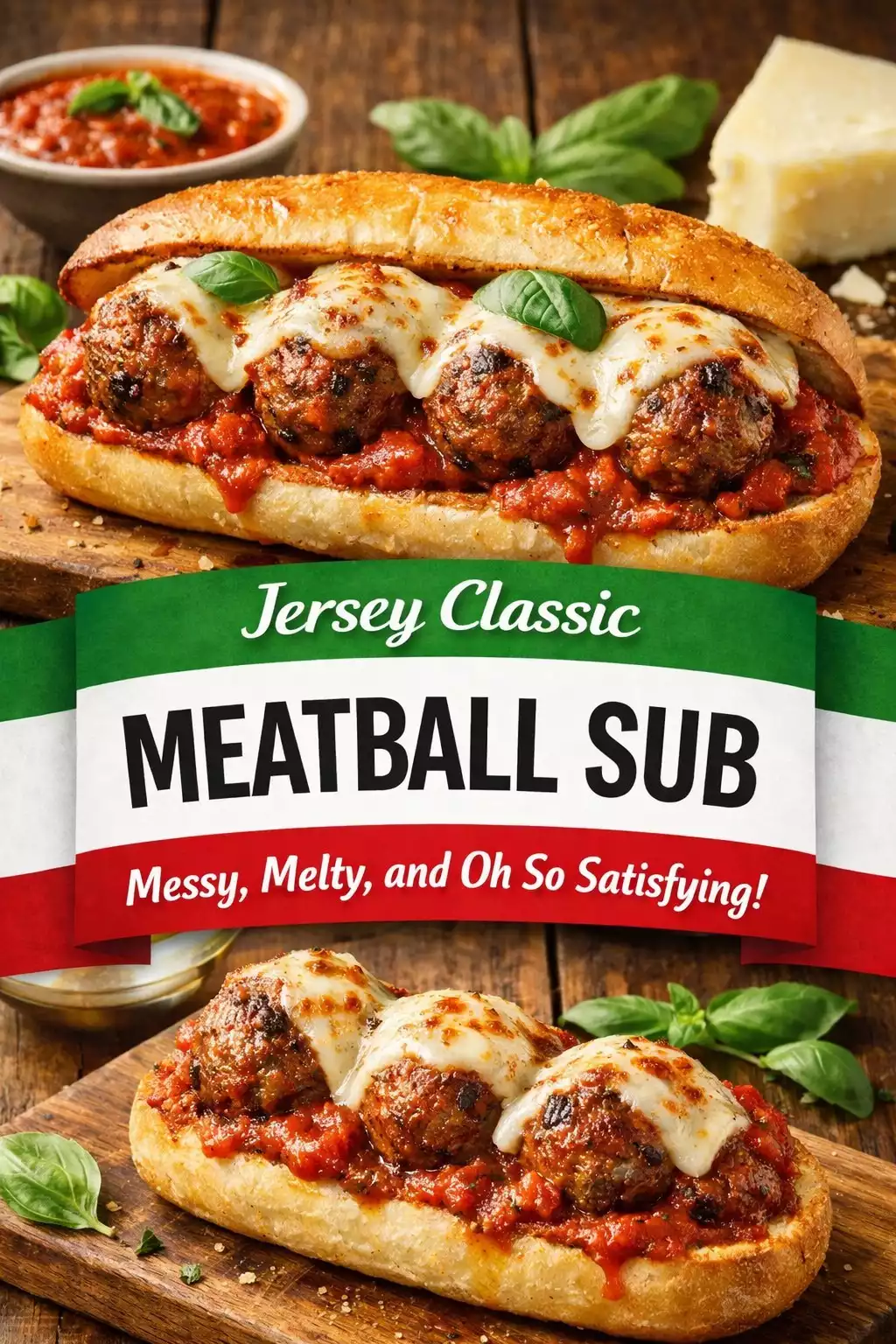
This isn’t the fancy restaurant version. This is the real one. The Meatball Sub is a Jersey institution — not Italian, not gourmet, not composed. It’s a hoagie roll, a ladle of marinara, four or five good meatballs pressed in, and a handful of provolone melted under a broiler. It’s loud and messy and deeply satisfying in the way that only genuinely unpretentious food can be. I’ve eaten it from paper bags at tailgates and from paper plates at my grandmother’s table. Same sandwich. Same feeling.
The meatballs are the story. Not the bread, not the sauce — the meatballs. They need to be tender, well-seasoned, and properly browned before they go into the sauce to finish. Skipping the browning step produces soft, pale meatballs that taste steamed. Properly browned meatballs have a crust that adds both flavor and structure to hold up against the sauce. Everything else — the roll, the cheese, the broil — supports what happens when those meatballs are right.
For the standalone meatball recipe that these subs are built on, see homemade meatballs. For more ways to use the same meatballs, check the classic beef stew approach or stretch the ground beef budget further with easy ground beef dinners and sunday pot roast.
Why This Works
- Panade in the meatballs: Milk-soaked bread (panade) is the technique that keeps meatballs tender even after browning and simmering. The bread absorbs the milk, the mixture keeps the meat moist from inside. Meatballs without panade become dense and tough.
- Brown before sauce: Meatballs browned in a skillet before going into the sauce develop a crust that provides both flavor and structural integrity. They hold together in the sauce rather than breaking apart.
- Broil with cheese at the end: A meatball sub without broiled, bubbly, slightly browned cheese on top is just a meatball sandwich. The 2-minute broil step transforms the cheese from melted to browned in a way that adds another layer of flavor.
- Hoagie roll quality matters: The roll is the vehicle and it needs to be worthy. A good hoagie roll is slightly crusty outside, soft enough to compress around the filling, and substantial enough to hold its structure against the sauce. Soft sandwich bread falls apart. A baguette cuts the mouth. Hoagie is the right answer.
Ingredients
For the Meatballs
- 1 lb ground beef (80/20)
- ½ lb ground pork (or all beef)
- 2 slices white bread, crusts removed
- ¼ cup whole milk
- 1 egg
- 3 cloves garlic, minced
- ¼ cup grated Parmesan
- 2 tablespoons fresh parsley, chopped
- 1 teaspoon Italian seasoning
- ½ teaspoon onion powder
- Salt and black pepper
- 2 tablespoons olive oil for browning
For the Sauce and Sub
- 2 cups marinara or tomato sauce (homemade or jarred quality)
- 4 hoagie rolls
- 8 slices provolone cheese (or shredded mozzarella)
- Fresh basil for garnish (optional)
Instructions
Step 1: Make the Panade
Tear bread into small pieces and place in a bowl. Pour milk over the bread and let soak for 5 minutes until the bread is completely saturated. Mash into a paste with a fork. This is the panade and it’s what makes these meatballs tender.
Step 2: Mix the Meatballs
In a large bowl, combine ground beef, ground pork, panade, egg, garlic, Parmesan, parsley, Italian seasoning, onion powder, salt, and pepper. Mix with your hands until just combined — don’t overmix or the meatballs will be dense. The mixture should be moist and cohesive, not wet or crumbly. Roll into golf ball-sized portions (about 1.5 inches), approximately 16-20 meatballs.
Step 3: Brown the Meatballs
Heat olive oil in a large skillet over medium-high heat. Add meatballs in a single layer, leaving space between them. Brown on all sides, turning gently every 2-3 minutes, until a golden crust forms on the exterior, about 8-10 minutes total. They don’t need to be cooked through — just browned. Work in batches if needed.
Step 4: Simmer in Sauce
Add marinara to the skillet (or transfer everything to a pot). The sauce should come halfway up the meatballs. Simmer on low heat, uncovered, for 15-20 minutes, gently turning the meatballs once halfway through. They’ll finish cooking through and the sauce will absorb the meat’s flavor. Taste the sauce and adjust seasoning.
Step 5: Build and Broil
Preheat broiler. Split hoagie rolls lengthwise and place on a sheet pan. Spoon a layer of sauce on the bottom half of each roll. Nestle 4-5 meatballs into each roll, pressing them in gently. Spoon more sauce over the meatballs. Top generously with provolone slices. Broil 2-3 minutes until the cheese is bubbly and has brown spots. Watch closely — this step goes fast. Serve immediately.
Tips & Common Mistakes
- Don’t overmix the meat mixture: Overworked ground beef develops tough, rubbery texture. Mix only until the ingredients are evenly distributed. If you can still see streaks of the panade mixture, that’s fine.
- Wet hands for rolling: Lightly wet hands prevent the meat mixture from sticking during rolling and produce smoother meatballs. Keep a bowl of water nearby.
- Don’t press the meatballs flat when browning: Let them sit and brown without being pressed down. Pressing forces out moisture and flattens the shape.
- Match meatball size to roll size: Large meatballs in a standard hoagie roll are impossible to eat cleanly. Golf-ball sized (1.5 inches) fits 4-5 per roll and allows the sub to close enough to eat in bites.
- Toast the hoagie first: Before adding any filling, split the roll and toast cut-side up under the broiler for 60 seconds. This creates a moisture barrier that prevents the bread from getting completely soggy from the sauce.
Variations Worth Trying
- Spicy meatball sub: Add ½ teaspoon red pepper flakes and ½ lb hot Italian sausage (removed from casing) blended with the ground beef. Use a spicy arrabbiata sauce instead of plain marinara.
- Chicken Parm sub: Use the same roll and cheese technique but with a breaded, pan-fried chicken cutlet. Different protein, same sub format. An equally classic Italian-American deli item.
- Open-faced presentation: Serve the meatballs and sauce on a split, toasted roll without closing. Top with cheese and broil. More restaurant-style presentation, same flavor.
- Mini sub version: Make smaller meatballs (1-inch) and use slider rolls for a party appetizer format. 3 mini meatballs per slider, same sauce and cheese technique.
- Next-level cheese selection: Sharp provolone is the classic, but fresh mozzarella (not shredded) laid over the meatballs and broiled produces a different, milkier melt. Both are excellent. Fresh mozzarella is more indulgent. See homemade meatballs for the standalone recipe that drives this sub.
Storage & Reheating
- Refrigerator: Store meatballs in sauce in an airtight container for up to 4 days. Store separately from assembled rolls — the bread goes soggy quickly when in contact with sauce.
- Freezer: Meatballs in sauce freeze beautifully for up to 3 months. One of the best make-ahead freezer meals available. Thaw overnight in the refrigerator and reheat gently on the stovetop.
- Reheating: Reheat meatballs and sauce in a covered pan over medium-low heat until warmed through. Assemble subs fresh with warm meatballs and broil with cheese right before serving. Don’t reheat assembled subs — the bread degrades significantly.
Frequently Asked Questions
What’s the best cheese for a meatball sub?
Provolone is traditional and ideal — it melts well, has enough flavor to stand up to the sauce, and browns beautifully under the broiler. Fresh mozzarella is more indulgent but can be too milky against a bold marinara. Shredded mozzarella is the most common home option and works perfectly. Sharp provolone is the authentic choice.
Can I use all beef instead of beef and pork?
Yes. All-beef meatballs work well with the panade technique to keep them tender. The flavor is slightly less complex than the beef-pork blend (pork adds fat and sweetness that beef alone lacks), but the all-beef version is completely satisfying. Use 80/20 beef for adequate fat content.
How do I prevent the roll from getting soggy?
Three strategies: (1) Toast the roll cut-side-up under the broiler for 60 seconds before filling; (2) Don’t over-sauce — a moderate amount of sauce goes a long way; (3) Serve and eat immediately. A meatball sub that sits assembled for more than 10 minutes gets soggy regardless. Build and serve.
Can the meatballs be baked instead of pan-fried?
Yes. Arrange on a oiled baking sheet and bake at 425°F for 18-20 minutes until browned and cooked through. The oven-baked crust is slightly different from the pan-seared crust but still good. The advantage: bake 30-40 meatballs simultaneously rather than in batches. Then finish in the sauce as directed.
What makes a good jarred marinara for meatball subs?
Look for jarred sauces with simple ingredient lists: tomatoes, olive oil, garlic, onion, herbs. Avoid sauces with added sugar (first few ingredients), artificial flavors, or thickeners. Rao’s, Marcella, and Victoria are consistently reliable. Add a pinch of red pepper flakes and a torn basil leaf to any jarred sauce and let it simmer with the meatballs for 15 minutes — it becomes significantly better. For more beef applications with Italian-American soul, see beef cheese quesadilla.