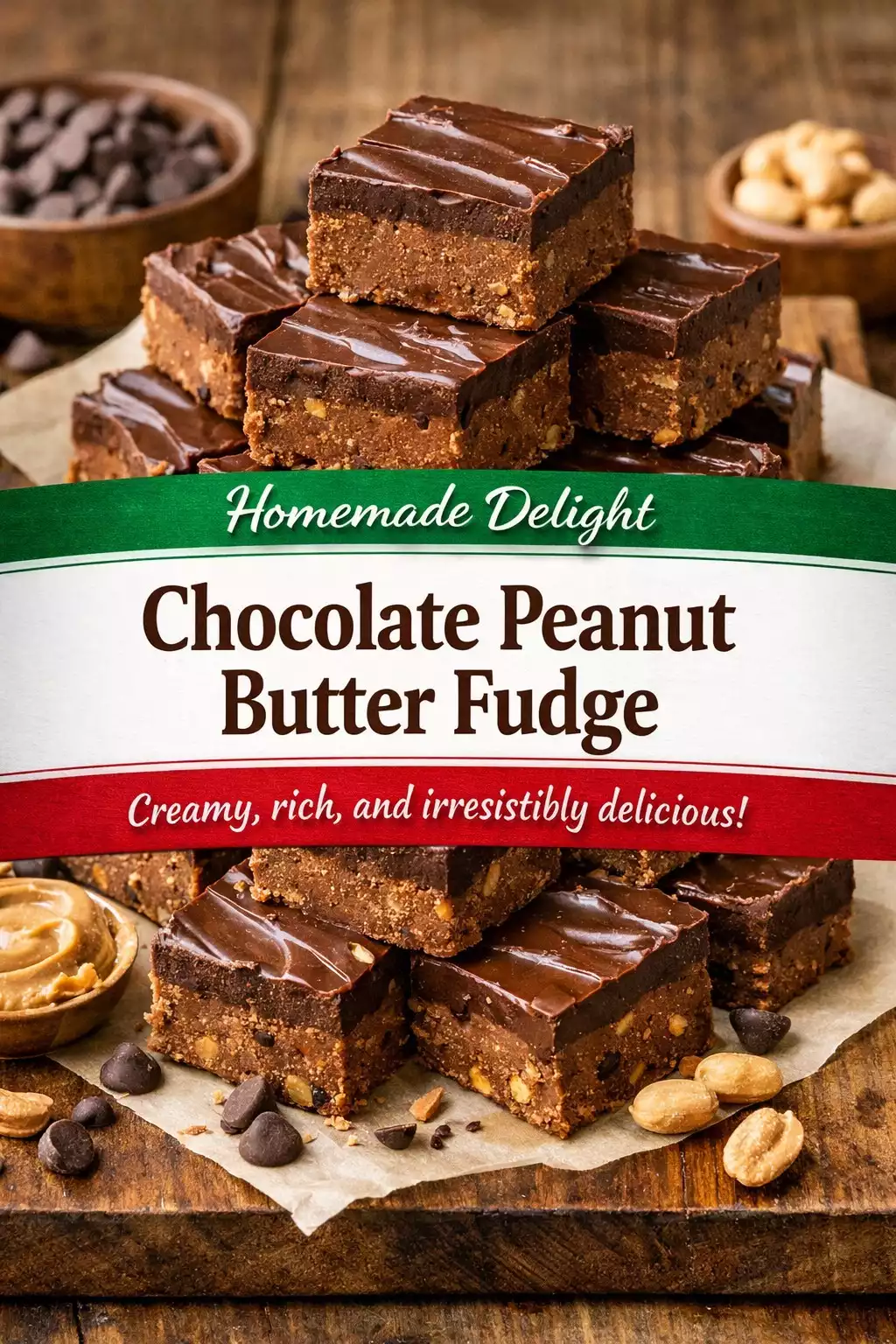
I‘ve been making this since before you were born. Trust me. Chocolate Peanut Butter Fudge is the dessert that appears on every holiday tray in this family and disappears faster than anything else on the table. It’s not delicate. It’s not subtle. It’s rich, dense, sweet, chocolatey, and peanut buttery in the way that only a few things in this world achieve — absolutely and completely. I’ve made versions of this fudge for thirty years and the feedback has never changed: people want more.
The technique matters here. Fudge-making is about sugar crystallization — when you get it right, the result is smooth and creamy with a slight crystalline texture that’s distinctly fudge. Get it wrong and it’s either grainy (too much crystallization) or sticky and soft (not enough). The no-fail method — using sweetened condensed milk rather than a traditional candy thermometer approach — produces consistent results that home cooks can replicate without specialized equipment or candy-making experience.
For other no-bake chocolate desserts in the same family, the strawberry icebox cake and homemade chocolate peanut butter cups use similar chocolate-forward techniques. The chocolate trifle and soft frosted sugar cookies round out the dessert spread for holiday occasions. For holiday cookie options, see peanut butter blossoms.
Why This Works
- Condensed milk fudge method: Traditional fudge requires a candy thermometer and precise temperature control. The condensed milk method bypasses this entirely — the high sugar content of condensed milk provides the structure needed for fudge texture without temperature monitoring. More reliable for home cooks.
- Butter in both layers: Butter added to the melted chocolate and the peanut butter layer creates smoothness and prevents the fudge from being too stiff or crumbly. It’s an emulsifier that keeps both layers cohesive.
- Peanut butter layer on top: Adding a peanut butter layer on top of the chocolate creates distinct visual layers when sliced and ensures that both flavors have presence in every bite rather than being fully mixed together.
- Refrigerating to set: Room-temperature setting is too slow and inconsistent. Refrigerating the assembled fudge for 2-3 hours creates a firm, clean-slicing result that holds together at room temperature for service.
Ingredients
For the Chocolate Layer
- 2 cups semi-sweet chocolate chips
- 1 can (14 oz) sweetened condensed milk
- 2 tablespoons unsalted butter
- 1 teaspoon vanilla extract
- Pinch of salt
For the Peanut Butter Layer
- 1.5 cups creamy peanut butter (commercial)
- 1.5 cups powdered sugar, sifted
- 2 tablespoons unsalted butter, softened
- 1 teaspoon vanilla extract
- Optional: flaky sea salt for topping
Instructions
Step 1: Prepare the Pan
Line an 8×8 or 9×9 baking pan with parchment paper, leaving overhang on the sides for easy lifting. The parchment is essential — the fudge cannot be lifted out cleanly from an unlined pan. Lightly butter the parchment if desired.
Step 2: Make the Chocolate Layer
Combine chocolate chips, condensed milk, and butter in a heavy saucepan over medium-low heat. Stir constantly until completely melted and smooth. Remove from heat. Add vanilla and salt. The mixture should be glossy, thick, and uniform. Pour immediately into the prepared pan and spread to an even layer. Let cool for 10 minutes at room temperature.
Step 3: Make the Peanut Butter Layer
While the chocolate layer cools, mix peanut butter, softened butter, sifted powdered sugar, and vanilla together until smooth and cohesive. The mixture should be thick but spreadable. If too stiff, add a teaspoon of milk. If too soft, add more powdered sugar.
Step 4: Assemble
Scoop the peanut butter mixture over the chocolate layer in spoonfuls. Press and spread gently with slightly dampened fingers or a spatula to create an even layer. Be careful not to mix the layers — press gently rather than spreading aggressively. Optionally, use a fork to create a swirled pattern. Sprinkle with flaky sea salt if desired.
Step 5: Chill and Slice
Refrigerate for at least 2-3 hours until completely firm. Lift out using the parchment overhang and place on a cutting board. Slice with a sharp knife — for the cleanest cuts, run the knife under hot water and dry between each cut. Cut into 1-inch squares for rich portions, or 2-inch squares for a more substantial piece. Store covered.
Tips & Common Mistakes
- Stir the chocolate constantly: Condensed milk fudge can scorch on the bottom of the pan if left unattended. Medium-low heat, constant stirring, and a heavy-bottomed pan prevent this.
- Don’t overheat the chocolate: Chocolate that gets too hot or is overworked can seize or turn grainy. Melt gently over medium-low heat and remove from heat as soon as it’s fully smooth.
- Let the chocolate layer cool before adding peanut butter: If the chocolate is still hot when the peanut butter layer is added, the heat melts the peanut butter and the layers blend rather than staying distinct.
- Commercial peanut butter only: Natural peanut butter’s oil content is different and the layer is more likely to separate from the chocolate. Use commercial creamy peanut butter for a stable, cohesive layer.
- Slice while cold: Fudge slices cleanest when cold from the refrigerator. Room-temperature fudge is softer and the knife drags through rather than cutting cleanly.
Variations Worth Trying
- Reverse layers: Put the peanut butter layer on the bottom, chocolate on top. Same recipe, different visual — the chocolate top surface is slightly more glossy and elegant-looking.
- Three-layer version: Chocolate, then peanut butter, then a final thin chocolate layer on top. More labor but creates a fully enclosed peanut butter layer that’s visually striking when sliced.
- Rocky road variation: Fold ½ cup mini marshmallows and ½ cup chopped walnuts into the chocolate layer before pouring. Skip the peanut butter layer. Classic rocky road fudge.
- White chocolate peanut butter: Use white chocolate chips instead of semi-sweet for the base layer. The sweetness is more pronounced; add a pinch more salt to balance.
- Holiday decoration: Before refrigerating, press holiday sprinkles, crushed candy canes, or chopped roasted pecans into the top layer. Instant holiday presentation. See homemade chocolate peanut butter cups for a similar chocolate-peanut butter combination in a different format.
Storage & Serving
- Refrigerator: Store in an airtight container with parchment between layers for up to 2 weeks. One of the longest-keeping no-bake desserts available, making it ideal for holiday baking in advance.
- Freezer: Freeze in a single layer on a sheet pan until solid, then transfer to a zip-lock bag with parchment between layers. Freeze for up to 3 months. Thaw overnight in the refrigerator. The texture is almost identical to fresh.
- Serving temperature: Serve cold from the refrigerator for the cleanest presentation and firmest texture. At room temperature, fudge softens within 30-40 minutes and is still delicious but slightly more yielding.
Frequently Asked Questions
Why did my chocolate layer turn grainy?
Grainy fudge usually means the chocolate was overheated or water got into the melted chocolate (steam, wet spoon, etc.). Melt over medium-low heat, stir constantly, and make sure all utensils are completely dry. If grainy texture occurs, it can sometimes be saved by adding a tablespoon of warm cream and stirring vigorously off heat to re-emulsify.
Can milk chocolate chips be used instead of semi-sweet?
Yes. Milk chocolate creates a sweeter, softer fudge. Reduce the condensed milk by 2 tablespoons to compensate for the increased sweetness, and increase the salt slightly. The result is less complex but more candy-like — popular with children and those who prefer sweeter chocolate.
How do I cut the fudge into clean squares?
Three steps: chill thoroughly (minimum 3 hours), use a sharp chef’s knife (not serrated), and run the blade under hot water and dry it between each cut. A sharp, warm blade slices through the cold fudge cleanly without dragging. Use a ruler as a guide if uniform sizing matters.
Can this fudge be shipped or mailed?
Yes, with care. Pack in a single layer in a rigid container with parchment between pieces. Include an ice pack for trips over 8 hours or in warm weather. Fudge ships well for 2-3 days at room temperature in cool weather, but may soften in summer conditions.
What’s the difference between this fudge and a candy-thermometer version?
Traditional fudge requires cooking sugar syrup to exactly 235-240°F (soft ball stage), then beating it as it cools to control crystallization. The condensed milk method bypasses this entire process — the sugar in the condensed milk is already processed and creates a fudge texture without temperature monitoring. The condensed milk version is more foolproof; the traditional version has a slightly more delicate, crystalline texture that some consider more “authentic.”