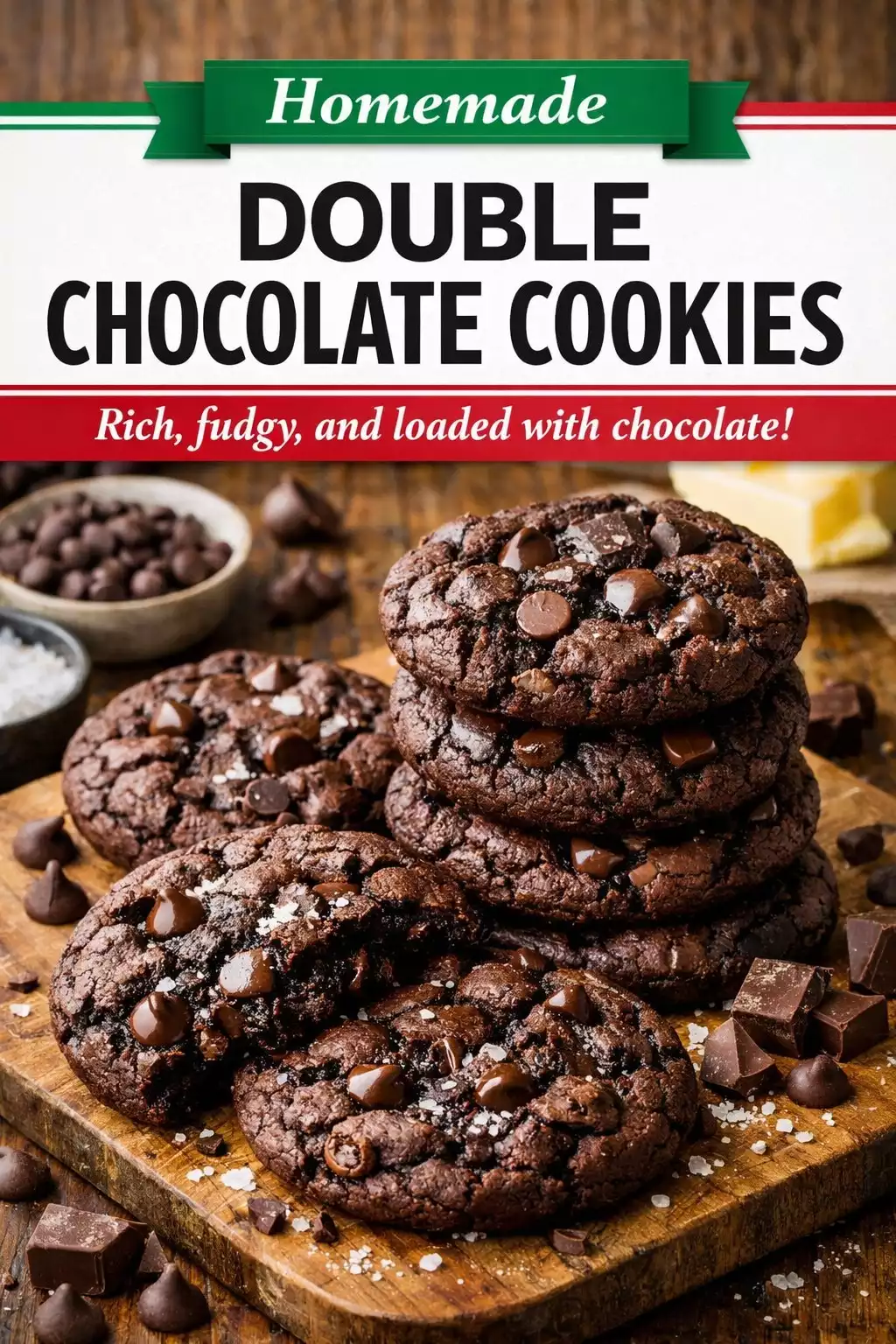
My nonna would’ve smacked me with a wooden spoon if I got this wrong. Double Chocolate Cookies are the cookies that the other cookies at the holiday table are jealous of. Not because they’re more complicated — they’re not. Because they’re more chocolate. A cookie made with cocoa powder in the dough AND chocolate chips folded through is a completely different animal than a chocolate chip cookie with chocolate extract added. The chocolate is structural, not flavored. Every bite is chocolate rather than a cookie with chocolate in it.
The technique that separates professional-quality double chocolate cookies from the average version is the browning of the butter. Melted butter produces flat, chewy cookies. Browned butter produces cookies with a nutty, caramelized depth that makes the chocolate more complex. It takes 3 extra minutes. The result is a cookie that tastes like it has ingredients in it that aren’t there — like espresso, or toffee, or something sophisticated that’s actually just chemistry between milk solids and heat.
For more chocolate baking, see the chocolate bundt cake for a showpiece dessert, and the brown butter chocolate chip cookies for the technique applied to a different cookie. The tres leches cake and molten chocolate lava cakes provide more baked chocolate options for different occasions.
Why This Works
- Brown butter: Browning the butter creates nuttiness and depth that makes the chocolate flavor more complex without adding any other ingredient. The milk solids in butter caramelize during browning and create new flavor compounds. This is the single technique that elevates any butter-based cookie recipe.
- Dutch-process cocoa: Dutch-process cocoa (darker, more intense, lower acid) produces a deeper chocolate color and more balanced flavor than natural cocoa in this recipe. Natural cocoa is more acidic and produces slightly different texture when combined with baking powder vs. baking soda.
- Resting the dough: A 30-minute minimum rest (or overnight in the refrigerator) allows the flour to fully hydrate, the cocoa to fully bloom, and the brown butter to solidify slightly. The result is a dough that produces thicker, more flavorful cookies rather than thin, spreading discs.
- Both chips and chunks: Mini chips distribute evenly and provide chocolate in every bite. Chopped chunks create pockets of melted chocolate with visible variation. Using both creates textural complexity that uniform chips alone don’t provide.
Ingredients
For the Cookies
- 1 cup (2 sticks) unsalted butter
- 1.5 cups all-purpose flour
- ¾ cup Dutch-process cocoa powder
- 1 teaspoon baking soda
- ½ teaspoon salt
- 1 cup granulated sugar
- ¾ cup packed brown sugar
- 2 large eggs
- 2 teaspoons vanilla extract
- 1 cup semi-sweet chocolate chips
- 4 oz dark chocolate, roughly chopped
- Flaky sea salt for finishing
Instructions
Step 1: Brown the Butter
Melt butter in a light-colored saucepan over medium heat. Continue cooking, stirring frequently, as the butter foams, subsides, and then the milk solids begin to brown on the bottom of the pan. The butter is ready when it smells nutty and the solids are golden-brown (not black). Pour immediately into a large mixing bowl, scraping all the browned bits. Let cool for 10-15 minutes until solid at room temperature, or 20 minutes until just slightly soft.
Step 2: Whisk the Wet Ingredients
Beat the cooled brown butter with both sugars until combined — about 2 minutes. Add eggs one at a time, beating after each. Add vanilla. The mixture should be smooth and slightly glossy.
Step 3: Add Dry Ingredients
Sift together flour, cocoa, baking soda, and salt. Add to the butter mixture and mix until just combined — a few streaks of flour are fine. Fold in chocolate chips and chopped chocolate pieces by hand. Don’t overmix.
Step 4: Rest the Dough
Cover and refrigerate for at least 30 minutes, preferably overnight (up to 72 hours). The dough darkens and the flavors deepen significantly with extended resting. This is not optional for the best cookies — rested dough produces superior results.
Step 5: Bake
Preheat oven to 375°F. Scoop dough into 2-tablespoon balls and place 3 inches apart on parchment-lined sheet pans. Press a few chocolate chips on top if desired. Bake for 9-11 minutes — the cookies should look slightly underdone in the center. They finish cooking on the pan for 3-4 minutes after removal. Sprinkle with flaky sea salt immediately after removing from oven. Cool on the pan for 5 minutes before transferring.
Tips & Common Mistakes
- Don’t rush the cooling after baking: These cookies need the 3-4 minutes on the hot pan after baking to finish setting. Remove from the pan too early and they fall apart. The center should look slightly underbaked when pulled from the oven.
- Brown, not burnt butter: Browned butter smells nutty and has golden-brown solids. Burnt butter smells acrid and has black solids. Watch it constantly after it begins foaming and pull it immediately when the color is right. A light-colored pan helps see the browning.
- Dutch-process cocoa specifically: The recipe is built for Dutch-process. Natural cocoa and baking soda can react differently and affect the texture. If using natural cocoa, use baking powder instead of baking soda.
- Cold dough, better cookies: Cold dough spreads more slowly in the oven, producing thicker, chewier cookies. If the dough has warmed up during scooping, refrigerate the scooped balls for 15 minutes before baking.
- Salt on warm cookies: Flaky sea salt added immediately after the pan comes out of the oven — while the cookies are still hot — adheres and partially melts into the surface. Salt added to cold cookies sits on top without integrating. The timing matters.
Variations Worth Trying
- Triple chocolate: Use white chocolate chips in addition to dark and semi-sweet. Three chocolate varieties, each with different sweetness and fat content, create complexity in every bite.
- Mexican chocolate version: Add 1 teaspoon cinnamon and a pinch of cayenne to the dry ingredients. The cinnamon adds warmth; the cayenne adds a delayed heat that amplifies the chocolate flavor.
- Caramel stuffed: Flatten each dough ball, place a soft caramel candy in the center, and re-roll into a ball before baking. The caramel melts into a pocket inside the cookie.
- Mint chocolate: Add ½ teaspoon peppermint extract (not mint flavoring) to the dough. Replace some of the semi-sweet chips with Andes mint chips. Classic after-dinner mint flavor in cookie form.
- More chocolate baking options: For a larger-format chocolate dessert, the chocolate bundt cake uses similar technique in a showpiece format. The molten chocolate lava cakes provide a restaurant-style option in the same chocolate intensity range.
Storage & Baking Schedule
- Dough refrigerator: Rested dough keeps in the refrigerator for up to 72 hours. Extended resting improves flavor. Scoop and bake as needed from the refrigerator.
- Dough freezer: Scoop dough into balls and freeze on a sheet pan until solid. Transfer to a zip-lock bag and freeze for up to 3 months. Bake from frozen at 375°F for 12-14 minutes (2-3 minutes extra).
- Baked cookies: Store in an airtight container for up to 5 days at room temperature. Layer with parchment to prevent sticking. The cookies soften slightly after day 2 — still excellent but less crispy at the edges.
Frequently Asked Questions
Can this recipe be made without browning the butter?
Yes. Melt the butter normally (don’t brown) and let cool to room temperature before mixing with sugars. The cookies will be good but lack the nutty depth that makes the browned butter version exceptional. Browning butter takes 4 minutes and produces a meaningfully better cookie.
Why are my cookies flat?
Three possible causes: butter was too warm when mixed (brown butter should cool to room temperature before adding sugar), dough wasn’t rested/chilled, or the oven temperature is lower than indicated. Make sure butter is cool, dough is cold from the refrigerator, and verify oven temperature with a thermometer.
Can I use natural cocoa instead of Dutch-process?
Yes with adjustments. Replace baking soda with 1.5 teaspoons baking powder (the acidity difference requires different leavening). Natural cocoa produces slightly different flavor and color — more acidic, lighter color. Dutch-process is preferred for this recipe’s deep color and balanced flavor.
How do I get the centers to stay gooey?
Underbake by 1-2 minutes and pull when the edges look set but the center is still quite soft. The center will set to a fudgy, gooey texture as it cools on the pan. An internal temperature of 165-170°F (if using a thermometer) indicates the right point.
What chocolate chip brand produces the best results?
Guittard, Ghirardelli, Valrhona, and Callebaut are consistently the best performing. Standard Nestle Toll House chips work but have a slightly waxy texture from the stabilizers. Chopping good-quality chocolate bars creates irregular pieces that pool more dramatically when melted. For more chocolate-focused baking, see brown butter chocolate chip cookies.