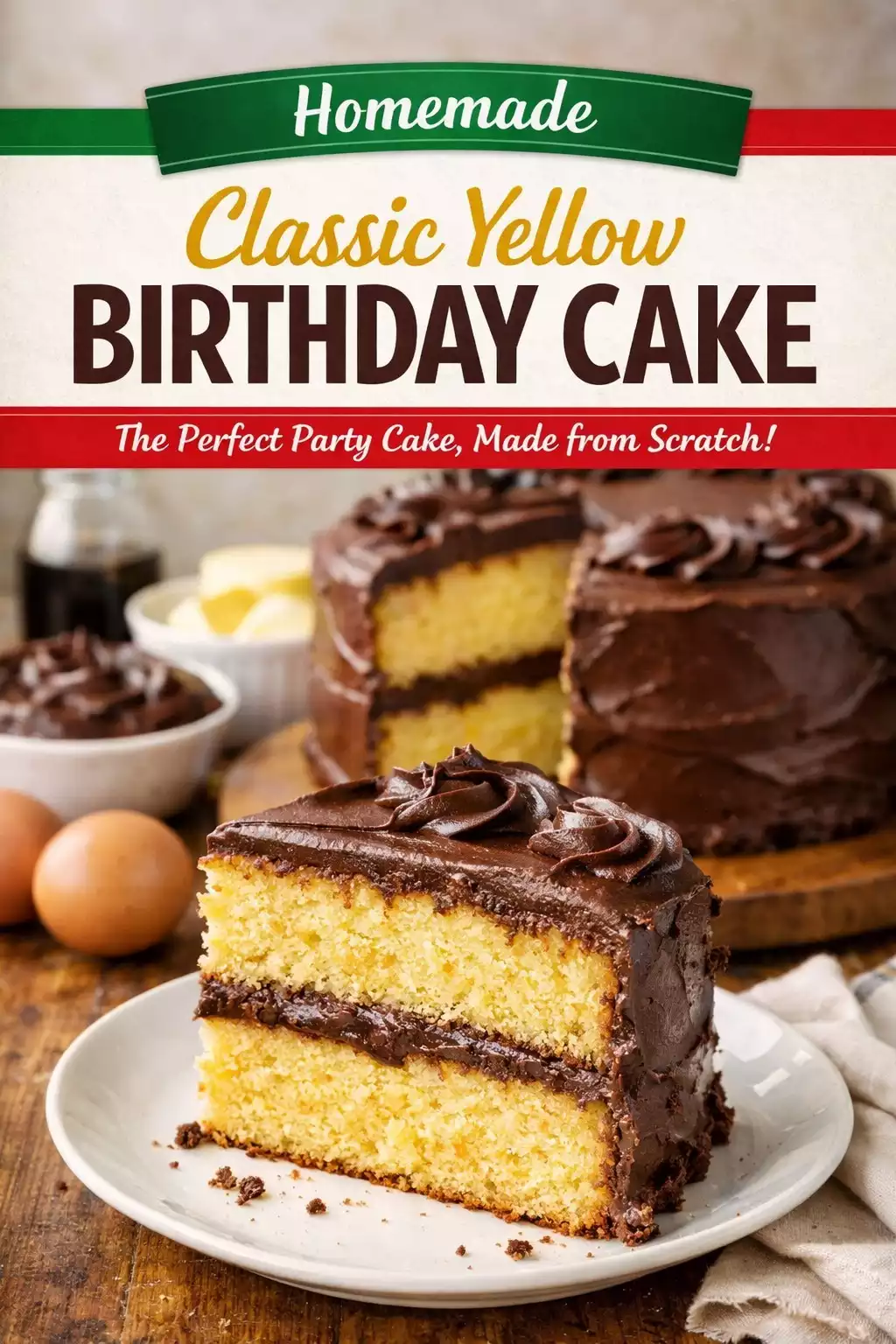
You know what separates a memorable birthday cake from a forgettable one? It’s not the decorations. It’s not the candles or the song. It’s the moment someone takes that first bite and the cake actually tastes like something. A Classic Yellow Birthday Cake with real chocolate frosting — that buttery, vanilla-forward yellow crumb against dark, fudgy frosting — is the gold standard of cake recipes. This is what birthday cake is supposed to taste like.
The challenge with yellow cake is getting the crumb right. Boxed mixes lean on artificial flavoring and chemical shortcuts. This version builds flavor the honest way: real butter for richness, whole eggs plus extra yolks for color and structure, buttermilk for tenderness and tang, and a generous pour of good vanilla. The result is a cake with a genuinely moist, tight crumb that slices clean, handles frosting without crumbling, and tastes like what birthdays should taste like. My old head chef used to say — if the aroma doesn’t hit the hallway, start over. This cake hits the hallway.
Pair this with chocolate bundt cake for an all-out dessert table, or check out brown butter chocolate chip cookies for birthday party cookie additions. But this cake stands completely on its own.
Why This Classic Yellow Birthday Cake Works
- Extra egg yolks — give the cake its signature golden color and add richness and structure
- Buttermilk — creates a more tender crumb through acid-gluten interaction
- Creaming method — proper aeration of butter and sugar creates a fine, even crumb
- Cake flour option — lower protein creates a more delicate, tender texture than all-purpose
- Room temperature everything — proper emulsification requires all ingredients at the same temperature
Ingredients
The Yellow Cake
- 2 1/2 cups (315g) all-purpose flour (or cake flour for more tender crumb)
- 2 teaspoons baking powder
- 1/2 teaspoon baking soda
- 3/4 teaspoon fine salt
- 1 cup (225g) unsalted butter, room temperature
- 2 cups (400g) granulated sugar
- 4 large eggs + 2 egg yolks, all room temperature
- 1 cup (240ml) buttermilk, room temperature
- 1 tablespoon pure vanilla extract
Chocolate Buttercream Frosting
- 1 cup (225g) unsalted butter, room temperature
- 3 cups (360g) powdered sugar, sifted
- 2/3 cup (65g) unsweetened cocoa powder, sifted
- 4-6 tablespoons heavy cream or whole milk
- 2 teaspoons pure vanilla extract
- 1/2 teaspoon fine salt
How to Make Classic Yellow Birthday Cake
Step 1: Prep and Preheat
Preheat oven to 350°F. Grease two 9-inch round cake pans, line bottoms with parchment circles, grease parchment. The parchment is not optional — it’s the difference between a cake that releases cleanly and a disaster. All ingredients should be at room temperature before starting.
Step 2: Cream Butter and Sugar
Beat butter on medium speed for 1 minute until smooth. Add sugar and beat on medium-high for 4-5 minutes until pale, very fluffy, and noticeably increased in volume. This step builds the structure of the cake. Insufficiently creamed butter creates a dense, heavy cake. Don’t rush the clock — 4 full minutes of creaming makes a visible difference.
Step 3: Add Eggs
Add eggs and yolks one at a time, beating well after each addition. Scrape the bowl between additions. The mixture should look thick, pale yellow, and fluffy. If it looks curdled or broken, the eggs were too cold — the batter will usually come back together as you add the dry ingredients, but proper temperature prevents this entirely.
Step 4: Alternate Dry Ingredients and Buttermilk
Whisk together flour, baking powder, baking soda, and salt. With mixer on low, add flour mixture and buttermilk in three alternating additions (flour, buttermilk, flour, buttermilk, flour). Start and end with flour. Mix just until combined after each addition — overmixing develops gluten and creates a tough cake. Add vanilla with the last buttermilk addition.
Step 5: Bake
Divide batter evenly between prepared pans — weigh the pans on a scale for perfectly even layers. Bake for 28-32 minutes until a toothpick inserted in the center comes out clean or with a few moist crumbs (not wet batter). Do not overbake — a dry yellow cake is one of the saddest things in baking. Cool in pans for 10 minutes before turning out onto wire racks to cool completely.
Step 6: Make the Frosting and Assemble
Beat butter until smooth. Add sifted cocoa and powdered sugar gradually with mixer on low. Add cream and vanilla. Beat on medium-high for 3 minutes until fluffy and spreadable. Level cake layers if domed. Place first layer on a cake board or plate, spread frosting on top, then place second layer. Apply a thin crumb coat, refrigerate 15 minutes, then apply final frosting coat. Decorate as desired.
Tips & Common Mistakes
- Room temperature ingredients are non-negotiable — cold butter won’t cream properly, cold eggs cause curdling, cold buttermilk creates uneven mixing.
- Don’t skip the crumb coat — a thin first coat of frosting traps crumbs, making the final coat clean and professional looking.
- Weigh the batter into pans — equal layers stack and look more professional. Worth the 30-second extra step.
- Cool completely before frosting — warm cake melts the frosting and creates a messy, sliding layer situation.
- Level the layers — domed layers create an unstable cake. A serrated knife or cake leveler removes the dome cleanly.
- Sift the cocoa and powdered sugar — lumpy frosting is always from unsifted ingredients. 60 seconds of sifting prevents this completely.
Variations
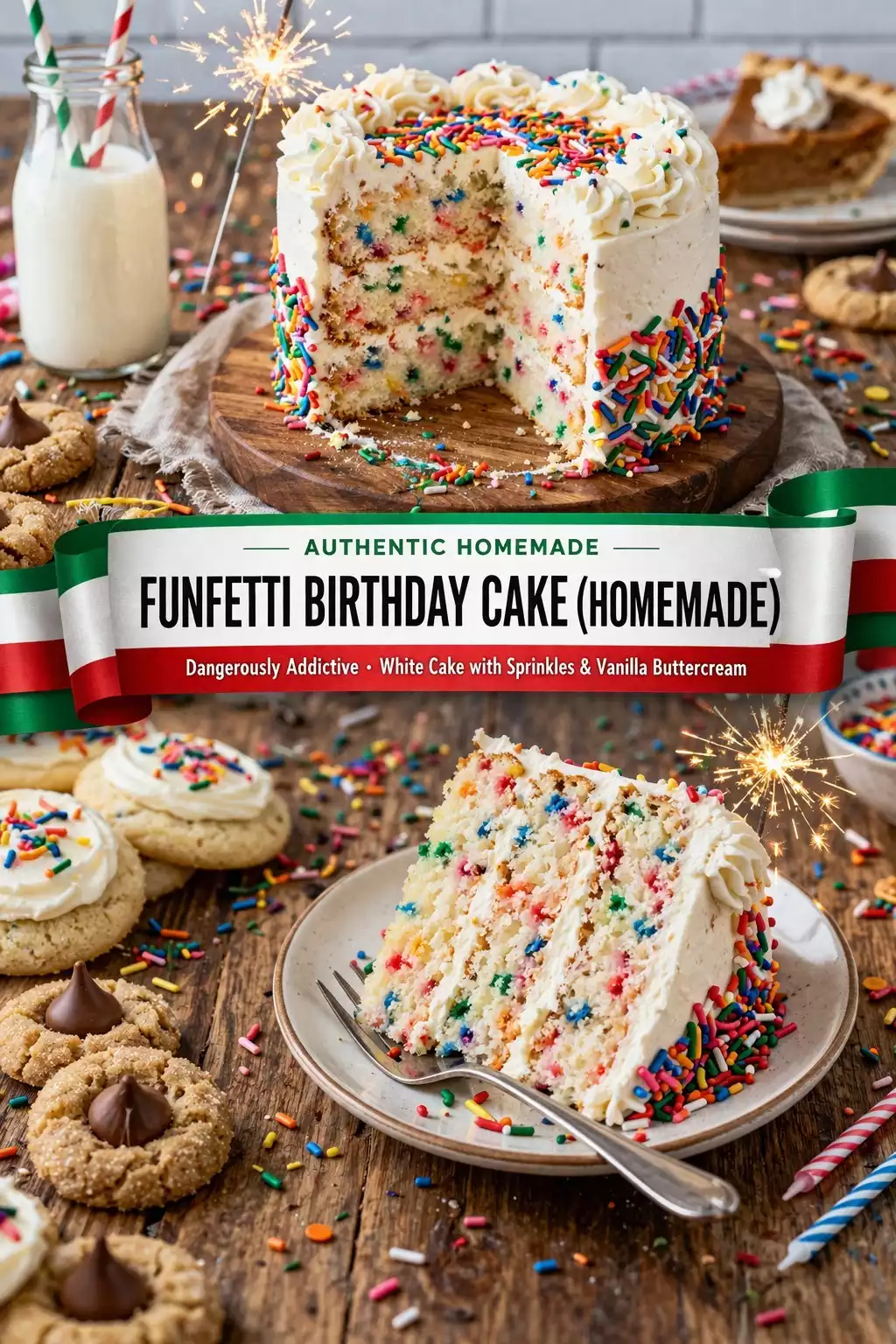
- Vanilla on Vanilla: Replace chocolate frosting with classic vanilla buttercream. Add rainbow sprinkles inside the batter for a funfetti-style surprise. Great alongside soft frosted sugar cookies at a birthday party.
- Lemon Yellow Cake: Add the zest of 2 lemons to the batter. Frost with lemon curd buttercream (standard buttercream + 3 tablespoons lemon curd). Bright and unexpected for those who find chocolate birthday cake routine.
- Strawberry Filling: Spread a layer of fresh strawberry jam or sliced strawberries with whipped cream between the layers instead of frosting. Pair with vanilla frosting on the outside.
- Layer Cake to Sheet Cake: Pour all batter into a greased 9×13 pan. Bake at 350°F for 35-40 minutes. Sheet cakes are easier to transport, serve a crowd, and require less skill to frost. For the same great cake with less assembly pressure. See chocolate bundt cake for another format option.
- Brown Butter Yellow Cake: Brown all the butter before creaming. Cool and re-solidify in refrigerator before using. The caramelized dairy solids add a nutty depth that transforms the standard flavor profile entirely.
Storage & Make-Ahead
- Room temperature (frosted): Cake dome or covered at room temperature for 2 days. The buttercream is a barrier that keeps the cake moist.
- Refrigerator (frosted): Tightly covered for up to 5 days. Bring slices to room temperature before serving — cold cake is denser and less flavorful.
- Cake layers (unfrosted): Wrap cooled layers tightly in plastic wrap. Room temperature for 1 day, refrigerator for 3 days, freezer for 2 months.
- Make-ahead assembly: Bake layers up to 2 days ahead, wrap and refrigerate. Make frosting day-of for freshest result. Assemble the day of serving for best presentation.
- Freeze slices: Individual slices freeze beautifully. Wrap each slice in plastic wrap, then foil. Thaw in refrigerator overnight, then bring to room temperature before eating.
Frequently Asked Questions
Can I use cake flour instead of all-purpose?
Yes — and it produces a more tender, delicate crumb. Substitute 1:1 by weight (not by volume — cake flour is lighter). The cake will be slightly softer and more fine-crumbed. All-purpose gives a slightly more sturdy structure that holds up better for multi-layer stacking. Both are correct; it depends on your texture preference.
My cake is dense and not fluffy — what went wrong?
Almost certainly the creaming step. Butter and sugar need a full 4-5 minutes of beating to incorporate enough air for a light crumb. Under-creamed butter produces a dense, heavy cake. Also check that your baking powder is fresh — expired leavening cannot lift the batter. Test it by dropping a teaspoon into hot water; fresh baking powder will bubble immediately.
Can I make this as cupcakes?
Yes — this recipe makes about 24 standard cupcakes. Fill each liner 2/3 full. Bake at 350°F for 18-20 minutes until a toothpick comes out clean. Cool completely before frosting. The batter makes excellent cupcakes — the extra egg yolks create a particularly golden, rich cupcake that stands out on any birthday table.
How do I get perfectly flat cake layers?
Several approaches: Bake strips (damp fabric strips wrapped around the pans) slow the outer edge and allow the center to catch up, producing flatter layers. Alternatively, let the cake cool completely then level with a long serrated knife using a cake turntable. The simplest approach is to slightly underfill the center of the pan — the dome forms as the center rises to meet the edges.
Can I use a box mix base for this?
Yes — the technique of extra egg yolks, buttermilk substitution, and melted butter instead of oil applies to box mixes too (called the WASC or scratch-enhanced method). Add an extra yolk and substitute buttermilk for water. It won’t taste identical to this from-scratch version but it’s a significant upgrade from following box directions. See double chocolate cookies if you want something that’s always simpler than a cake.