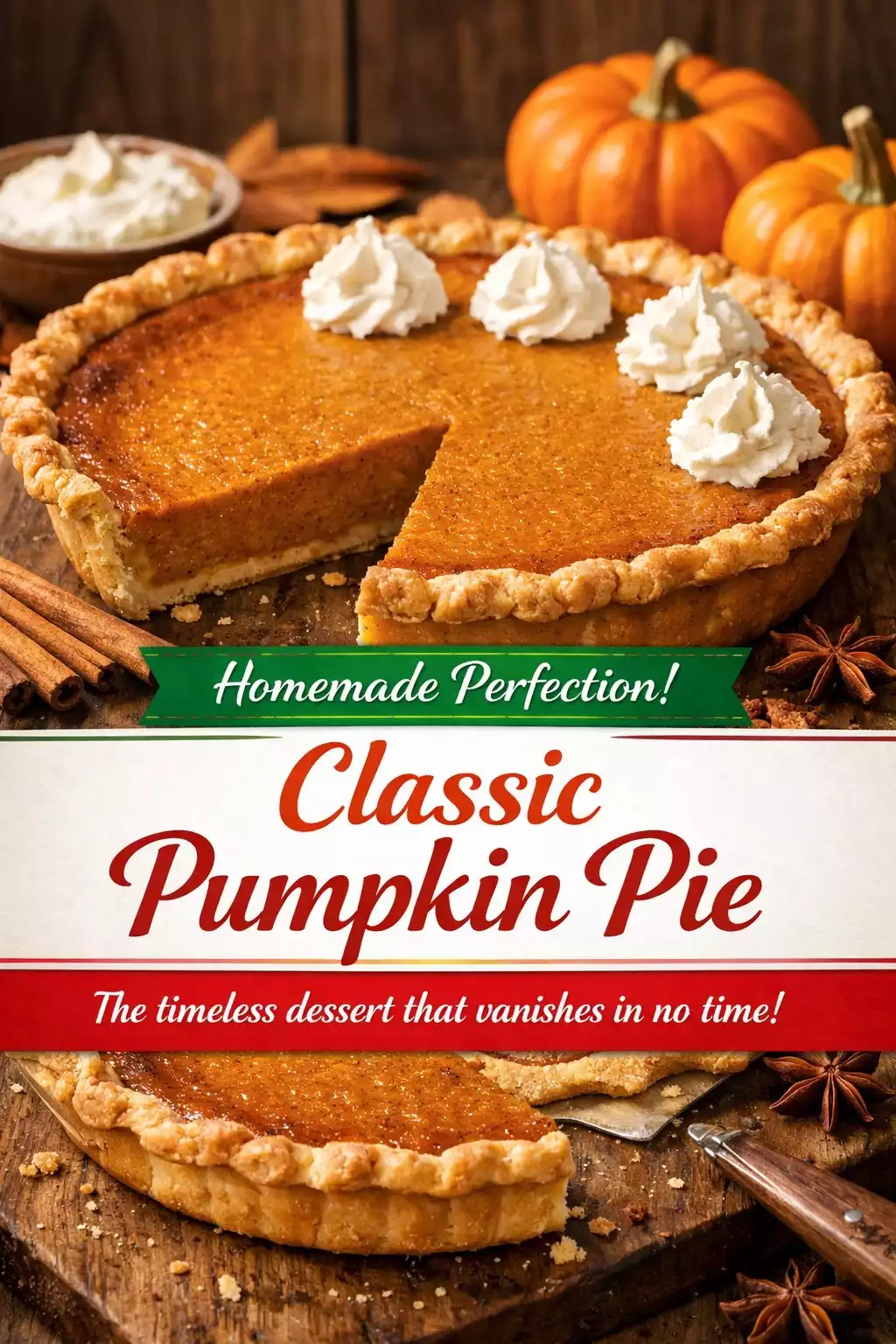
Three generations of this recipe. Classic Pumpkin Pie — the version that belongs on every Thanksgiving table without apology or modification. There’s a reason this fall dessert recipes institution has survived unchanged for over a century: it is already perfect. The smooth, spiced custard in a flaky butter crust is one of the most satisfying food experiences in the American calendar. And it’s not complicated. It’s just technique — proper crust, properly tempered custard, proper baking temperature, and the patience to let it cool completely before you cut it.
The secret that most recipes miss is the pre-cooking of the pumpkin filling on the stovetop before it goes in the crust. Five minutes of stirring in a saucepan blooms the spices, drives off excess moisture, and concentrates the pumpkin flavor dramatically. The difference in the final pie between pre-cooked and straight-to-crust filling is measurable — more flavor, better texture, less likely to crack. This is a professional technique that requires no additional skill, just two extra minutes and a saucepan.
For a complete holiday spread, pair with southern pecan pie and gingerbread cookies. For the cookie platter alongside, peanut butter blossoms and soft frosted sugar cookies complete the table.
Why This Classic Pumpkin Pie Works
- Stovetop pre-cooking — blooms spices and concentrates flavor before baking
- Evaporated milk instead of heavy cream — the traditional choice; creates the right silky-custard texture
- Blind-baked crust — prevents the infamous soggy bottom by pre-cooking the pastry
- Low oven temperature — custards must bake gently; high heat causes cracking and curdling
- Cool completely before slicing — custard needs time to set; slicing too early produces a runny, messy slice
Ingredients
The Pie Crust
- 1 1/4 cups (160g) all-purpose flour
- 1 tablespoon granulated sugar
- 1/2 teaspoon fine salt
- 1/2 cup (113g) cold unsalted butter, cubed
- 3-5 tablespoons ice water
The Pumpkin Filling
- 1 can (15 oz) pure pumpkin puree (not pumpkin pie filling)
- 3/4 cup (150g) light brown sugar, packed
- 1 1/2 teaspoons ground cinnamon
- 1/2 teaspoon ground ginger
- 1/4 teaspoon ground cloves
- 1/4 teaspoon ground nutmeg
- 1/4 teaspoon fine salt
- 3 large eggs
- 1 can (12 oz) evaporated milk
- 1 teaspoon pure vanilla extract
How to Make Classic Pumpkin Pie
Step 1: Make the Pie Crust
Whisk flour, sugar, and salt together. Cut cold butter into the flour using a pastry cutter or fingers until the mixture resembles coarse crumbs with some pea-sized butter pieces remaining. Add ice water one tablespoon at a time, tossing with a fork until the dough just comes together when pressed. Flatten into a disc, wrap in plastic, and refrigerate for at least 1 hour. Cold butter = flaky crust. Don’t rush this step.
Step 2: Roll and Blind Bake the Crust
Preheat oven to 375°F. Roll chilled dough on a floured surface to 1/8-inch thickness. Transfer to a 9-inch pie plate. Crimp or flute the edges. Line the raw crust with parchment paper and fill with pie weights or dried beans. Blind bake for 15 minutes. Remove weights and parchment. Continue baking 5 more minutes until the bottom looks dry and just beginning to turn golden. Remove from oven and let cool slightly while you prepare the filling.
Step 3: Pre-Cook the Filling (The Key Step)
In a medium saucepan over medium heat, combine pumpkin puree, brown sugar, cinnamon, ginger, cloves, nutmeg, and salt. Cook, stirring constantly, for 3-5 minutes until the mixture is fragrant, slightly thickened, and begins to stick slightly to the pan. This blooms the spices and removes excess moisture. Remove from heat. Let cool for 5 minutes.
Step 4: Complete the Filling
Whisk eggs and vanilla into the slightly cooled pumpkin mixture one egg at a time. Gradually whisk in the evaporated milk until smooth and fully combined. Pour filling into the pre-baked, slightly cooled pie crust. The filling should fill the crust nearly to the rim.
Step 5: Bake Low and Slow
Reduce oven temperature to 325°F. Bake for 50-60 minutes until the edges are set and the center has a slight jiggle when the pie is gently moved. The center should not be liquid — it should jiggle like set gelatin, not like water. The pie will continue to set as it cools. Remove from oven and cool on a wire rack for at least 2-3 hours at room temperature, then refrigerate if not serving immediately.
Tips & Common Mistakes
- Use pure pumpkin, not pie filling — pumpkin pie filling has added spices and sugar. You can’t control the flavor or sweetness level. Always use plain puree.
- Pre-cook the filling — this is the most impactful technique upgrade. 5 minutes on the stovetop transforms the flavor.
- Don’t overbake — a jiggly center is correct. A fully firm center straight from the oven means it’s overcooked and will crack.
- Cool completely before slicing — custard pies need a full 2-3 hours to set. Slicing a warm pumpkin pie creates a runny mess that resembles soup in a crust.
- Edge shield or foil — pie crust edges brown faster than the filling cooks. Cover edges with foil or a pie shield after the first 30 minutes of the filling bake.
- Prevent cracking — cracks mean overbaked or temperature shock. Low, steady oven temperature and gradual cooling (don’t open the oven door suddenly) prevents most cracking.
Variations
- Maple Pumpkin Pie: Replace brown sugar with 1/2 cup pure maple syrup. Reduce evaporated milk by 2 tablespoons to compensate for extra liquid. The maple adds a complex sweetness that complements the pumpkin beautifully.
- Pumpkin Cream Pie: Bake the pumpkin filling in a pre-baked crust and chill completely. Top with stabilized whipped cream (whipped cream with 1 tablespoon powdered sugar and a bit of gelatin). No hot oven, elegant finish.
- Brown Butter Pumpkin Pie: Brown 2 tablespoons of butter and whisk into the filling. Adds a nutty depth that’s unexpected and outstanding. A simple upgrade with significant impact.
- Gingersnap Crust: Replace the standard pastry crust with a gingersnap cookie crust (2 cups crushed gingersnaps + 6 tablespoons melted butter, pressed into the pie plate). Bake at 350°F for 10 minutes before adding filling. The spiced cookie crust amplifies the ginger in the filling. Pairs beautifully with homemade funfetti cake on the holiday dessert table.
- Pumpkin Pie Bars: Make a slab version in a 9×13 pan with a shortbread crust. Press a simple shortbread base (2 cups flour + 1 cup cold butter + 1/2 cup powdered sugar) into the pan, blind bake 15 minutes, then pour filling over and bake at 325°F for 40-45 minutes. Serves a crowd more easily than individual pie slices.
Storage & Make-Ahead
- Refrigerator: Pumpkin pie contains eggs and dairy and must be refrigerated after it cools. Keeps up to 4 days covered with plastic wrap or foil.
- Bring to temperature: Serve cold or at room temperature. If you prefer warm pie, individual slices can be microwave heated for 20-30 seconds.
- Freezer (baked): Freeze completely cooled pie uncovered until solid, then wrap. Keeps 2 months. Thaw overnight in the refrigerator. Texture holds well.
- Make-ahead: Pumpkin pie is ideal made 1-2 days ahead. The flavor actually improves as it refrigerates. Bake 2 days before Thanksgiving, refrigerate, and serve cold or at room temperature day-of.
- Crust ahead: Make pie crust dough up to 3 days ahead and refrigerate, or freeze for up to 1 month. Roll and blind bake the day you assemble the pie.
Frequently Asked Questions
Why did my pumpkin pie crack?
Overbaked, or there was a sudden temperature shock during cooling. Custards crack when they overbake and the proteins tighten too much. Pull the pie when the center has a jiggle — not liquid, not solid, but a defined jiggle. Also avoid sudden temperature changes: don’t place a hot pie in a cold spot. Let it cool gradually on a room-temperature wire rack.
Can I use fresh pumpkin instead of canned?
Yes — roast a sugar pumpkin (not a carving pumpkin), scoop out the flesh, and puree until smooth. Strain through a fine-mesh strainer to remove excess moisture. Fresh pumpkin is more watery than canned and produces a slightly less stable pie. The pre-cooking step becomes even more important with fresh pumpkin to drive off the extra moisture.
Why is my pumpkin pie still jiggly after the recommended time?
Oven temperature is likely low. Most residential ovens run 25-50°F below their setting. Use an oven thermometer to verify your actual temperature. At true 325°F, the pie should be set at 55-60 minutes. At an actual 275°F, it could take 80+ minutes. Calibrate your oven, not the recipe.
Can I make this with a store-bought crust?
Yes — a refrigerated pie crust works fine. Pre-bake it according to the package directions before adding filling. Store-bought is not as flavorful as homemade but it’s completely acceptable for a weeknight or when time is short. Honestly, most people won’t know the difference if your filling is excellent.
What’s the difference between evaporated milk and heavy cream in pumpkin pie?
Evaporated milk produces a silkier, more classic custard texture with a slightly lighter mouthfeel. Heavy cream produces a richer, denser custard. The original Libby’s recipe uses evaporated milk and has been the standard for decades. Heavy cream makes a more indulgent pie. Both are correct; evaporated milk is traditional, heavy cream is luxurious. See southern pecan pie for the other essential Thanksgiving pie.