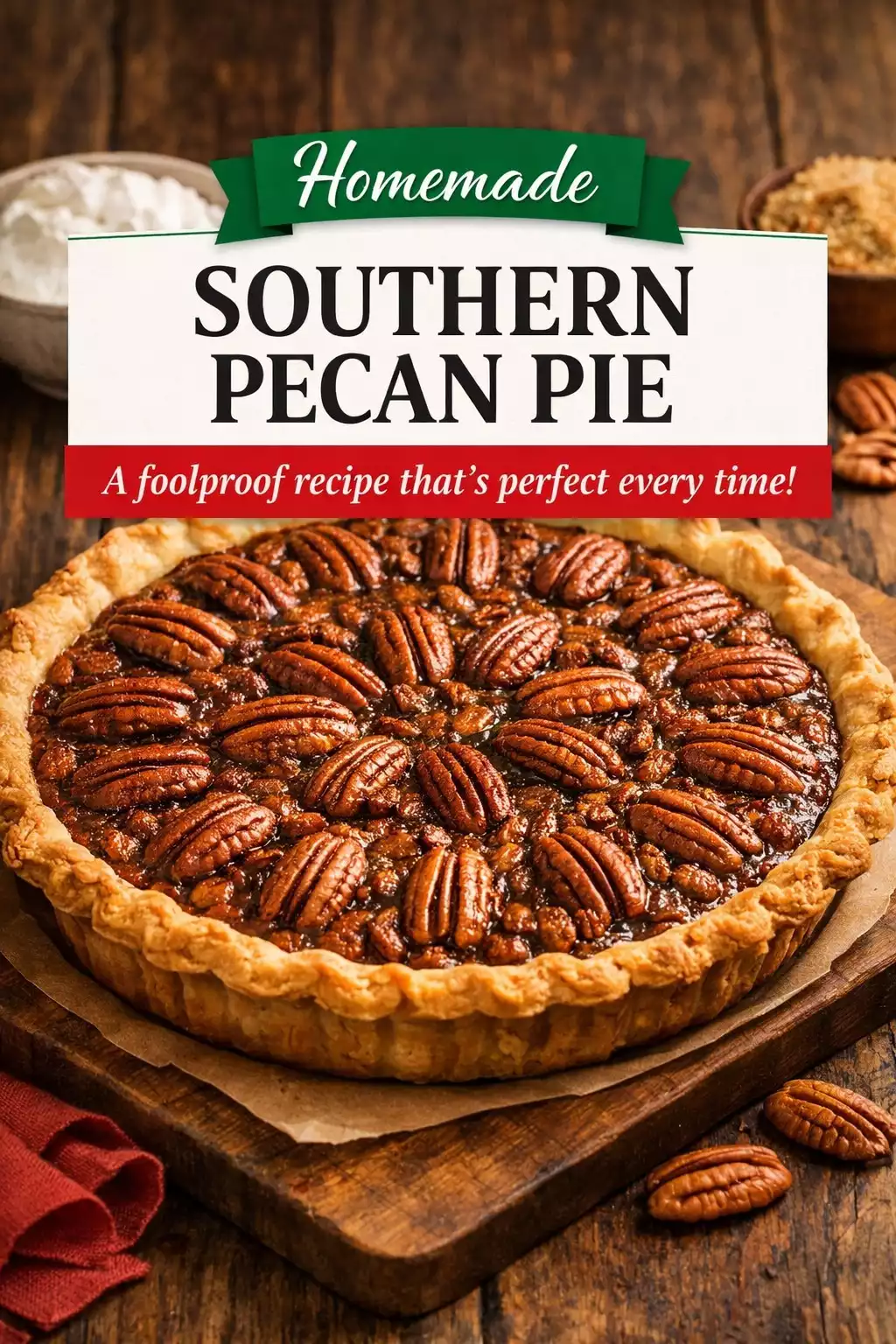
Pecan pie is the most honest dessert on the Thanksgiving table. No complexity, no subtlety — it says exactly what it is and delivers exactly what it promises. Pecans, butter, sugar, and eggs in a flaky crust, baked until the filling goes from liquid to a trembling, caramel-like custard that sets up into sweet, crunchy, perfectly calibrated richness. Southern Pecan Pie is fall dessert recipes at its most direct, and three generations of this recipe have proven that you don’t need to improve on what already works.
The technique is simpler than people think and easier to mess up than it should be. The filling is essentially caramel and eggs — mix them wrong or bake them too hot and you end up with scrambled egg caramel in a crust. Mix them right, bake them low, and you get something transcendent. The secret is tempering: the hot sugar-butter mixture must cool slightly before the eggs go in, and the whole thing must bake low and slow at 325°F rather than the 375°F that most recipes use. That 50°F difference is the entire game.
For a complete Thanksgiving dessert table, pair this with classic pumpkin pie and gingerbread cookies. Cookie additions from soft frosted sugar cookies and peanut butter blossoms round out the spread.
Why This Southern Pecan Pie Works
- Browned butter in the filling — adds a nutty caramel depth that plain melted butter doesn’t provide
- Tempering the eggs — prevents scrambling when hot liquid meets the egg mixture
- Low bake temperature — 325°F sets the custard gently without curdling or cracking
- Corn syrup combination — light corn syrup provides the classic chewy-firm texture; dark corn syrup adds molasses depth
- Whole and halved pecans — halves on top for visual impact, chopped in the filling for distribution
Ingredients
The Pie Crust
- 1 1/4 cups (160g) all-purpose flour
- 1 tablespoon sugar
- 1/2 teaspoon salt
- 1/2 cup (113g) cold unsalted butter, cubed
- 3-5 tablespoons ice water
The Pecan Filling
- 1/2 cup (113g) unsalted butter
- 1 cup (200g) light brown sugar, packed
- 1 cup light corn syrup
- 3 large eggs, room temperature
- 2 teaspoons pure vanilla extract
- 1/2 teaspoon fine salt
- 1 1/2 cups (170g) pecan halves (1 cup roughly chopped + 1/2 cup halves for topping)
How to Make Southern Pecan Pie
Step 1: Make and Blind Bake the Crust
Make pie crust dough: combine flour, sugar, salt, and cold cubed butter. Work until it resembles coarse crumbs. Add ice water until the dough just holds together. Flatten into a disc, wrap, and refrigerate 1 hour. Roll to 12-inch circle, transfer to a 9-inch pie plate, trim and crimp edges. Line with parchment and pie weights. Blind bake at 375°F for 15 minutes. Remove weights, bake 5 more minutes until bottom looks dry. Cool slightly.
Step 2: Brown the Butter
In a medium saucepan, melt butter over medium heat. Continue cooking, stirring occasionally, until the milk solids turn golden brown and the butter smells nutty — about 4-5 minutes. Immediately add brown sugar and corn syrup and stir to combine. Cook over medium heat, stirring frequently, until the sugar is dissolved and the mixture is smooth and just beginning to bubble, about 3-4 minutes. Remove from heat and let cool for 10 minutes. Don’t skip the cooling — hot liquid added directly to eggs creates scrambled egg caramel.
Step 3: Temper the Eggs
While the caramel cools, whisk eggs, vanilla, and salt together in a bowl. Slowly pour the slightly cooled caramel mixture into the eggs in a thin stream, whisking constantly as you pour. This tempering process raises the egg temperature gradually instead of shocking them with hot liquid. The result should be a smooth, glossy filling with no visible egg bits.
Step 4: Build the Pie
Scatter the roughly chopped pecans over the bottom of the blind-baked crust. Pour the filling over the pecans. Arrange pecan halves in a decorative pattern on top — concentric circles or a radial pattern. The pecan halves will float and set in place during baking, creating the classic pecan pie visual.
Step 5: Bake Low and Slow
Reduce oven to 325°F. Place pie on a baking sheet (catches drips and provides even heat distribution). Bake for 55-70 minutes until the edges are set and the center has a slight jiggle — like set Jell-O, not liquid. Cover the crust edges with foil after 30 minutes to prevent over-browning. Cool completely on a wire rack — at least 3 hours — before slicing. This pie needs full cooling to set properly.
Tips & Common Mistakes
- Cool the caramel before adding eggs — this is the single most important step. The eggs must be tempered gradually, not cooked by hot sugar. 10 minutes of cooling is the minimum.
- Don’t overbake — a jiggly center is correct for pecan pie. Fully firm means overcooked; the filling will crack as it cools.
- Low temperature is essential — at 375°F the eggs cook too fast and the filling bubbles up and becomes grainy. 325°F is the right temperature for any custard pie.
- Protect the crust edges — the long bake time means crust edges will over-brown without protection. Use foil or a pie shield after the first 30 minutes.
- Room temperature eggs are important — cold eggs tempering poorly with warm caramel can cause curdling at the start of the pour. Room temp eggs emulsify more cleanly.
- Let it fully cool — pecan pie is even more sliceable the next day. Make it the day before Thanksgiving and refrigerate. Day-of, let it come to room temperature before serving.
Variations
- Chocolate Pecan Pie: Add 4 oz chopped semi-sweet chocolate to the hot caramel mixture and stir until melted before cooling and tempering. Produces a dark, rich, completely different experience. One of the best pie variations in the tradition.
- Bourbon Pecan Pie: Add 2 tablespoons good bourbon to the finished filling before pouring. The alcohol burns off during baking, leaving a subtle whiskey depth that elevates the caramel flavor. Classic Southern variation for adult gatherings. Pairs beautifully with homemade funfetti cake for contrast at the same table.
- Maple Pecan Pie: Replace 1/4 cup of the corn syrup with pure maple syrup. The maple adds a distinct layer of flavor to the caramel base. Use Grade B (dark) maple for the most pronounced maple flavor.
- Mini Pecan Tarts: Press chilled pie dough into a mini muffin tin, fill each with a teaspoon of filling and a few pecan pieces. Bake at 325°F for 20-25 minutes. One recipe makes about 24 mini tarts. Perfect for holiday cookie trays.
- Pecan Pie Bars: Press a shortbread crust into a 9×13 pan, blind bake 15 minutes, then pour filling over. Bake at 325°F for 35-40 minutes. Cut into bars once completely cool. Easier to serve to a crowd than individual pie slices.
Storage & Make-Ahead
- Refrigerator: Store covered in the refrigerator for up to 5 days. Pecan pie must be refrigerated after 2 hours at room temperature due to the egg custard filling.
- Serve at room temperature: Remove from refrigerator 45-60 minutes before serving. Cold pecan pie is gummy and dense; at room temperature it’s properly chewy and sliceable.
- Freezer: Freeze cooled pie uncovered until solid, then wrap in plastic and foil. Keeps 2 months. Thaw overnight in refrigerator and bring to room temperature before serving.
- Make-ahead recommendation: Pecan pie is best made 1-2 days ahead. The filling continues to firm up and the flavors deepen. This is the ideal Thanksgiving prep strategy — bake Wednesday, serve Thursday.
- Crust ahead: Make crust dough and refrigerate up to 3 days, or freeze up to 1 month. Roll and blind bake the day you make the filling.
Frequently Asked Questions
Why is my pecan pie filling runny after it cools?
Under-baked. The filling needs to bake to a set-but-jiggling stage where the center doesn’t flow when the pie is tilted. If it flows, it needs more time. The egg proteins in the filling need to coagulate fully to create the sliceable texture. Check at 55 minutes and continue baking in 5-minute increments until the center has that defined jiggle.
Can I make pecan pie without corn syrup?
Yes — pure maple syrup or a combination of maple syrup and honey can replace corn syrup. The texture will be slightly different (less chewy, more crystalline) and the flavor more complex. Golden syrup (Lyle’s) is the most similar substitute and works nearly identically. Avoid agave — it’s too thin and creates a different texture entirely.
Why are my pecans burning on top?
The oven temperature is too high, or the pie isn’t covered with foil for the last portion of baking. At 325°F with foil cover after 40 minutes, the pecans should stay golden, not burn. If they’re still burning, add the foil earlier (after 20 minutes) or reduce temperature to 300°F and extend baking time.
My filling bubbled up through the pecans — what happened?
The oven temperature was too high, causing the filling to boil rather than set slowly. At 325°F, the filling should heat slowly and set without boiling. If bubbling occurs, the pecans float and the top looks disturbed. The pie is usually still structurally fine; reduce temperature for future bakes.
What’s the difference between light and dark corn syrup in pecan pie?
Light corn syrup produces a cleaner, more neutral sweetness with classic golden color. Dark corn syrup adds molasses flavor and deeper color — some people find it too strong, others love the extra complexity. Using a 50/50 combination is a good middle ground. Traditional Southern recipes vary by region — some use exclusively light, some dark. This recipe uses all light for a cleaner flavor profile. See classic pumpkin pie for the pairing tradition.