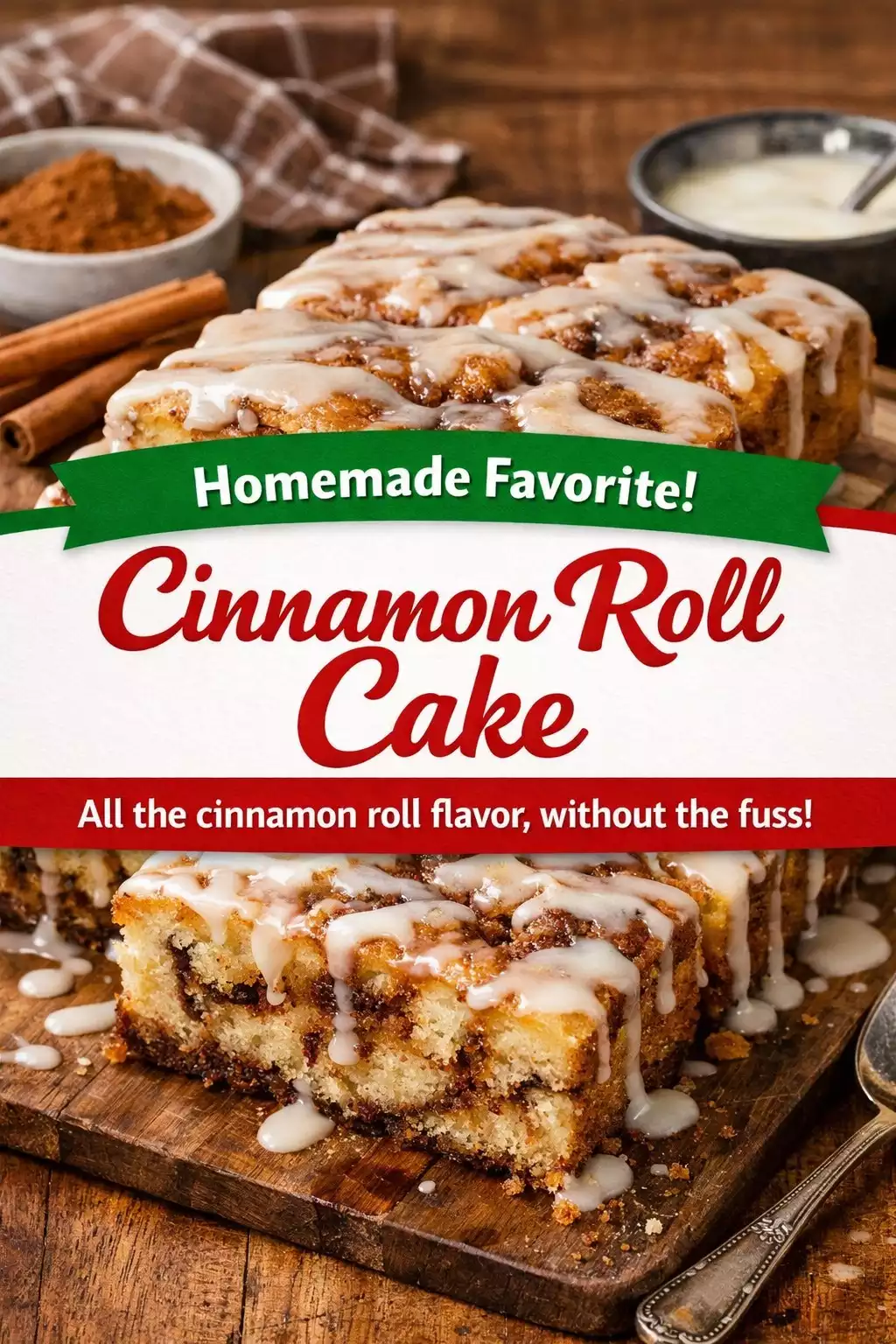
Every Italian-American family has their version. This one’s mine. Cinnamon Roll Cake takes everything you love about a cinnamon roll — the buttery, spiced swirl, the sticky glaze, the warm yeasty satisfaction — and delivers it in a format that bakes in one pan, requires no yeast, no rolling, no cutting, and no 2-hour rise time. It is a fall dessert recipes shortcut that doesn’t feel like a shortcut, because the result is genuinely excellent.
The magic is in the swirl technique. You make a thick, tender cake batter, pour it into the pan, then drizzle a cinnamon-butter mixture over the top and swirl it through with a knife. During baking, the cinnamon butter sinks partway through the batter, creating swirls of warm spice distributed through every slice. The vanilla glaze poured over the hot cake soaks in while the cake is still warm, adding moisture and the characteristic sticky sweetness of a cinnamon roll without any of the bread-making complexity. This is comfort food in under an hour, and it tastes like a Sunday morning.
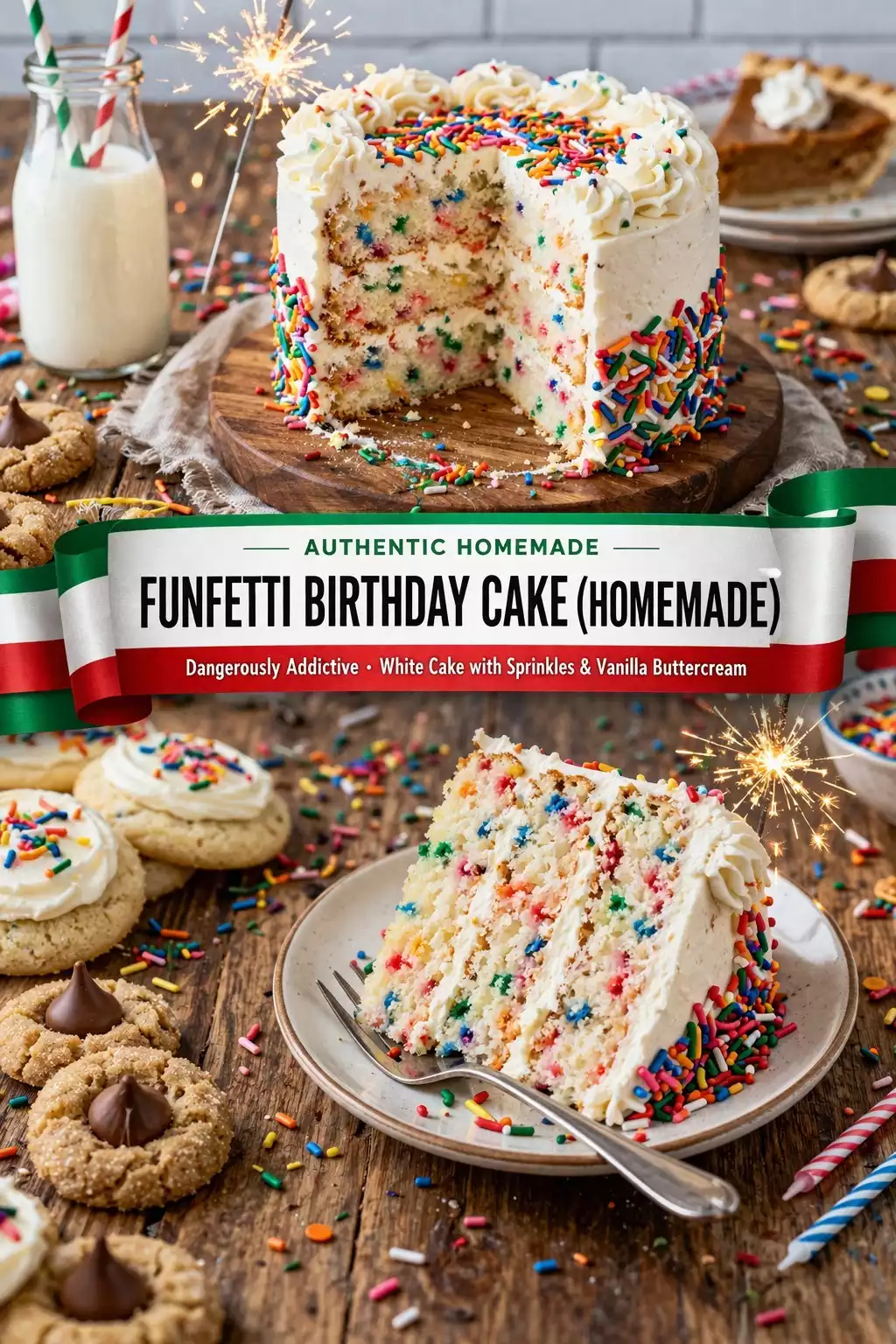
For a full fall baking spread, pair with classic pumpkin pie and gingerbread cookies. For cookie companions at a brunch or holiday gathering, soft frosted sugar cookies and peanut butter blossoms round out the table.
Why This Cinnamon Roll Cake Works
- Buttermilk base — creates a tender, slightly tangy crumb that echoes the yeast tang of real cinnamon rolls
- Cinnamon butter swirl — not mixed in; drizzled and swirled on top, then it sinks during baking to create ribbon pockets
- Hot cake + warm glaze — the cake absorbs the glaze while still warm, creating the sticky-sweet finish of a proper cinnamon roll
- High cinnamon content — the swirl uses a generous amount; restraint here produces a bland cake
- No yeast = no wait — chemical leavening means oven-ready in under 10 minutes
Ingredients
The Cake
- 3 cups (380g) all-purpose flour
- 1 cup (200g) granulated sugar
- 1 tablespoon baking powder
- 1/2 teaspoon baking soda
- 1/2 teaspoon fine salt
- 2 large eggs, room temperature
- 1 cup (240ml) buttermilk, room temperature
- 1/2 cup (120ml) whole milk
- 1/3 cup (75ml) neutral oil
- 2 teaspoons pure vanilla extract
Cinnamon Swirl
- 1/2 cup (113g) unsalted butter, softened
- 3/4 cup (150g) light brown sugar, packed
- 2 tablespoons ground cinnamon
- Pinch of fine salt
Vanilla Glaze
- 2 cups (240g) powdered sugar, sifted
- 1/4 cup whole milk or heavy cream
- 1 teaspoon pure vanilla extract
- Pinch of fine salt
How to Make Cinnamon Roll Cake
Step 1: Make the Cake Batter
Preheat oven to 350°F. Grease a 9×13-inch baking pan with butter and flour. In a large bowl, whisk together flour, sugar, baking powder, baking soda, and salt. In a separate bowl, whisk eggs, buttermilk, milk, oil, and vanilla. Add wet ingredients to dry and stir with a spatula until just combined and smooth. Don’t overmix. Pour batter into the prepared pan and spread evenly.
Step 2: Make and Apply the Cinnamon Swirl
Beat softened butter with brown sugar, cinnamon, and salt until smooth and creamy — like a soft, spreadable paste. Drop spoonfuls of the cinnamon butter mixture evenly across the entire surface of the batter, covering as much of the surface as possible. Using a butter knife, swirl the cinnamon mixture into the batter with figure-eight or S-shaped motions, going about 1 inch deep. Don’t over-swirl — you want distinct ribbons, not fully incorporated cinnamon throughout.
Step 3: Bake
Bake for 28-33 minutes until the edges are set and a toothpick inserted in a plain (non-swirl) section comes out clean. The swirl areas will look darker and slightly wet — this is correct, that’s the caramelized cinnamon sugar. Cool in the pan for 10 minutes before glazing.
Step 4: Make and Apply the Glaze
Whisk together powdered sugar, milk, vanilla, and salt until completely smooth. The glaze should be thick but pourable — like a thick syrup. If too thick, add milk a teaspoon at a time. While the cake is still warm (not hot, warm), pour the glaze over the entire surface, letting it pool in the swirl indentations. The warm cake absorbs the glaze into the top layer, creating the characteristic sticky cinnamon roll finish.
Step 5: Serve Warm or Room Temperature
This cake is excellent warm — the glaze is still slightly liquid and the cinnamon butter pockets are soft. It’s also excellent at room temperature once the glaze has set completely (about 30 minutes after application). Serve directly from the pan in squares. No fancy plating required — this is a family-style, pass-the-pan kind of dessert.
Tips & Common Mistakes
- Don’t over-swirl — the goal is visible cinnamon ribbons, not a fully integrated cinnamon cake. Too much swirling loses the distinct ribbon effect.
- Use softened, not melted butter for the swirl — melted butter makes a liquid swirl that sinks immediately. Softened butter creates a paste that swirls and stays in place before sinking gradually during baking.
- Apply glaze while warm — warm cake absorbs the glaze; cool cake just has glaze sitting on top. The absorption creates the cinnamon roll-like sticky sweetness.
- Generous cinnamon in the swirl — 2 tablespoons of cinnamon seems like a lot. It’s correct. Less produces a bland swirl that disappears during baking.
- Check in the non-swirl areas — the toothpick test should be done in a plain portion of batter, not a cinnamon swirl area, which will always appear wet from the sugar.
- Buttermilk substitute — if you don’t have buttermilk, add 1 tablespoon of white vinegar or lemon juice to 1 cup of milk and let sit 5 minutes. Works as a functional substitute.
Variations
- Brown Butter Cinnamon Roll Cake: Brown the butter in the swirl mixture before adding brown sugar and cinnamon. The brown butter adds a nutty caramel note that deepens the flavor significantly. Cool slightly before beating with sugar.
- Cream Cheese Swirl: Add 4 oz softened cream cheese beaten with 2 tablespoons sugar and 1 teaspoon vanilla as a separate swirl layer alongside the cinnamon butter. Drop alternating spoonfuls and swirl together. The cream cheese pockets mimic the tangy filling in professional cinnamon rolls.
- Maple Cinnamon Cake: Replace all the granulated sugar in the cake batter with packed brown sugar. Add 1 tablespoon maple extract to the glaze. The deep maple note against the cinnamon is warmly autumn-appropriate.
- Apple Cinnamon Roll Cake: Fold 1 1/2 cups finely diced Granny Smith apple into the batter before pouring into the pan. The apples add moisture and a fruit note that plays beautifully against the cinnamon swirl. Particularly good in October and November. See classic pumpkin pie for the seasonal companion.
- Cream Cheese Glaze: Replace the simple vanilla glaze with cream cheese glaze: 4 oz softened cream cheese beaten with 1.5 cups sifted powdered sugar, 3 tablespoons cream, and 1 teaspoon vanilla. Thicker, tangier, and more reminiscent of actual cinnamon roll icing.
Storage & Make-Ahead
- Room temperature: Covered with plastic wrap or foil for up to 3 days. The glaze seals the surface and keeps the cake moist.
- Refrigerator: Up to 5 days covered. The cake becomes slightly denser when refrigerated; bring to room temperature or microwave a portion for 20-30 seconds before serving.
- Freezer: Unglazed cake freezes for 2 months. Wrap individual squares in plastic wrap, then place in a bag. Thaw at room temperature and glaze after thawing.
- Make-ahead: Bake the cake up to 2 days ahead, cover without glazing, and store at room temperature. Warm slightly in a 300°F oven for 5 minutes before glazing and serving. This mimics the fresh-baked experience closely.
- Reheating: Individual squares reheat beautifully in the microwave for 20-25 seconds. The cinnamon butter swirls soften back to their warm, oozy texture.
Frequently Asked Questions
Does this taste like an actual cinnamon roll?
It captures the essential experience — buttery cinnamon swirl, sweet glaze, tender crumb — without the yeasty bread character. If you’re expecting a pull-apart yeast roll, this is different. If you’re expecting the flavor and comfort of a cinnamon roll in a more casual format, this delivers completely. It’s a companion dessert to cinnamon rolls, not a replacement.
Can I make this in a round pan?
Two 9-inch round pans work — divide the batter and cinnamon swirl between them. Reduce bake time by about 5 minutes (check at 23-25 minutes). A 10-inch round cake pan holds all the batter but needs 35-38 minutes. A Bundt pan also works — grease well, pour batter, add swirl by pushing cinnamon mixture into the batter with a spoon before baking. Dramatic presentation.
Why is my cinnamon swirl just disappearing into the batter?
The cinnamon butter was too warm or too melted. It needs to be the consistency of thick frosting — spreadable paste, not liquid. If it melted before you applied it, refrigerate it for 10-15 minutes until it firms back to paste. Cold, soft cinnamon butter holds its swirl pattern during baking much better than warm.
Can I use pecans or walnuts in this?
Yes — stir 1/2 cup chopped toasted pecans into the cinnamon swirl mixture before dropping it on the batter. The nuts add crunch and a nutty depth that balances the sweet swirl beautifully. Toast them first for best flavor. This is particularly good in the Apple Cinnamon Roll Cake variation.
Can I halve this recipe?
Yes — halve all ingredients. Bake in a 9-inch square pan at 350°F for 22-26 minutes. Makes 9-12 bars. This works well for smaller households where a full 9×13 pan is too much at once. Glaze with half the glaze recipe. See peanut butter blossoms for a single-batch cookie that pairs perfectly with a half batch of this cake at a small gathering.