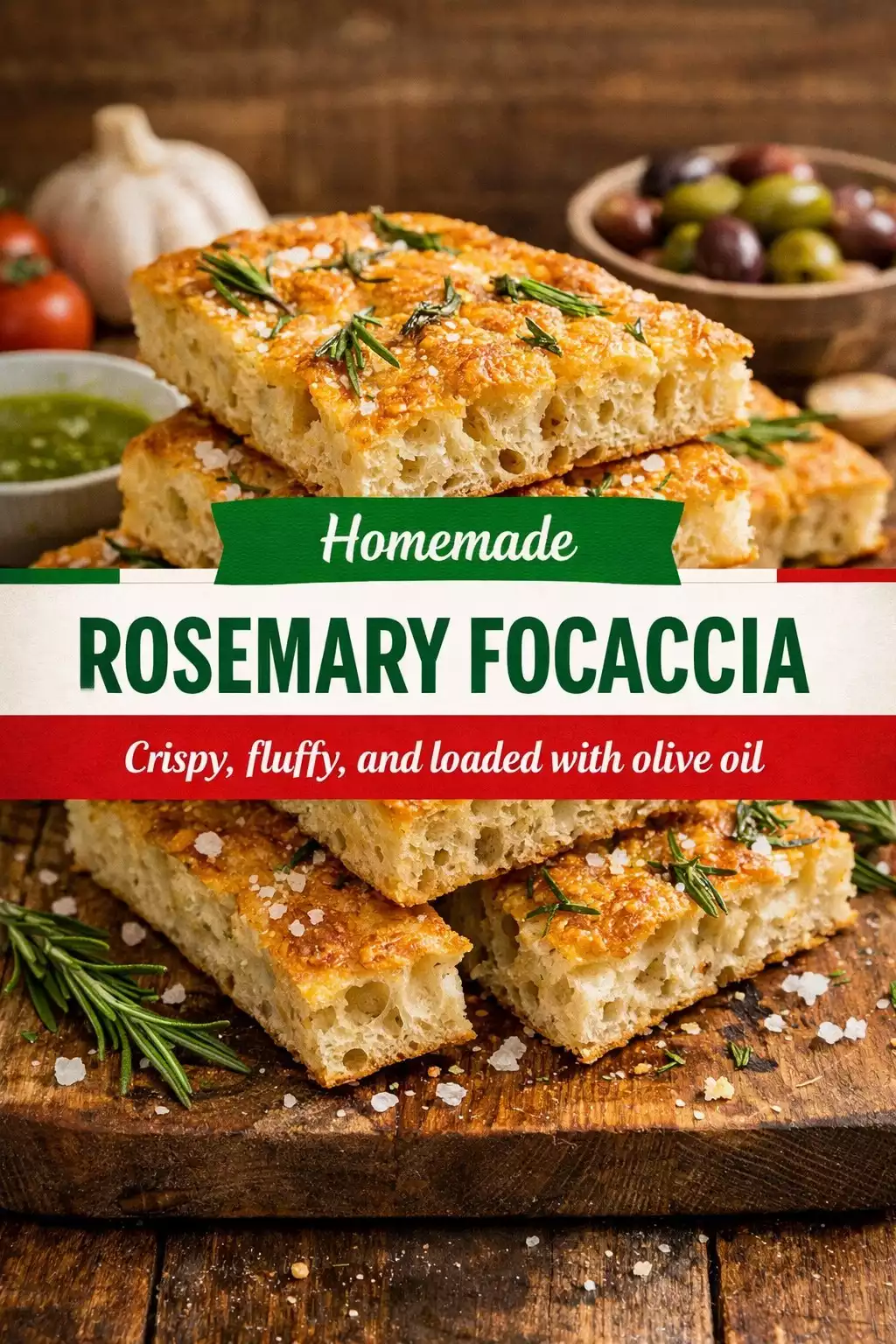
Focaccia is the bread that proves oil is not an afterthought. Every northern Italian region has their version — thick or thin, plain or topped, dimpled or smooth — but all of them share one truth: the olive oil is doing as much work as the flour. It’s in the dough, it’s pooled in those iconic dimples, it’s finishing the surface as it comes out of the oven. The bread you’re making is an olive oil delivery mechanism with excellent structural support. Accept this and make it correctly.
This rosemary focaccia starts with a high-hydration dough that feels wrong the first time you handle it — wetter than bread dough should be, stickier than instinct suggests is right. That’s exactly correct. The hydration is what produces the open, airy crumb under that golden, crispy, oil-scented crust. The first time you pull it out of the oven and press your fingers into it and hear that crunch, you’ll understand everything.
As a pizza dough recipe cousin, focaccia shares DNA but serves a different purpose. This is the bread that disappears before dinner at a table full of Italians. It’s the bread that makes a bowl of soup unnecessary. Make it once and it becomes a ritual.
Why This Recipe Works
- High hydration dough: More water means a more open crumb with irregular bubbles — the texture that distinguishes great focaccia from dense, bready imposters.
- Cold fermentation overnight: Develops the complex, slightly tangy flavor that makes a proper focaccia taste like it has history.
- Generous olive oil in the pan: The bottom of the bread essentially fries in oil during baking. This is why focaccia has that distinctly crispy, golden bottom that no other bread achieves.
- Dimpling just before baking: Creates the signature wells that hold olive oil and toppings, and also pops large gas bubbles for a more even, open crumb.
- Finishing with flaky salt: Coarse salt on top provides texture contrast and flavor that makes the crust unforgettable.
Ingredients
For the Focaccia
- 2¼ teaspoons active dry yeast (1 packet)
- 1¾ cups warm water (110°F)
- 1 teaspoon granulated sugar
- 3 cups all-purpose flour (or bread flour)
- 1½ teaspoons salt
- 5 tablespoons good-quality extra-virgin olive oil, divided, plus more for the pan
For the Topping
- 3–4 sprigs fresh rosemary, leaves stripped
- Flaky sea salt (Maldon or similar)
- 3–4 tablespoons extra-virgin olive oil for finishing
- Optional: sliced olives, thin onion slices, cherry tomatoes
Instructions
Step 1: Activate Yeast
Combine warm water, sugar, and yeast. Let sit 5–7 minutes until foamy. This is the only moment you have to confirm the yeast is alive before investing hours into the fermentation.
Step 2: Mix the Dough
In a large bowl, combine flour and salt. Add the yeast mixture and 3 tablespoons olive oil. Mix with a wooden spoon or your hands until a sticky, shaggy dough forms. It will be wetter than standard bread dough. Do not add more flour. Cover and let rest 30 minutes.
Step 3: Fold (Instead of Kneading)
Instead of traditional kneading, perform stretch-and-fold: grab one side of the dough, stretch it up, and fold it over the center. Rotate the bowl and repeat 4 times. This is one set. Perform 3–4 sets, 30 minutes apart. This builds gluten without traditional kneading.
Step 4: Cold Ferment
After the final fold, cover the bowl tightly with plastic wrap and refrigerate 12–24 hours. The long cold fermentation is what develops the flavor that makes this focaccia worth making.
Step 5: Pan Transfer and Second Rise
Pour 2 tablespoons olive oil generously over the bottom of a 9×13 inch baking pan. Transfer the cold dough into the pan and gently stretch to fill the corners. Don’t force it — let it relax. Drizzle with remaining 2 tablespoons olive oil. Cover loosely and let rise at room temperature 2–3 hours until puffy and jiggly.
Step 6: Dimple and Top
Preheat oven to 450°F (230°C). Using all ten fingers, firmly dimple the entire surface of the dough, pressing nearly to the bottom of the pan. The dough should look cratered. Pour 3–4 tablespoons olive oil over the surface, making sure it pools in the dimples. Scatter rosemary leaves generously and press lightly to adhere. Finish with generous flaky salt.
Step 7: Bake
Bake 20–25 minutes until deep golden brown on top and the edges pull away from the pan. The bottom should be visibly golden when you lift a corner with a spatula. Let rest 10 minutes in the pan before cutting. Run a knife around the edges to release, then lift out whole.
Pro Tips & Common Mistakes
- Don’t add flour to the sticky dough: The high hydration is intentional. Wet dough = open crumb. Resist the instinct to firm it up with flour.
- Oil the pan generously: The bottom of the focaccia should essentially fry in oil during baking. A lightly oiled pan produces focaccia that tastes like baked bread. A generously oiled pan produces focaccia that tastes like Liguria.
- Dimple deep: Superficial dimpling fills back in during baking. Press firmly to the bottom of the pan. The dimples are structural.
- Good olive oil is the ingredient: This bread has four ingredients. The olive oil is carrying most of the flavor. Use the good bottle.
- The cold ferment is not optional: Same-day focaccia is edible. Cold-fermented focaccia is memorable. The difference is real and significant.
Variations Worth Trying
- Tomato and Olive: Press halved cherry tomatoes and pitted kalamata olives into the dimpled dough before baking. The tomatoes burst and concentrate; the olives turn slightly chewy and intense.
- Caramelized Onion: Slowly caramelize 2 large onions in butter and olive oil for 45 minutes until deeply golden. Spread over dimpled dough before baking. One of the best versions you can make.
- Potato Focaccia (Focaccia Barese): Press thinly sliced raw potato rounds into the surface. They cook with the bread and become crispy-edged and tender. Traditional in Bari.
- Schiacciata (Thinner Version): Halve the recipe and bake in the same pan for a thinner, crisper focaccia. Excellent for sandwiches.
- Herb and Sea Salt: Skip the rosemary and use a blend of thyme, sage, and oregano with extra-flaky salt. Every bit as good. See also this socca chickpea flatbread, this homemade pizza dough, and this cheddar herb quick bread for more bread options, plus this thin crust pizza dough and this homemade naan.
Storage & Reheating
- Room temperature: Covered with a towel, up to 2 days. The crust softens but the flavor remains excellent.
- Freezer: Slice into portions, wrap tightly, and freeze up to 2 months. Reheat in a 400°F oven for 8–10 minutes directly from frozen.
- Best reheating method: A hot oven (400°F) for 8 minutes restores the crispy crust and warm interior. Not the microwave — that produces soft, damp results.
Frequently Asked Questions
Can I make focaccia the same day?
Yes. After mixing, let the dough rise at room temperature for 2 hours instead of refrigerating. Perform the stretch-and-fold sets, transfer to the pan, let rise another 1–1.5 hours, then dimple and bake. The flavor will be less complex but the focaccia will still be very good.
My focaccia is dense and bready. What happened?
Under-proofed dough or too much added flour. The second rise in the pan is critical — the dough must look puffy and jiggly before dimpling. Dimpling under-risen dough deflates it before it’s built enough structure to recover.
Do I need bread flour?
All-purpose flour produces excellent focaccia. Bread flour adds more chew and a slightly more structured crumb. Both are correct — use what you have.
Can I use dried rosemary?
Fresh rosemary is significantly better here. Dried rosemary is harsher and doesn’t have the same fragrant oil release. If you must use dried, use half the quantity and press it into the dough rather than leaving it on the surface where it burns.
Why is my focaccia pale on top?
The oven needs to be fully preheated and at maximum temperature. 450°F is not negotiable for proper color. Also make sure the focaccia is on the upper-middle rack where top heat is highest.