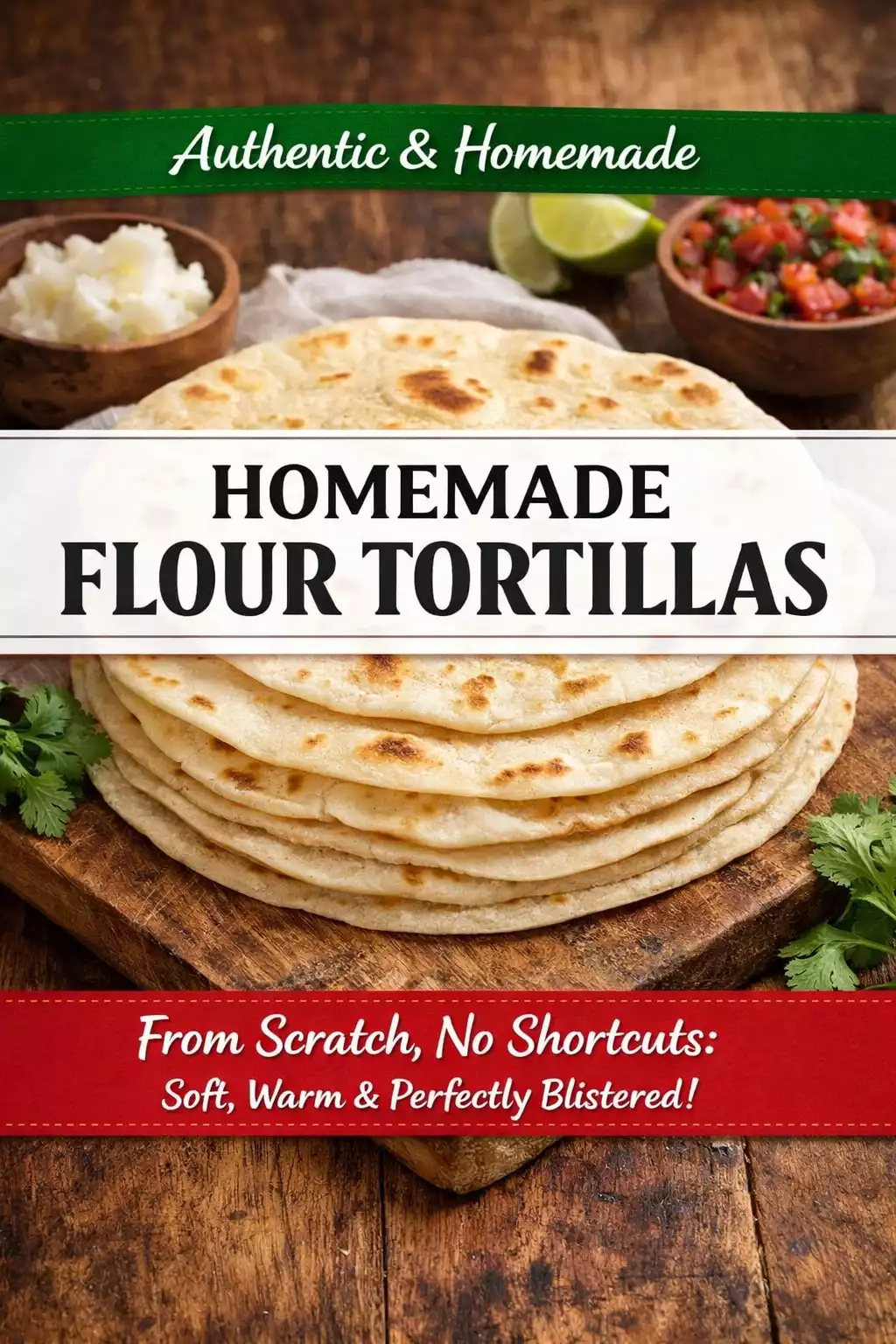
There’s a principle in cooking that cuts across every cuisine I’ve ever worked with: master the fundamentals and they translate everywhere. The technique for proper tortilla-making — the fat cut into flour, the hot water, the rest, the press-and-roll, the dry heat — is as precise as any bread formula I’ve learned. And the result, when done right, has a quality that the packaged version cannot replicate. A fresh flour tortilla is soft, pliable, slightly blistered, and warm in your hand in a way that makes the grocery store stack feel like a different food entirely.
I grew up in an Italian-American kitchen that respected good bread in every form. My nonna would have understood the philosophy here completely — good fat, simple flour, proper technique, high heat. This pizza dough recipe-adjacent flat dough follows the same logic and produces results that belong at any table, any cuisine.
Good food is good food, no matter where it comes from. Make tortillas from scratch once and you will understand why Mexicans take them seriously. Because they deserve to be taken seriously.
Why This Recipe Works
- Lard or shortening for flakiness: Traditional flour tortillas use lard, which produces a slightly flaky, tender texture. Shortening works as a substitute; butter adds flavor but produces a less traditional result.
- Hot water hydration: Hot water partially cooks the gluten and creates a more extensible, pliable dough that’s easier to roll thin without springing back.
- Resting the dough: Twenty to thirty minutes of rest allows the gluten to fully relax so the tortillas roll out thin and stay thin rather than shrinking back.
- Very hot dry pan: A screaming-hot comal or cast iron creates the characteristic golden blisters on the tortilla surface. Medium heat produces pale, rubber-textured tortillas.
- Quick cooking time: 30–45 seconds per side maximum. Overcooking dries them out and makes them stiff rather than pliable.
Ingredients
For the Tortillas (Makes 8–10)
- 2 cups all-purpose flour
- 1 teaspoon salt
- ½ teaspoon baking powder
- 3 tablespoons lard or vegetable shortening (or butter for flavor)
- ¾ cup hot water (not boiling, about 160°F)
Instructions
Step 1: Combine Dry Ingredients and Fat
In a large bowl, whisk together flour, salt, and baking powder. Add the lard or shortening and use your fingers or a pastry cutter to work the fat into the flour until the mixture resembles coarse crumbs with pea-sized fat pieces. This step is critical — the fat must be incorporated before the water is added.
Step 2: Add Hot Water
Add the hot water gradually, mixing with a fork or your hand as you pour. Mix until a rough dough forms. The dough will look shaggy at first — that’s fine. Turn it onto the counter and knead for 2–3 minutes until it comes together into a smooth, soft ball. Do not over-knead.
Step 3: Rest the Dough
Cover the dough with a clean towel or plastic wrap and rest at room temperature for 20–30 minutes minimum. This rest is non-negotiable — skipping it produces tortillas that snap back to a smaller size when you try to roll them.
Step 4: Divide and Roll
Divide rested dough into 8–10 equal balls. On a lightly floured surface, roll each ball into a thin circle approximately 8 inches in diameter. Roll from the center outward, rotating the dough a quarter turn between rolls. Aim for even thinness throughout — thicker spots will be doughy after cooking.
Step 5: Cook
Heat a comal or cast iron skillet over high heat until very hot. No oil needed. Place a rolled tortilla on the dry hot surface. Cook 30–45 seconds until bubbles form and the bottom has golden brown spots. Flip and cook 20–30 more seconds. The entire tortilla should puff slightly during cooking. Remove immediately.
Step 6: Keep Warm
Stack cooked tortillas between layers of a clean kitchen towel. The steam from stacking keeps them soft and pliable. Serve warm — fresh tortillas within 30 minutes of cooking are significantly better than room temperature ones.
Pro Tips & Common Mistakes
- Use lard if possible: The flavor and texture difference between lard tortillas and shortening tortillas is notable. Traditional is traditional for a reason.
- Roll thin: Thick flour tortillas are undercooked bread. Roll to near-translucent thinness for proper texture.
- Very hot pan: Tortillas cooked over medium heat are pale and rubbery. High heat creates the golden blisters and proper chew.
- Don’t skip the rest: Unrested dough fights you. Twenty minutes transforms a frustrating, shrinking dough into a cooperative one that holds its rolled shape.
- Cook quickly: 30–45 seconds per side is the target. More time dries them out. Less time leaves the center doughy.
Variations Worth Trying
- Whole Wheat Tortillas: Replace half the all-purpose flour with whole wheat. Earthier flavor, slightly more dense but still pliable. Better nutritional profile.
- Herb Tortillas: Add 1 tablespoon finely chopped cilantro, chives, or dried herbs to the dry ingredients. Subtle flavor enhancement visible in the finished tortilla.
- Spinach Tortillas: Blend 1 cup fresh spinach with the hot water until smooth, then use as the liquid in the recipe. Creates green tortillas with a mild vegetable flavor.
- Larger Burrito Tortillas: Divide dough into 6 instead of 8 portions and roll larger. Increase cooking time slightly — 30–45 seconds per side still applies.
- Tortilla Chips: Cut day-old tortillas into triangles, brush with oil, season with salt, and bake at 375°F for 10–12 minutes. Also see this soft dinner rolls, this cast iron cornbread, this cheddar herb quick bread, this homemade naan, and this rosemary focaccia for the complete bread and flatbread collection.
Storage & Reheating
- Room temperature: Stacked and wrapped in foil or a bag, up to 2 days. They soften and lose some character after the first day.
- Refrigerator: Up to 1 week in an airtight bag. Reheat before using.
- Freezer: Separate with parchment paper and freeze up to 3 months. Thaw at room temperature or heat directly from frozen in a skillet.
- Best reheating: 30 seconds per side in a dry hot skillet or 20–30 seconds wrapped in a damp paper towel in the microwave. The skillet method is better for restoring texture.
Frequently Asked Questions
Can I use butter instead of lard?
Yes. Butter produces a richer, more flavorful tortilla with a slightly different texture than traditional lard tortillas. Excellent result, not traditional. Shortening is closer to traditional texture without the lard flavor.
Why are my tortillas cracking when I fold them?
Overcooked or cooled down too much before using. Tortillas must be warm and pliable when used. Reheat briefly if they’ve cooled. If they cracked during cooking, the pan was too dry or cooking time too long.
Can I make the dough ahead?
Yes. Refrigerate the rested dough up to 2 days. Bring to room temperature before rolling, and allow an additional 10 minutes of rest after removing from the fridge.
Why does my dough keep springing back?
Insufficient rest time. Cover and wait a minimum 30 minutes, or up to 1 hour. The gluten needs to fully relax before it will hold a rolled shape without retracting.
Can I make corn tortillas with this recipe?
No. Corn tortillas use masa harina (nixtamalized corn flour) and water — entirely different technique and ingredient. This recipe is specifically for wheat flour tortillas.
Do I need a tortilla press?
No. A rolling pin on a floured surface works perfectly. A tortilla press is faster for high-volume production but isn’t necessary for home use. A heavy-bottomed pot pressing flat also works in a pinch.