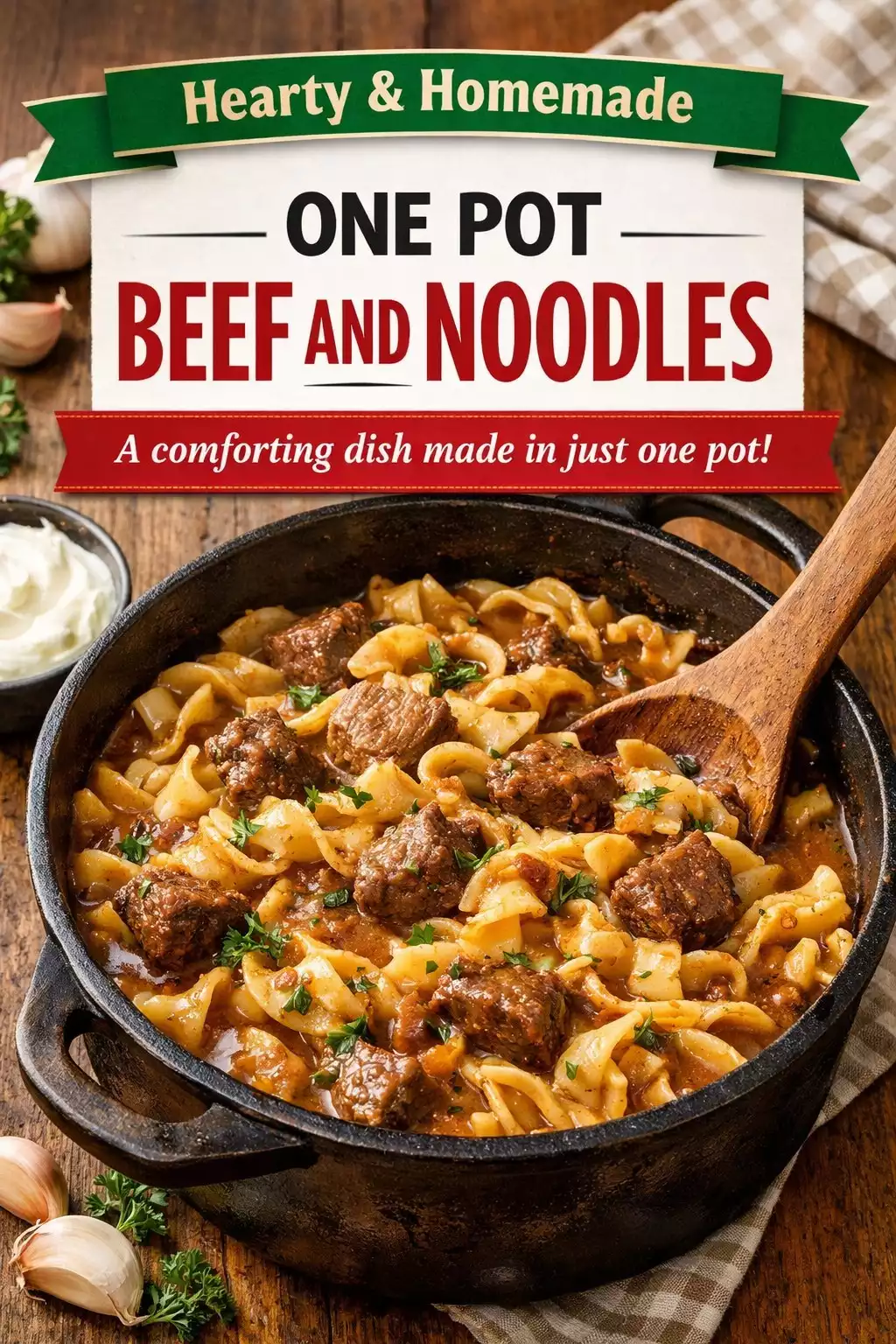
Beef and noodles in one pot is the kind of dinner that’s been feeding families across America for generations — not because it’s fashionable, but because it works. Tender beef, egg noodles that absorb the savory braising liquid, aromatics that build during the cook rather than getting added at the end from a can. This is the version built from technique rather than shortcuts, and it shows in every bite.
My nonna would’ve smacked me with a wooden spoon if I tried to tell her this was complicated. It’s not. The complexity is in the flavor, not the method. The technique is patient — brown the beef properly, build the aromatics correctly, add liquid at the right moment, finish with attention. These are principles that apply to everything I’ve ever cooked professionally, scaled down to a weeknight dinner that serves a family at a table worth sitting at.
A great one pot meal doesn’t hide behind convenience. It’s a full dinner in one vessel because that’s the most efficient way to build flavor, not the laziest. There’s a difference. This recipe knows the difference.
Why This Recipe Works
- Browning the beef in batches: Overcrowding the pan causes steaming rather than searing. Batch browning develops the deep crust and fond that the entire sauce depends on.
- Worcestershire sauce in the broth: Adds umami depth, slight sweetness, and complexity that beef broth alone doesn’t carry. A few tablespoons transforms the flavor profile.
- Flour-thickened sauce: Tossing the beef in flour before browning or adding flour to the aromatics creates a silky sauce that coats the noodles rather than a thin broth.
- Egg noodles added at the end: Added in the last 10–12 minutes, the noodles absorb just enough braising liquid to be flavorful without becoming mushy.
- Sour cream finish: Stirred in off heat, sour cream adds creaminess, tang, and richness that rounds out the savory beef broth into something approaching a proper sauce.
Ingredients
Main Ingredients
- 2 lbs beef stew meat or chuck roast, cut into 1-inch cubes
- Salt and black pepper
- 2 tablespoons olive oil or vegetable oil
- 1 medium onion, diced
- 3 cloves garlic, minced
- 3 tablespoons all-purpose flour
- 3 cups beef broth
- 1 cup water
- 2 tablespoons Worcestershire sauce
- 1 teaspoon dried thyme
- 2 cups wide egg noodles (uncooked)
- ½ cup sour cream
- Fresh parsley for serving
Instructions
Step 1: Brown the Beef
Pat beef cubes completely dry and season generously with salt and pepper. Heat oil in a large Dutch oven over high heat. Brown beef in batches — don’t crowd the pan. Work in 2–3 batches, each piece searing 2–3 minutes per side until deeply browned. Transfer to a plate. This step is the foundation of the dish’s flavor.
Step 2: Build Aromatics
Reduce heat to medium. In the same pot with beef drippings, add onion. Cook 3–4 minutes, scraping up browned bits from the bottom. Add garlic and cook 60 more seconds. Sprinkle flour over onions and stir to coat — cook 1 minute to cook out the raw flour taste.
Step 3: Add Liquid and Braise
Add beef broth, water, Worcestershire sauce, and thyme. Stir well, scraping any remaining fond from the bottom of the pot. Return browned beef to the pot. Bring to a boil, then reduce to a low simmer. Cover and cook 60–90 minutes until the beef is very tender and fork-able. Stir occasionally.
Step 4: Add Egg Noodles
Add uncooked egg noodles directly to the braising liquid. Stir to submerge. Bring back to a simmer, cover, and cook 10–12 minutes, stirring every few minutes, until noodles are tender and have absorbed much of the liquid. If the pot looks dry before noodles are done, add a splash of broth or water.
Step 5: Finish with Sour Cream
Remove from heat. Stir in sour cream until fully incorporated and the sauce is creamy. Taste for seasoning — this dish often needs more salt than you expect given the volume of broth. Serve in bowls topped with fresh parsley.
Pro Tips & Common Mistakes
- Don’t skip the sear: Every recipe says this. This recipe means it more than most. The fond from browning beef is the entire flavor structure of the sauce.
- Brown in batches, never crowd: Six inches of beef in a hot pan = steam. Two inches = sear. The difference in color, texture, and flavor is dramatic.
- Add sour cream off heat: Boiling sour cream separates and creates a grainy, curdled sauce. Remove from heat first, then stir in and serve immediately.
- The braise needs time: Sixty minutes is the minimum for chuck to become tender. Ninety is better. This is not a 30-minute recipe — plan accordingly.
- Taste the broth before adding noodles: Noodles absorb flavor from the broth as they cook. Season the broth well before adding them so the noodles taste of the dish, not of pasta.
Variations Worth Trying
- Mushroom Beef Noodles: Add 8 oz sliced cremini mushrooms with the onions. The mushrooms absorb the beef fat and become deeply savory. See also this one pot lemon garlic pasta for a lighter pasta direction.
- Hungarian-Style (Goulash): Add 2 tablespoons sweet paprika and 1 teaspoon caraway seeds with the aromatics. A different flavor profile in the same method.
- Slow Cooker Version: Brown beef and aromatics on stovetop, then transfer to slow cooker with broth for 6–8 hours on low. Add noodles in the last 30 minutes on high. See this slow cooker dump beef stew for a similar hands-off approach.
- No Sour Cream: Substitute ¼ cup cream cheese stirred in off heat for a richer, tangier alternative. Or skip the dairy entirely for a clean beef and noodle dish.
- Added Vegetables: Carrots and peas added in the last 15 minutes of braising add color, nutrition, and sweetness. See also this dutch oven pot roast and this dump and bake meatball casserole for more beef-forward one-pot dinners.
Storage & Reheating
- Refrigerator: Up to 4 days. Noodles continue absorbing liquid and soften further with time.
- Reheating: Add a splash of beef broth when reheating — the noodles absorb liquid as the dish sits. Cover and reheat over medium-low heat or microwave covered.
- Freezer: Freeze the beef portion before adding noodles for best results. Add fresh noodles when reheating.
Frequently Asked Questions
What’s the best cut of beef for this dish?
Chuck roast cut into cubes is the gold standard. It has enough fat and collagen to become silky and tender after a long braise. Stew meat (which is often chuck) works well. Lean cuts like sirloin will be dry and stringy after the long cook time.
Can I use a different pasta instead of egg noodles?
Wide egg noodles work best for their absorbency and texture. Medium shells, rotini, or broad pappardelle work well. Thin or delicate pasta will overcook. Avoid long thin pastas like spaghetti — they don’t integrate well into a braise.
Can I make this in a slow cooker?
Yes, with the stovetop sear as the first step. After browning beef and building aromatics, transfer to the slow cooker with broth and cook on low 6–8 hours. Add uncooked noodles 30 minutes before serving, increase to high, and cook covered until noodles are done.
Can I use ground beef instead of stew meat?
Yes. Brown and drain ground beef, add aromatics, build the sauce, and add noodles. The texture will be more like a hearty pasta dish than a braise. Good but a different recipe. Reduce cook time significantly — ground beef doesn’t need braising time.
Why is my sauce thin?
Either the flour step was skipped or not enough flour was used. Return to a simmer and let it cook uncovered for 5–10 minutes to reduce and thicken. Or stir a tablespoon of flour into a small amount of cold water and add to the simmering sauce.