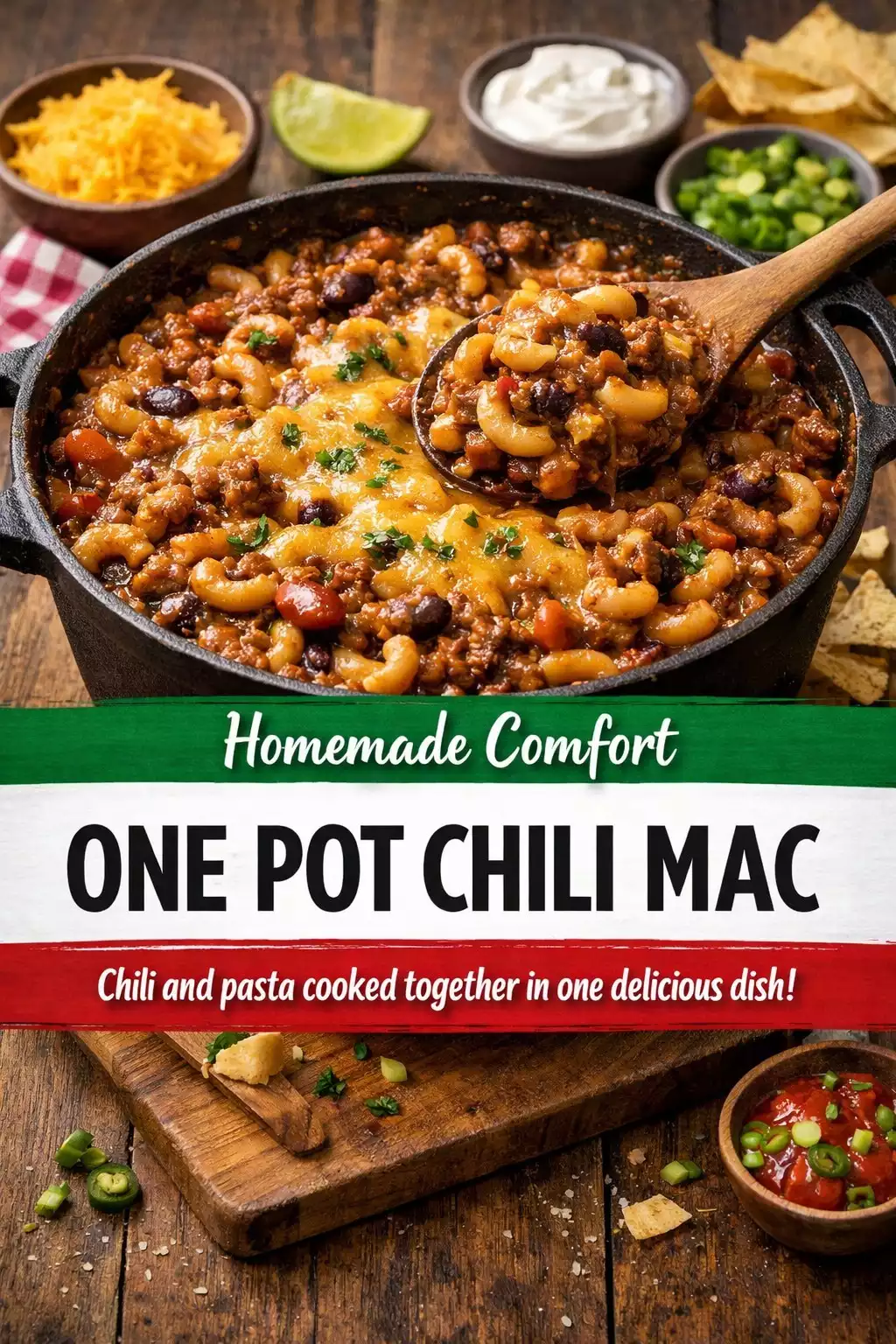
Chili mac is the great American comfort food crossover — two things everyone loves, combined in one pot in a way that makes both better. The chili gets the pasta’s starch to thicken it into a clingy, meat-coating sauce. The pasta gets the chili’s deep, spiced, beefy broth to cook in, so instead of bland noodles draped in sauce, you get noodles that taste of chili all the way through. The combination is smarter than it sounds, and once you understand the technique, you’ll stop making them separately.
I spent 30 years in kitchens so you don’t have to mess this up. The mistake most people make with chili mac is adding cooked pasta to cooked chili, which gives you two separate things sharing a bowl. The professional approach — and the approach that produces a real result — is cooking the raw pasta directly in the chili. One pot, one process, one unified dish.
This one pot meal version is the correct way. Low and slow, the way it should be.
Why This Recipe Works
- Raw pasta cooked in the chili: The pasta absorbs the spiced beef broth and releases starch that thickens the chili into a sauce rather than a soup. This is what separates one-pot chili mac from chili-in-a-bowl-with-pasta.
- Layered spice approach: Spices bloomed in the beef fat before liquid is added develop deeper, more complex flavor than spices added to a wet dish.
- Correct liquid ratio: Pasta absorbs a lot of liquid as it cooks. Adding adequate broth means the pasta finishes cooking without drying out, while the sauce has body from the absorbed starch.
- Cheese melted at the end: Cheddar stirred in off heat at the end creates a glossy, cohesive sauce rather than a clumped, broken cheese topping.
- Time to develop chili flavor: The beef and aromatics need 15–20 minutes before the pasta goes in to develop proper chili depth. Rushing this step produces a dish that tastes like seasoned ground beef, not chili.
Ingredients
Main Ingredients
- 1.5 lbs ground beef (80/20)
- 1 medium onion, diced
- 4 cloves garlic, minced
- 1 can (15 oz) kidney beans or black beans, drained and rinsed
- 1 can (15 oz) diced tomatoes
- 1 can (6 oz) tomato paste
- 2 cups beef broth
- 1 cup water
- 2 tablespoons chili powder
- 1 teaspoon cumin
- 1 teaspoon smoked paprika
- ½ teaspoon oregano
- Salt and black pepper
- 1½ cups elbow macaroni (uncooked)
- 1½ cups shredded sharp cheddar cheese
- Optional toppings: sour cream, jalapeños, green onions
Instructions
Step 1: Brown the Beef
In a large pot over medium-high heat, cook ground beef, breaking it into small pieces. Cook until well browned — about 8–10 minutes. Don’t drain the fat entirely — leave about 1 tablespoon in the pot. The rendered beef fat carries flavor and is the cooking fat for the aromatics.
Step 2: Build Aromatics
Add onion to the pot with the beef. Cook 3–4 minutes until softened. Add garlic and cook 1 minute more. Add the spices (chili powder, cumin, paprika, oregano) directly to the beef and onion mixture. Stir and cook 1–2 minutes until fragrant. Blooming spices in fat multiplies their flavor impact.
Step 3: Add Tomatoes and Beans
Stir in tomato paste and cook 1 minute. Add diced tomatoes (with their liquid), drained beans, beef broth, and water. Stir to combine thoroughly. Bring to a boil, then reduce to a strong simmer. Cook uncovered for 15–20 minutes to develop chili flavor before adding pasta.
Step 4: Add Pasta
Stir in uncooked elbow macaroni. Return to a simmer. Cover and cook, stirring every 3–4 minutes, for 12–15 minutes until the pasta is tender and has absorbed much of the liquid. The chili should be thick and clingy rather than soupy.
Step 5: Finish with Cheese
Remove from heat. Add shredded cheddar in two additions, stirring each addition until melted before adding the next. The residual heat melts the cheese into the chili mac without breaking the cheese into oily strings. Taste for seasoning and serve immediately with chosen toppings.
Pro Tips & Common Mistakes
- Don’t drain all the fat: Leave a tablespoon of beef fat in the pot to cook the aromatics. This carries flavor that oil alone doesn’t provide.
- Bloom the spices: Two minutes of spices cooking in fat creates dramatically more flavor than adding them to liquid. This one step separates good chili mac from great chili mac.
- Develop the chili before adding pasta: The 15–20 minutes of chili cooking time is mandatory for proper flavor. The pasta added to under-developed chili produces a flat result.
- Stir the pasta: Same as all one-pot pasta — stir every few minutes to prevent sticking and to help the starch distribute.
- Add cheese off heat: This is the difference between a glossy, unified sauce and a broken, oily, stringy topping.
Variations Worth Trying
- Spicy Version: Add 1–2 diced jalapeños with the onion and increase chili powder to 3 tablespoons. A serious heat level that’s very good.
- White Chili Mac: Use ground chicken or turkey, white beans, chicken broth, and substitute chili powder with cumin, green chiles, and oregano. A completely different but excellent direction.
- Baked Version: After adding cheese on the stovetop, transfer to a baking dish, top with additional cheese and breadcrumbs, and bake at 375°F for 15 minutes until bubbly. Restaurant-style presentation.
- Taco-Style: Add 1 packet taco seasoning instead of individual spices, and top with crushed tortilla chips, salsa, and guacamole. A crowd-pleaser variation. See this homemade sloppy joes for another beef comfort food.
- Slow Cooker Method: Brown beef and aromatics on stovetop, then transfer everything except pasta to a slow cooker. Cook on low 4–6 hours, then add pasta on high for 30 minutes. See also this one pot beef and noodles, this dutch oven pot roast, this taco night, and this homemade sloppy joes for more beef-forward family dinners.
Storage & Reheating
- Refrigerator: Up to 4 days. The pasta absorbs more liquid overnight — add a splash of beef broth when reheating.
- Freezer: Freeze the chili portion before adding pasta for best results. Reheat from frozen, bring to a simmer, add fresh pasta, and cook until tender.
- Reheating: Medium-low heat with a splash of broth or water, covered. Stir frequently. Microwave works but the cheese can separate slightly.
Frequently Asked Questions
What pasta shape works best?
Elbow macaroni is the classic and correct choice for both size and absorbency. Shells, rotini, and small penne also work well. Avoid long pasta, wide noodles, or delicate shapes that break apart during stirring.
Can I make this without beans?
Yes. Skip the beans and increase ground beef to 2 lbs for a pure beef chili mac. Some people prefer it without beans entirely; this is a legitimate position.
How do I prevent the cheese from getting clumpy?
Two things: remove from heat before adding cheese, and add in multiple small additions rather than all at once. Each addition should be fully melted before the next goes in.
Can I use turkey or pork?
Ground turkey produces a lighter, leaner chili mac that’s slightly drier. Add an extra tablespoon of olive oil to compensate for the lower fat content. Ground pork is excellent and adds a different flavor dimension.
Why is my chili mac too thick after sitting?
The pasta absorbs liquid as it rests. Add beef broth, stir, and reheat. This is normal and expected — the dish thickens significantly between making and serving.