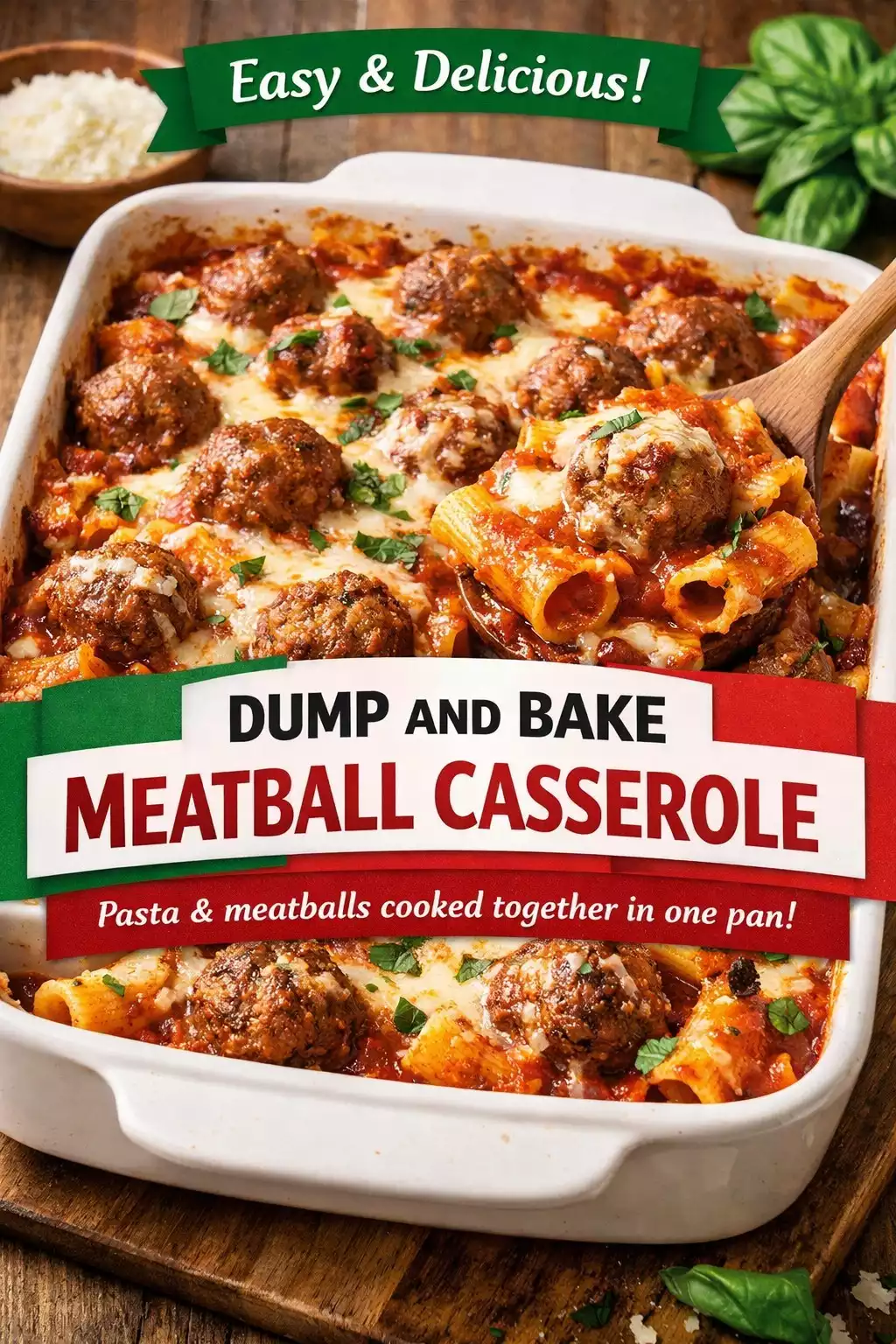
Meatballs belong to the Italian-American table the way bread belongs to every other tradition — as a near-constant presence that signals home, comfort, and a cook who knows what they’re doing. This dump and bake meatball casserole compresses the full meatball-and-sauce experience into a format that works on a weeknight when the full Sunday gravy commitment isn’t available. The meatballs bake in their sauce. The pasta cooks alongside. Everything finishes in one pan.
Old-school technique meets home kitchen reality. Every meatball in this casserole is seasoned the way my family seasoned meatballs: properly. Garlic, fresh parsley, Parmesan, a touch of breadcrumb for texture. The sauce is a proper marinara — not jarred tomato sauce labeled Italian. The pasta absorbs the sauce rather than swimming in it. This is the result.
The dump dinner format earns the name because the assembly is genuinely straightforward. But the flavor doesn’t reflect the assembly — it reflects the technique applied at each stage. That’s the difference between a good dump casserole and a memorable one.
Why This Recipe Works
- Raw pasta cooked in the sauce: The pasta releases starch directly into the marinara, thickening it naturally and absorbing the tomato and herb flavors. Result: pasta that tastes of the sauce all the way through, not just on the surface.
- Proper meatball seasoning: Parmesan, fresh garlic, herbs, and breadcrumbs soaked in milk produce a tender, flavorful meatball that holds its shape through the bake while remaining tender inside.
- Covered for the first part of baking: The foil traps steam that cooks the pasta and keeps the meatballs moist. Uncovering at the end allows the cheese to bubble and brown.
- Quality marinara matters: The flavor of the sauce is the flavor of the dish. Good sauce means a dish worth eating; thin, watery sauce produces a thin, watery casserole.
- Resting before serving: Allows the pasta to absorb the last of the sauce and the casserole to set enough to serve in proper portions.
Ingredients
For the Meatballs
- 1.5 lbs ground beef (or mix of beef and pork)
- ½ cup Italian breadcrumbs
- ¼ cup whole milk
- ½ cup grated Parmesan
- 2 eggs
- 4 cloves garlic, minced fine
- 2 tablespoons fresh parsley, chopped (or 1 tablespoon dried)
- 1 teaspoon dried oregano
- Salt and black pepper
For the Casserole
- 2 jars (25 oz each) marinara sauce (or homemade equivalent)
- 1½ cups water
- 12 oz rigatoni, penne, or ziti (uncooked)
- 2 cups shredded mozzarella
- ¼ cup grated Parmesan for topping
- Fresh basil for serving
Instructions
Step 1: Make the Meatballs
Combine breadcrumbs and milk in a large bowl. Let soak 2 minutes until the breadcrumbs are saturated. Add ground beef, Parmesan, eggs, garlic, parsley, oregano, salt, and pepper. Mix with your hands until just combined — overmixing produces dense, rubbery meatballs. Roll into 1.5-inch balls. The milk-soaked breadcrumb (panade) is the technique that keeps these tender through the long bake.
Step 2: Preheat and Prep Casserole
Preheat oven to 375°F (190°C). In a large, deep baking dish (9×13 or larger), combine both jars of marinara sauce and the water. Stir to combine. Add uncooked pasta directly to the sauce and stir to coat.
Step 3: Add Meatballs
Nestle the raw meatballs evenly throughout the pasta and sauce mixture. They don’t need to be pre-browned for this method — they’ll cook through during the covered bake and baste in the marinara as they cook.
Step 4: Cover and Bake
Cover the baking dish tightly with aluminum foil. Bake at 375°F for 50–60 minutes until the pasta is tender and the meatballs are cooked through (internal temperature 160°F). The foil is critical — the trapped steam cooks the pasta.
Step 5: Add Cheese and Finish
Remove foil. Scatter mozzarella and Parmesan evenly over the top. Return to oven uncovered and bake an additional 10–15 minutes until the cheese is melted, bubbling, and golden in spots. Let rest 10 minutes before serving. Scatter fresh basil.
Pro Tips & Common Mistakes
- Don’t skip the panade (breadcrumb soak): Breadcrumbs soaked in milk create a moist, tender meatball that stays soft through a long bake. Dry breadcrumbs produce a denser result.
- Don’t overmix the meatball mixture: Mix until the ingredients are just combined. Overmixing develops the protein and produces tough, compact meatballs.
- Seal the foil tightly: The pasta cooks from steam generated by the sauce. Loose foil produces undercooked pasta that hasn’t absorbed enough moisture.
- Water dilutes the sauce to the right cooking consistency: The raw pasta will absorb a significant amount of liquid. The water ensures there’s enough liquid for the pasta to cook without the sauce becoming too thick and sticky.
- Good marinara is non-negotiable: A thin, acidic jarred sauce produces a disappointing result. Use a quality marinara — or make a quick homemade one with crushed San Marzano tomatoes.
Variations Worth Trying
- Italian Sausage Meatballs: Replace half the ground beef with hot or sweet Italian sausage (removed from casings). The fennel and spice profile of the sausage adds tremendous depth.
- Three-Cheese Version: Add dollops of ricotta throughout the casserole before adding mozzarella on top. Creates pockets of creamy white cheese against the red sauce.
- Turkey Meatball Version: Substitute ground turkey for beef. Add 2 tablespoons olive oil to the mixture to compensate for lower fat. Lighter but still excellent.
- Baked Ziti-Style: Omit meatballs entirely and use 1 lb ground beef browned and mixed into the sauce. Same technique, different textural result — the Italian-American baked ziti format.
- Vodka Sauce Version: Replace marinara with a quality vodka sauce for a richer, creamier direction. See also this dutch oven pot roast, this beef taco casserole, this one pot beef and noodles, this slow cooker dump beef stew, and this pizza casserole for more hearty baked and braised beef dinners.
Storage & Reheating
- Refrigerator: Up to 4 days. The pasta continues absorbing sauce as it sits — may need a splash of water or marinara when reheating.
- Freezer: Excellent frozen up to 3 months. Freeze in portions. Thaw overnight and reheat covered at 325°F for 20–25 minutes or microwave covered.
- Reheating tip: Add 2–3 tablespoons water or marinara per portion before reheating to prevent a dry result. Cover during reheating.
Frequently Asked Questions
Do I really not need to brown the meatballs first?
For this specific format, no. The meatballs cook through during the covered bake and absorb the marinara flavor from all sides. Browning first adds a crust and more complex flavor but adds time. If you prefer browned meatballs, pan-sear briefly before adding to the casserole.
What pasta shape works best?
Rigatoni, penne, ziti, or mostaccioli — medium-length pasta with ridges that hold the sauce. Avoid delicate pasta that overcooks, or very large pasta that undercooks before the meatballs finish.
How many meatballs does this make?
Approximately 24–28 meatballs at 1.5-inch size. The recipe serves 6–8 people generously.
Can I use store-bought frozen meatballs?
Yes. Use 1.5 lbs of frozen Italian-style meatballs and skip the meatball making step. Quality varies significantly by brand. Homemade produces better flavor and texture but this shortcut is acceptable for time-pressed nights.
The pasta is cooked but watery. How do I fix it?
Remove the foil and return to the oven at 375°F for an additional 10–15 minutes, uncovered. The excess liquid will evaporate. This usually happens when the sauce was thinner than expected or extra-large pasta variety was used.