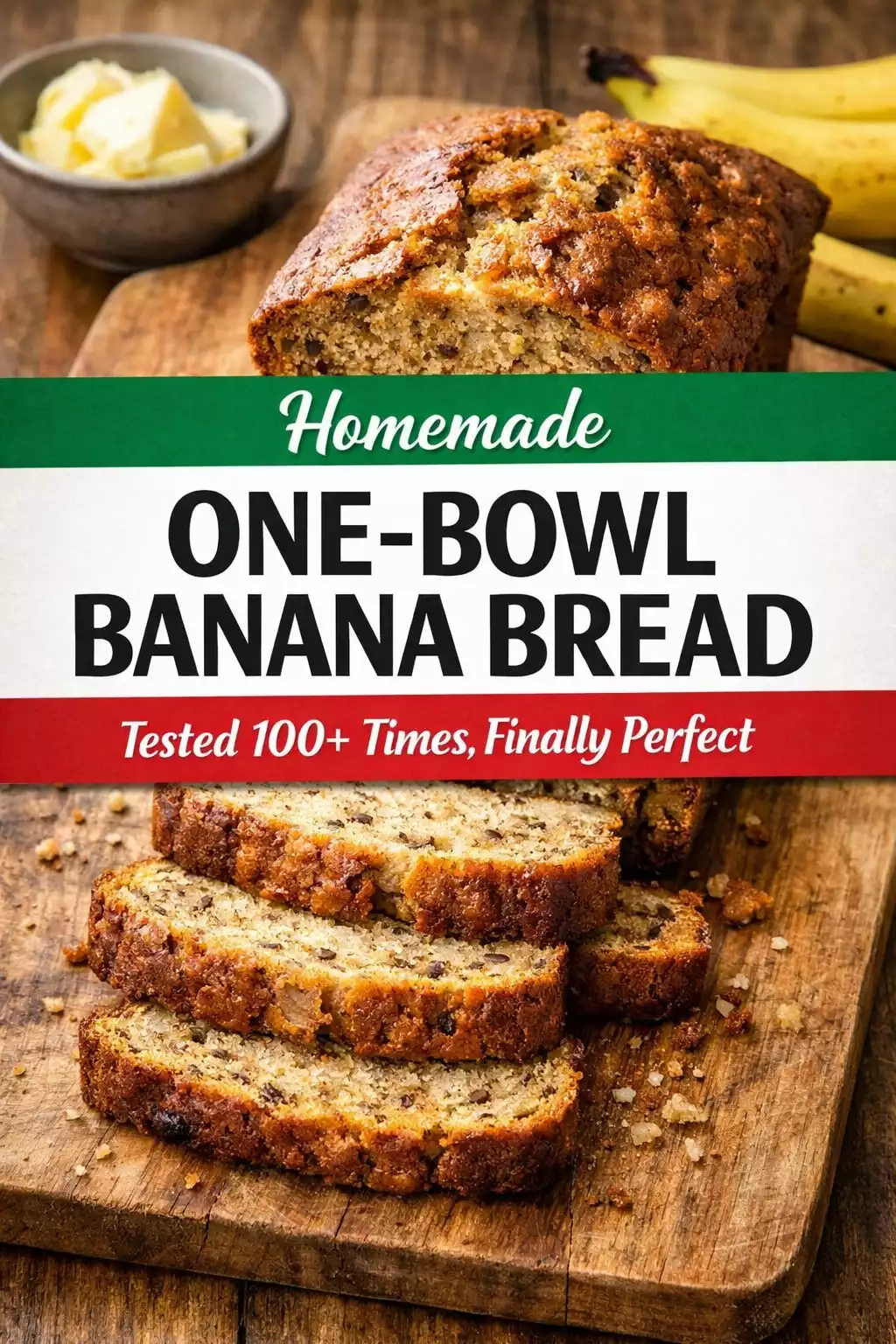
There’s a version of banana bread that comes together in one bowl, in under ten minutes of active work, in a single pan, and tastes like someone spent an hour making it. This is that version. The one-bowl approach isn’t a compromise — it’s a proper technique for quick breads where the minimal mixing required by the recipe is actually best served by limiting the number of times the ingredients are handled. One bowl forces restraint. Restraint produces tender banana bread.
The thing that has always made banana bread a legitimate recipe rather than a use-up-your-overripe-bananas convenience is that the best versions taste like they were made with intention. This dump dinner-adjacent quick bread delivers that. The bananas have to be very ripe. The mixing has to be minimal. The bake time has to be patient. Three requirements, none of them difficult.
Three generations of this recipe. You’re welcome. This is the dump dinner-format baking that earns its place in your kitchen permanently.
Why This Recipe Works
- One bowl means less mixing: The fewer times you combine wet and dry ingredients, the less gluten develops. Less gluten = more tender banana bread. The one-bowl method isn’t just convenient — it’s structurally superior for quick breads.
- Very ripe bananas for maximum sweetness and moisture: Overripe bananas contain more sugar and more moisture than yellow ones. The blackening process converts starch to simple sugars and breaks down the cell walls, releasing more flavor and liquid.
- Melted butter instead of softened: Melted butter incorporates into the batter more easily in a one-bowl format without requiring separate creaming. The texture is slightly more moist than creamed butter versions.
- Correct ratio of banana to flour: Too much banana produces a wet, gummy loaf. Too little produces a dry loaf that tastes like flour. The 1½ cups mashed banana for 2 cups flour is the correct balance.
- Low oven temperature (325°F): Banana bread needs time, not heat. A lower temperature allows the interior to set fully before the exterior overbrowns or a thick crust forms that blocks steam escape.
Ingredients
Main Ingredients
- 3 very ripe bananas (the darker the better, about 1½ cups mashed)
- ⅓ cup unsalted butter, melted
- ¾ cup granulated sugar (or ½ cup for less sweet)
- 1 large egg
- 1 teaspoon pure vanilla extract
- 1½ teaspoons baking soda
- ½ teaspoon salt
- 1½ cups all-purpose flour
- Optional: ½ cup walnuts, chocolate chips, or raisins
Instructions
Step 1: Preheat and Prep Pan
Preheat oven to 325°F (165°C). Grease and flour a 9×5 inch loaf pan, or line with parchment paper with overhanging sides for easy removal.
Step 2: Mash Bananas
In a large bowl, peel and mash the bananas thoroughly with a fork. They should be smooth and paste-like, with no visible chunks. The more thoroughly mashed, the more evenly they distribute through the batter and the more moisture they contribute. This takes 2 full minutes of mashing effort.
Step 3: Add Everything to the Same Bowl
To the mashed banana, add the melted butter and stir. Add sugar, egg, and vanilla extract and stir until combined. Sprinkle baking soda and salt over the mixture and stir in. Finally, add the flour and fold with a rubber spatula using 12–15 strokes until just combined. The batter will be lumpy — that is correct and intentional.
Step 4: Add Mix-Ins
If adding walnuts, chocolate chips, or raisins, fold in with 3–4 additional strokes. Overmixing here distributes add-ins but also overdevelops gluten. Minimal strokes is always correct for quick bread.
Step 5: Bake
Pour batter into the prepared loaf pan. Bake at 325°F for 55–70 minutes until a toothpick inserted in the center comes out clean or with a few dry crumbs. The center is the last to set — test there, not the edges. Cover loosely with foil in the last 15 minutes if the top is browning too quickly.
Step 6: Cool
Cool in the pan 10 minutes, then turn out onto a wire rack and cool at least 20 more minutes before slicing. Hot banana bread is fragile and will crumble. Patience produces clean slices.
Pro Tips & Common Mistakes
- Overripe bananas are mandatory: Yellow bananas with a few spots produce acceptable banana bread. Nearly black bananas produce exceptional banana bread. The difference in sweetness and moisture is substantial.
- Don’t overmix: This is the most common mistake with all quick breads. Twelve to fifteen folds is the maximum. A lumpy batter is correct; a smooth batter is a mistake.
- Test for doneness in the center: The edges are always done first. The toothpick must come out clean from the very center — the thickest part of the loaf.
- Cool before slicing: Hot banana bread has not fully set. Slicing before it cools produces compressed, gummy slices. Twenty minutes minimum on a rack.
- Use the right pan: A 9×5 standard loaf pan is the correct size. A smaller pan will overflow. A larger pan produces a flat, under-risen loaf.
Variations Worth Trying
- Brown Butter Version: Brown the butter before melting (cook until golden and nutty-smelling, then cool). Adds a toasted, caramel depth that elevates every version of banana bread.
- Nutella Swirl: Dollop 3–4 tablespoons of Nutella over the top of the batter in the pan and swirl with a knife. The Nutella creates a marble effect that looks professional and tastes very good.
- Cream Cheese Filling: Beat 4 oz cream cheese with 2 tablespoons sugar. Pour half the batter, add cream cheese filling in the center, top with remaining batter. A filled banana bread that’s more special occasion than weeknight.
- Streusel Topped: Mix ¼ cup each brown sugar, flour, and cold butter into crumbles. Press over the top before baking. A coffee cake-adjacent banana bread.
- Muffin Version: Divide batter among 12 muffin cups and bake at 375°F for 18–22 minutes. See also this biscuits and gravy, this cherry dump cake, this easy chicken quesadillas, this one pot turkey and vegetable soup, and this slow cooker taco soup for more easy family meals and baked goods.
Storage & Reheating
- Room temperature: Wrapped in plastic or in an airtight container up to 3 days. Banana bread improves overnight as the moisture redistributes.
- Refrigerator: Up to 1 week. Bring to room temperature before eating or warm briefly.
- Freezer: Slice first, wrap individually, and freeze up to 3 months. Pull out slices as needed — thaw at room temperature in 30 minutes or 20 seconds in the microwave.
- Warming tip: A 10-second microwave warm or 2 minutes in a toaster makes day-old banana bread taste fresh-baked.
Frequently Asked Questions
Can I use frozen bananas?
Absolutely. Freeze bananas when they’re at peak ripeness (blackened), then thaw and drain excess liquid before mashing. Frozen-thawed bananas are often even more flavorful than fresh overripe ones.
Can I use oil instead of butter?
Yes. ¼ cup neutral oil substitutes for the melted butter. The texture is slightly more moist and the bread keeps an additional day. The buttery flavor is absent — acceptable trade for some bakers.
Why is my banana bread dense and gummy?
Usually overmixed or underbaked. Overmixing develops too much gluten and produces a dense, tight crumb. Underbaking leaves the center starchy. Test with a toothpick in the very center of the loaf.
What if I only have two bananas?
Add 2 tablespoons sour cream or Greek yogurt to compensate for the missing moisture and flavor. The bread will be slightly less intense in banana flavor but still good.
Can I make this without eggs?
Yes. Replace the egg with an additional ¼ banana (mashed) plus 1 tablespoon flax meal mixed with 3 tablespoons water (let sit 5 minutes). The result is slightly denser but functional for egg-free baking.