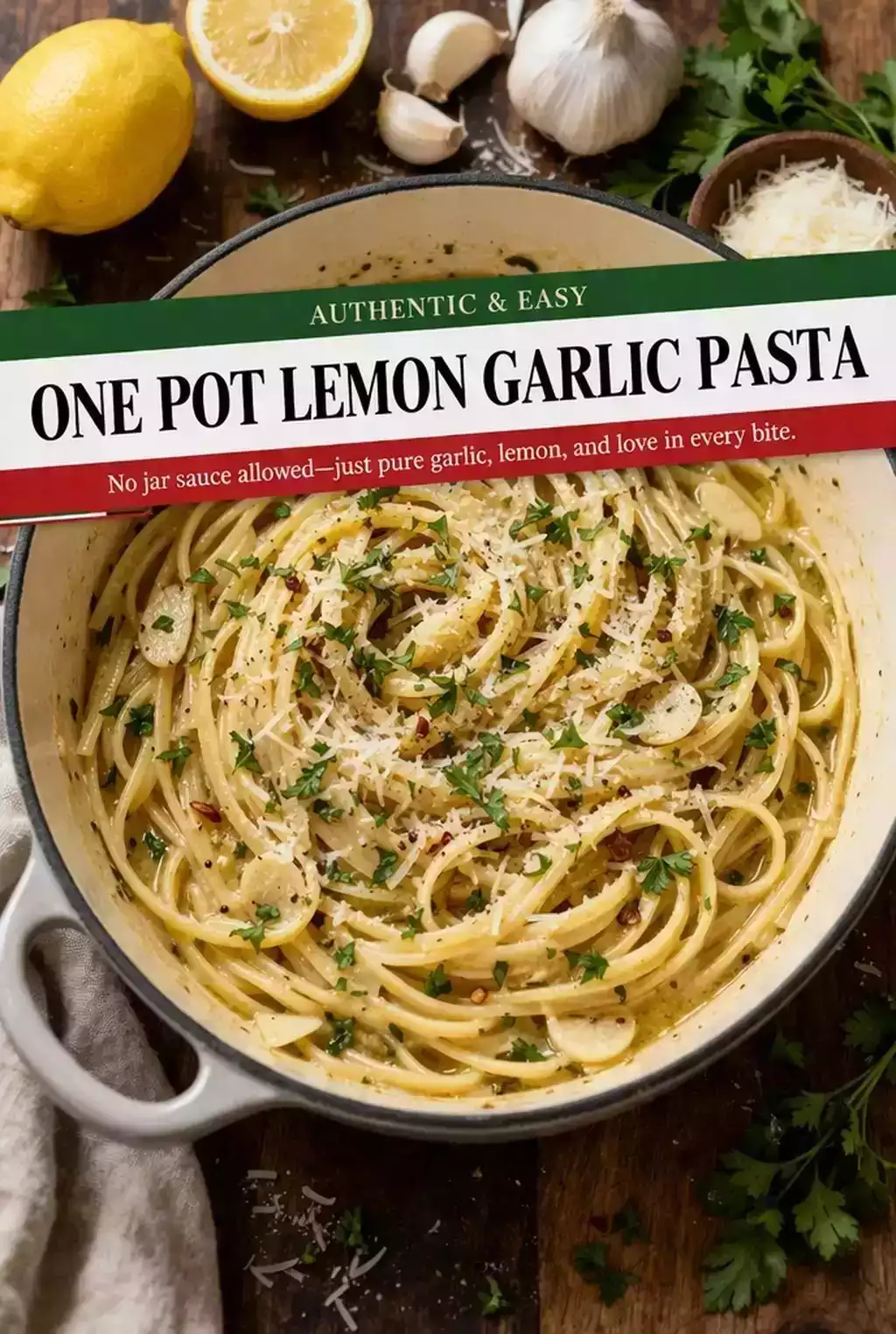
People pay $30 for this at restaurants. You’re making it for six bucks. Lemon pasta is one of those dishes that looks like a trick — five ingredients, ten minutes, absolutely stunning result. The first time I ordered it in a restaurant in Rome, I spent the entire meal trying to figure out what they did. Came home, made it four times in a week until it matched. That recipe is this one.
The Italian-American version of lemon pasta lives in my family’s rotation year-round — winter with heavy cream, summer with just butter and pasta water, always with real lemon zest and real Parmigiano. The zest is what makes it sing. Juice alone gives you acidity; zest gives you the citrus oils that make the whole bowl come alive.
This lemon pasta recipe works because it respects what the lemon actually does. It’s not background flavor — it’s the star. Everything else supports it: butter for richness, Parmigiano for umami, pasta water for body, black pepper for contrast. Learn this once and you’ll make it for the rest of your life.
Why This Lemon Pasta Recipe Works
- Zest and juice both go in — zest carries the aromatic citrus oils; juice carries the brightness; neither alone is enough
- Butter is emulsified, not just melted — off-heat technique keeps butter from breaking and going oily
- Pasta water creates the sauce — starch emulsifies fat and acid into something silky and cohesive
- Parmigiano goes in last, off heat — cheese added over direct heat seizes; off heat melts properly
- Black pepper adds necessary contrast — without it the dish tastes flat; lemon and pepper are natural partners
Ingredients
Core Ingredients
- 1 pound spaghetti or linguine
- 4 tablespoons unsalted butter, cold and cubed
- Zest of 2 large lemons
- Juice of 1 large lemon (about 3 tablespoons)
- 1 cup freshly grated Parmigiano-Reggiano
- 1 teaspoon freshly cracked black pepper
- ½ cup reserved pasta water
- Kosher salt, for pasta water and seasoning
Optional Additions
- 2 cloves garlic, minced (sauté in butter briefly before adding pasta)
- ¼ cup heavy cream (for a richer, creamier version)
- Fresh basil or flat-leaf parsley, torn
- Red pepper flakes for heat
- 1 cup baby arugula stirred in at the end
Instructions
Step 1: Cook the Pasta Aggressively Salted
Bring a large pot to a full boil. Add enough salt that it tastes like mild seawater. Cook pasta two minutes shy of package directions. Reserve 1 cup pasta water before draining. This water is the sauce — don’t forget it and don’t dilute it with tap water.
Step 2: Zest While the Pasta Cooks
Zest both lemons directly into a large mixing bowl or wide skillet. Add the cold butter cubes on top of the zest. The oils from the zest will begin infusing into the butter as it melts — this is the first layer of lemon flavor. Juice one lemon into a separate small bowl and set aside.
Step 3: Create the Lemon Butter Base
Add ¼ cup of hot pasta water to the bowl with butter and zest. Toss the drained pasta on top immediately. The heat of the pasta and water starts melting the butter. Toss vigorously for 1 minute. Add the lemon juice and toss again. The pasta water, butter, and lemon juice should begin emulsifying into a light, glossy sauce.
Step 4: Add the Parmigiano Off Heat
Remove from heat completely. Add Parmigiano-Reggiano in two additions, tossing between each. The residual heat melts the cheese without seizing it. Add more pasta water if the sauce looks tight — it should flow freely around the pasta, not glue it together.
Step 5: Season and Serve
Taste and adjust — more lemon zest for brightness, more salt if flat, more pasta water if thick. Finish with a generous amount of freshly cracked black pepper. Plate immediately and serve with extra Parmigiano. This dish does not sit well — eat it the moment it’s done.
Chef’s Tips & Common Mistakes
- Zest first, juice second — zesting a juiced lemon is nearly impossible; zest while the lemon is whole
- Cold butter, not melted — cold butter emulsifies as it melts; pre-melted butter just makes the pasta greasy
- Off-heat cheese addition — Parmigiano seizes over direct heat, creating a lumpy, grainy sauce; always add off heat
- Use fresh-grated Parmigiano only — the pre-shredded kind has anti-caking agents that prevent melting
- Don’t skimp on black pepper — lemon needs the contrast; timid pepper makes the dish taste unfinished
- Serve immediately — lemon pasta absorbs the sauce within minutes of sitting; it’s not a make-ahead dish
Variations
- Creamy Lemon Pasta: Add ¼ cup heavy cream to the pan before the pasta and reduce briefly — closer to a restaurant-style cream sauce
- Lemon Shrimp Pasta: Sauté shrimp in butter and garlic, deglaze with lemon juice, add pasta — technique similar to the white sauce pasta finishing method
- Lemon Ricotta Pasta: Stir in 3 tablespoons whole-milk ricotta at the end for a creamy, pillowy texture
- Lemon Asparagus Pasta: Toss in blanched asparagus tips — the grassy, springtime flavor pairs perfectly with lemon
- Aglio Lemon: Combine garlic-toasted-in-oil from aglio e olio technique with lemon zest and Parmigiano for a more complex version
- Lemon Pesto Pasta: Mix a spoonful of pesto into the lemon butter sauce — herb and citrus together, similar to brown butter sage pasta brightness
Storage & Reheating
Refrigerator: Store up to 2 days covered. The pasta absorbs the sauce as it sits and tends to clump.
Reheating: Reheat in a skillet over medium-low with a splash of water or butter, tossing to loosen. Add a fresh squeeze of lemon and a bit of Parmigiano to revive it.
Freezer: Not recommended — lemon pasta loses its freshness in the freezer and the emulsion breaks on reheating.
Best Practice: This is a 15-minute dish. Make it fresh. The ingredients are always on hand; there’s no reason to store it.
Frequently Asked Questions
Why does my lemon pasta taste sour instead of bright?
Too much juice, not enough zest. Lemon juice is acid; lemon zest is aromatic citrus oil. The zest is what makes pasta taste like lemon rather than just tasting sour. Use the zest of two lemons but only the juice of one. Taste before adding more juice.
Can I use bottled lemon juice?
Not recommended. Bottled lemon juice lacks the volatile aromatics that make fresh lemon taste like lemon. It tastes flat and slightly chemical in cooked applications. This is a dish built entirely around lemon flavor — fresh is non-negotiable. See also: penne alla vodka for another recipe where quality of a single ingredient defines the dish.
What pasta works best with lemon?
Long pasta — spaghetti, linguine, tagliatelle — works best. The light, delicate sauce coats long strands evenly. Heavier tube shapes can make the dish feel unbalanced. The sauce should feel like silk on the pasta, not a coating that fills hollow shapes.
Why is my sauce breaking and looking oily?
The emulsion broke. Fix it: add a splash of hot pasta water and toss vigorously off heat. The starch re-emulsifies the fat. Prevention: add pasta water gradually, never all at once; keep butter cold when adding; don’t overheat the pan.
Can I make lemon pasta without Parmigiano?
Pecorino Romano works and adds a saltier, sharper note that actually pairs well with lemon. Nutritional yeast works for vegan versions but the texture differs. Completely omitting cheese gives you a lighter, more Sicilian-style dish — a splash of extra olive oil and more pasta water compensates for the lost body. See aglio e olio for a great cheese-optional approach.