This is the one my kids fight over. Every. Single. Time. And I’ve made vegetables in every possible way over the years — roasted at high heat in cast iron, blanched and shocked, braised low and slow, raw with nothing on them because a good vegetable doesn’t need help. But the air fryer version of roasted vegetables has become a legitimate staple in my kitchen, and I’ll tell you exactly why: it achieves in 12–15 minutes what the oven takes 30–40 minutes to do, and the caramelization and slight char on the edges is comparable if not better than what comes off a sheet pan. You just need to know which vegetables work best, how to cut them, and how not to crowd the basket.
This is the Air Fryer Vegetables guide — every vegetable, the right temperature, the right time. Pair it with my Air Fryer Brussels Sprouts for the elite of air fryer vegetables, check out my Air Fryer French Fries for potato-based air frying, and serve alongside my Air Fryer Salmon or Air Fryer Shrimp for a complete dinner.
Why Air Fryer Vegetables Work
- Circulating hot air, not steam — a conventional oven traps moisture from the vegetables in a large space. The air fryer’s smaller chamber circulates heat faster, drying the surface of vegetables for better caramelization.
- Cut size consistency — uniform pieces cook evenly. Mix large and small pieces and the small pieces burn while the large pieces are still raw.
- Right oil, right amount — too little oil and nothing caramelizes; too much and the basket fills with steam. A light, even coating is the target.
- Don’t overcrowd — every vegetable needs space for hot air to circulate. A full, piled basket steams the vegetables instead of roasting them.
Ingredients
Base Mix (Mix and Match)
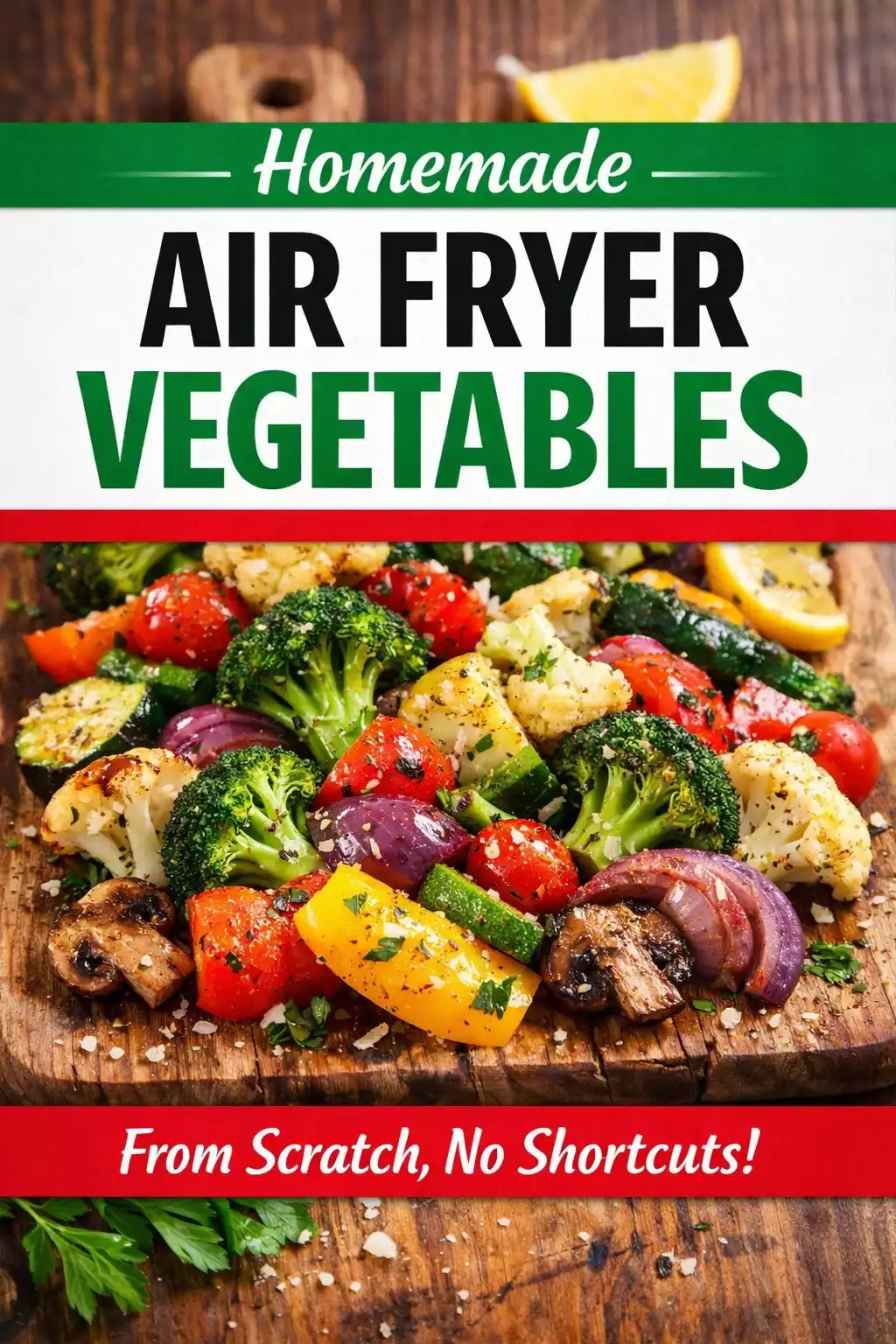
- 1.5–2 lbs total mixed vegetables: broccoli florets, cauliflower, bell peppers, zucchini, yellow squash, red onion, asparagus, green beans, cherry tomatoes, mushrooms
- 2 tbsp olive oil
- 1 tsp kosher salt
- ½ tsp black pepper
- ½ tsp garlic powder
- ½ tsp Italian seasoning or dried herbs of choice
Optional Finishing Touches
- Lemon juice and zest
- Parmesan, freshly grated
- Fresh herbs (basil, parsley, thyme)
- Balsamic glaze drizzle
- Red pepper flakes
Instructions
Step 1: Prep the Vegetables
Cut all vegetables into similar-sized pieces — roughly 1 to 1.5 inches. Larger pieces for heartier vegetables (broccoli, cauliflower, root vegetables); slightly smaller for soft vegetables (zucchini, bell pepper) so they cook in the same timeframe. Pat vegetables dry if they were washed.
Step 2: Season and Coat
Toss vegetables with olive oil until every surface is lightly coated. Add salt, pepper, garlic powder, and dried herbs. Toss again to distribute seasoning evenly. Avoid letting them sit in oil and seasoning for too long before cooking — salted vegetables will release water.
Step 3: Preheat and Cook
Preheat the air fryer to 380°F. Add vegetables in a single layer — work in batches if needed. Cook 12–16 minutes total, shaking or tossing every 5 minutes. The vegetables are done when lightly charred on the edges and tender when pierced with a fork.
Step 4: Timing by Vegetable
Quick-cooking (10–12 min): Asparagus, green beans, cherry tomatoes, thin-cut bell peppers
Medium (12–15 min): Broccoli, zucchini, mushrooms, red onion, corn
Longer (15–18 min): Cauliflower, Brussels sprouts, thick-cut root vegetables
When mixing vegetables with different cook times, stagger the additions or cut slower-cooking vegetables smaller.
Step 5: Finish and Serve
Transfer to a serving platter. Finish with lemon juice, fresh herbs, a grating of parmesan, or a drizzle of balsamic glaze. Taste and adjust salt. Serve immediately.
Tips & Common Mistakes
- Uniform cutting is everything — the single most important step. Inconsistently-cut vegetables cook unevenly, period. Take an extra minute to cut uniformly.
- Dry vegetables before oiling — wet vegetables (especially broccoli and cauliflower after rinsing) release steam in the basket. Pat dry first.
- Don’t dump the whole bowl in at once — a full crowded basket steams rather than roasts. Single layer, multiple batches if needed. The result is worth the extra 10 minutes.
- Shake regularly — every 4–5 minutes keeps the vegetables moving and ensures even caramelization on multiple sides.
- Add tomatoes and delicate vegetables late — cherry tomatoes and thin asparagus cook fast. Add them in the last 5 minutes with heartier vegetables, not at the start.
Variations
- Italian Style: Italian seasoning, garlic, olive oil, finished with parmesan and basil. Classic and goes with everything.
- Asian-Inspired: Sesame oil (added after cooking), soy sauce, a pinch of ginger powder, and a sprinkle of sesame seeds. Serve with rice for an easy weeknight bowl.
- Mediterranean: Zucchini, red onion, tomatoes, and bell pepper with oregano, lemon, and olive oil. Serve with feta crumbled on top.
- Spicy Cajun: Coat in Cajun seasoning with extra smoked paprika and cayenne. Bold and excellent with grilled or air-fried proteins.
- Balsamic Glazed: Drizzle balsamic glaze over the finished vegetables. The sweetness contrasts the charred edges beautifully. See my Pan-Fried Asparagus for a stovetop vegetable technique worth mastering.
Storage & Reheating
- Refrigerator: Store in an airtight container up to 4 days. Roasted vegetables are excellent cold in grain bowls and salads the next day.
- Reheating: Air fryer at 375°F for 3–5 minutes. Restores crispness far better than the microwave, which steams them soft.
- Repurpose: Day-old air-fried vegetables work brilliantly in frittatas, pasta, grain bowls, and soups. Nothing goes to waste.
Frequently Asked Questions
Can I mix all the vegetables together?
Yes — but cut slower-cooking vegetables (broccoli, cauliflower) smaller than faster ones (zucchini, peppers), so everything finishes together. Or add the faster-cooking vegetables partway through the cook. A mixed basket is totally fine with some attention to sizing.
What vegetables don’t work well in the air fryer?
Very wet vegetables like large tomato wedges tend to release too much liquid and steam. Loose leafy greens like spinach blow around in the circulating air. Very dense root vegetables like whole beets or large chunks of raw carrot need more time than most air fryer recipes accommodate. For leafy greens, use a light spritz of oil and cook briefly at high heat, watching constantly.
Should I oil the basket or the vegetables?
Oil the vegetables directly — a light coating on the vegetable surfaces produces even browning. Spraying or oiling only the basket can cause vegetables that aren’t oiled well to stick or steam rather than roast. Do both if you’re having sticking issues.
Can I cook vegetables and protein at the same time?
In a dual-basket air fryer, yes. In a single basket, no — the different temperatures and times make simultaneous cooking impractical. Cook proteins in one batch, vegetables in another, and recrisp the first batch for 2 minutes before serving everything together.
Why are my vegetables coming out soft instead of crispy?
Almost certainly overcrowding. Even one layer too many defeats the airflow. The air fryer basket should look like a single layer of vegetables with space between them — not a full, piled bowl. Also check out my Air Fryer Brussels Sprouts for the pinnacle of air-fried vegetable technique.