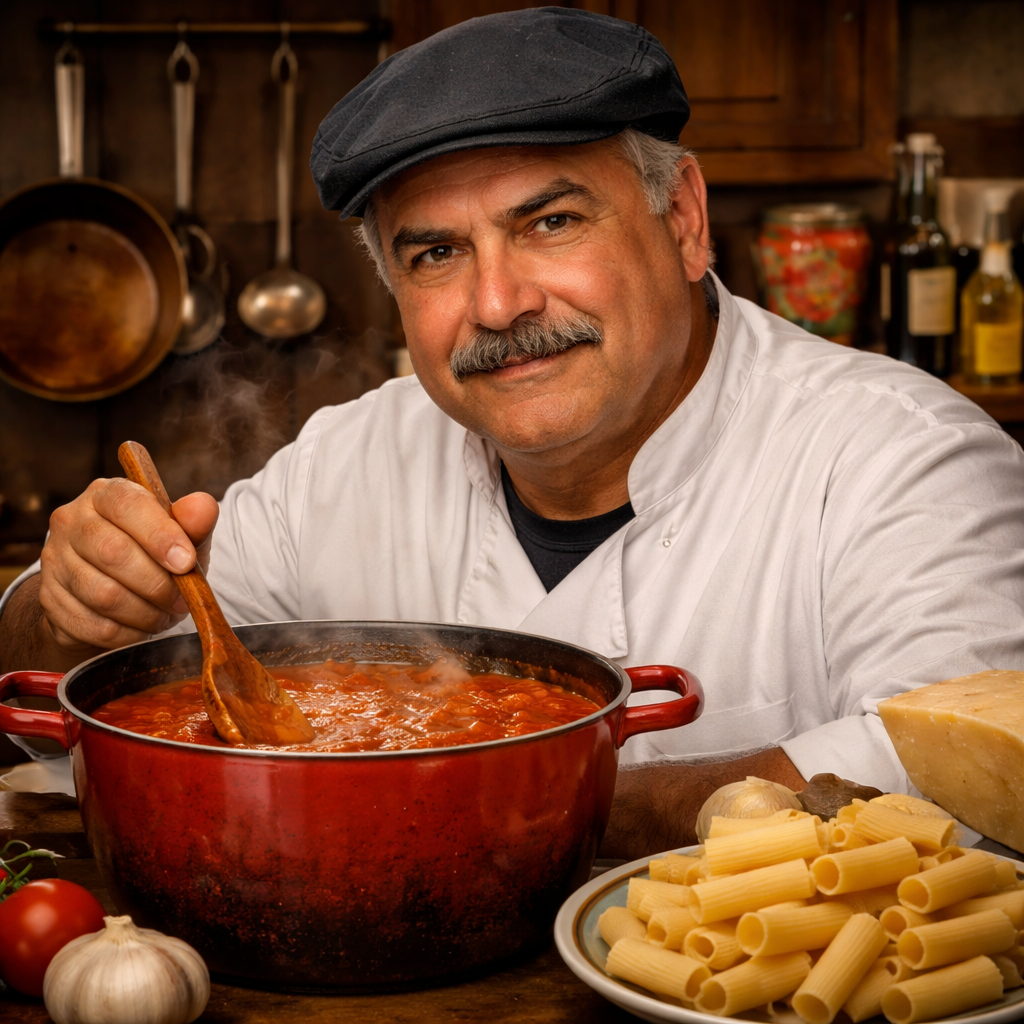
Don’t rush this. Good food doesn’t have a timer. Marinara Sauce from Scratch is the sentence I’ve lived by in Italian-American cooking since the day I first learned to cook from the women in my family — women who understood that the difference between a Sunday sauce and a Tuesday night tomato sauce is time, attention, and the willingness to not cut corners. This is a pure marinara: tomatoes, garlic, olive oil, fresh basil, salt. That’s it. No onion, no carrots, no celery. The simplicity is the point. When you taste marinara that’s been built on great tomatoes and properly handled, you understand why Italian cooking doesn’t need more than five ingredients to be extraordinary.
The tomatoes are everything. San Marzano DOP canned whole tomatoes, or the freshest in-season plum tomatoes you can find. Everything else in this recipe exists to support the tomatoes, not compete with them. Use the best you can afford. The sauce will tell you exactly what you used.
Why This Marinara Sauce Works
- San Marzano tomatoes: DOP-certified San Marzano tomatoes have lower acidity, more sweetness, and more complex tomato flavor than standard canned tomatoes. The difference in a sauce with this few ingredients is immediately obvious.
- Hand-crushed tomatoes: Crushing whole tomatoes by hand rather than using pre-crushed maintains textural variation. Some pieces are very smooth; some remain chunky. The varied texture makes a more interesting, more natural-tasting sauce.
- Garlic bloomed in olive oil: Garlic sliced (not minced) and cooked slowly in olive oil over medium-low heat creates a sweet, fragrant oil that is the flavor base of the sauce. Minced garlic burns fast; sliced garlic blooms slowly and evenly.
- Long, uncovered simmer: 30–45 minutes of gentle simmering concentrates the tomato flavor and reduces the sauce to the right consistency. The slow evaporation is the work.
- Fresh basil at the end: Added off heat or in the last 2 minutes of cooking. Heat destroys the volatile aromatics in fresh basil. Added too early, you get cooked herb flavor; added at the end, you get fresh herb brightness.
Ingredients
Marinara Sauce
- 2 cans (28 oz each) whole San Marzano tomatoes, DOP if possible
- 6 tbsp extra virgin olive oil (use the good bottle)
- 5 garlic cloves, thinly sliced
- Pinch of red pepper flakes (optional)
- 1 tsp salt (or to taste)
- 1 tsp sugar (only if tomatoes are very acidic)
- 10–12 fresh basil leaves
Instructions
Step 1: Bloom the Garlic
Heat olive oil in a large, wide saucepan over medium-low heat. Add the sliced garlic and red pepper flakes if using. Cook slowly, stirring occasionally, for 4–5 minutes until the garlic is very lightly golden and fragrant — not brown, not crispy, not burned. The moment the garlic starts to color, it’s almost done. The oil should smell deeply garlicky. This is the foundation of the entire sauce.
Step 2: Add the Tomatoes
Crush the whole tomatoes by hand directly into the pan — squeeze each one, breaking it open, then let it fall in. Pour all the juice from the can in as well. The sauce will sizzle and bubble as it hits the hot oil. Add salt. Stir to combine. Increase heat to bring to a steady simmer.
Step 3: Simmer Low and Slow
Reduce heat to maintain a gentle, steady simmer — bubbles breaking the surface slowly, not a rolling boil. Cook uncovered for 30–45 minutes, stirring every 10 minutes, until the sauce has darkened slightly in color, reduced by about a third, and the oil has re-emerged on the surface (a sign that the water has evaporated and the sauce is concentrating). The texture should coat the back of a spoon heavily.
Step 4: Finish and Taste
Remove from heat. Tear the fresh basil leaves and stir into the sauce. Taste and adjust salt — the sauce should taste bright, sweet, garlicky, and intensely tomato-forward. If it tastes acidic or flat, add a pinch of sugar. If it tastes metallic, it needed to cook longer. For a smoother sauce, use an immersion blender briefly. For a rustic, chunky sauce, leave as is.
Tips and Common Mistakes
- Burned garlic: Burned garlic in the oil is an unfixable problem that ruins the entire sauce. Low heat, patience, and constant attention for those 5 minutes. The moment you smell toasting rather than blooming — take the pan off the heat.
- Too acidic: A pinch of sugar corrects this immediately. Also check if the tomatoes are San Marzano DOP — generic canned tomatoes are often significantly more acidic.
- Too watery: Cook longer, uncovered. The sauce needs time to reduce. Don’t add flour or starch — natural reduction is the only approach for a proper marinara.
- Fresh basil added too early: Basil added at the start of cooking turns black and tastes bitter. It goes in at the end — off heat or in the last 2 minutes. This rule is absolute.
Variations
- Arrabbiata: Increase red pepper flakes to 1 teaspoon or add 1–2 fresh chilis. Same technique, significantly more heat. The spicy version of marinara used throughout Southern Italy.
- Puttanesca: Add olives, capers, and anchovies to the garlic oil stage. Aggressively flavored, salty, and one of the most compelling pasta sauces in the Italian repertoire.
- Fresh tomato marinara: In peak summer, use 3 lbs of ripe plum tomatoes instead of canned. Blanch, peel, seed, and crush. The sauce cooks faster (about 20 minutes) and has a brighter, more delicate flavor. Worth the extra work in tomato season.
Marinara is the foundation of Italian-American cooking. Pair it with the Italian Seasoning Blend, the Béchamel Sauce, and make it alongside the Best Steak Marinade for a full sauce arsenal.
Storage and Reheating
- Refrigerator: Keeps 5–7 days. The flavor continues to develop over the first 2 days as the olive oil and basil infuse throughout.
- Freezer: Freezes beautifully for 3 months. Freeze in 1–2 cup portions for easy weeknight use. This is one of the best make-and-freeze sauces in Italian cooking.
- Reheating: Reheat gently in a saucepan over medium-low heat with a splash of water if needed to loosen. Never microwave directly from frozen — thaw first for best texture.
Frequently Asked Questions
Are San Marzano tomatoes worth the extra cost?
For a sauce this simple, yes, unambiguously. San Marzano DOP tomatoes have a specific flavor profile — sweet, low-acid, meaty — that comes from the volcanic soil and specific growing conditions in the Campania region of Italy. In a sauce with only five ingredients, that quality is immediately and unmistakably present in the final result.
Can I use fresh tomatoes instead of canned?
Yes, but only in peak tomato season with fully ripe plum tomatoes. Use 3 lbs, blanch (30 seconds in boiling water), ice bath, peel, seed, and crush. Fresh tomato marinara is lighter and brighter. Out-of-season fresh tomatoes produce a worse sauce than good canned tomatoes — don’t use them for this.
Why does marinara taste better the next day?
The olive oil continues to carry the garlic and herb flavors throughout the sauce overnight. The acid mellows slightly. The ingredients meld together in a way that can’t happen during the brief cooking period. Day-two marinara is the goal whenever possible.
How much sauce does this recipe make?
About 4–5 cups — enough to sauce 1.5 to 2 pounds of pasta, or top two large pizzas. Double the recipe for batch cooking and freezing.