Every kitchen has a reputation recipe — the one people request by name, the one that disappears first at every party, the one that other bakers try to reverse-engineer and never quite nail. For a lot of home bakers, Soft Frosted Sugar Cookies is that recipe. The thick, pillowy cookie with the cloud of buttercream frosting and the sprinkles that catch the light. These are cookie recipes royalty, and they belong in every home baker’s rotation.
The secret isn’t complicated — it’s cream cheese in the dough that keeps these cookies soft for days, and real butter in the frosting that gives it that melt-on-your-tongue texture you don’t get from shortening. The rest is technique: don’t overbake, don’t underchill the dough, don’t rush the frosting. These are the kind of cookies that end arguments about which bakery in town makes the best ones. Make these, and you become the bakery.
For holiday spreads, these pair beautifully with peanut butter blossoms and gingerbread cookies. And when someone asks where you got them, you smile and say you made them yourself.
Why These Soft Frosted Sugar Cookies Work
- Cream cheese in the dough — adds tang and fat that keeps cookies soft for days
- No rolling required — drop and press method means uniform thickness without a rolling pin
- Room temperature ingredients — proper creaming requires soft butter and cream cheese, no shortcuts
- Underbaking by design — pulling early and cooling on the pan is the entire secret to pillow-soft texture
- Real butter frosting — shortening-based frosting doesn’t taste like anything; this does
Ingredients
The Cookie Dough
- 2 3/4 cups (350g) all-purpose flour
- 1 teaspoon baking powder
- 1/4 teaspoon baking soda
- 1/2 teaspoon fine salt
- 1/2 cup (113g) unsalted butter, room temperature
- 4 oz cream cheese, room temperature
- 1 cup (200g) granulated sugar
- 1 large egg, room temperature
- 1 teaspoon pure vanilla extract
- 1/2 teaspoon almond extract (optional, but excellent)
The Buttercream Frosting
- 1/2 cup (113g) unsalted butter, room temperature
- 2 cups (240g) powdered sugar, sifted
- 2 tablespoons heavy cream or whole milk
- 1 teaspoon pure vanilla extract
- Pinch of fine salt
- Food coloring (gel preferred) — optional
- Sprinkles for topping
How to Make Soft Frosted Sugar Cookies
Step 1: Make the Dough
In a stand mixer or with a hand mixer, beat butter and cream cheese together on medium speed until completely smooth and combined, about 2 minutes. Add sugar and beat for another 2-3 minutes until pale and fluffy — don’t rush this step. Add egg, vanilla, and almond extract. Mix until combined. Reduce speed to low and add flour, baking powder, baking soda, and salt all at once. Mix just until no flour streaks remain. Dough will be soft.
Step 2: Chill the Dough
Cover and refrigerate for a minimum of 1 hour, up to 24 hours. Chilling is essential — it prevents spreading during baking and makes the dough easier to handle. Cold dough from the refrigerator also produces a thicker, puffier cookie. This step cannot be skipped if you want the signature thick, pillowy texture.
Step 3: Bake
Preheat oven to 350°F. Line baking sheets with parchment paper. Scoop dough into 1.5-tablespoon balls (a cookie scoop makes this clean and consistent) and place 2 inches apart on prepared sheets. Flatten gently with the bottom of a glass to about 1/2-inch thickness. Bake for 9-11 minutes — the edges should be just barely set, the centers should look underdone. They finish on the pan.
Step 4: Cool Completely
Let cookies cool on the baking sheet for 5 minutes before transferring to a wire rack. Cool completely before frosting — warm cookies melt the buttercream and you’ll end up with a glossy mess. Full cooling takes about 30-45 minutes. Use this time to make the frosting.
Step 5: Make the Frosting and Decorate
Beat butter until completely smooth. Add sifted powdered sugar gradually, beating on low to avoid a sugar cloud. Add cream, vanilla, and salt. Beat on medium-high for 2 minutes until fluffy and spreadable. Add gel food coloring if using. Frost each completely cooled cookie generously — these cookies can take a thick swirl of frosting. Top immediately with sprinkles before frosting sets.
Tips & Common Mistakes
- Everything must be room temperature — cold butter and cream cheese don’t cream properly and create a lumpy dough.
- Sift the powdered sugar — unsifted powdered sugar creates a lumpy frosting. A 30-second sift prevents this completely.
- Use gel food coloring — liquid food coloring thins the frosting. Gel gives intense color without changing texture.
- Don’t overbake — these cookies should look underdone when they leave the oven. Trust the process.
- Almond extract is the secret — professional bakery sugar cookies almost universally use almond extract. It’s that flavor people can’t identify but love.
- Store with wax paper between layers — frosted cookies stick to each other. Layer with wax paper or parchment for storage.
Variations
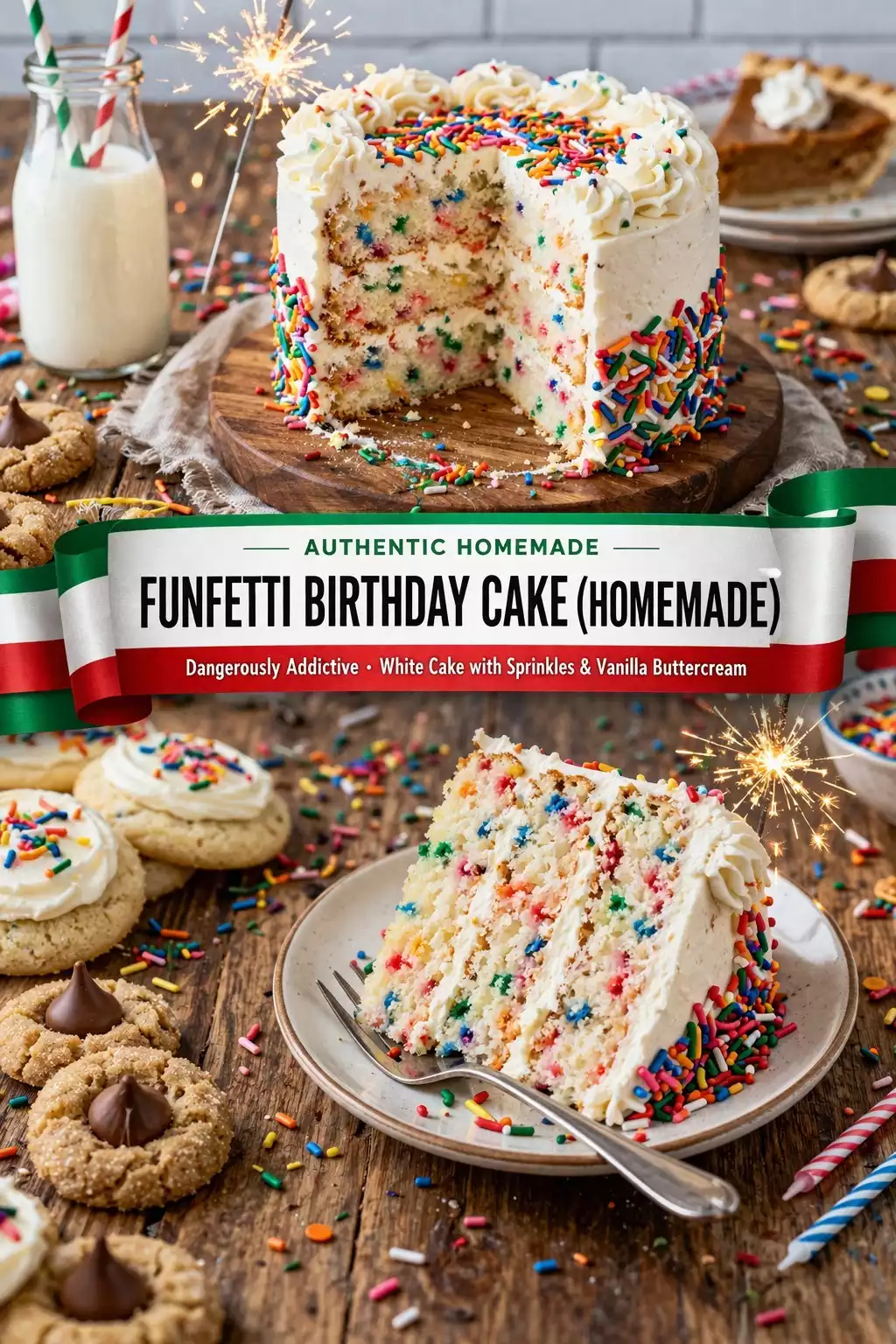
- Holiday Shapes: Add an extra 1/4 cup flour to make the dough stiffer, then roll to 1/4-inch and use cookie cutters. Chill cut shapes before baking to maintain definition. Ideal for Christmas or Easter spreads alongside homemade funfetti cake.
- Lemon Frosted: Add 1 teaspoon lemon zest to dough and 2 tablespoons lemon juice to frosting. Use yellow food coloring. Bright, spring-ready, completely different vibe.
- Funfetti Sugar Cookies: Fold 1/3 cup rainbow sprinkles into the dough before chilling. Add more to the frosting. Birthday party essential.
- Chocolate Frosted: Replace 2 tablespoons of powdered sugar in frosting with unsweetened cocoa powder. Add 1 oz melted dark chocolate for deeper flavor.
- Brown Butter Version: Brown the 1/2 cup of dough butter before using. Cool completely before creaming. Adds nutty depth to what is otherwise a clean vanilla profile.
Storage & Make-Ahead
- Room temperature: Frosted cookies keep in an airtight container for 4-5 days. The cream cheese in the dough keeps them soft longer than standard sugar cookies.
- Refrigerator: Frosted cookies can be refrigerated up to 1 week. Bring to room temperature before serving — cold cookies are dense.
- Freezer (unfrosted): Baked, unfrosted cookies freeze beautifully for 2 months. Thaw and frost before serving.
- Freezer (dough): Scoop dough balls and freeze raw. Bake from frozen adding 2-3 minutes to bake time.
- Make-ahead assembly: Make dough up to 2 days ahead and keep refrigerated. Bake day-of for freshest result.
Frequently Asked Questions
Why are my sugar cookies spreading and getting thin?
Almost always a temperature issue — dough wasn’t chilled long enough, or the baking sheets were warm from a previous batch. Always chill dough thoroughly and use room-temperature or cool baking sheets. If spreading persists, add an extra 2 tablespoons of flour to the dough.
Can I make these without cream cheese?
Yes, but they won’t stay as soft as long. Replace cream cheese with an additional 2 tablespoons of butter and a teaspoon of sour cream. The texture will still be good — just slightly less pillowy over time.
How do I get the frosting to the right consistency?
Add cream one teaspoon at a time. Too stiff — add cream. Too loose — add powdered sugar. The target is spreadable but thick enough to hold its shape. Think soft whipped butter texture — it should hold a peak but spread easily with an offset spatula.
Can I color the dough as well as the frosting?
Yes — add gel food coloring to the dough after it comes together. For pastel colors, add just a tiny amount. For vivid colors, use more gel. Pastel-tinted dough with matching frosting is a very pretty holiday presentation. See classic pumpkin pie for the other holiday essential to round out the spread.
My frosting is too sweet — how do I fix it?
Add a pinch more salt and an extra teaspoon of cream. Salt cuts perceived sweetness without making the frosting salty. If still too sweet, a drop of almond extract added to the frosting rounds out the sugar flavor without adding more sweetness. This is a legitimate technique, not a trick.